I have seen plenty of “looks fine to me” tie-down jobs turn into white-knuckle driving when the load starts walking around after the first pothole. Good tie-downs are not about brute force. They are about proper anchor points, the right strap for the job, and keeping tension where you set it.
Below are seven trailer accessories I consider must-haves if you want safer, easier cargo securement, whether you are hauling a side-by-side, a pallet of materials, a piece of equipment, or a weekend’s worth of messy farm stuff.
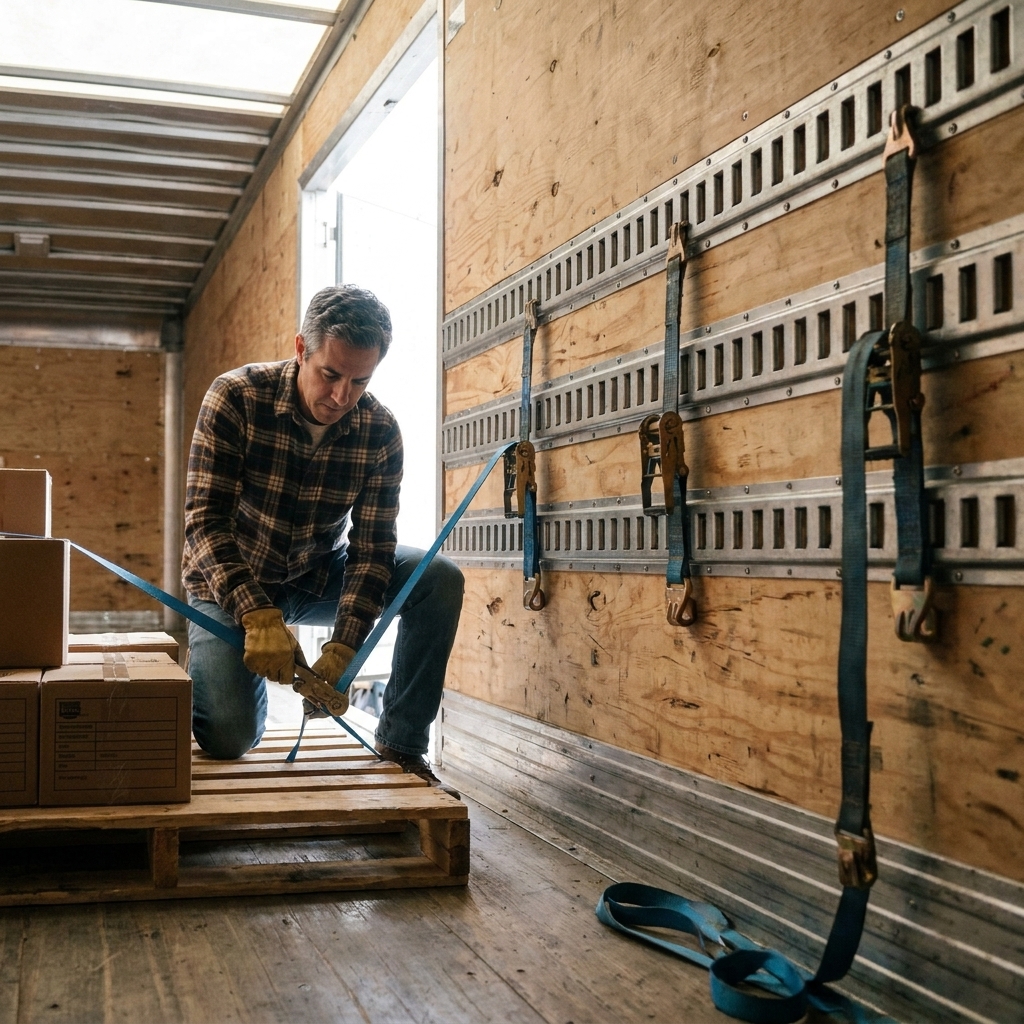
Before you buy: 3 tie-down basics
- Working Load Limit (WLL) is the number you size by. Break strength is part of the safety margin, but WLL is what matters for proper sizing and apples-to-apples comparisons across gear.
- Anchor points should be rated and mounted to structure. A strong D-ring bolted into thin plywood is still a weak anchor. You want frame members, crossmembers, or manufacturer-approved backing plates.
- Use the right securement method. Direct tie-downs (straight to the load) and indirect tie-downs (over the load) behave differently. Choose hardware that supports the method you actually use.
Ben’s driveway rule: If I can imagine the load moving 2 inches in any direction, I secure it like it already did.
Quick note: If you are hauling commercially, DOT and FMCSA cargo securement rules may apply. This is practical advice, not a compliance checklist.
1) E-track system
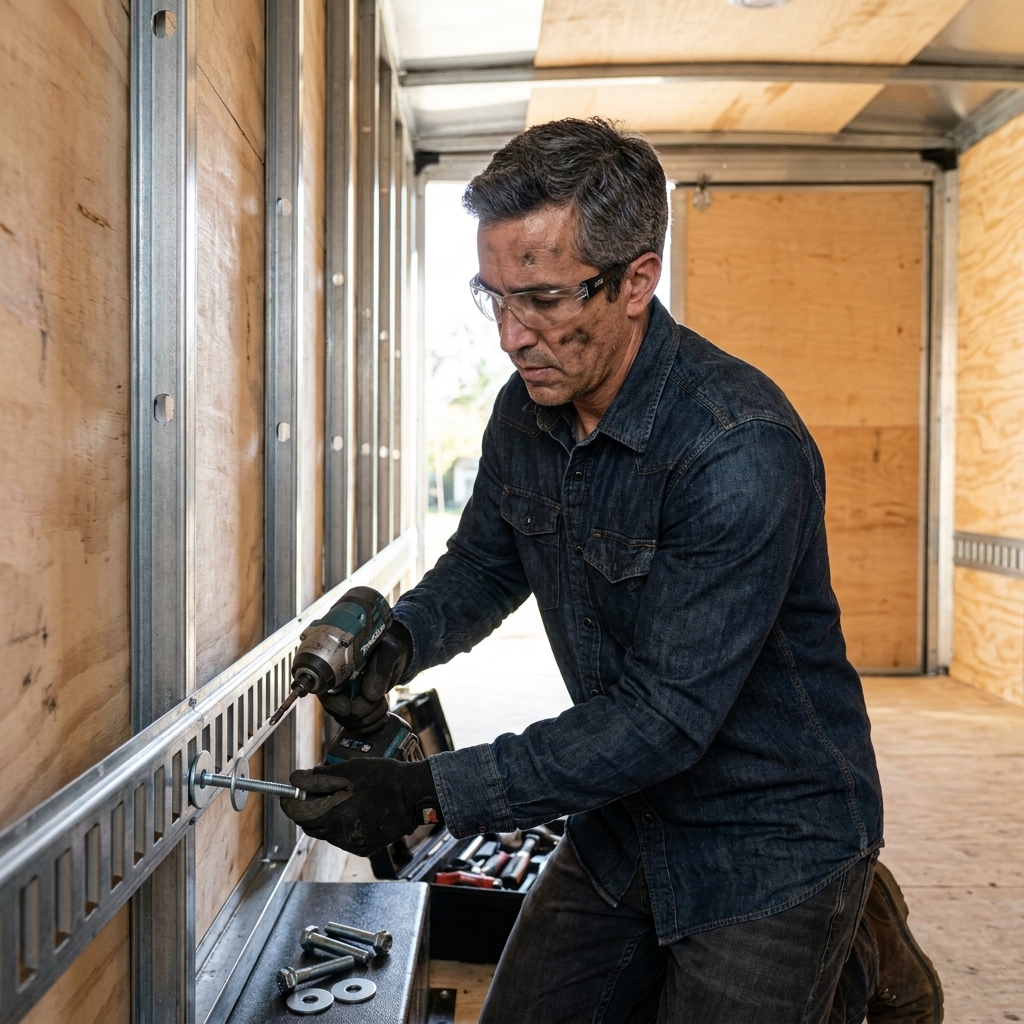
If you haul different shapes and sizes week to week, E-track is one of the most versatile upgrades you can add to a trailer. It gives you adjustable anchor points along a wall or floor, so you are not stuck using the same four corners forever.
One important reality check: E-track systems vary a lot in rating, and your real capacity is only as good as the track, the fitting, and what you mounted it to. Some wall-mounted setups are perfect for general cargo, but not ideal for heavy equipment securement unless the manufacturer ratings and trailer structure support it.
Why it makes tie-downs safer
- Lets you pull straps at better angles, which keeps loads from sliding or tipping.
- Encourages using more points of contact instead of trying to “win” with two straps.
- Works with a big ecosystem of fittings: D-ring anchors, rope rings, strap winches, and even shoring beams.
What to look for
- Steel track (powder-coated or galvanized) for utility and equipment trailers.
- Consistent ratings across the track and fittings. Do not mix unknown no-name clips with good track.
- Proper mounting: through-bolts with fender washers or backing plates into structure, not just wood screws into plywood.
Install tip: Horizontal E-track on walls is great for tying to ATVs, mowers, and furniture. Floor E-track is excellent, but only if it is recessed or protected so you are not constantly beating it up with tires and pallets.
2) Heavy-duty ratchet straps
A good ratchet strap is like a good torque wrench. It gives you controlled tension without guesswork. For most everyday hauling, you want straps that feel stout in your hands, have clean stitching, and have hardware that matches your anchor points.
Why they help
- Easy to get consistent tension across multiple straps.
- Less slip than cam buckle straps for heavier items.
- Better control when you need to snug something down without over-crushing it.
What to look for
- WLL clearly labeled on the strap.
- 2-inch straps are a sweet spot for many loads. Go wider or add more straps when needed.
- Hook style that matches your setup: flat hooks for rub rails and trailer edges, wire hooks for many D-rings, and E-track fittings for E-track.
- Long, comfortable ratchet handle with a smooth mechanism.
Ben’s habit: I carry a few lengths. Short straps are great for equipment and keep extra tail from flapping. Long straps save the day when you are securing awkward loads.
3) Recessed D-rings
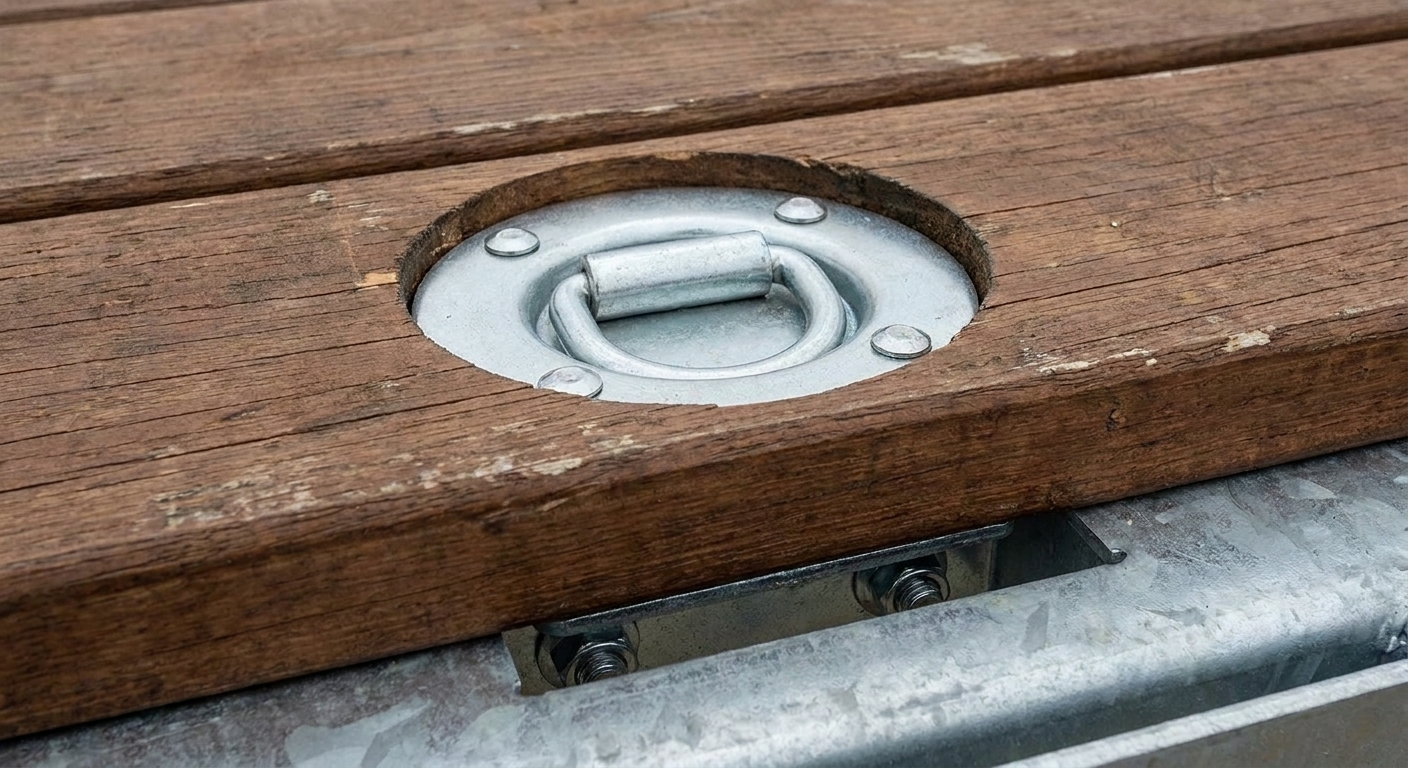
Recessed D-rings are the unsung hero on flatbed and utility trailers. When they are installed correctly, they give you strong, low-profile anchor points that do not trip you up or get smashed by tires.
Why they are worth it
- Safer footing when walking on the deck.
- Cleaner tie-down angles for low equipment.
- Less chance of bending an exposed ring when loading.
What to look for
- Rated recessed pan + ring with WLL stamped or documented.
- Backing plates or reinforcement recommended by the manufacturer.
- Corrosion resistance if you see road salt or boat ramps.
Common mistake: Installing D-rings “where it’s convenient” instead of where structure supports them. If you cannot confidently describe what you bolted into, pause and re-think the install.
4) Cargo net
Cargo nets do not replace straps for heavy equipment, but they are excellent for the stuff that wants to bounce out or shift around: coolers, totes, tarps, camp gear, and those “I’ll just toss it in there” items.
Where nets shine
- Keeping lighter items from becoming road hazards.
- Containing odd shapes that are hard to strap evenly.
- Adding a redundant layer over a pile of gear.
What to look for
- Edge webbing and strong hooks or soft loops.
- Appropriate size so it stretches slightly when installed, not maxed out.
- UV-resistant material if it lives on an open trailer.
Ben’s tip: If the net’s hooks can scratch paint or powder coat, run a short soft loop or a rag at the contact point. It keeps things nice and also helps the hook stay put.
5) Corner protectors
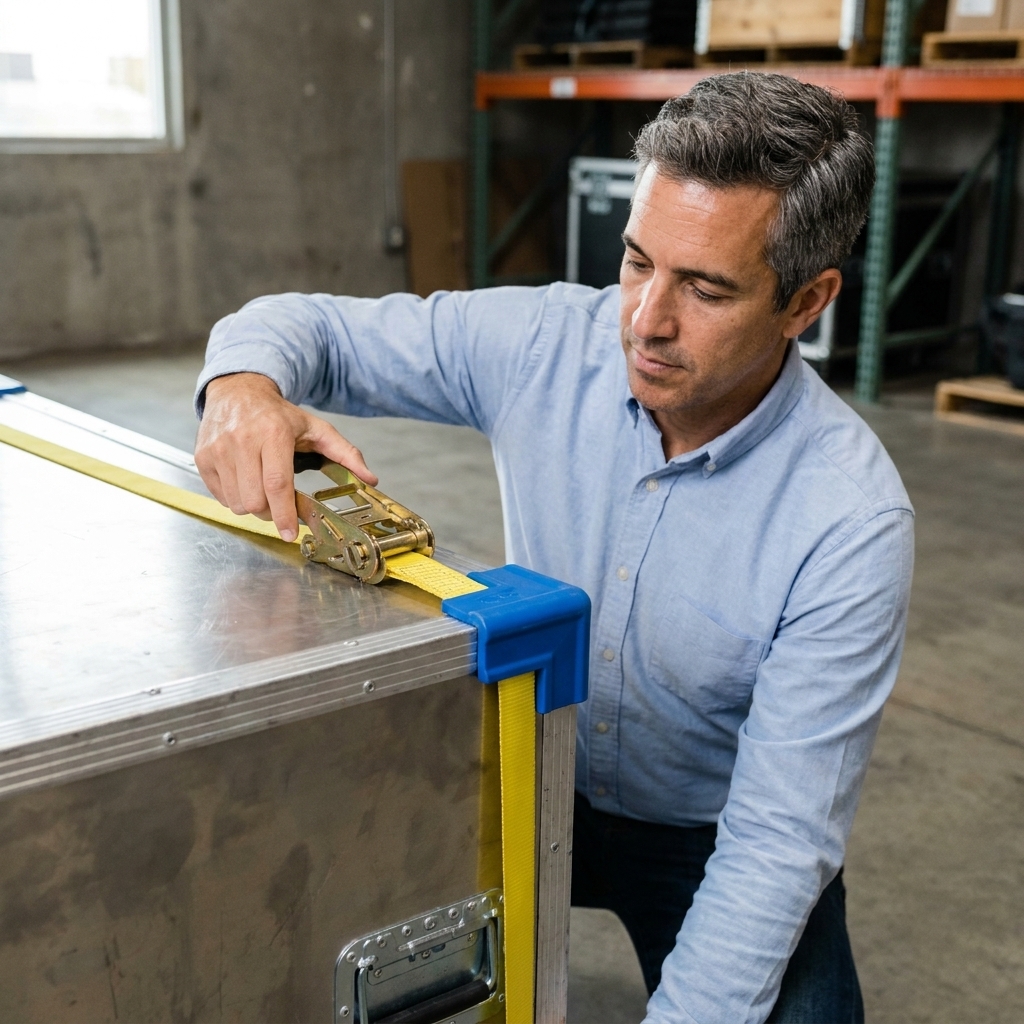
One of the fastest ways to lose strap tension is to run webbing over a sharp edge. Even “not that sharp” edges chew straps over time. Corner protectors spread the load and keep your straps from getting cut, frayed, or worn down by vibration.
Why they matter
- Protects the strap, the cargo, and your trailer rails.
- Helps straps stay centered instead of migrating off an edge.
- Reduces stress points that lead to sudden strap failure.
What to look for
- Heavy plastic or rubber for general use, or reinforced models for rough equipment edges.
- Grooves that fit your strap width.
- Retention features so they do not fall off while you are tightening.
6) Axle straps and soft loops
If you haul vehicles, tractors, UTVs, or anything with suspension, axle straps and soft loops are a safer way to create tie-down points without hooking directly onto lines, control arms, or random holes that were never meant to be anchors.
Why they are safer
- Reduces the chance of slipping off a questionable hook point.
- Prevents damage to brake lines, ABS wires, and powder-coated parts.
- Gives you repeatable tie-down points every time you load.
What to look for
- Wear sleeves where the strap contacts the axle or frame.
- Stitched eyes that lay flat and look clean, no loose threads.
- WLL labeling, just like any other securement gear.
Quick reminder: If you are tying down a vehicle, decide whether you are securing by the tires, the axle, or the frame, then set up your straps accordingly. Mixing methods can be fine, but do it on purpose. The trouble starts when your straps fight suspension travel and tension changes as the vehicle settles.
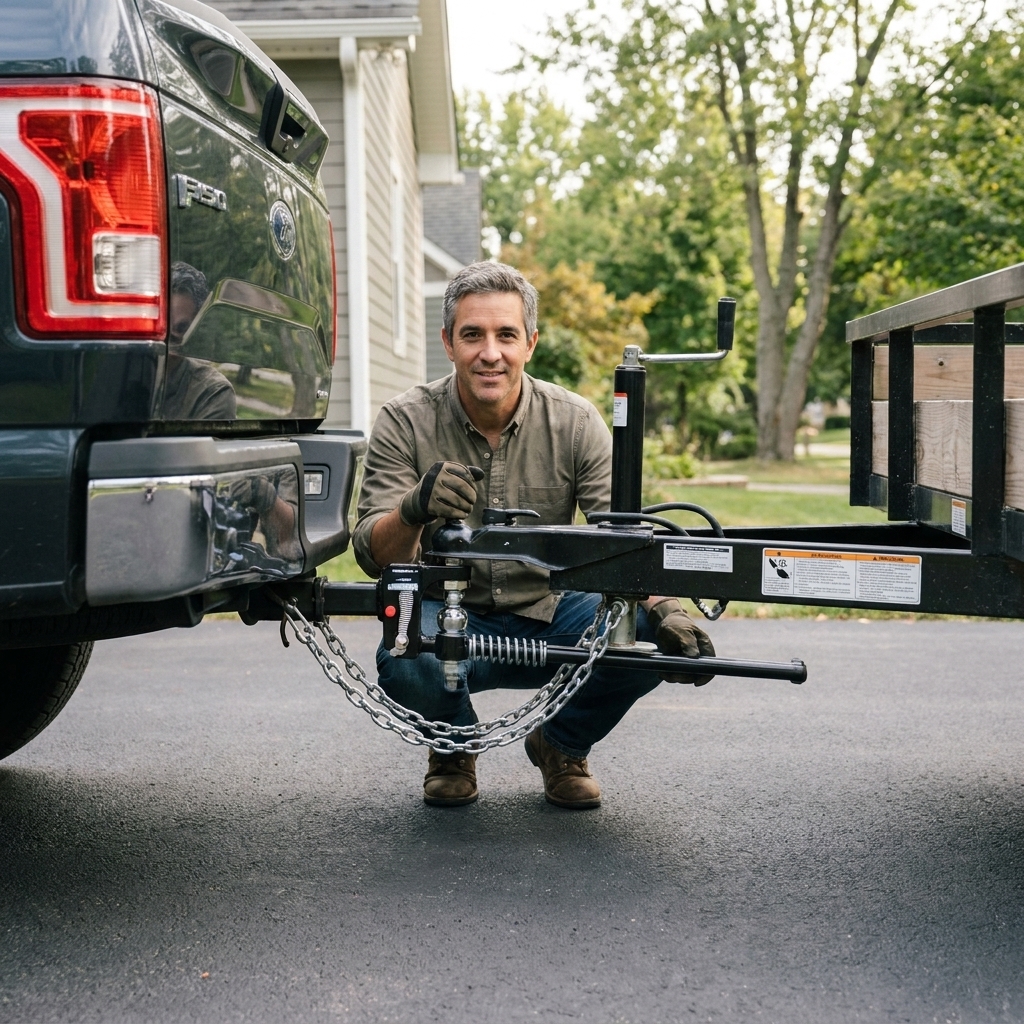
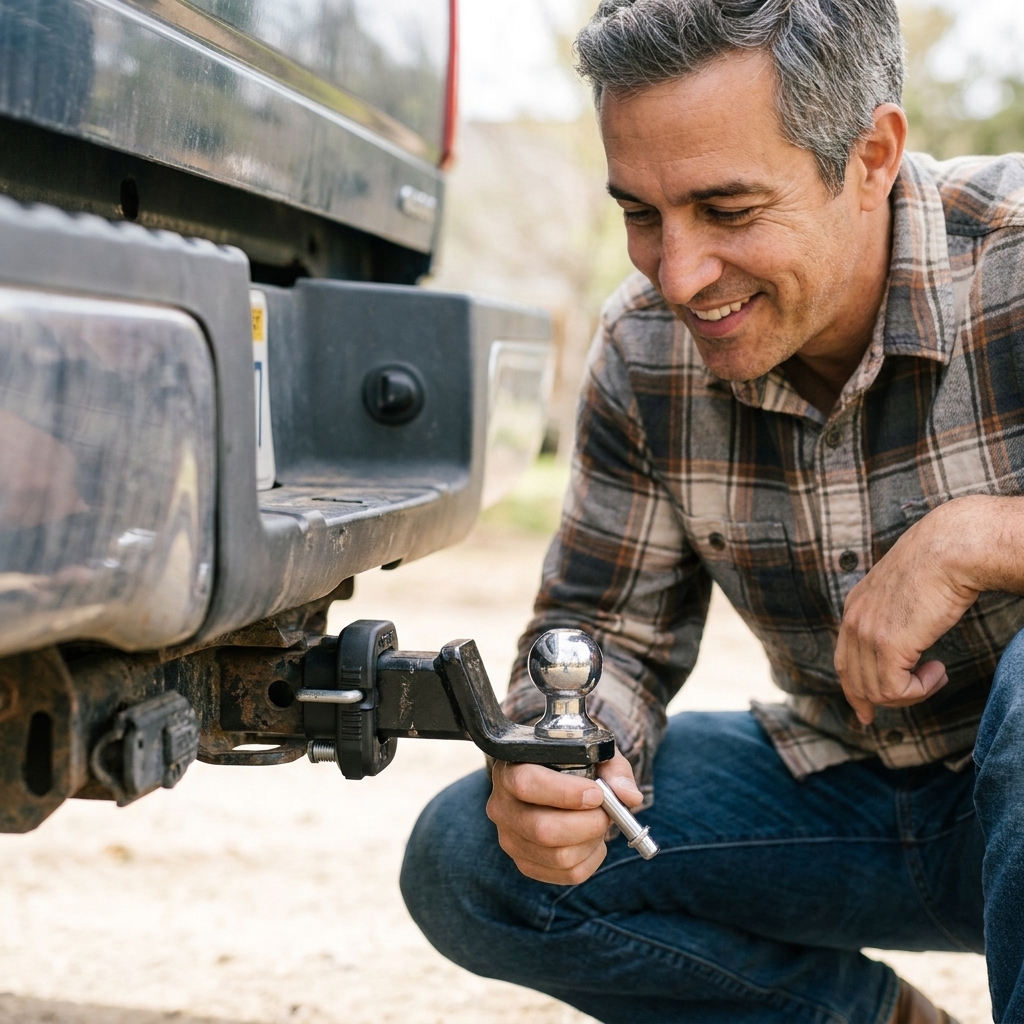
7) Anti-rattle hitch clamp
This one is not a tie-down accessory for your cargo, but it helps your whole towing setup feel safer and more predictable. If your ball mount or hitch accessory clunks around in the receiver, that movement can add noise and unnecessary play you feel through the truck.
Why it helps
- Reduces receiver slop and noise.
- Helps keep your hitch setup feeling tight and predictable.
- A locking pin adds theft resistance when you stop for fuel or food.
What to look for
- Clamp style that matches your receiver size (2-inch and 2.5-inch are most common on trucks).
- Solid hardware that will not loosen itself constantly.
- Weather resistance if you live in the salt belt like I grew up with in Ohio.
My go-to tie-down kit
If you want a simple shopping list that covers 90 percent of real-world hauling, here is what I keep on hand:
- E-track (or a few rated D-ring anchors) so you are not improvising anchor points
- 4 to 8 heavy-duty ratchet straps in mixed lengths
- 2 axle straps or soft loops for equipment and vehicle tie-down points
- A small stack of corner protectors
- A cargo net for loose items
- An anti-rattle clamp and a locking hitch pin
- Gloves and a small strap winder or Velcro strap keepers to prevent tangled straps
Two add-ons I recommend for equipment hauling: wheel chocks (to keep things from rolling while you are strapping) and a couple of properly rated chains and binders for situations where straps are not the right tool.
Common tie-down mistakes
- Depending on bungees for anything that would hurt someone if it came off.
- Hooking to weak or unrated points like light-duty stake pockets, thin angle iron, or wood-only rails.
- Over-tightening to “feel safe” and crushing cargo or damaging equipment.
- No redundancy: one strap does all the work. Two moderate straps are often safer than one maxed-out strap.
- Ignoring strap angles: a strap pulling mostly upward does not stop forward movement during braking.
If you hit the brakes hard and your cargo would slide into your trailer’s front rail, you need more forward restraint. Think like physics, not like optimism.
One concrete angle tip: I like opposing pulls when possible. If you can run straps that pull forward and back (or at least at low, opposing angles), the load has a much harder time starting any kind of slide.
Quick strap check
I treat straps like tires. They do not fail when it is convenient.
- Retire straps with cuts, melted spots, heavy fraying, or torn stitching.
- Watch for UV damage on straps that live in the sun. Fading and stiffness are clues.
- Do not ignore bent, cracked, or rusty hardware that does not move smoothly.
FAQ
How many straps do I need?
There is no single number because it depends on weight, shape, and how the load can move. My rule is to use enough straps that if one loosens, the load still stays put. For equipment, I typically run at least four points when possible, with good strap angles.
Are E-track tie-down points strong enough for equipment?
Quality track and fittings can be strong enough for many loads, but the real question is how it is mounted and whether the trailer structure supports it. Through-bolted into structure with backing plates is what you want. If it is only screwed into plywood, treat it as a light-duty cargo organizer, not your primary equipment anchor.
Ratchet straps vs cam buckle straps: which is better?
For heavier loads and anything that can shift, I prefer ratchet straps because they hold tension better. Cam straps are great for lighter items and things you do not want to crush, like kayaks or some furniture, as long as the WLL is appropriate.
Do I need corner protectors if my strap is not rubbing?
If there is any edge contact, vibration will eventually turn “not rubbing” into rubbing. Corner protectors are cheap insurance, especially on painted equipment edges, metal trailer rails, and lumber stacks.
Final thought
Safe tie-downs are not about having the fanciest gear. They are about removing weak links. Add adjustable anchor points, use rated hardware, protect your straps from edges, and build in a little redundancy. Your future self, and everyone behind you on the highway, will appreciate it.