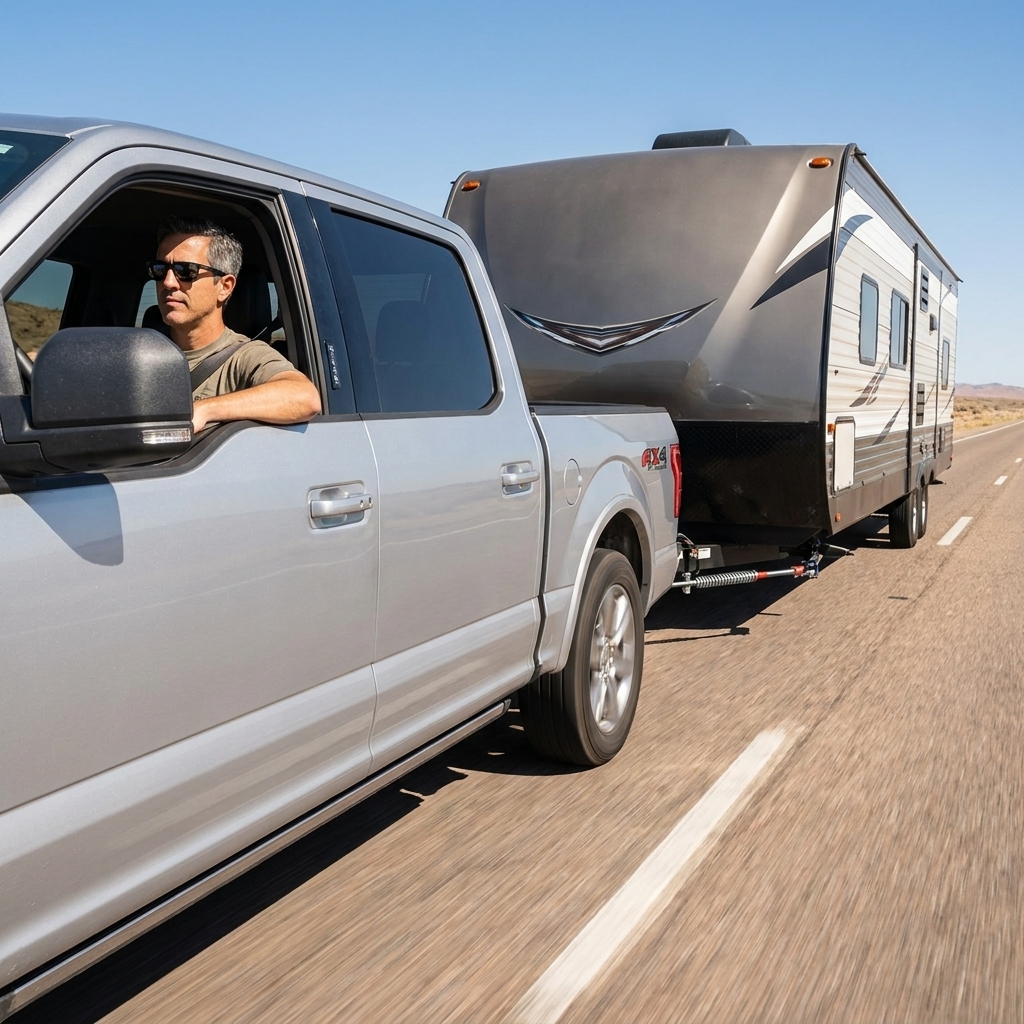
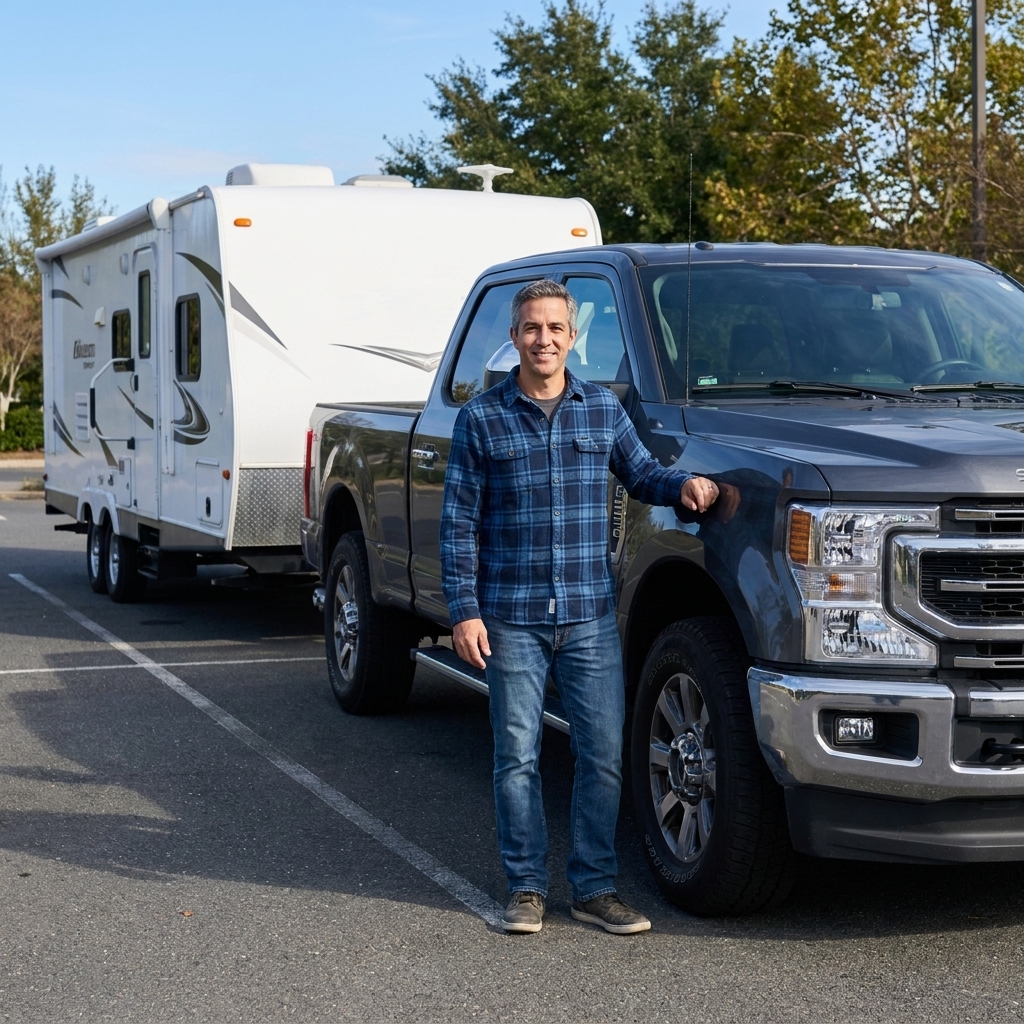
Trailer sway has a way of showing up at the worst possible time. One gust, one passing semi, one downhill curve, and suddenly your trailer is wagging the dog. The good news is sway is usually a setup problem you can fix in the driveway, not a mystery you have to “drive through.”
In this guide, I’ll walk you through what causes trailer sway, what to do if it starts happening on the highway, and how to prevent it for good with proper tongue weight, better loading, and the right sway control devices.
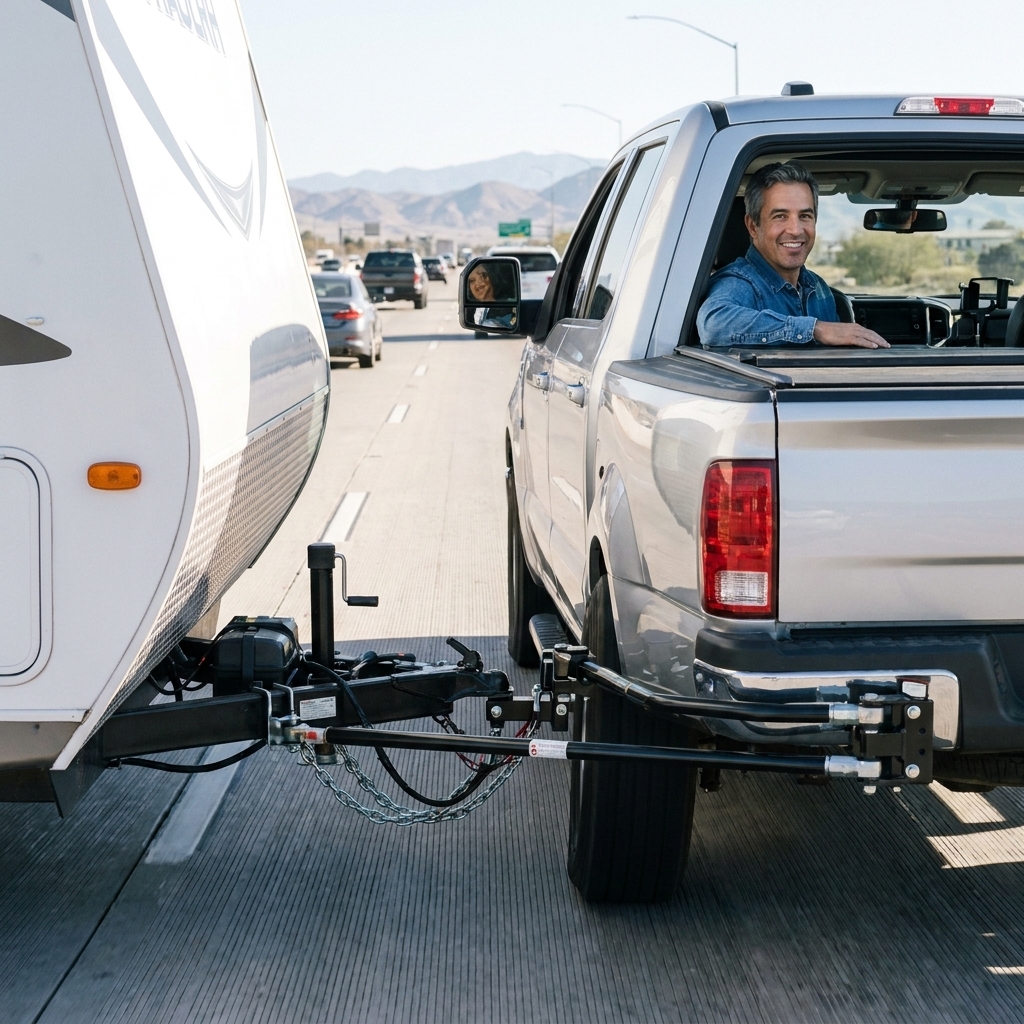
What trailer sway feels like (and why it’s dangerous)
Trailer sway is that side-to-side oscillation where the trailer starts steering the back of your tow vehicle. At first it feels like a light wiggle. If you ignore it, it can build into violent fishtailing fast.
Once the sway rhythm gets going, your steering inputs can accidentally feed it, kind of like pushing a kid on a swing at the wrong moment. That’s why “I’ll just correct it” sometimes makes it worse.
- Mild sway: You feel the trailer nudge the truck and you make little steering corrections.
- Moderate sway: The trailer starts moving the rear of the truck, especially after bumps or when a semi passes.
- Severe sway: Repeated fishtailing, loss of lane control, and a real rollover risk.
What causes trailer sway
Sway usually comes from one of these buckets: weight distribution, hitch setup, tires and suspension, or driving conditions. Most of the time, the root cause is not enough tongue weight or a load that’s too far rearward.
1) Too little tongue weight (the big one)
Think of tongue weight like the “hand pressure” that keeps a wheelbarrow stable. Too light on the tongue and the trailer wants to pivot around the axle. Too heavy and you overload the truck’s rear axle and reduce steering control. We’re aiming for the sweet spot.
2) Cargo loaded behind the trailer axles
Heavy gear behind the axle turns your trailer into a pendulum. Coolers, generators, toolboxes, and firewood piles at the very back are common culprits, especially in travel trailers and utility trailers.
3) No weight distribution (or the wrong setup)
A weight distribution hitch (WDH) does two helpful things: it restores some weight to the front axle of the tow vehicle and helps level the rig. If it’s set wrong, you can still sway and you can also create handling problems.
4) Soft suspension, worn parts, or sloppy coupler fit
Worn suspension bushings, weak shocks on the tow vehicle, loose spring hangers, a bent component, or a coupler that doesn’t lock up tight on the ball can all amplify sway. The trailer should feel like it’s firmly “connected,” not like it has play.
5) Tire issues (pressure, rating, or sidewall stiffness)
Underinflated trailer tires allow more sidewall flex, which lets the trailer wander and start oscillating. Also watch for passenger tires used where ST (special trailer) tires or LT tires are required. Stiffness matters when you’re towing.
6) Speed, wind, and passing trucks
Even a solid setup can get pushed around by crosswinds or a big rig’s bow wave. Speed is the multiplier. Many sway incidents start because the rig was right on the edge, then speed and wind pushed it over.
7) Too much trailer for the tow vehicle
If you are overloaded on payload, tongue weight, receiver rating, or your trailer is simply beyond what the vehicle is designed to control, sway becomes more likely and harder to stop. Ratings are not paperwork. They are stability and braking limits.
What to do right now if sway starts
If sway begins, the goal is to calm the oscillation without feeding it. Your owner’s manuals and your brake controller and hitch manufacturer instructions always win, but these steps line up with common towing guidance.
- Hold the wheel straight and steady. Keep your eyes far ahead and resist the urge to countersteer. Avoid big corrections.
- Ease off the throttle. Let the rig slow down gradually. Avoid sudden or aggressive tow-vehicle braking.
- Use the manual trailer brake lever (if equipped). Apply it smoothly and firmly as needed to pull the trailer straight behind you. In most cases, you want trailer brakes without adding tow-vehicle brakes.
- Do not accelerate. Speed makes sway worse, even if it feels like you want to “power through.”
- Once stable, get off the road and inspect. Find a safe shoulder or exit and fix the cause before continuing.
One driveway-fence rule: If sway happened once, it can happen again. Treat it like a warning light, not a one-off moment.
Fix #1: Set the right tongue weight
For most bumper-pull trailers, a solid target is 10 to 15 percent of the trailer’s total loaded weight on the hitch (tongue weight). It can vary by trailer design and axle placement, so your trailer manufacturer guidance matters too.
- Light utility trailers: often happiest closer to 10 to 12 percent
- Travel trailers: often tow better closer to 12 to 15 percent
Quick tongue weight math
If your trailer weighs 6,000 lb loaded, you generally want:
- 10%: about 600 lb tongue weight
- 15%: about 900 lb tongue weight
If your tongue weight is 350 lb on a 6,000 lb trailer, you have a sway invitation.
How to measure tongue weight
- Best: Use a tongue weight scale.
- Good: Use a public scale and take axle weights (tow vehicle alone, then combined, then tongue weight math).
- DIY: Use a bathroom scale with a lever setup for lighter tongues (only if you know what you’re doing and it’s within the scale’s limits).
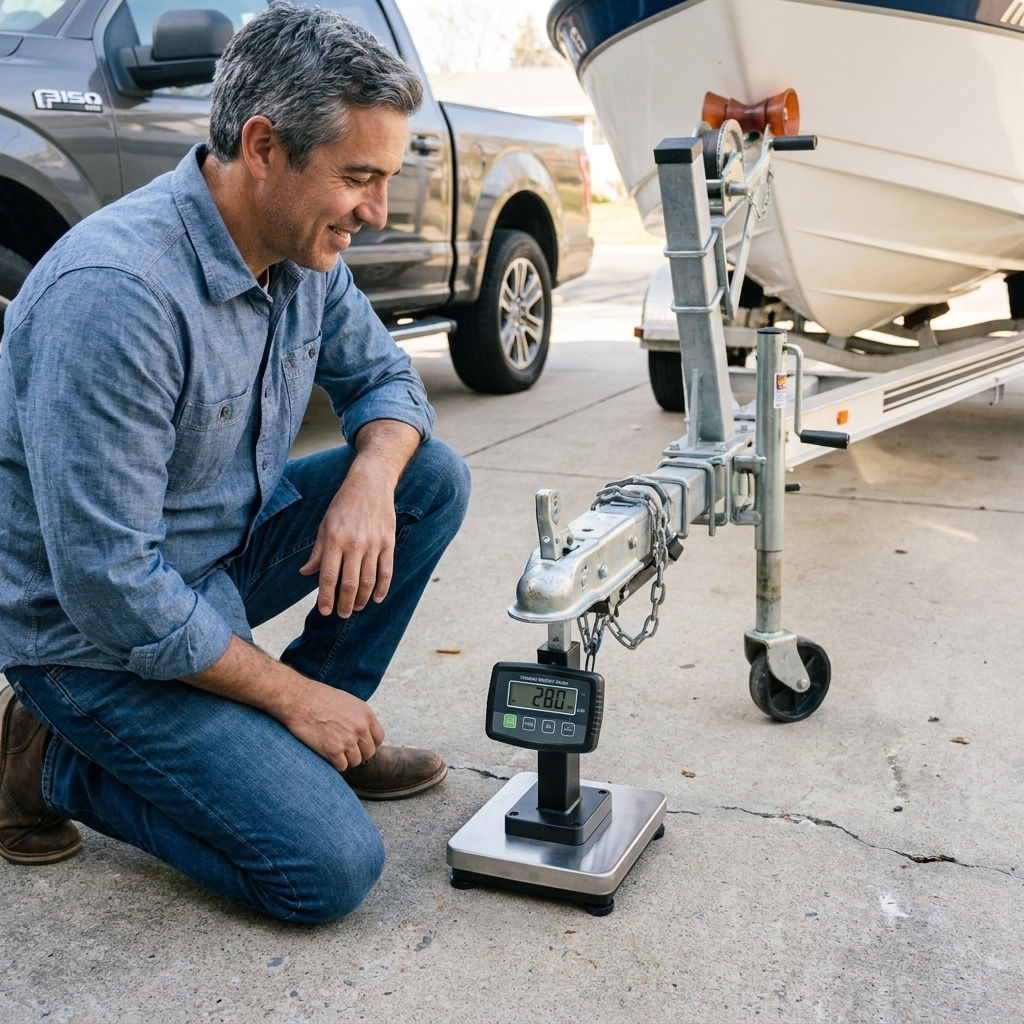
Fix #2: Load it the right way
If you only change one thing today, change how you load.
Loading rules that prevent sway
- Keep heavy stuff low and close to the axles. Not in the rear bumper storage. Not stacked high.
- Aim for a slight forward bias. You want the trailer naturally pulling forward, not pushing from the back.
- Balance left to right. Side-to-side imbalance can cause a lean and encourage wandering.
- Secure everything. Shifting cargo changes tongue weight mid-trip, which is a nasty surprise.
Travel trailer note: Rear cargo racks, rear kitchen storage crammed with heavy gear, and bikes on the back bumper are common sway starters. If you add weight behind the axle, you usually need to add more weight forward to compensate, and you still might not like how it tows.
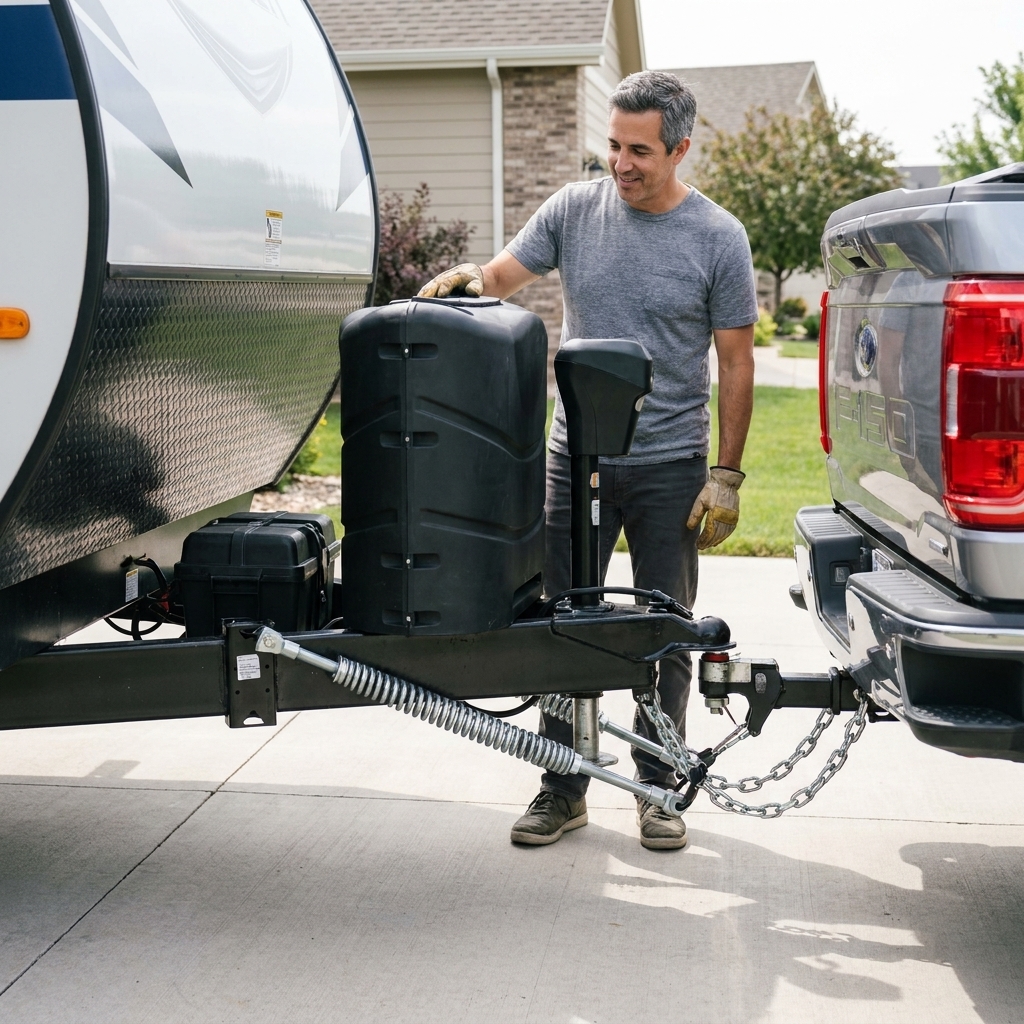
Fix #3: Set up your WDH correctly
A weight distribution hitch is not just about looks. It’s about keeping your front axle planted so you can steer and brake normally.
WDH setup checkpoints
- Start on level ground: Measure front and rear fender heights before hitching.
- Hitch up and tension the bars: Your goal is restoring front axle load. Fender height is a useful proxy, but follow your tow vehicle and hitch instructions for targets.
- Re-check head angle and washer stack (if applicable): Small changes make a big difference.
- Confirm ball height: Trailer should tow level or slightly nose-down.
If you are nose-up, you are unloading the tongue and encouraging sway. If you are nose-down too far, you can overload the tongue and rear axle. Level is the goal.
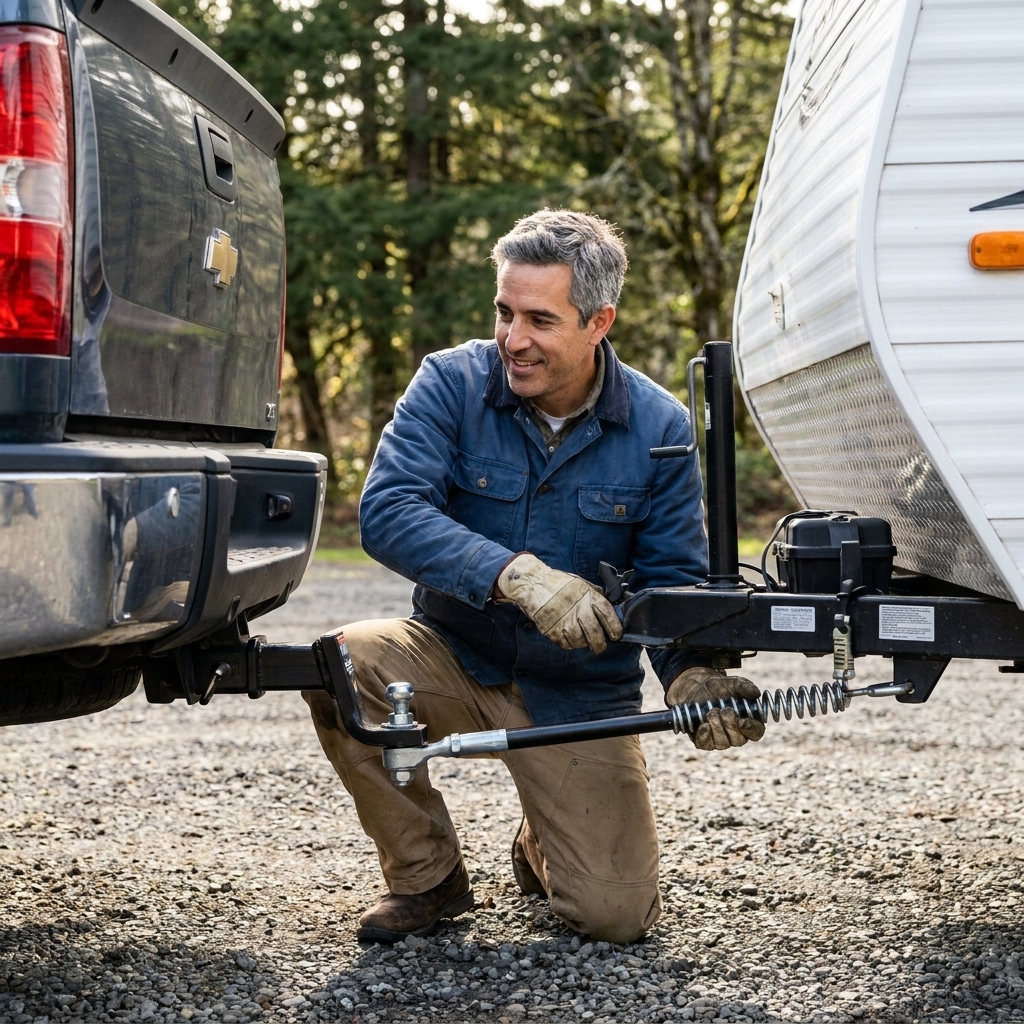
Fix #4: Add the right sway control
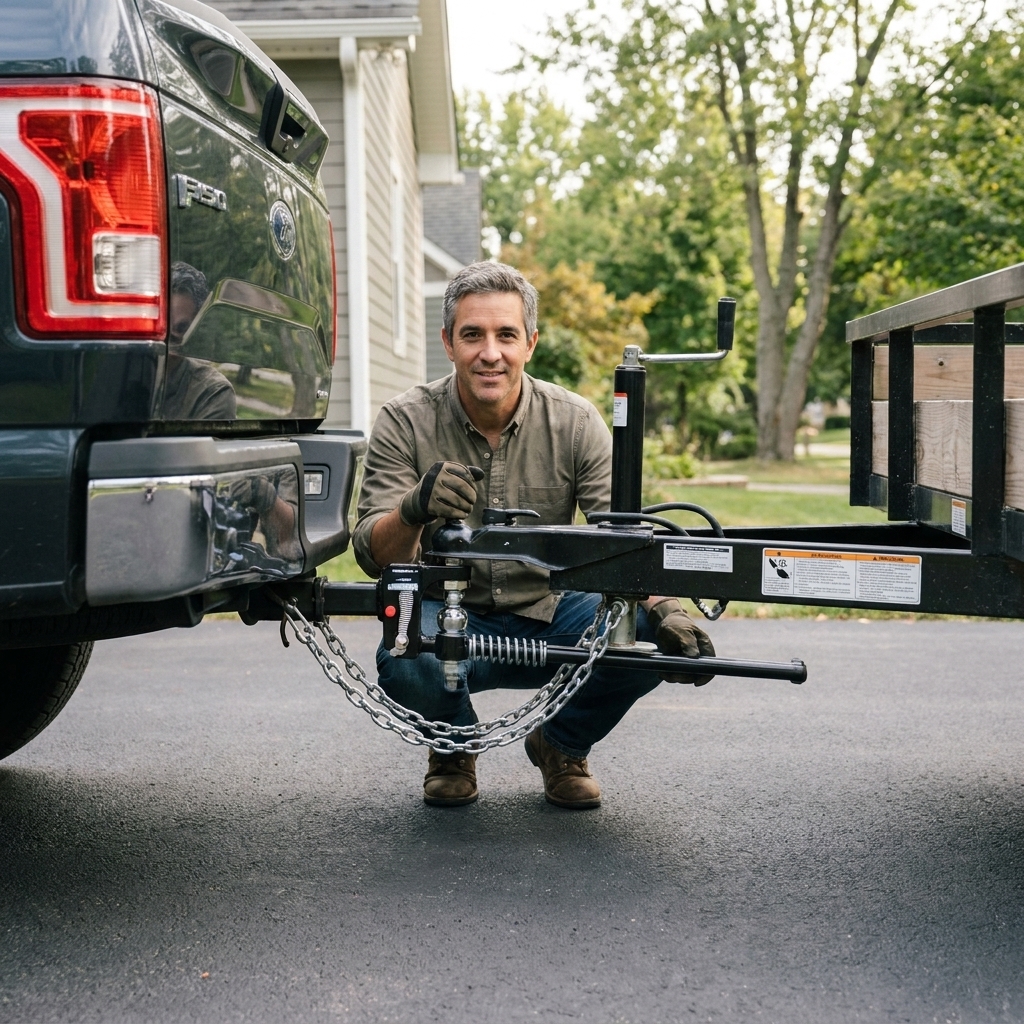
Sway control is a tool, not a permission slip to tow a poorly loaded trailer. But when your tongue weight and loading are right, sway control devices can make towing noticeably calmer. Always follow your hitch manufacturer’s rules for backing, rain, snow, ice, and off-road use.
Friction bar sway control
This is the classic add-on bar that resists pivoting between the tow vehicle and trailer.
- Pros: Affordable, simple, helps with light to moderate sway tendencies.
- Cons: Needs adjustment, can be noisy, and may need to be loosened or removed for backing or slick conditions depending on the manufacturer.
Integrated sway control WDH
Many modern WDH systems build sway resistance into the hitch design.
- Pros: Stronger sway control than a single friction bar for many setups, less fiddling.
- Cons: Costs more, still needs proper setup and correct tongue weight.
Dual-cam and active centering systems
These systems help center the trailer behind the truck and resist sway at the source.
- Pros: Excellent for longer travel trailers and higher wind exposure.
- Cons: More complex setup, may require more precise adjustment.
My practical take: If you tow a long travel trailer a few times a year in mixed weather, a quality integrated sway control WDH is usually money well spent. If you tow a short utility trailer occasionally, correct tongue weight and good tires often solve it without fancy hardware.
Fix #5: Tires and maintenance checks
When folks ask me why their trailer “suddenly” started swaying, tires and maintenance are often hiding in the background.
Tow vehicle checks
- Rear tire pressure: Follow the door placard and your tire manufacturer guidance for the load you are carrying. Soft rear tires equal squirm.
- Suspension and shocks: Worn rear shocks let the rig bounce, which can start oscillations.
- Hitch receiver and ball: Correct ball size, torqued properly, no slop.
Trailer checks
- Trailer tire pressure: Follow the trailer placard and tire manufacturer guidance. Many ST tires are rated at the maximum cold pressure listed on the sidewall, but do not assume. Verify.
- Tire condition: Dry rot, bulges, uneven wear. Replace if questionable.
- Bearings and hubs: Hot hubs can signal bearing or brake issues that need attention before they turn into a roadside failure.
- Suspension: Look for broken leaf springs, worn shackles, loose U-bolts, or signs of a bent axle.
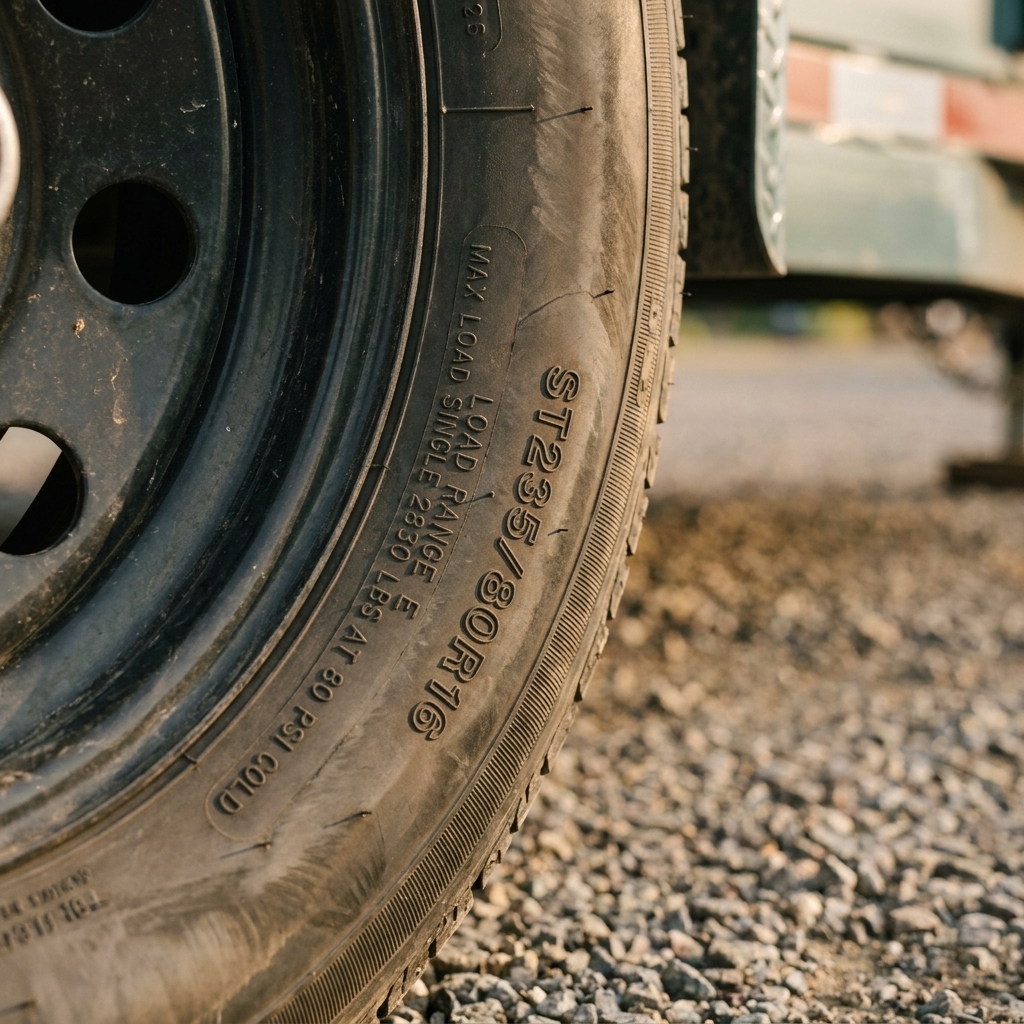
Don’t ignore ratings
A stable tow starts on paper. Before you chase sway with hardware, make sure you are not asking the tow vehicle or hitch to do something it cannot.
- Tow rating and GCWR: Stay within your tow vehicle limits for combined weight.
- Payload: Tongue weight counts as payload, and so do passengers and cargo in the truck or SUV.
- Receiver and hitch ratings: Verify max trailer weight and max tongue weight (and the ratings when using weight distribution).
- Ball and coupler ratings: Match sizes and ratings, and replace worn parts.
When to stop and get help
If you correct tongue weight, loading, and hitch setup and the trailer still wants to wag, it is time to stop guessing.
- Repeated sway events on calm days at reasonable speeds
- Visible damage or odd wear (bent components, cracked welds, abnormal tire wear)
- A trailer that will not tow straight even after basic setup corrections
A qualified trailer shop can check axle alignment, suspension wear, frame issues, brake function, and coupler fit. Those problems are less common than loading and tongue weight, but they are real.
Prevention checklist
- Confirm tongue weight is about 10 to 15 percent of loaded trailer weight (or per manufacturer guidance).
- Load heavy cargo low and near the axles, not at the rear.
- Trailer tows level or slightly nose-down.
- WDH is set so the front axle feels planted and measurements match your hitch and vehicle guidance.
- Tires (truck and trailer) are at correct cold pressures.
- All cargo is strapped down.
- Brake controller is adjusted and you can manually apply trailer brakes smoothly.
- Plan your speed. If conditions are windy, slow down early.
Common questions
Should I speed up or slow down to stop sway?
Slow down gradually. Do not accelerate. If you have a brake controller, use the manual lever smoothly and firmly as needed while keeping the wheel straight. Follow your controller and tow vehicle guidance.
Can too much tongue weight cause sway?
Too much tongue weight usually causes sag, poor braking, light steering feel, and overloaded axles. It’s less likely to cause classic fishtailing, but it can still make the whole setup unsafe. Aim for the 10 to 15 percent range, follow the trailer’s guidance, and stay within ratings.
Why does sway happen when trucks pass?
Big rigs create a pressure wave. First it pushes your trailer away, then it pulls it toward the truck as it passes. If your rig is marginal on tongue weight or speed, that push-pull can start oscillation.
Do I need sway control for a travel trailer?
Often, yes. Travel trailers have big flat sides that catch wind, and many are long enough to benefit from sway control even with good tongue weight. The longer and taller the trailer, the more helpful sway control becomes.
Is it safe to tow nose-up?
Usually not. Nose-up reduces effective tongue load and can make sway more likely. Adjust ball height and WDH setup so the trailer runs level or slightly nose-down.
Bottom line
Trailer sway is not something you should “get used to.” When your tongue weight is right, your load is centered and secured, your hitch is set up correctly, your tires are properly inflated, and your ratings are respected, towing gets boring in the best possible way.
If you want the fastest path to a calmer tow, start with tongue weight and loading. Then add sway control to polish the setup, not to cover up a problem.