If you have ever watched a trailer tug the back of a truck down like a kid sitting on the tailgate, you have already seen the difference between a standard hitch and a weight distribution hitch (WDH). One is basically a strong, simple connector. The other is a tool that helps your truck and trailer share the load more evenly so your steering, braking, and handling stay predictable.
This is one of those towing decisions that feels optional until it does not. Let’s walk through what each hitch type actually does, how to tell what you need, and how to set it up so the whole rig feels planted instead of “busy” at highway speeds, meaning you are making constant little steering corrections or bouncing over every dip.
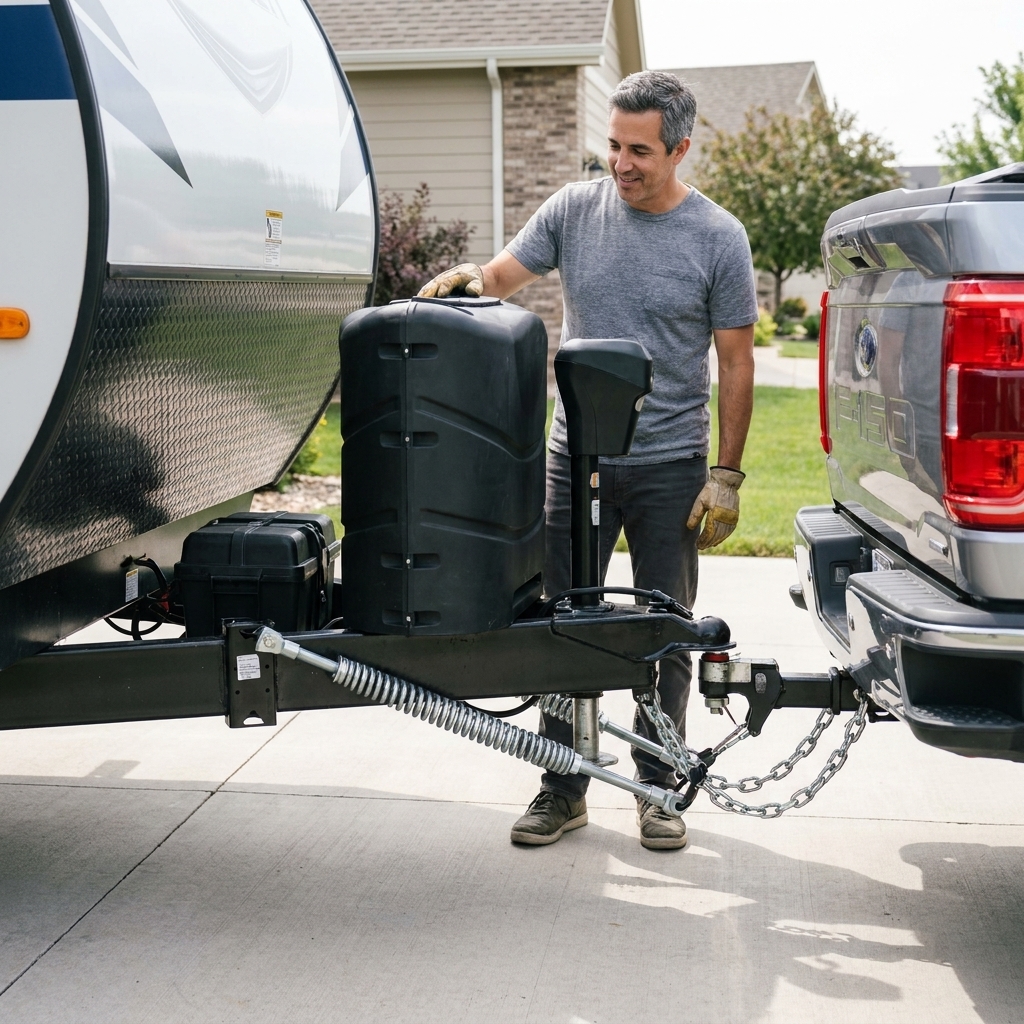
Standard hitch vs. weight distribution hitch
What a standard hitch does
A standard hitch (also called a deadweight or weight-carrying hitch, often labeled WC) is the normal ball mount and hitch ball setup. It supports the trailer tongue weight directly on the rear of the tow vehicle.
- Pros: simple, cheaper, quick to hook up, less hardware
- Cons: all tongue weight acts like a lever around your rear axle, which can squat the truck and lighten the front end
What a weight distribution hitch does
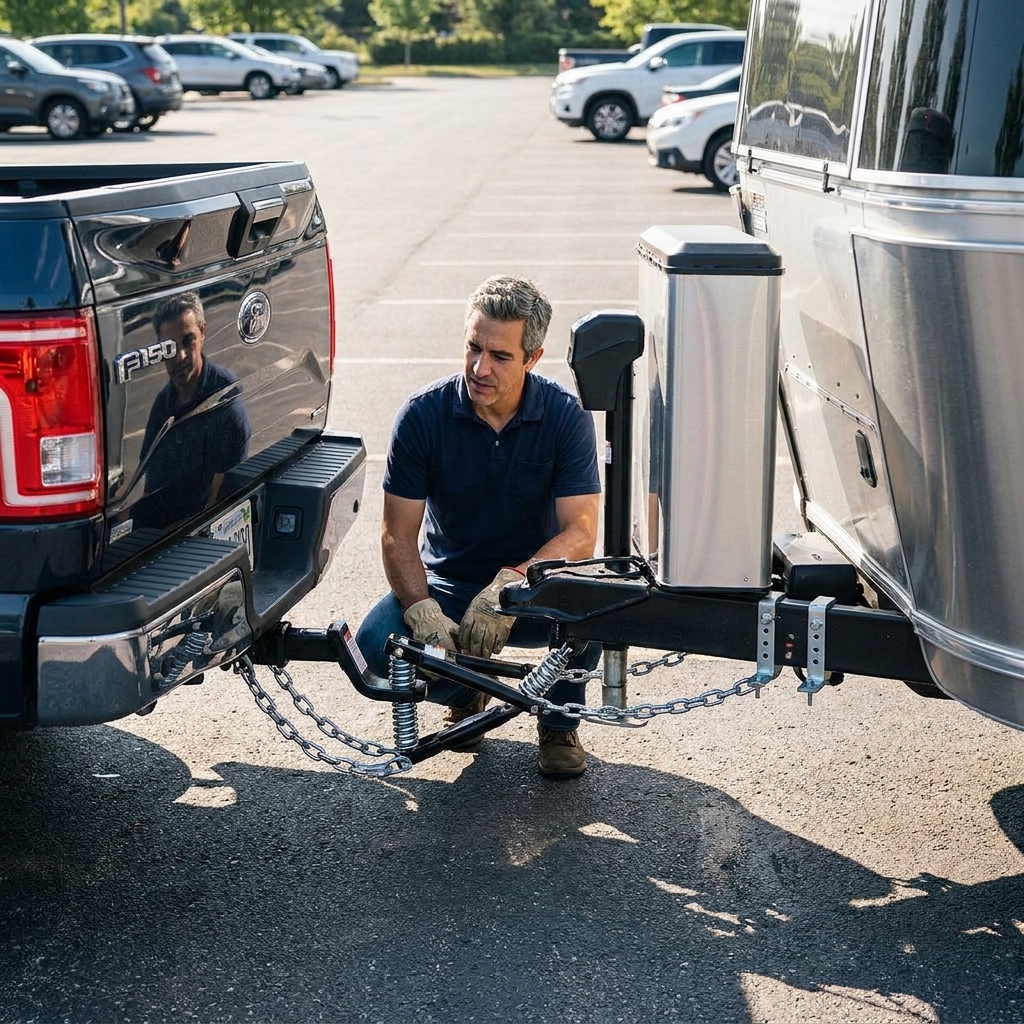
A weight distribution hitch uses spring bars (or similar tensioning arms) to apply leverage between the trailer A-frame and the hitch head. That leverage helps transfer some of the tongue weight forward onto the tow vehicle’s front axle and back onto the trailer axles.
The goal is not “no squat.” The goal is better axle balance, which usually means better steering feel, more even braking, and less porpoising over dips.
- Pros: helps restore front axle load, improves stability, can reduce sway when paired with sway control
- Cons: costs more, takes more time to set up, requires correct sizing and adjustment
Why tongue weight changes handling
Here’s my driveway-fence version: your truck is a seesaw. When you drop 600 to 1,000 pounds of tongue weight on the back, it creates a lever effect around the rear axle. The back goes down, and the front gets lighter.
That lighter front end is where trouble starts:
- Less steering authority: the tires are carrying less weight, so the steering can feel vague or floaty
- Longer or less predictable stopping: front tires and front brakes do a lot of the work in a hard stop, and tongue weight can reduce front-axle traction and change how brake balance and ABS feel
- Headlights aimed high: not dangerous by itself, but it is a clue your axle balance is off
- More sway sensitivity: a rig that is already “unloaded” on the front tends to react worse to crosswinds and passing trucks
A WDH is basically a tool to fight that seesaw effect.
When you need a WDH (and when you do not)
There is no single universal number because trucks, wheelbases, rear suspension, and trailer geometry vary. But in real-world towing, a few rules of thumb get you close fast.
You likely need a WDH if
- Your trailer is long and boxy (most travel trailers), even at moderate weights
- Your tongue weight is roughly 10 to 15 percent of trailer weight and that number is big enough to noticeably squat the rear
- Your hitch receiver label says “WD required” above a certain trailer weight or tongue weight
- You feel light steering, “push” from the trailer, or bouncing over highway dips
- You are near your payload limit and need to keep the rig stable and predictable
You often do not need a WDH if
- You are towing a small utility trailer or open flatbed that is short and light
- Tongue weight is modest and the truck stays level enough that steering and braking feel normal
- You are using a gooseneck or fifth wheel (different animal entirely, weight sits over or near the rear axle)
Quick safety note: A weight distribution hitch is not a “tow rating booster.” If your truck is over payload, over rear axle rating, or over receiver limits, adding a WDH does not make the setup legal or safe. It just redistributes load within the system.
What receiver labels mean
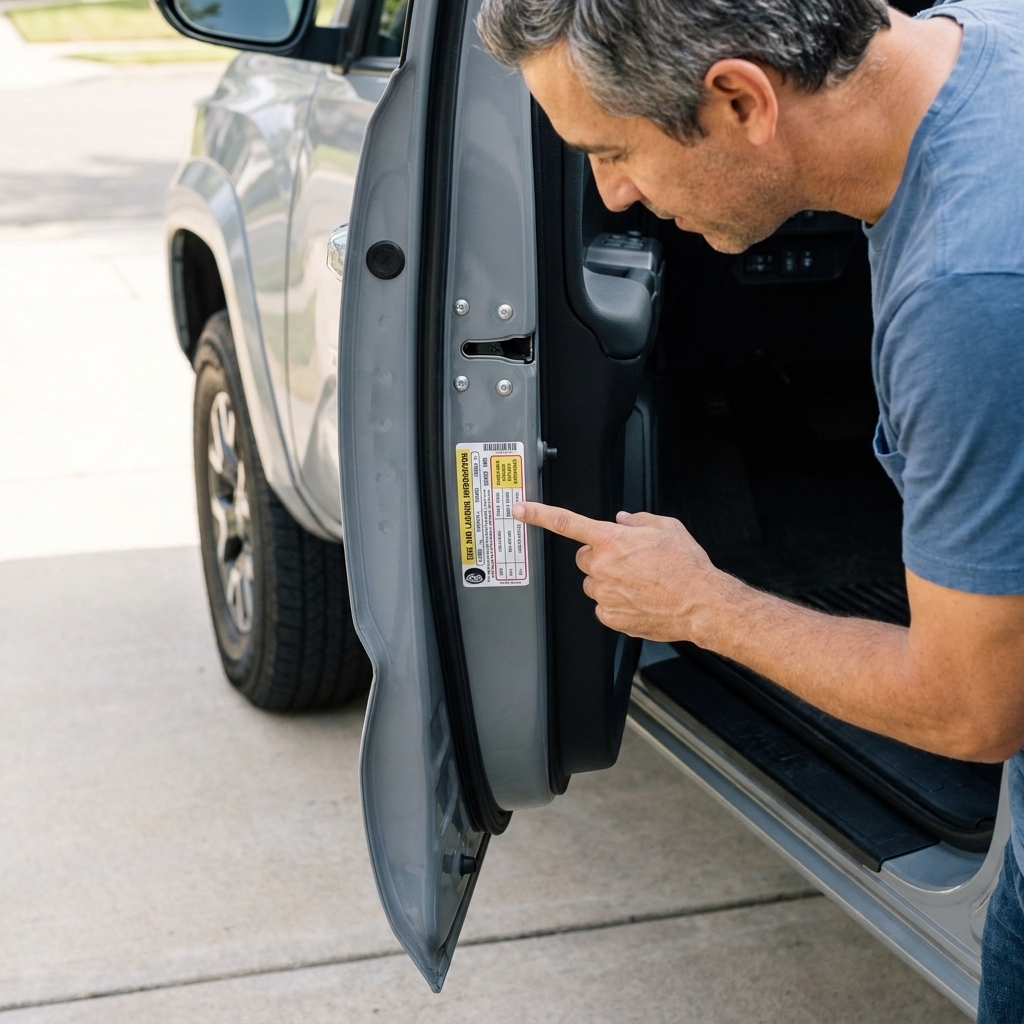
If you crawl under the back of your truck and look at the receiver sticker, you will usually see two sets of limits:
- WC (Weight Carrying): the max trailer weight and max tongue weight when using a standard hitch
- WD (Weight Distributing): the max trailer weight and max tongue weight when using a weight distribution hitch
It is common for the WD rating to be higher than the WC rating. That does not mean you should automatically tow at the WD max. It means the receiver is engineered to handle higher loads when the system is distributing weight properly.
Also, do not read the receiver sticker in a vacuum. The truck’s owner’s manual and tow guide still control what is allowed for your specific vehicle and configuration.
Also check your:
- truck’s payload and rear axle rating (RAWR)
- trailer’s GVWR (max it can weigh loaded)
- hitch ball and ball mount ratings
- tire load ratings on both truck and trailer
Does a WDH prevent sway?
Not automatically.
Weight distribution is mainly about axle balance. Sway is a stability issue caused by a mix of wind, speed, improper loading, soft suspension, and trailer design.
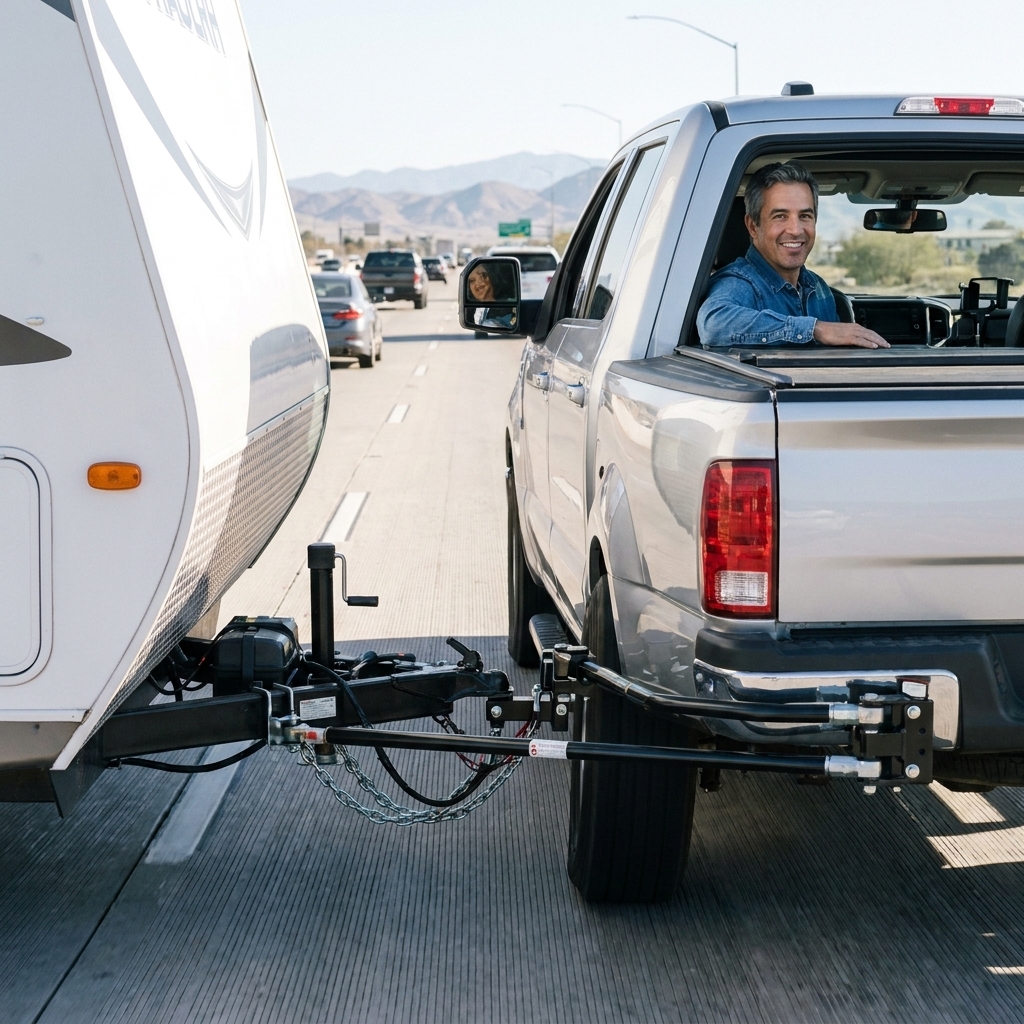
Many modern WDH setups include built-in sway control (friction surfaces, cams, or 4-point systems). Others use add-on friction sway bars. Either can help, but neither replaces proper loading and sane speeds.
Signs you need sway control
- Trailer wiggles when a semi passes
- Trailer feels “loose” in crosswinds
- You find yourself constantly correcting the steering
- Sway is mild at lower speeds but becomes noticeable at highway speeds and gets worse as speed increases
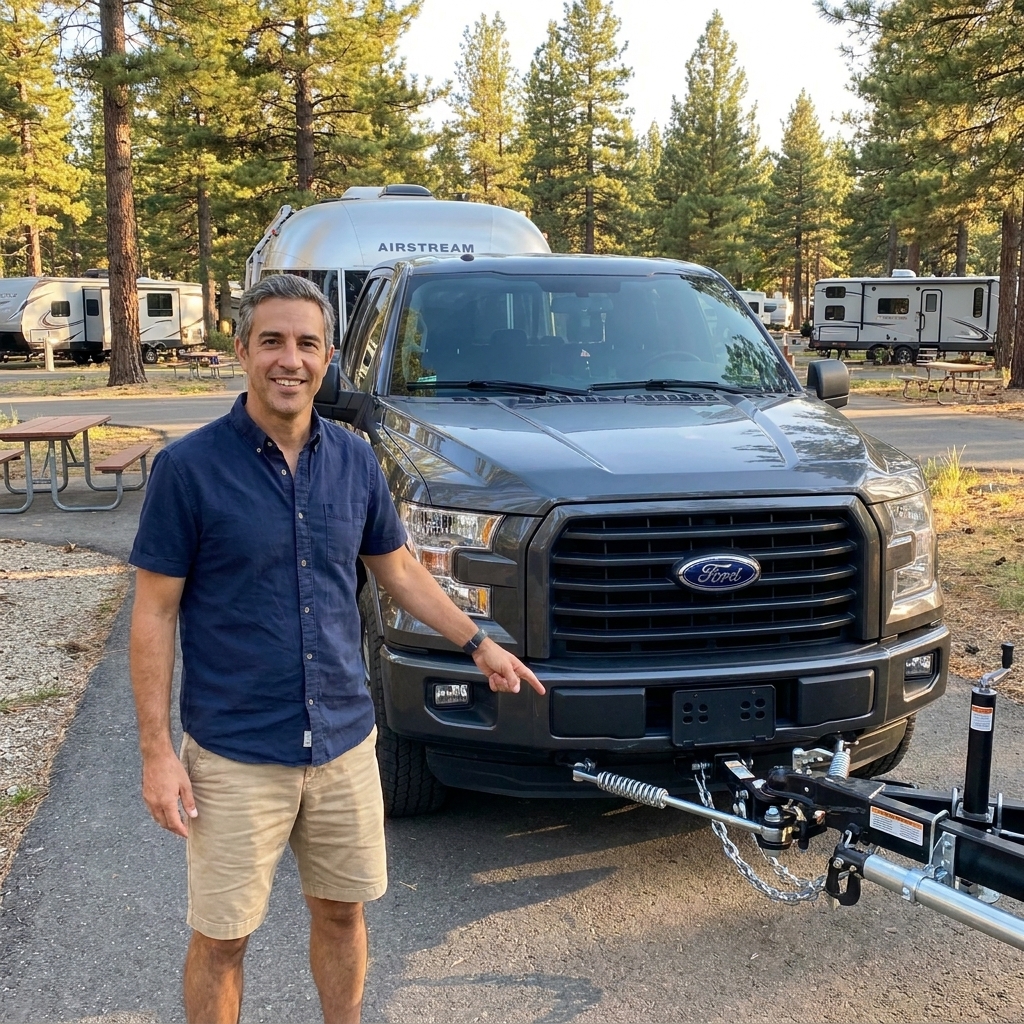
How to choose the right hitch
Step 1: Estimate real tongue weight
Most bumper-pull trailers tow best with 10 to 15 percent of the trailer’s loaded weight on the tongue. Travel trailers often behave better closer to 12 to 15 percent.
Example: a 7,000 lb travel trailer loaded for a trip often wants 840 to 1,050 lb of tongue weight.
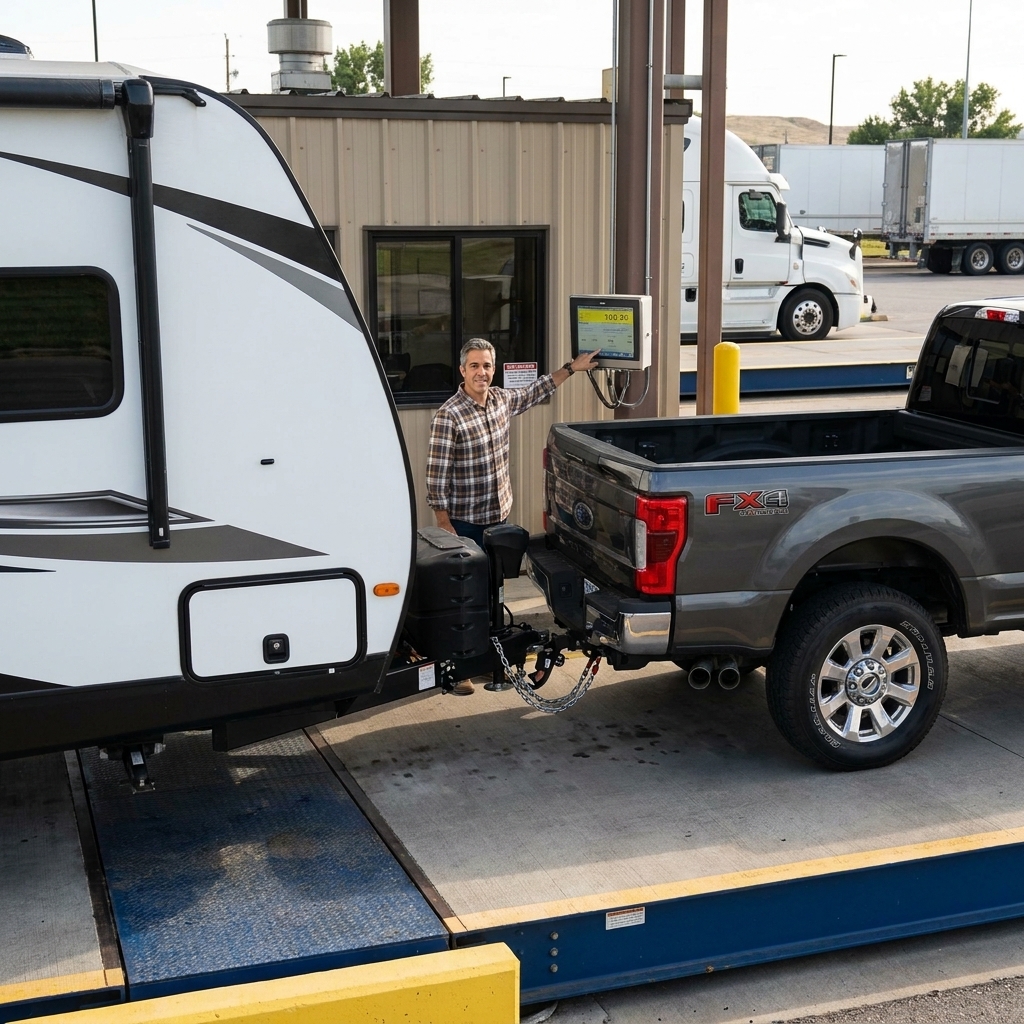
The best way to know is to measure it with a tongue weight scale or a public scale using a few passes. Guessing is how people end up with a trailer that “mysteriously” sways.
Step 2: Match spring bars to loaded tongue weight
WDH spring bars are rated by tongue weight ranges, like 600 to 1,000 lb or 1,000 to 1,400 lb. Pick a range that covers your loaded tongue weight.
- Too light: you cannot distribute enough weight, the rig still feels loose
- Too stiff: harsh ride, extra stress on brackets and frame, can make handling weird
Step 3: Decide on sway control
- Shorter, lighter, open trailers: often fine with no sway control if loaded right
- Most travel trailers: I recommend integrated sway control, especially for family trips and windy routes
- Longer trailers: stronger integrated systems tend to feel calmer
WDH setup basics
I have watched perfectly good trucks tow terribly because the hitch was “close enough.” With WDH, close enough usually means noisy, bouncy, and still a little squirrelly.
One more thing: modern half-tons and SUVs can squat easily even when you are within ratings. Squat is a clue, not the whole diagnosis. What matters is axle load, trailer attitude, and how the rig behaves on the road.
What a good setup looks like
- Truck and trailer sit level or slightly nose-down on the trailer
- Front axle load is partially restored compared to the unhitched truck
- Steering feels normal, braking feels confident, and the rig settles quickly after bumps
Common mistakes I see
- Using the wrong drop or rise so the trailer tows nose-high
- Not enough bar tension because “I don’t want it too tight”
- Over-tensioning until the ride is harsh and the rear feels skittery
- Loading heavy gear behind the trailer axles, which reduces tongue weight and invites sway
- Assuming airbags replace WDH (they level the truck, but they do not restore front axle load by themselves)
Driveway tip: Measure fender height at the front and rear of the truck before hitching, after hitching with no WDH tension, and after tensioning the WDH. You are looking for the front to come back down toward its unhitched height, not necessarily exactly equal.
If your truck or hitch manufacturer gives a specific target for front-axle load restoration, follow that guidance over any generic fender-height rule.
WDH compatibility
Not every truck and trailer combo plays nicely with weight distribution. Some combinations have restrictions.
What to verify first
- Truck manual: some SUVs and unibody vehicles limit or forbid WDH use
- OEM receiver instructions: some factory receivers are WD-capable only with specific ball mounts, shank lengths, or setup rules
- Trailer frame: very light trailer tongues may have bracket limitations
- Receiver rating: you must have a WD-rated receiver and stay within its WD tongue weight limit
- Coupler and ball: match ball size and ratings, and torque the ball nut to spec
If any part of the chain is not rated for weight distribution, that is your limiting factor.
Quick comparison
| Feature | Standard hitch (WC) | Weight distribution hitch (WDH) |
|---|---|---|
| Best for | Light, short trailers | Heavier, longer bumper-pull trailers |
| Effect on truck stance | More rear squat | Reduces squat and rebalances axles |
| Steering and braking feel | Can get lighter up front | More consistent and predictable |
| Sway control | Not included | Often integrated or easily added |
| Cost and complexity | Lower, simple | Higher, requires setup and adjustments |
| Receiver limits | Limited by WC rating | Can use WD rating if equipped and within limits |
My rule-of-thumb guide
If you want the quick neighbor answer, here it is:
- Utility trailer with a mower, ATV, or lumber: standard hitch is usually fine if tongue weight is right and the truck stays composed
- Travel trailer of almost any meaningful size: plan on a WDH with sway control
- If the receiver sticker lists a much higher WD rating than WC: that is the receiver manufacturer telling you the hardware is rated higher when used with weight distribution, but your truck’s manual and overall ratings still set the real limits
- If you are white-knuckling it: do not tough it out. Fix the setup. Most of the time it is tongue weight, hitch adjustment, or both.

FAQ
Is a weight distribution hitch required by law?
Usually it is not a blanket legal requirement, but it can be required by equipment ratings and by manufacturer instructions. If your receiver says you must use WD above a certain tongue weight or trailer weight, treat that as non-negotiable. When in doubt, follow your truck and hitch manufacturer guidance for your exact model and configuration.
Can a weight distribution hitch increase my tow rating?
No. It can allow you to use the WD rating of the receiver if your truck is equipped for it and your manufacturer allows it, but it does not change the truck’s GVWR, payload, axle ratings, or powertrain limits.
Do airbags replace a weight distribution hitch?
Airbags help level a loaded truck and can improve ride quality, but they do not automatically restore weight to the front axle the way a properly adjusted WDH does. For many travel trailer setups, airbags and a WDH can work well together, but airbags alone are not a substitute.
What is the biggest cause of sway?
Improper loading is the big one. Too little tongue weight, heavy gear behind the axles, and towing too fast for conditions turn small wiggles into real sway. A good hitch helps, but loading and speed discipline are the foundation.
How do I know if my WDH is adjusted correctly?
The truck should steer and brake normally, the trailer should track straight, and the rig should settle quickly after bumps. On the measurement side, your front end should come back down toward its unhitched height after tensioning, and the trailer should sit level or slightly nose-down.
Bottom line
A standard hitch is fine for lighter, shorter trailers when your truck stays composed and you are well within ratings. Once tongue weight gets serious or the trailer gets long and wind-sensitive, a weight distribution hitch goes from “nice to have” to “this is what makes it drive like it should.”
Before you buy hardware, check your receiver label and your owner’s manual. The right answer is the one that keeps you within every rating in the chain and produces a rig that feels calm, not busy.
If you tell me what you tow (trailer GVWR, estimated loaded weight, and your truck year and model), I can help you sanity-check tongue weight targets and point you toward the right spring bar range.