I’ve seen it a hundred times in construction fleets and campground parking lots: a truck that “can tow 12,000 pounds” on paper, but the owner is unknowingly overloaded before they even pull out of the driveway. The reason is simple. The brochure tow rating is only true under a very specific set of conditions, and your real world setup almost never matches them.
This guide will help you calculate your truck’s true towing capacity using the numbers that actually matter: GVWR, GCWR, and payload. We’ll keep it practical, we’ll do the math together, and we’ll keep the focus where it belongs: safety and control.
The only three numbers you really need
If you remember nothing else, remember this: your trailer doesn’t just add “tow weight.” It adds weight to your truck, too. And trucks run out of payload long before they run out of engine.
- GVWR (Gross Vehicle Weight Rating): the max your truck is allowed to weigh when loaded.
- GCWR (Gross Combined Weight Rating): the max your truck and trailer together are allowed to weigh.
- Payload: how much weight you can add to the truck (people, cargo, tools, hitch, and tongue weight) before hitting GVWR.
Here’s the fence-post analogy I use with neighbors: GCWR is how much the whole fence line can handle. GVWR and payload are how much weight one fence post can hold. You can have a strong engine (long fence line), but if the rear axle is overloaded (bent fence post), you’re still in trouble.
Where to find GVWR, GCWR, and payload
GVWR and payload
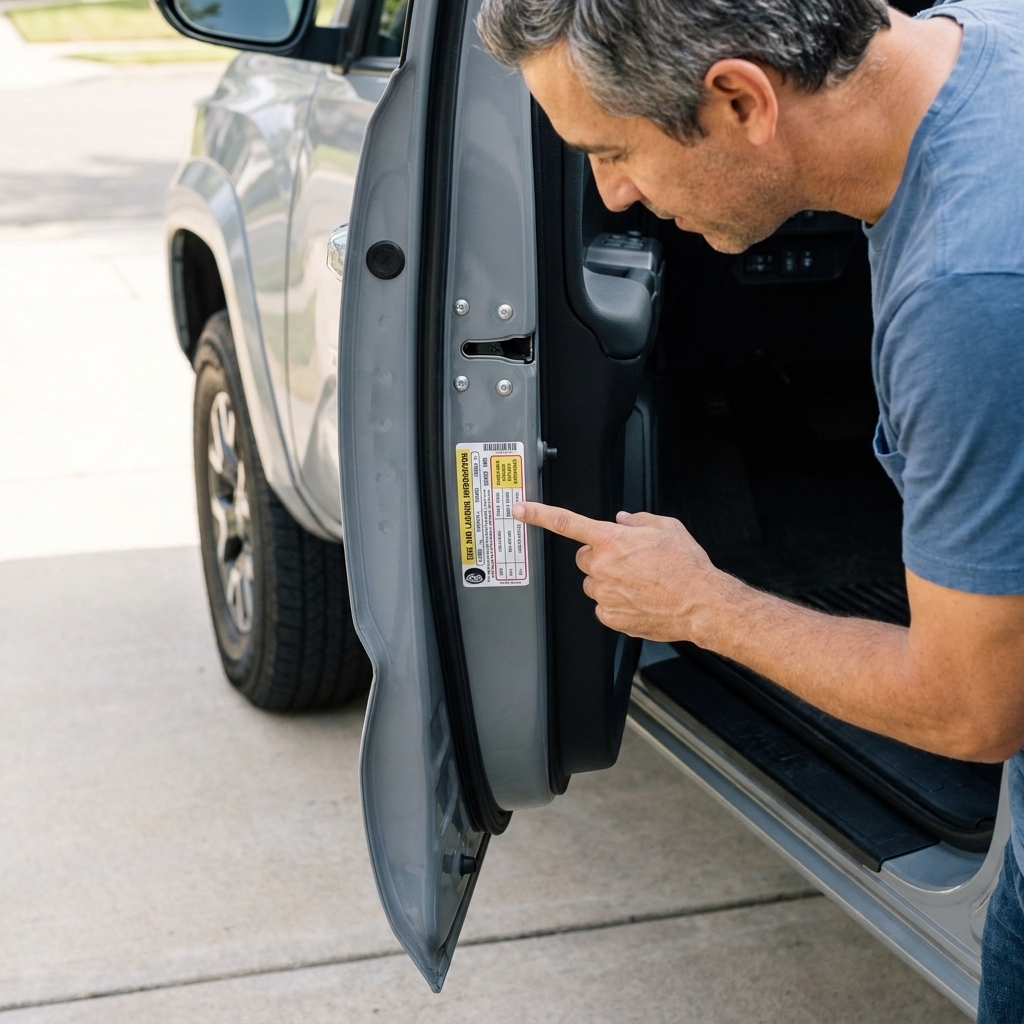
Look on the driver-side door jamb for the tire and loading sticker. Most modern pickups also list a line similar to:
- “The combined weight of occupants and cargo should never exceed …”
That number is your payload for that exact truck as equipped. Not a range. Not a “typical.” Your truck’s number.
GCWR
GCWR is usually in your owner’s manual, towing guide, or manufacturer spec sheet, and it depends on engine, axle ratio, transmission, cab style, drivetrain, and sometimes even tire package.
If you cannot find GCWR for your exact configuration, call the dealer with your VIN or check the manufacturer’s official towing guide PDF for your model year.

Quick definitions
Curb weight vs. actual scale weight
Curb weight is what the truck weighs empty with fluids. It’s useful for manufacturers, but it’s not what you should base your towing decisions on.
What you want is actual scale weight, because accessories and real life add up fast: bigger tires, a toolbox, a bed cap, running boards, a winch bumper, a full tank, and so on.
Tongue weight and pin weight
- Tongue weight is the downward force the trailer applies to the hitch ball. Typical safe range is 10 to 15% of trailer weight for most bumper-pull trailers.
- Pin weight is the downward force from a fifth-wheel or gooseneck in the bed. Typical range is often 15 to 25%, depending on trailer design and loading.
Both tongue weight and pin weight count as payload on the truck. That’s the part many folks miss.
Hitch weight counts, too
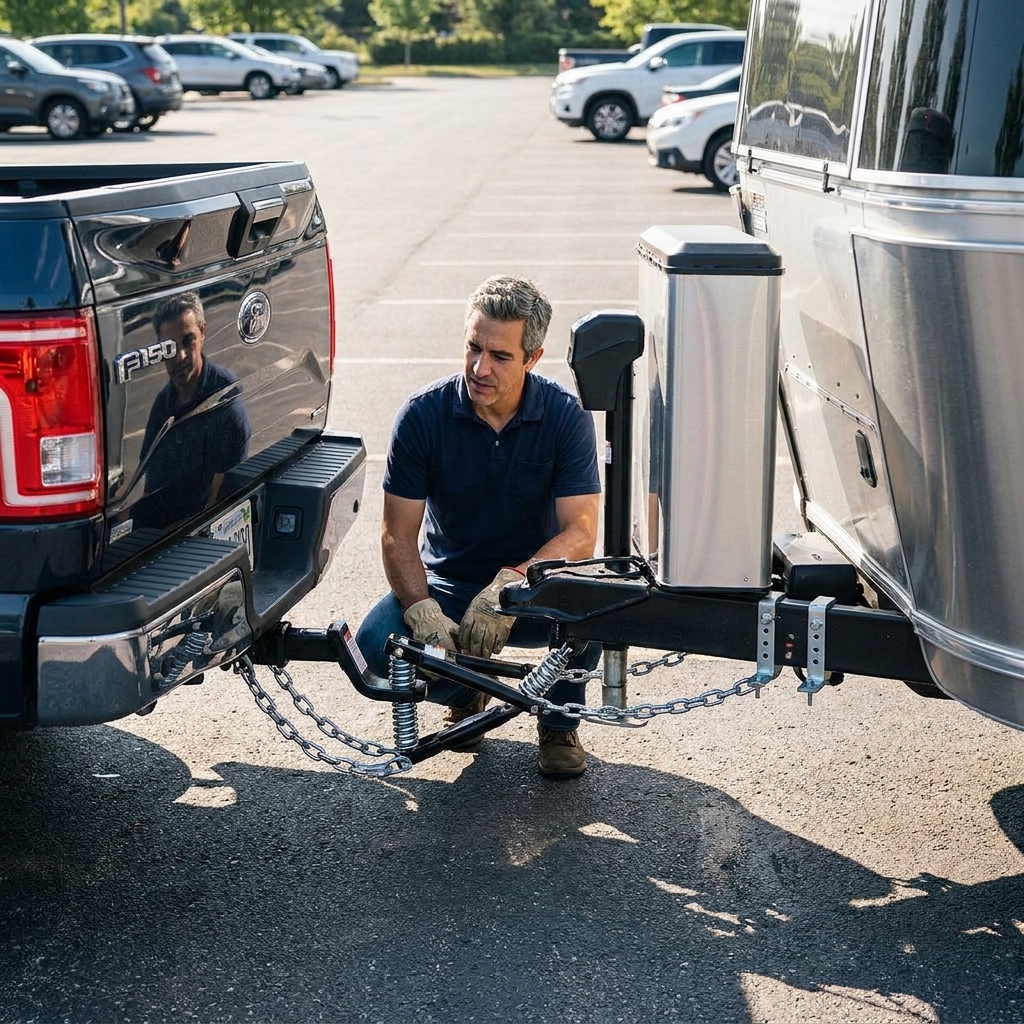
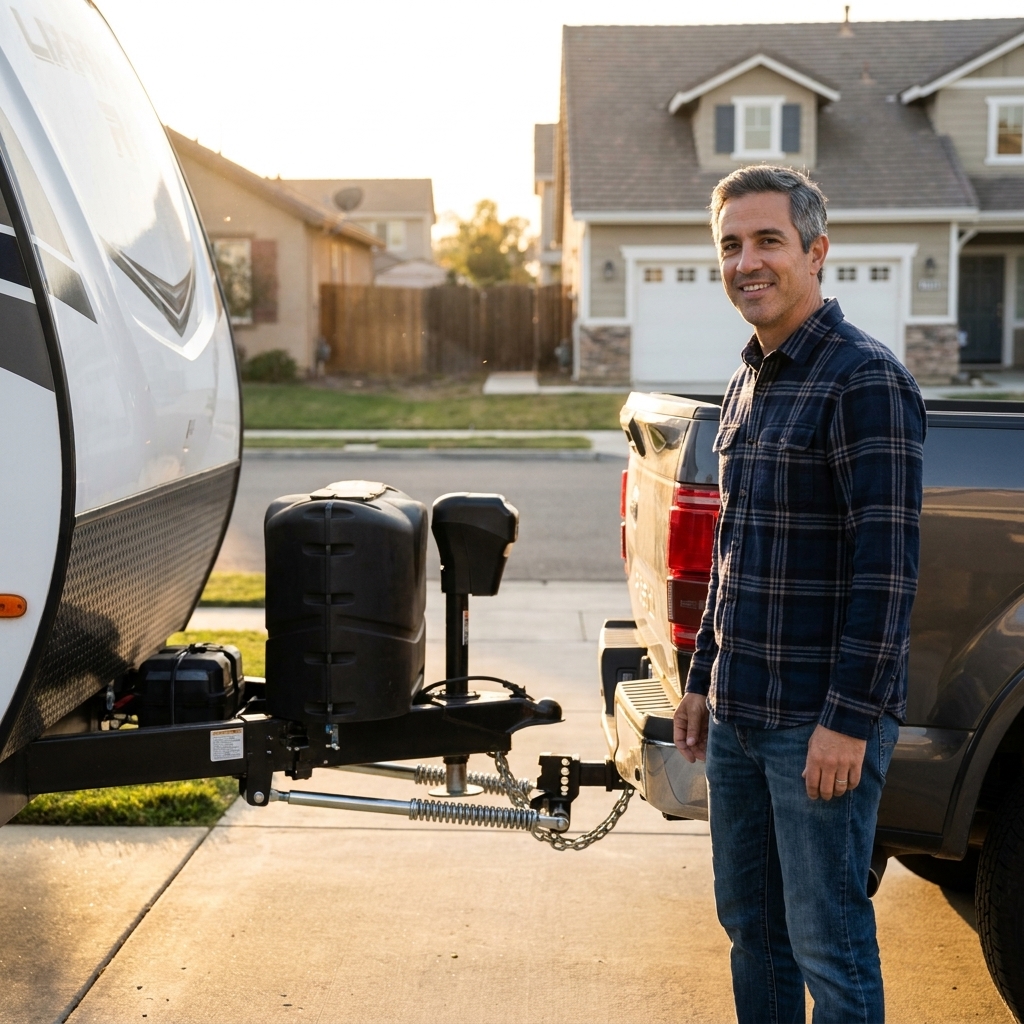
A weight distribution hitch, a beefy ball mount, a fifth-wheel hitch, bed rails, and even a stacked set of recovery gear all eat payload. The truck does not care if the weight is “cargo” or “towing equipment.” It’s all weight on the chassis.
The method I trust
When I’m setting up a truck for towing, I run two separate checks:
- Payload check (staying under GVWR and axle ratings).
- Combined weight check (staying under GCWR).
If either one fails, you are overloaded, even if the trailer is below the advertised max tow rating.
Step 1: Load the truck for real
Put in the people, the dog, the cooler, the tools, the firewood, the generator, the bikes. Fill the fuel tank to your normal level.
This matters because payload is often the tightest constraint, and passengers are payload.
Step 2: Estimate tongue weight
Use realistic tongue weight assumptions:
- Travel trailer: assume 12 to 15% of loaded trailer weight.
- Utility trailer: assume 10 to 15%, but it depends heavily on how the load is positioned.
- Fifth-wheel: assume 18 to 22% until you can weigh it.
If you use 10% because it makes the math feel better, your rear suspension will tell on you the moment you hit a dip.
Step 3: Payload math
Payload used = passengers + cargo in truck + hitch equipment + tongue or pin weight
To stay legal and mechanically happy:
Payload used ≤ payload rating on your door sticker
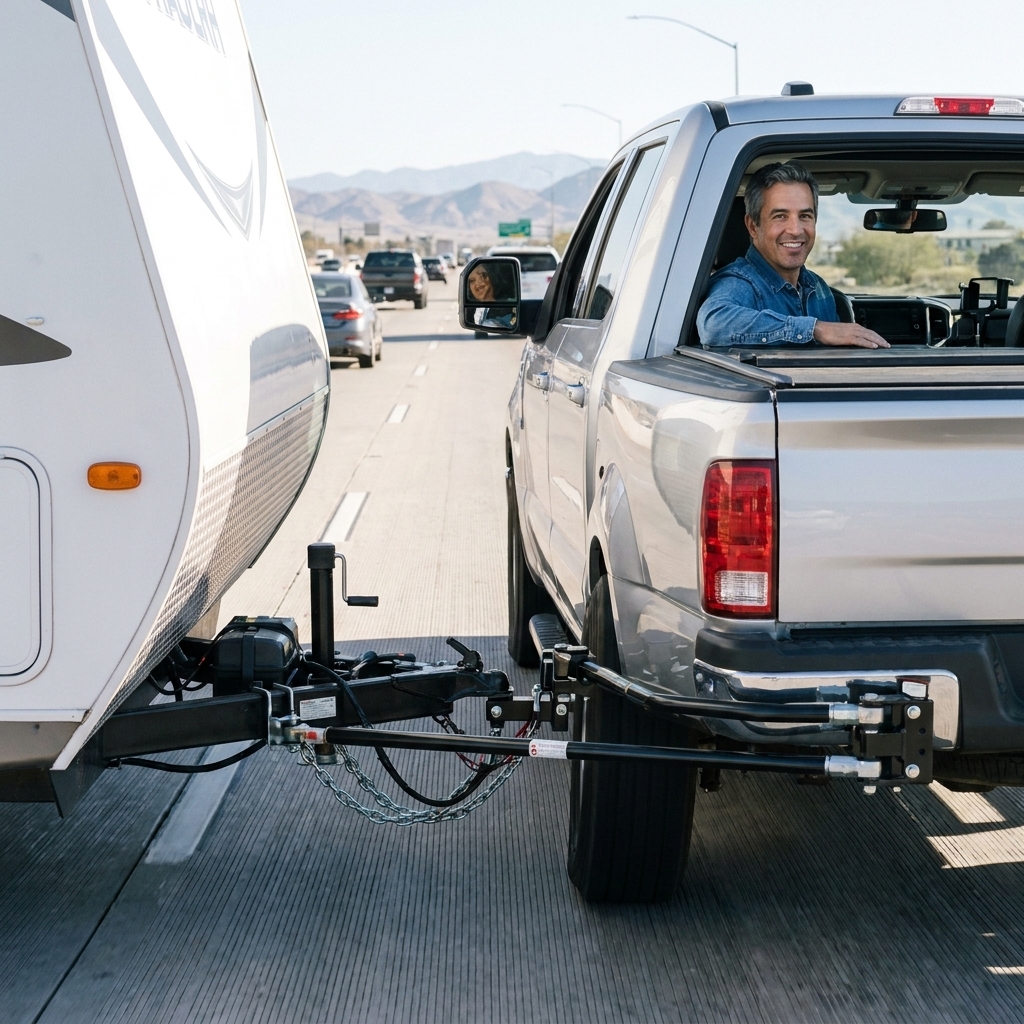
Important: A weight distribution hitch can shift some load to the front axle and trailer axles, which helps balance. But it does not magically delete tongue weight from your truck’s GVWR and payload math. The force is still carried by the truck.
Step 4: GCWR math
Max trailer weight by GCWR = GCWR − actual loaded truck weight
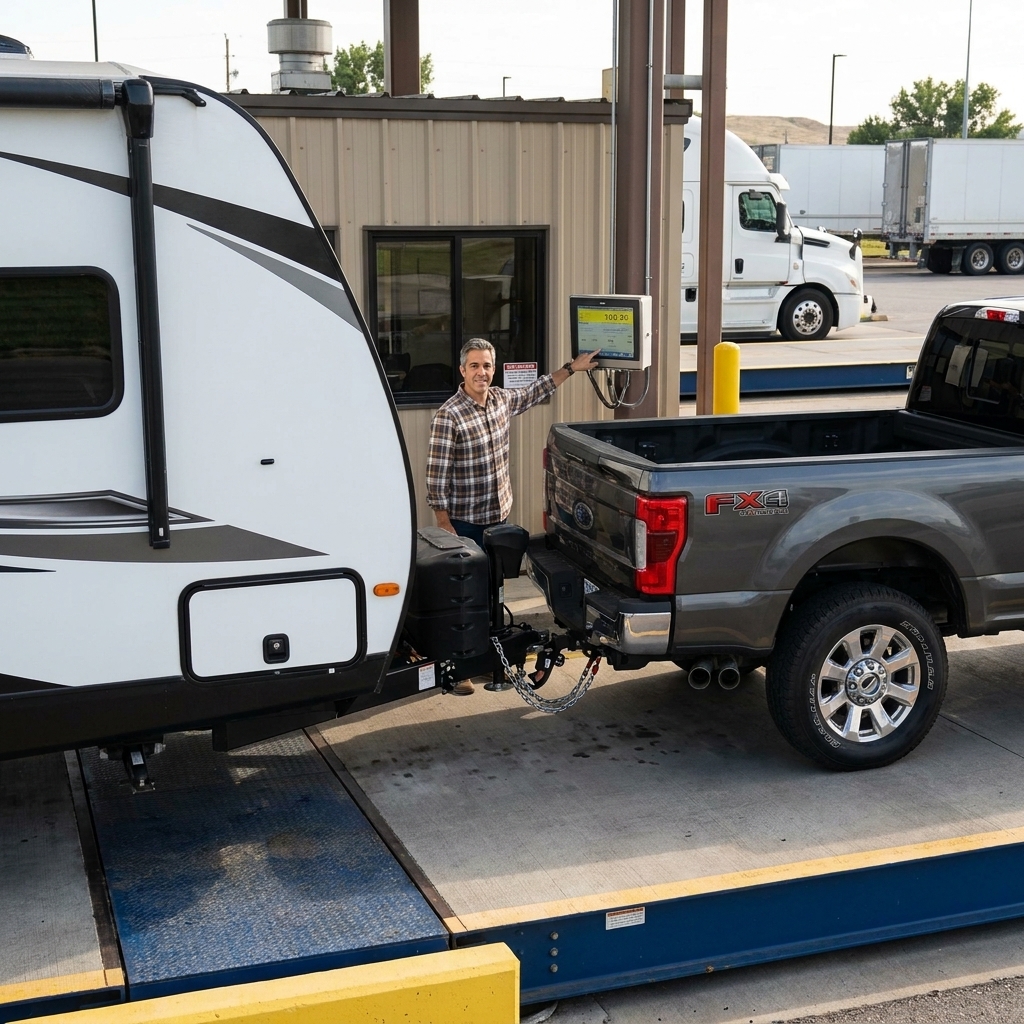
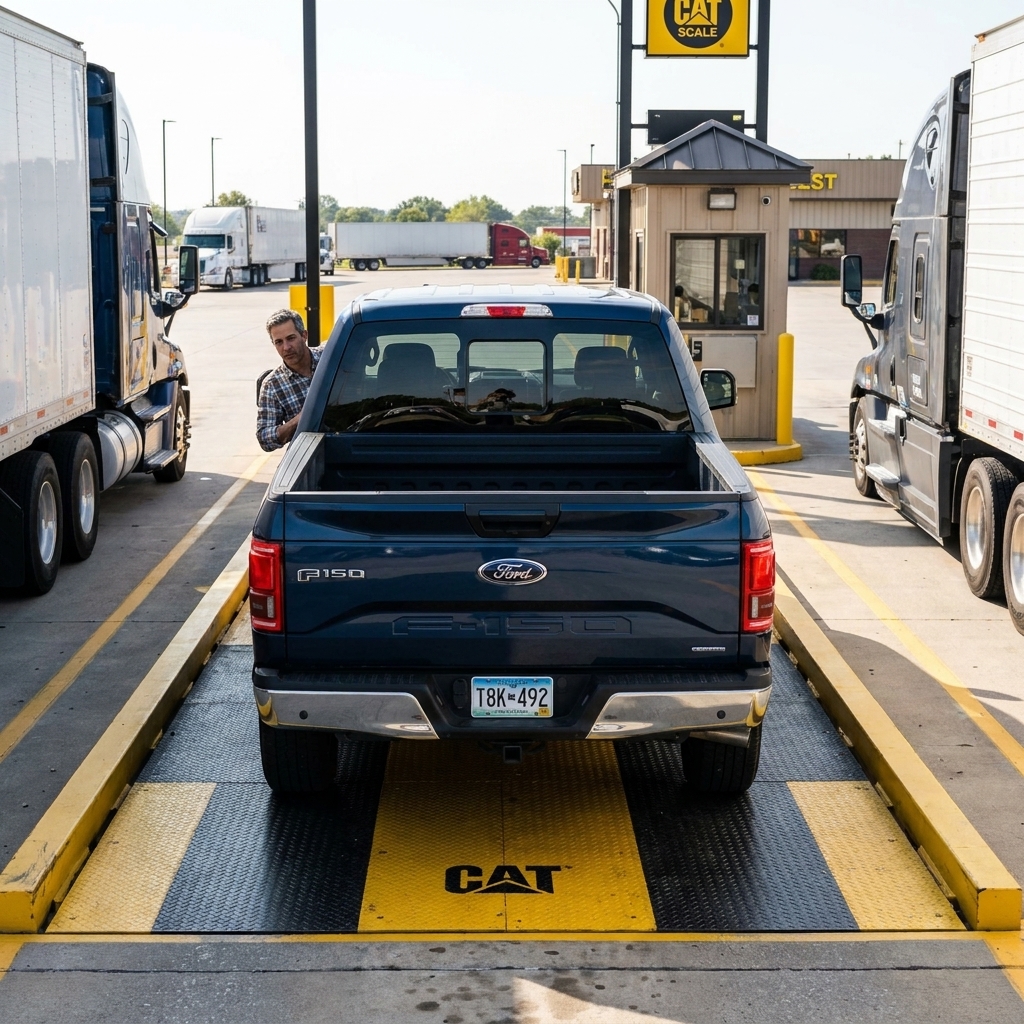
To do this correctly, you need a real truck weight. The easiest way is a public CAT scale at a truck stop, a quarry scale, a landfill, or many grain elevators.
Worked example
Let’s say you have a half-ton pickup and want to tow a travel trailer.
- Door sticker payload: 1,650 lb
- GVWR: 7,100 lb
- GCWR: 15,000 lb
- Actual truck scale weight with family and cargo: 6,300 lb
1) GCWR-based trailer limit
GCWR − loaded truck weight = 15,000 − 6,300 = 8,700 lb
So from a combined-weight standpoint, an 8,700 lb trailer could be possible.
2) GVWR and payload reality check
Now we bring it back to the number that bites people: how much capacity is left on the truck before you hit GVWR.
Remaining capacity to GVWR = 7,100 − 6,300 = 800 lb
Now account for hitch hardware:
- Weight distribution hitch hardware: 75 lb
- Remaining for tongue weight: 800 − 75 = 725 lb
If you use a realistic tongue weight target of 13%:
Max trailer weight based on tongue weight = 725 ÷ 0.13 = 5,576 lb
That is the whole point of weighing the truck loaded: it captures the family and cargo you already put in it. The door sticker payload (1,650 lb) is the starting budget. Once you add people and gear, the leftover for tongue weight can shrink fast.
The takeaway: you have to check GCWR, GVWR and payload, and ideally axle ratings. One “green light” doesn’t mean the whole setup is green.
Do not skip axle ratings
Your truck also has:
- Front GAWR (Gross Axle Weight Rating)
- Rear GAWR
These are listed on the same door jamb certification label as GVWR on many trucks.
Why they matter: tongue weight and bed cargo mostly land on the rear axle. It’s completely possible to be “under GVWR” but still overload the rear axle depending on how the truck is configured and loaded.
Best practice: weigh it in passes
- Truck only (loaded for travel)
- Truck + trailer with weight distribution hitch set the way you tow
- If possible, trailer axles only to confirm actual tongue weight
If you’ve never done this before, it’s simpler than it sounds. The CAT scale ticket gives you axle weights, and those axle weights tell the truth.
Common mistakes
Using dry weight
Dry weight is the trailer without your propane, battery, food, water, clothes, and gear. Real camping and real work are never dry.
If you don’t have scale weights yet, use the trailer’s GVWR as a conservative planning number. It keeps you honest.
Forgetting passengers and bed cargo
A family of four, a couple bikes, a full cooler, and a loaded toolbox can wipe out 600 to 900 pounds of payload in a hurry.
Assuming airbags add payload
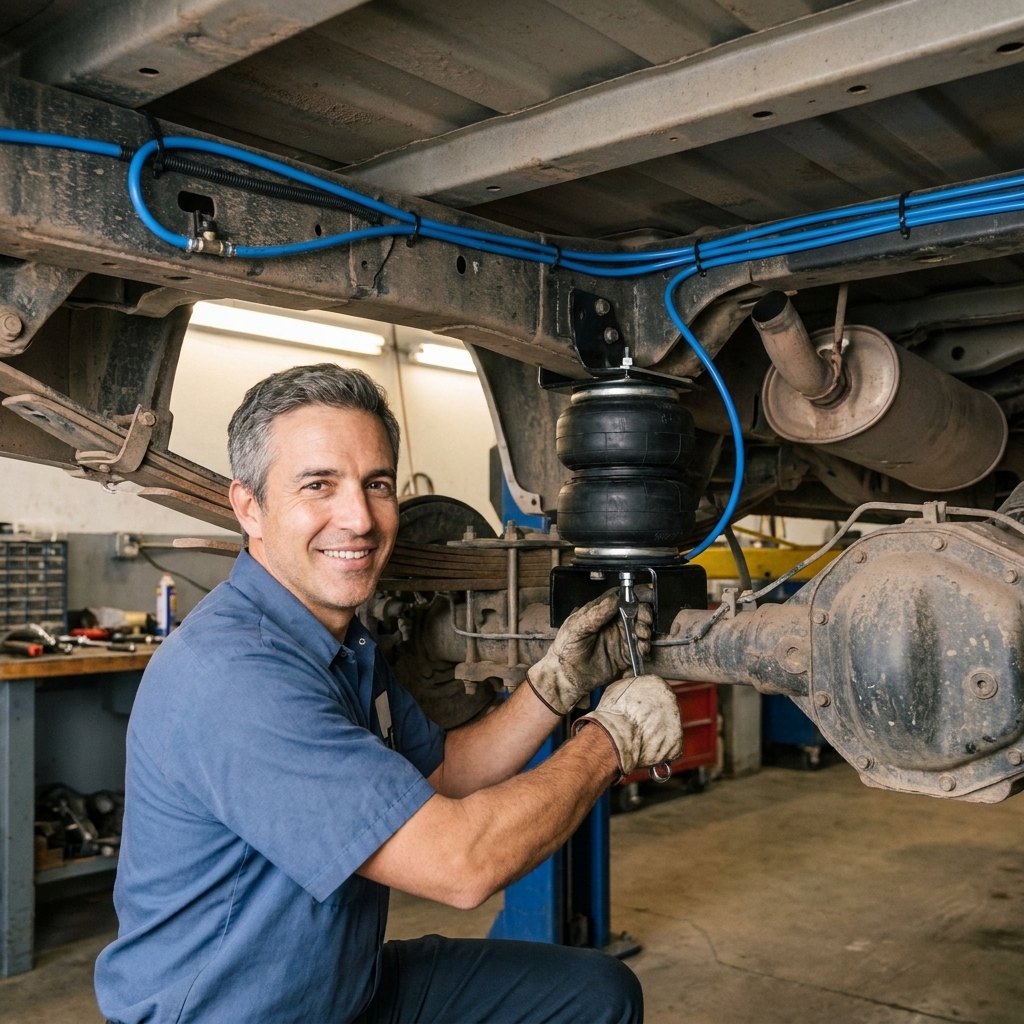
Airbags can level the truck and improve ride quality, and I’m not against them. But they do not change your legal ratings. Your payload and axle ratings stay the same.
Trusting max tow over the door sticker
Two trucks with the same engine can have wildly different payload based on trim level, cab size, 4x4, wheels and tires, and options. The door sticker is the grown-up number.
Driveway checklist
- Find payload on the door sticker and write it down.
- Find GVWR and rear GAWR on the certification label.
- Find GCWR in the towing guide for your exact configuration.
- Load the truck like a real trip, then weigh it.
- Estimate tongue weight realistically (12 to 15% for most travel trailers).
- Confirm you are under payload, GVWR, rear GAWR, and GCWR.
FAQ
What is the difference between GVWR and GCWR?
GVWR is the maximum your truck can weigh by itself when loaded. GCWR is the maximum your truck and trailer can weigh together. You can be under GCWR and still be overloaded on GVWR if you run out of payload.
Does a weight distribution hitch increase towing capacity?
It can improve balance and stability, and it may be required to tow near the top of your ratings. But it does not increase GVWR, GAWR, or payload, and it does not change your manufacturer ratings.
How do I know my actual tongue weight?
The most accurate method is weighing at a public scale using separate axle weights, or using a tongue weight scale for lighter trailers. If you are estimating, use 12 to 15% of loaded trailer weight for typical bumper-pull travel trailers.
Why does my truck squat if I’m under the tow rating?
Because squat is usually a payload and rear axle load issue, not a tow rating issue. Tongue weight is payload, and it pushes down on the rear suspension. A truck can be under the advertised tow rating and still be overloaded on payload or rear GAWR.
Will towing over ratings void my warranty?
It can, and it can also create liability issues in a crash. Even if nobody checks, your brakes, tires, and transmission will. Staying within ratings is the cheapest insurance you can buy.
My best advice
If you’re serious about towing safely, spend the 15 minutes and a few bucks to hit a scale. It ends the guessing. Once you know your real axle weights and your real combined weight, you can set your hitch correctly, adjust your loading, and tow with a truck that feels planted instead of white-knuckle floaty.
Your truck will take care of you, but only if you stay honest with the numbers.