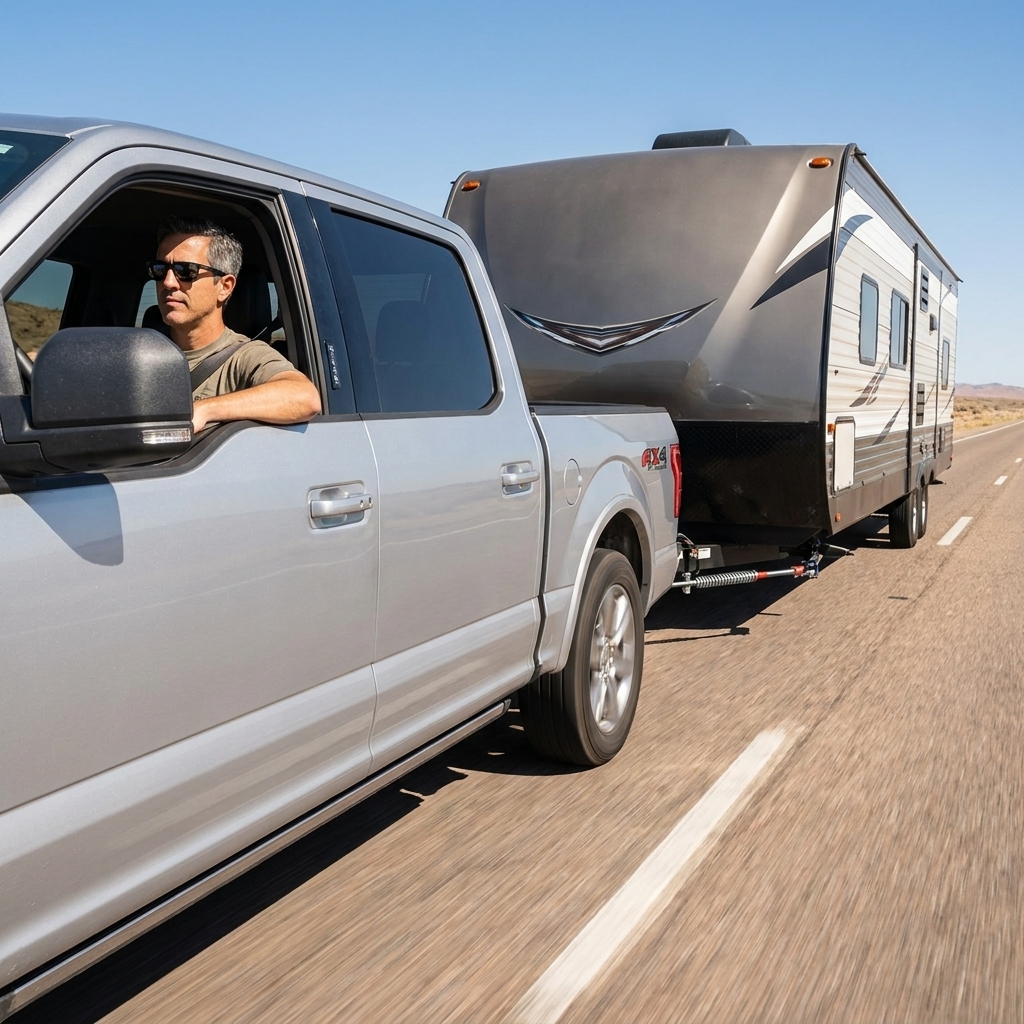
If you tow long enough, you’ve seen it. A half-ton or three-quarter-ton hooked to a heavy trailer, rear bumper dragging low, headlights pointed at the treetops, and the whole rig doing that slow bounce over highway seams. That “squat” is more than a cosmetic problem. It usually means the load is transferring rearward and unloading the front axle, which can reduce steering grip, change braking balance, accelerate uneven tire wear, and make sway harder to manage.
The good news is you don’t need to turn your pickup into a dump truck to fix it. The right suspension upgrades can level your truck under load, keep the ride controlled, and make towing feel boring again. Below are the upgrades I’ve had the best real-world results with across work fleets and family travel trailers.
What upgrades can and cannot do
Suspension upgrades can help your truck sit level and stay controlled while towing. They do not increase your truck’s legal payload or towing ratings.
Before you spend money, confirm these basics:
- Tire pressure and load rating: Many “sag” complaints are underinflated tires or tires that are marginal for tongue weight.
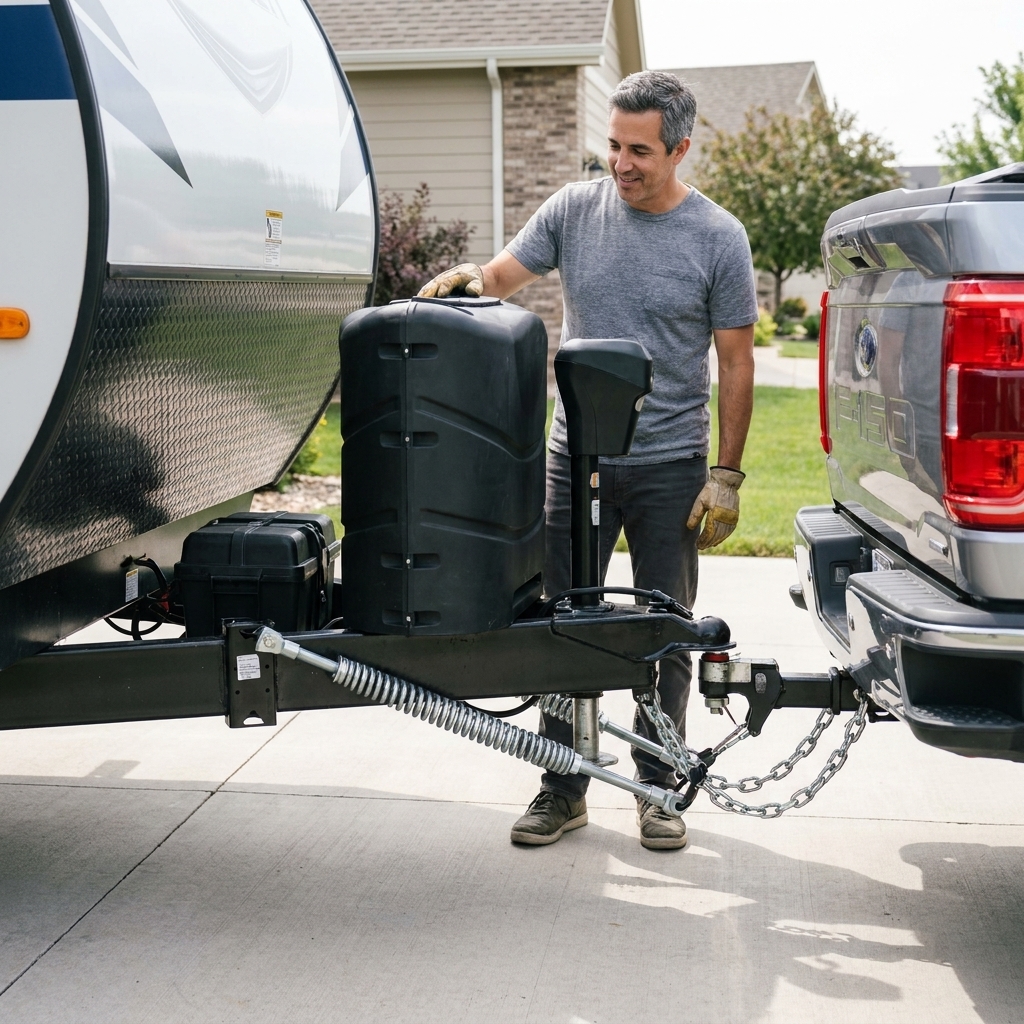
- Weight distribution hitch (WDH): If you’re towing a bumper-pull travel trailer, a properly set WDH is often the biggest single improvement for squat and steering feel, because it helps restore front axle load.
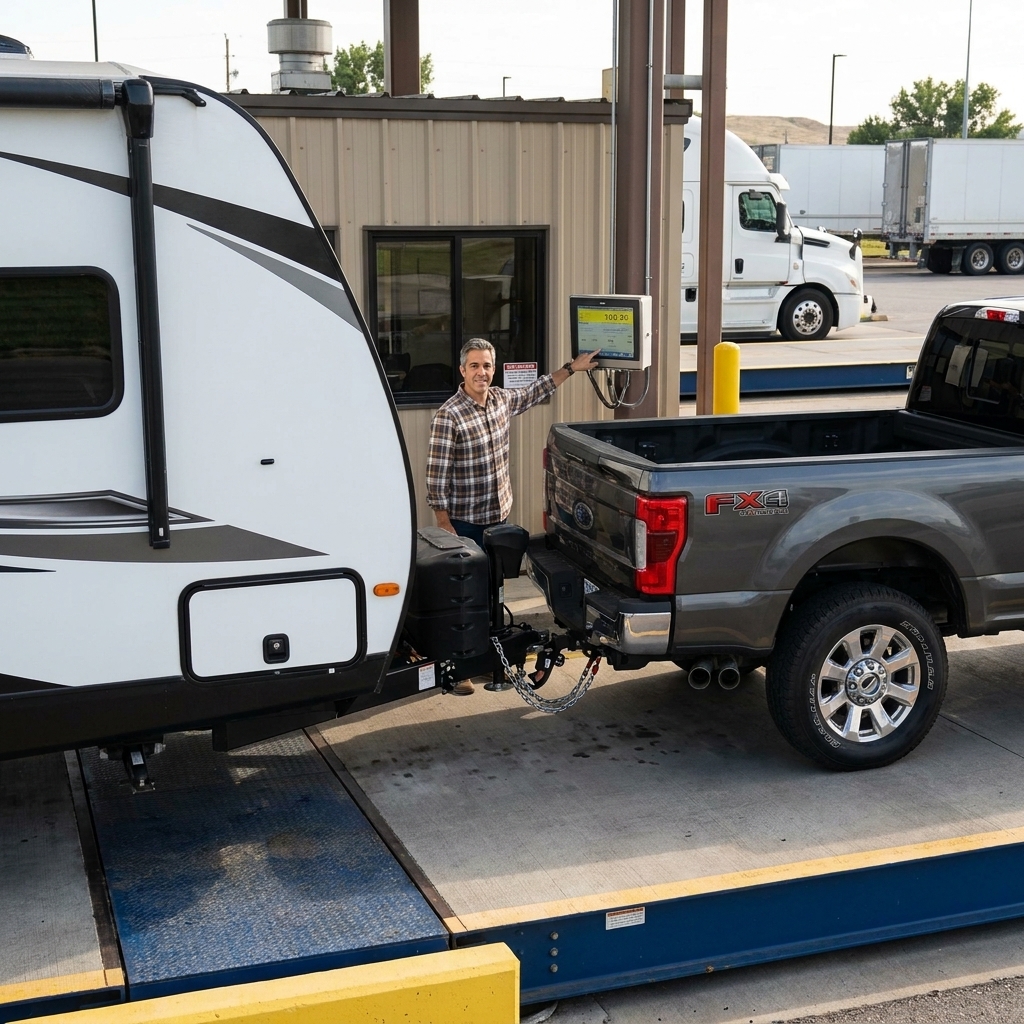
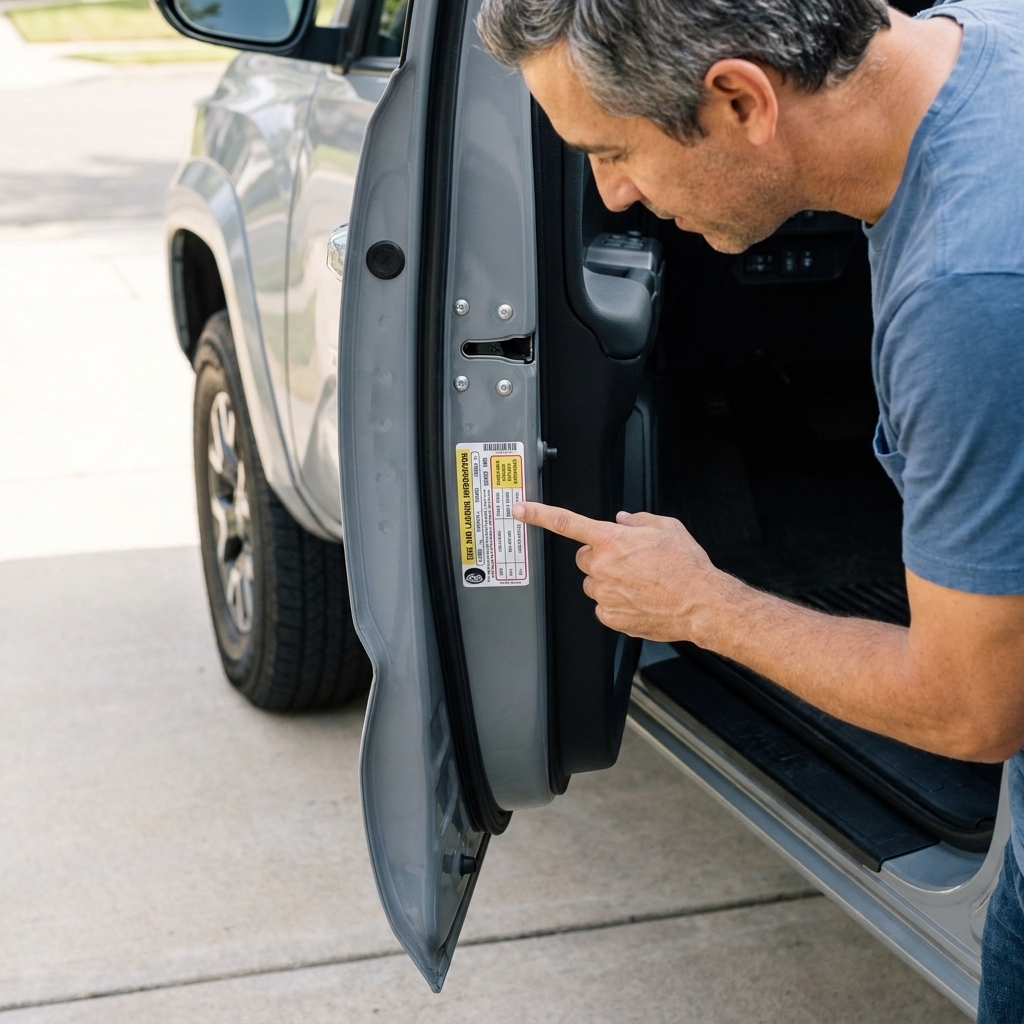
- Actual weights: If you’re over payload, suspension parts can mask the symptoms while your axles, tires, and brakes still carry too much.
Now, if you’re within ratings and still want a more level, stable tow setup, the upgrades below are where I’d put my money.
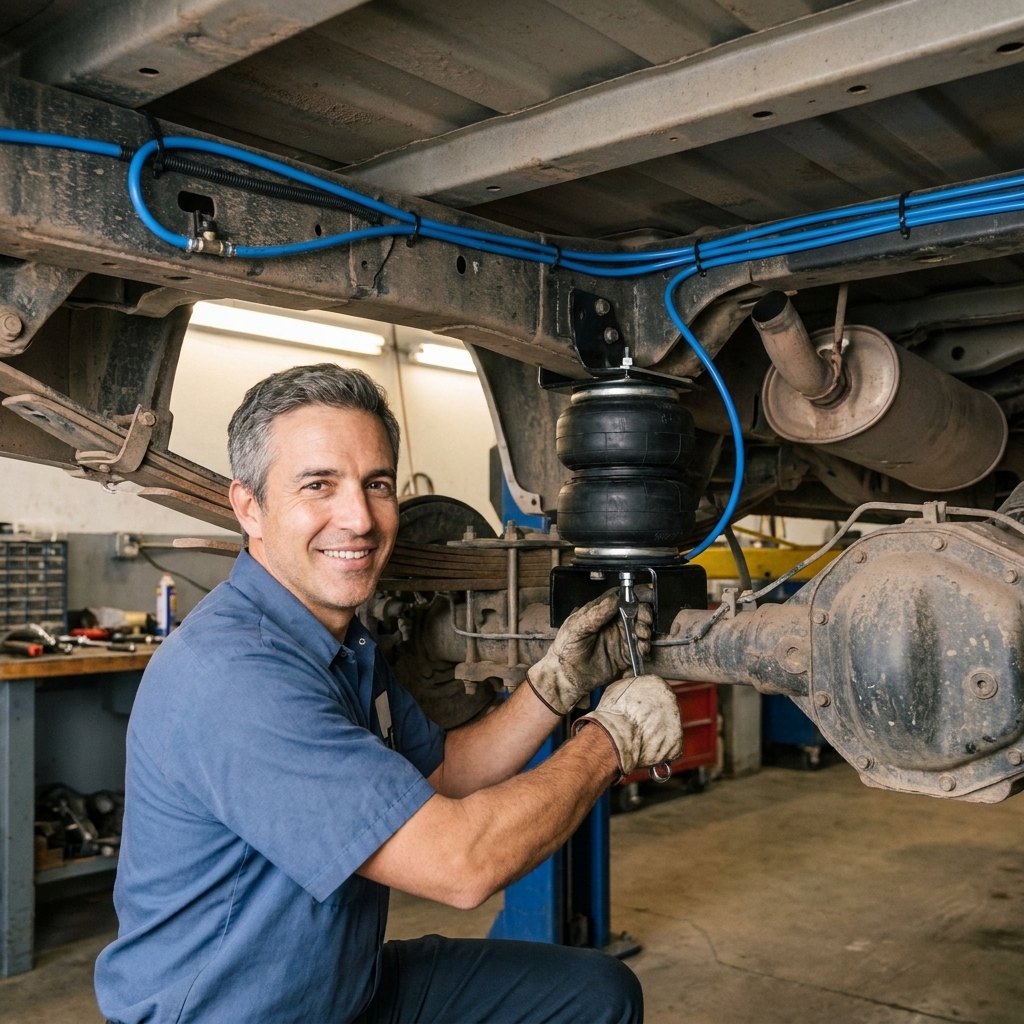
Airbags: adjustable support for sag
If you want one upgrade that can go from “empty daily driver” to “tongue-heavy trailer” with a few PSI, airbags are hard to beat. They mount between the frame and axle (or leaf pack), adding spring support only when you need it.
Why they work well for towing
- Adjustability: You can dial in ride height for different trailers or bed loads.
- Leveling: Great for correcting rear squat without making the unloaded ride harsh.
- Headlight aim and steering feel: Keeping the truck closer to level helps keep weight where it belongs.
What to watch out for
- They can hide overload: If you’re overweight, airbags will make it look fine while still overstressing axles and tires.
- Side-to-side balance: A single-fill air line can transfer air side-to-side in corners, which can feel a little loose. Some people prefer a single line for equalization with straight-line loads, but dual-path lines (left and right separate) are usually better for cornering stability and uneven loads.
- Maintenance: Not much, but you should occasionally check fittings and air lines for chafing or leaks.
My buying advice
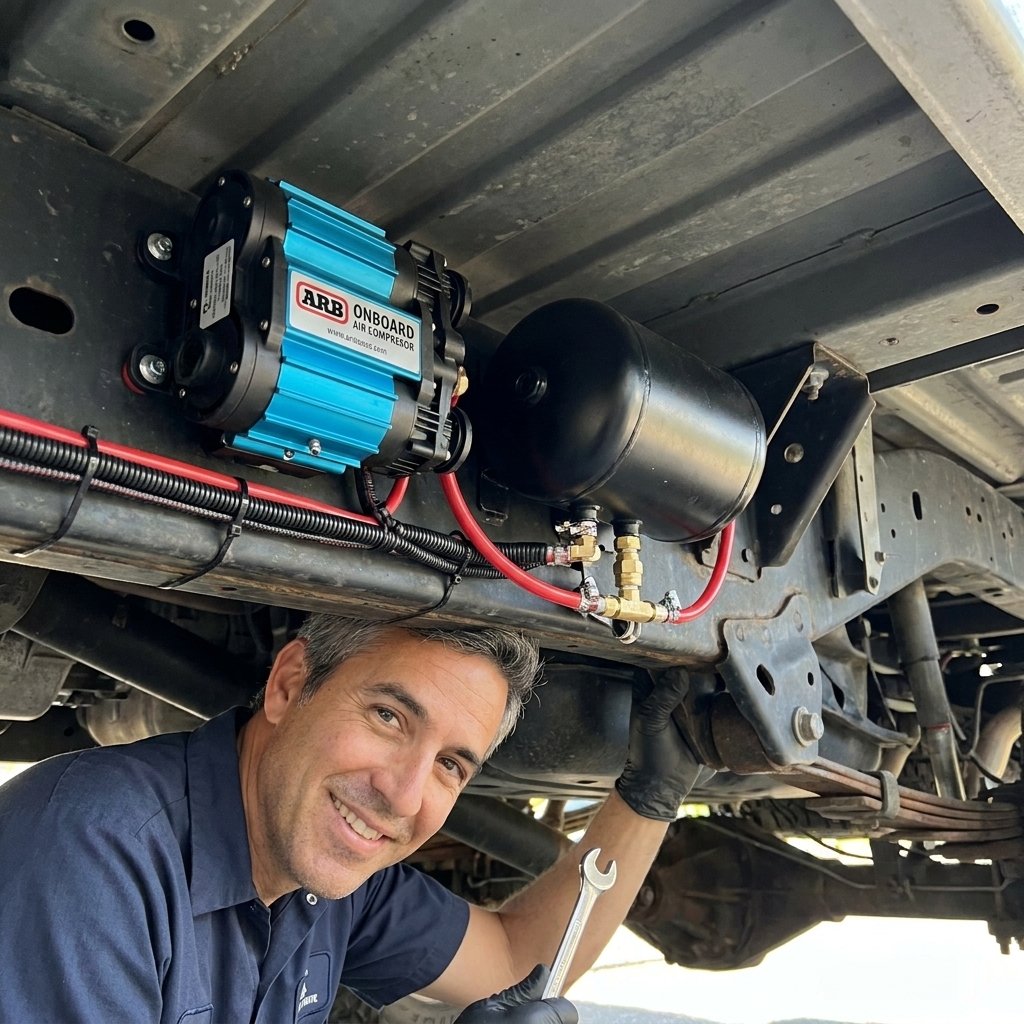
Look for a kit designed for your exact truck and bed configuration. If you tow often, a small onboard compressor with an in-cab gauge makes you far more likely to use the system correctly.
One more key point: if you’re using a WDH, set the hitch first to restore front axle weight, then use airbags to fine-tune rear ride height, not to fight the spring bars.
Helper springs and add-a-leaf
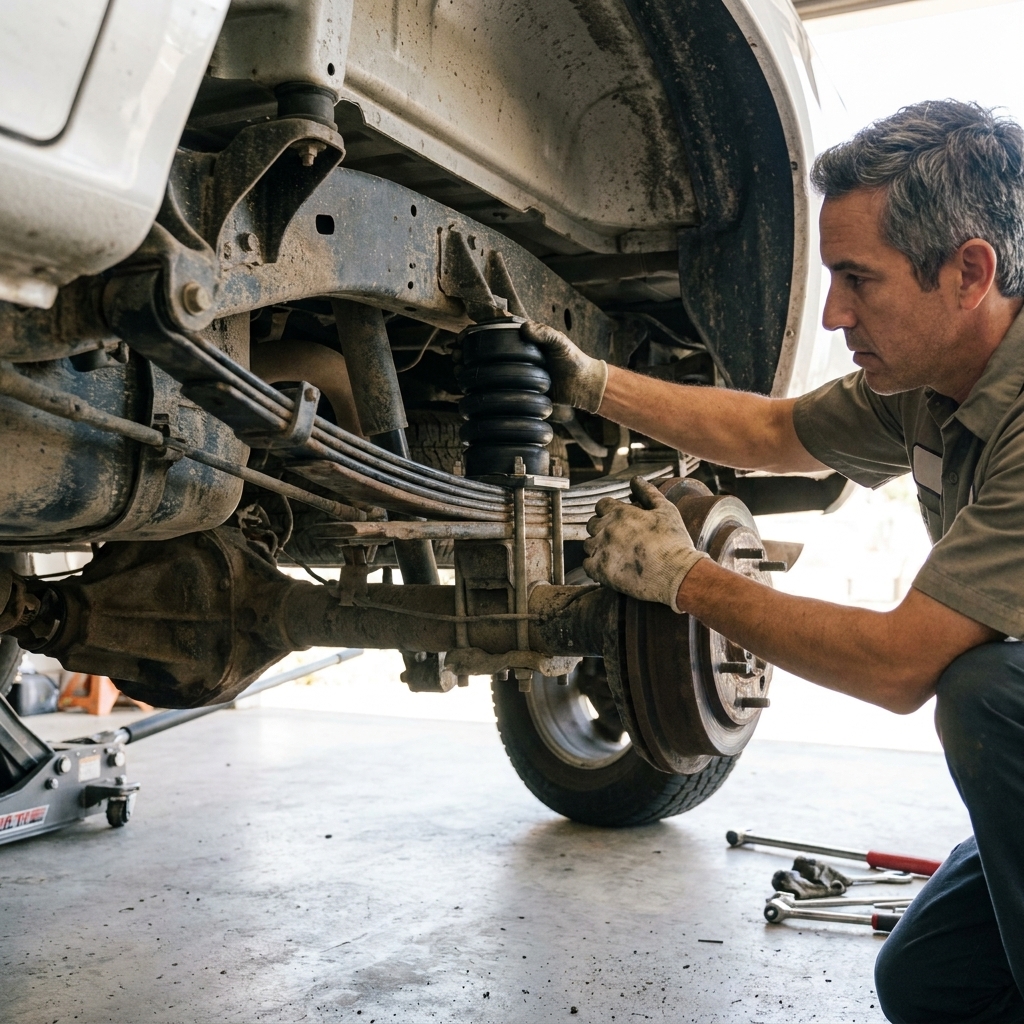
If you’d rather bolt it on and forget it, helper springs are the set-it-and-leave-it option. These systems add spring rate to the rear suspension so the truck naturally resists sag under load.
Common types
- Add-a-leaf: Adds a leaf to the existing pack. Budget-friendly, solid for consistent loads.
- Progressive helper springs: Engage more as the suspension compresses, so the unloaded ride stays closer to stock.
- Overload engagement helpers: Designed to bring factory overload leaves into play sooner.
Pros
- Reliable: No air lines, fittings, or compressors.
- Great for constant payload: If your bed is always loaded or you tow the same heavy trailer weekly, they make a lot of sense.
- Often cheaper than full air systems: Especially if you skip onboard air.
Cons
- Less adjustable: Your “loaded” improvement can come with a firmer unloaded ride.
- Can increase hop on rough roads: Stiffer rear spring rate without matching shocks can feel choppy.
If your truck spends most of its life hitched or loaded, helper springs are a no-drama fix. If it’s a family truck during the week and a tow rig on weekends, airbags usually win on comfort.
Heavy-duty shocks
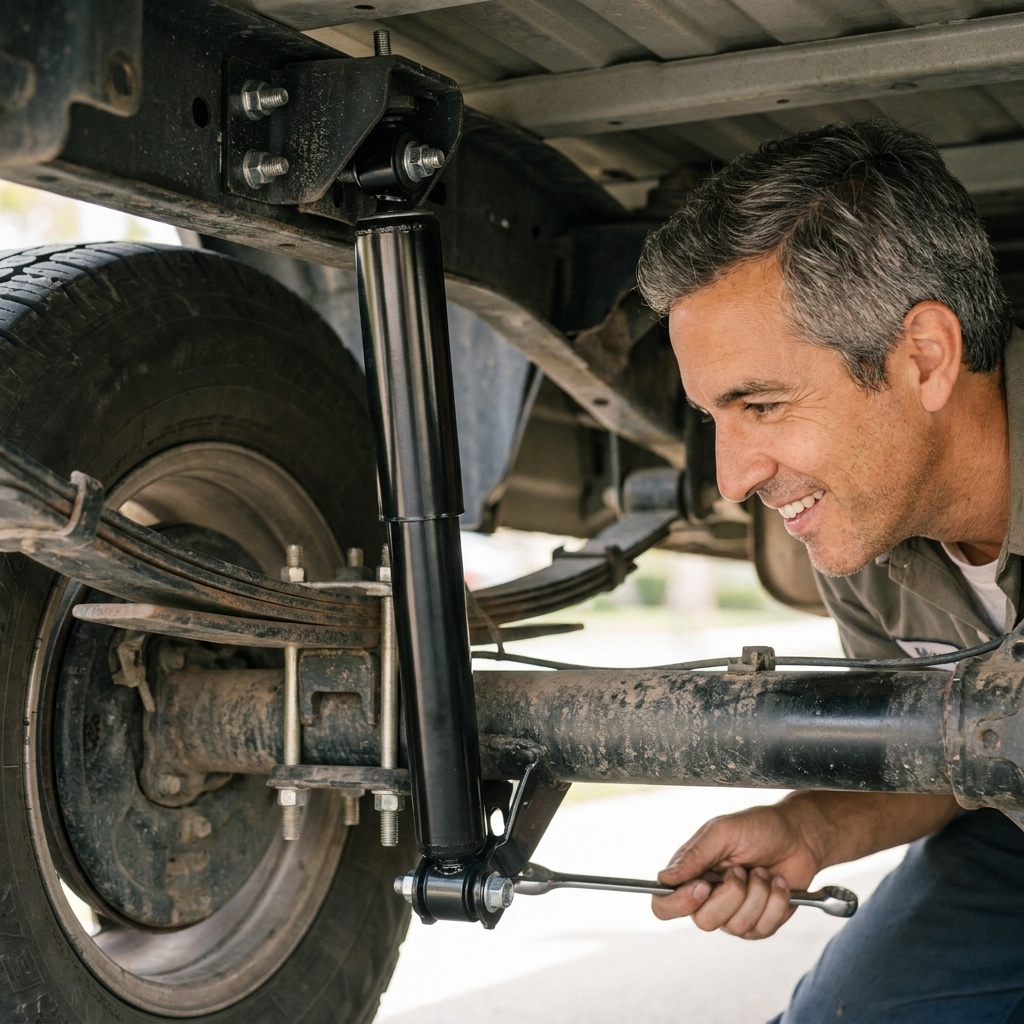
People shopping to fix sag sometimes skip shocks because shocks do not “hold the truck up.” True. But shocks control the motion after the spring compresses. If your truck porpoises over dips, bounces after bridge joints, or feels floaty in crosswinds, good shocks are the difference between tense, constant corrections and calm, low-fatigue control.
What towing-focused shocks do better
- Reduce bounce and porpoising: Especially with heavy tongue weight.
- Improve tire contact: More consistent traction during braking and over uneven pavement.
- Help with sway feel: Not a cure for sway, but they reduce the “wallow” that feeds it.
How to choose
Look for shocks marketed for heavy hauling or towing, ideally with larger bodies, better heat management, and valving that can control heavier spring rates. If you add helper springs or airbags, consider upgrading shocks at the same time so the whole system works together.
Rear sway bar upgrades
If you tow a tall travel trailer, enclosed cargo trailer, or anything that catches wind, a heavier rear sway bar (or adding one if your trim did not come with it) can make the truck feel more planted in lane changes and crosswinds.
When it’s most noticeable
- High center of gravity loads: Travel trailers and campers.
- Curvy highways and mountain passes: Repeated transitions expose body roll.
- Crosswinds and passing semi trucks: Less lean can mean less steering correction.
A sway bar does not fix a badly loaded trailer, and it will not compensate for too little tongue weight. Also, bigger is not always better: increasing rear roll stiffness can change handling balance, and on uneven pavement it can unload an inside rear tire sooner. Stick with reputable kits, good bushings and end links, and think of this as a stability refinement, not your primary sway solution.
Upgraded bump stops
If your truck occasionally hits the factory bump stops when you tow or haul, upgraded bump stops can smooth out those harsh impacts. Think of them as the cushion at the end of suspension travel.
- Best for: Frequent heavy tongue weight, rough access roads, driveways, and dips.
- What to expect: Less “bang” when the suspension compresses hard, and a more controlled feel near full load.
They are not a true leveling solution, but they pair well with helper springs and airbags to keep the rear from crashing into the stops.
Don’t skip the basics
Before you blame the truck, make sure the whole combination is set up correctly:
- Tongue weight: For most bumper-pull trailers, a common target is roughly 10 to 15 percent of trailer weight on the hitch. Too light is a recipe for sway.
- Trailer tires: Confirm load range, pressure when cold, and overall condition. Old or underinflated trailer tires can make everything feel loose.
- Brake controller setup: Dial in gain and verify trailer brakes are actually contributing. A stable rig still needs to stop straight.
- WDH verification: If you run a WDH, confirm you have restored front axle height and load, not just made the rear look pretty.
What I’d buy first
If you tow different trailers or loads
- Start with: Airbags (dual-path lines) + optional onboard compressor
- Add next: Heavy-duty shocks
If you tow the same heavy trailer all season
- Start with: Progressive helper springs or add-a-leaf
- Add next: Heavy-duty shocks
If the truck feels bouncy or loose, but not saggy
- Start with: Heavy-duty shocks
- Add next: Rear sway bar (especially with tall trailers)
If steering feels light on a bumper-pull
- Start with: Check WDH setup and restore front axle load
- Add next: Airbags only after the WDH is dialed in, not as a substitute
Install and setup tips
- Do not over-level the truck: Aim for level. A slight nose-down attitude can be acceptable if it matches your trailer manufacturer guidance, but avoid lifting the rear so far that the combo ends up nose-high.
- Measure before and after: Park on level ground, measure fender heights front and rear, then re-check with the trailer coupled.
- Protect air lines and wiring: Keep them away from exhaust, sharp edges, and moving suspension parts.
- Re-torque what you touched: After 500 to 1,000 miles of towing, re-check any U-bolts you replaced or loosened (common with add-a-leaf installs) and all suspension hardware you installed, per manufacturer spec.
- Check alignment and headlight aim: After major changes or if you tow heavy often, verify headlight aim and consider an alignment check. A properly set WDH should help get the front end back where it belongs.
FAQ
Do airbags increase towing capacity?
No. Airbags can level the truck and improve control, but they do not change your axle ratings, tire ratings, payload sticker, or hitch ratings. They help you tow more comfortably within your limits.
Are helper springs better than airbags?
Neither is universally better. Helper springs are simpler and great for consistent loads. Airbags are adjustable and usually ride nicer when you are empty. If your truck is a daily driver and a weekend tow rig, airbags are often the best fit.
Will heavy-duty shocks stop sag?
They will not stop sag by themselves. They will reduce the bounce and wallow that often comes with sag. If your truck sits too low under tongue weight, you need more spring support (airbags or helper springs) or a better WDH setup.
Can suspension upgrades reduce trailer sway?
They can reduce the truck’s body roll and bounce, which helps the whole combo feel more stable. But true sway control starts with correct trailer loading, correct tongue weight, proper hitch setup, and tires in good shape.
Bottom line
If you’re trying to tow heavy without that rear-end squat, think in two buckets: support (airbags or helper springs) and control (shocks and sway management). Get the truck level, keep the suspension from oscillating, and you’ll tow straighter, brake better, and arrive less stressed.