If you’ve ever felt your travel trailer start to “wag the dog” at 60 to 70 mph, you know how fast your stomach can end up in your throat. Trailer sway is one of those problems that feels random until you learn what’s really happening. The good news is it’s usually predictable and very fixable.
I’ve set up a lot of work trucks and towed a lot of miles. Most sway problems come down to the same handful of causes: speed, loading, tongue weight, tires, and hitch geometry. Let’s walk through what sway is, how to prevent it, and exactly what to do if it starts while you’re rolling.
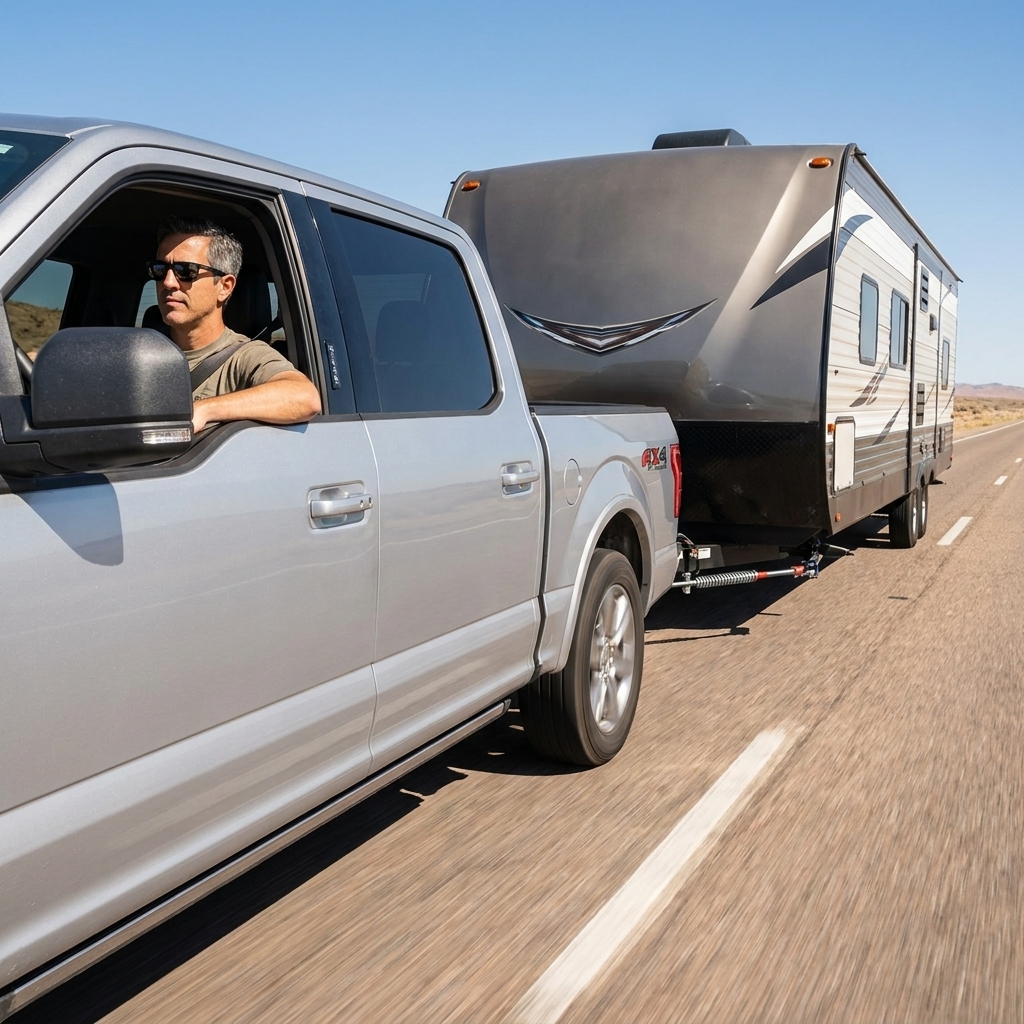
What sway is
Trailer sway is a side-to-side oscillation of the trailer that can build on itself. Picture a shopping cart wheel that starts shimmying. At first it’s a little wiggle. Then it becomes a full shake. A trailer can do the same thing, except it weighs thousands of pounds and it’s connected to your truck by one pivot point: the hitch ball.
When everything is balanced, the trailer naturally wants to track straight. When the balance is off, a gust of wind, a passing semi, a dip in the road, or a steering correction can start an oscillation.
The two big contributors
- Not enough tongue weight (or weight too far back): This is the number one culprit I see in the real world.
- Too much speed for the setup: Speed gives sway the energy it needs to grow.
Common triggers
Most sway events start with a trigger, then get amplified by a setup issue.
- Crosswinds and gusty weather: Flat-sided travel trailers are basically sails.
- Passing trucks: The bow wave pushes you away, then the suction pulls you back.
- Downhill grades: More speed and more load transfer make sway easier to start.
- Steering corrections: Overcorrecting can pump the sway harder.
- Uneven pavement and bridge joints: The trailer hits a bump and starts a wiggle.
If your trailer is loaded right and your hitch is set correctly, those triggers are usually just little nudges. If your tongue is light or your tires are squishy, that nudge can turn into a dance.
Know your numbers
Before we get into hardware, you need to know what your truck and trailer are allowed to carry. A lot of “mystery sway” starts with an overloaded or under-matched combo.
- Truck payload: The yellow door sticker number. This is what gets eaten up by passengers, cargo, the hitch, and tongue weight.
- GAWR (axle ratings) and tire ratings: You can be under tow rating and still overload an axle or tires.
- Receiver and hitch ratings: Many receivers have one max tongue weight for deadweight towing and a higher max when using a weight distribution hitch. Know both.
- Trailer GVWR: The trailer’s max allowed weight, not the brochure “dry weight.”
Quick reality check: tongue weight counts as payload on the truck. If your numbers are tight, stability usually is too.
Loading and tongue weight
If you remember one thing from this whole article, make it this: you can’t buy your way out of a badly loaded trailer. Sway control equipment helps, but proper loading prevents the problem in the first place.
Aim for the right tongue weight
For most bumper-pull travel trailers, a solid target is 10 to 15 percent of total trailer weight on the tongue, and many rigs behave best closer to 12 to 15 percent for stability. Always cross-check your trailer manufacturer guidance and your truck, receiver, and hitch ratings so you do not exceed limits.
- Example: a 7,000 lb trailer typically wants about 700 to 1,050 lb of tongue weight.
Too light on the tongue is the classic sway setup. Too heavy can overload payload, rear axle, tires, and hitch ratings. The goal is “enough,” not “as much as possible.”
How to load to reduce sway
- Keep heavy stuff low and forward, close to the trailer axle line but slightly ahead of it.
- Avoid loading the rear with dense gear. Rear cargo trays and heavy items behind the axles are sway fuel.
- Fill water smart: Depending on tank location, fresh water can help or hurt. If the fresh tank is behind the axles, traveling full can increase sway.
- Secure cargo: Shifting weight mid-trip can change tongue weight and balance.
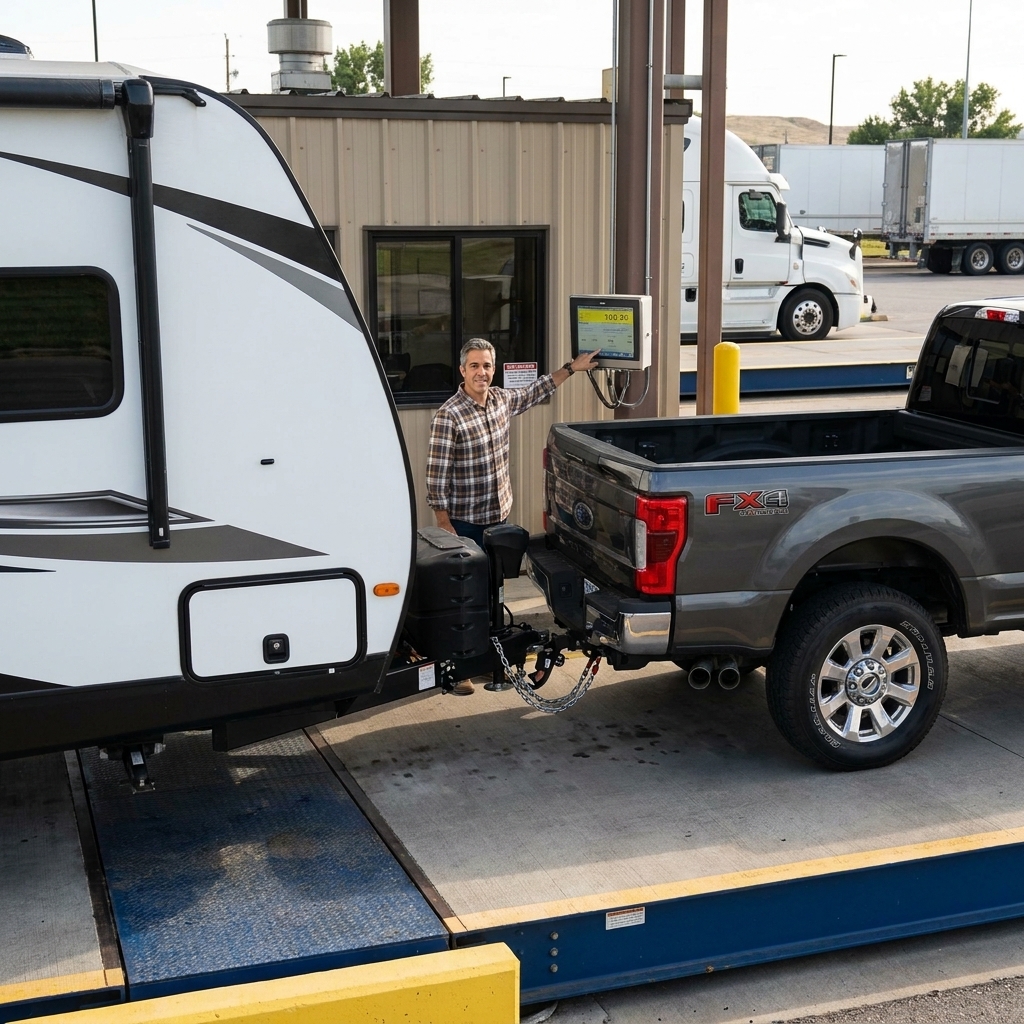
Practical tip: If you are guessing tongue weight by “how it looks,” you are guessing wrong. A tongue scale or a CAT Scale session is cheap insurance.
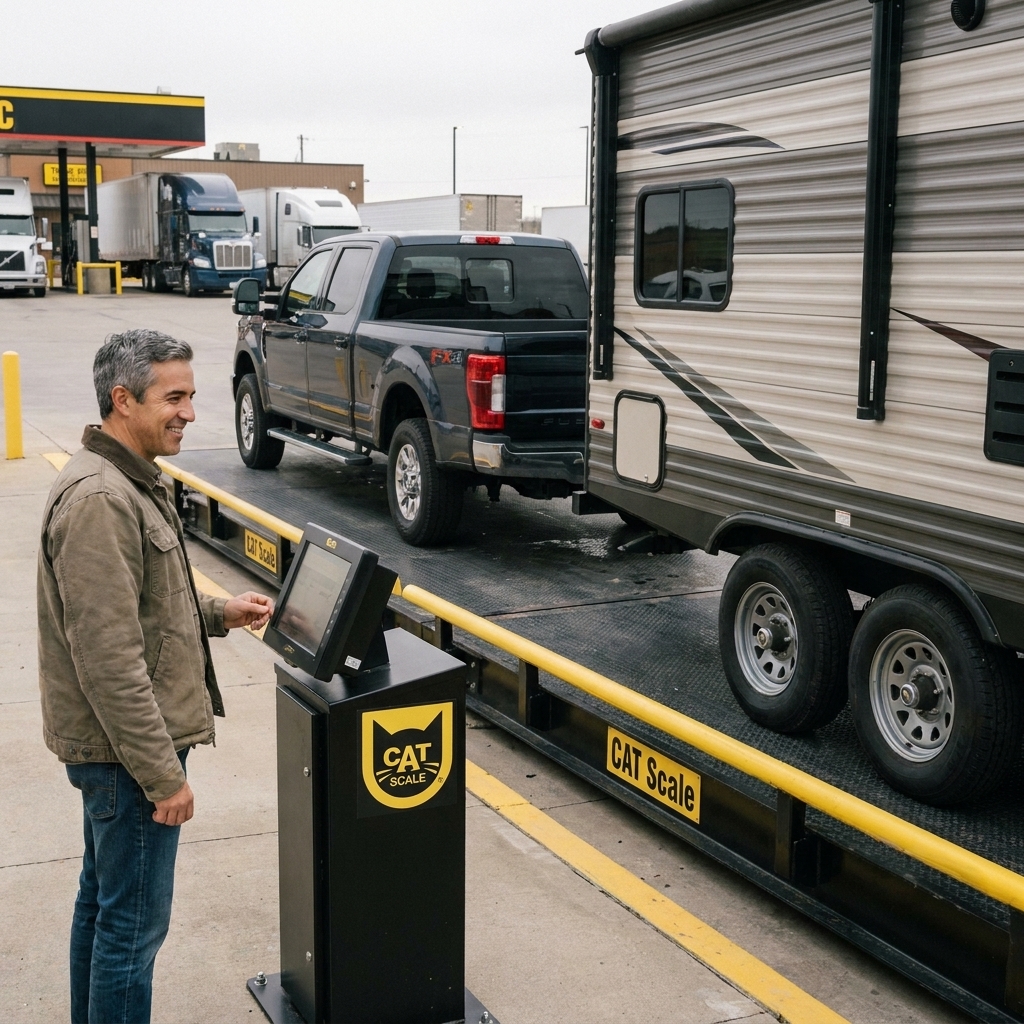
How to weigh it
If you want to take the stress and guessing out of towing, weigh your rig loaded exactly how you travel.
- First weigh: Get separate readings for the truck steer axle, truck drive axle, and trailer axles.
- Compare to ratings: Check each axle against GAWR and tire capacity, and check the truck against GVWR and payload.
- Adjust and reweigh: Move cargo forward or back, adjust the weight distribution hitch, then recheck. Small changes can move hundreds of pounds between axles.
This is where people usually find the real problem, like a rear-heavy trailer or a truck that is out of payload before they even add bikes and firewood.
Hitch setup
When folks tell me their trailer “just tows squirrely,” I usually find a hitch setup that is close, but not correct.
Tow level
With the trailer loaded for travel, you want it towing level or very slightly nose-down. Nose-high towing can reduce stability and braking performance.
Use weight distribution when needed
If your travel trailer is heavy enough to noticeably squat the rear of the truck, a weight distribution hitch (WDH) is usually the right move. It uses spring bars to transfer some of the load back to the front axle of the truck and onto the trailer axles.
- More front axle load restored usually means better steering feel and stability.
- Less rear sag means better headlight aim and less porpoising.
Follow the hitch manufacturer’s setup steps and measurements. “It looks okay” is not a setup procedure.
Match the ball and coupler
- Use the correct ball size (2 inches, 2-5/16 inches, etc.).
- Verify the coupler fully seats and locks.
- Confirm your ball mount and hitch are rated for your trailer’s GTW and tongue weight.
Sway control gear
Think of sway control as a layer on top of good loading and correct hitch geometry. It is there to add margin, not to cover up a bad setup.
Friction sway control arm
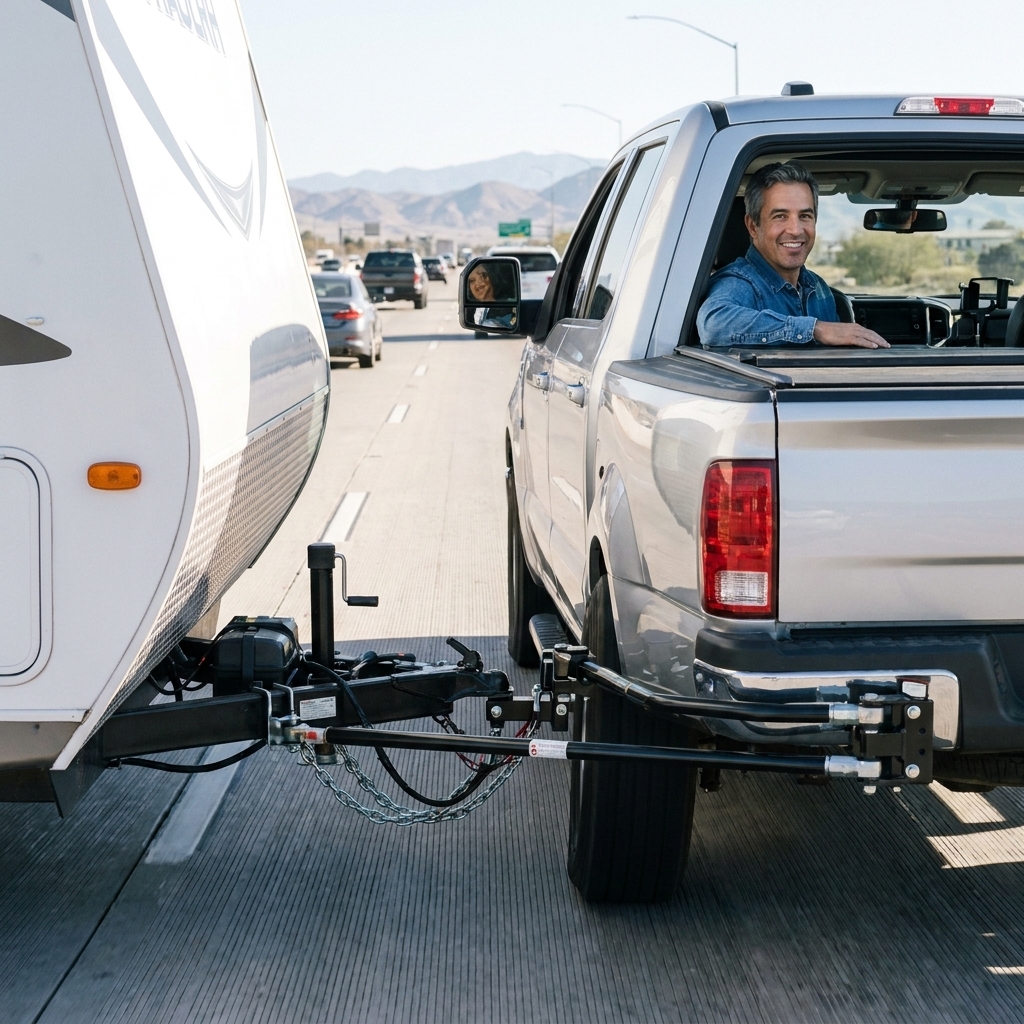
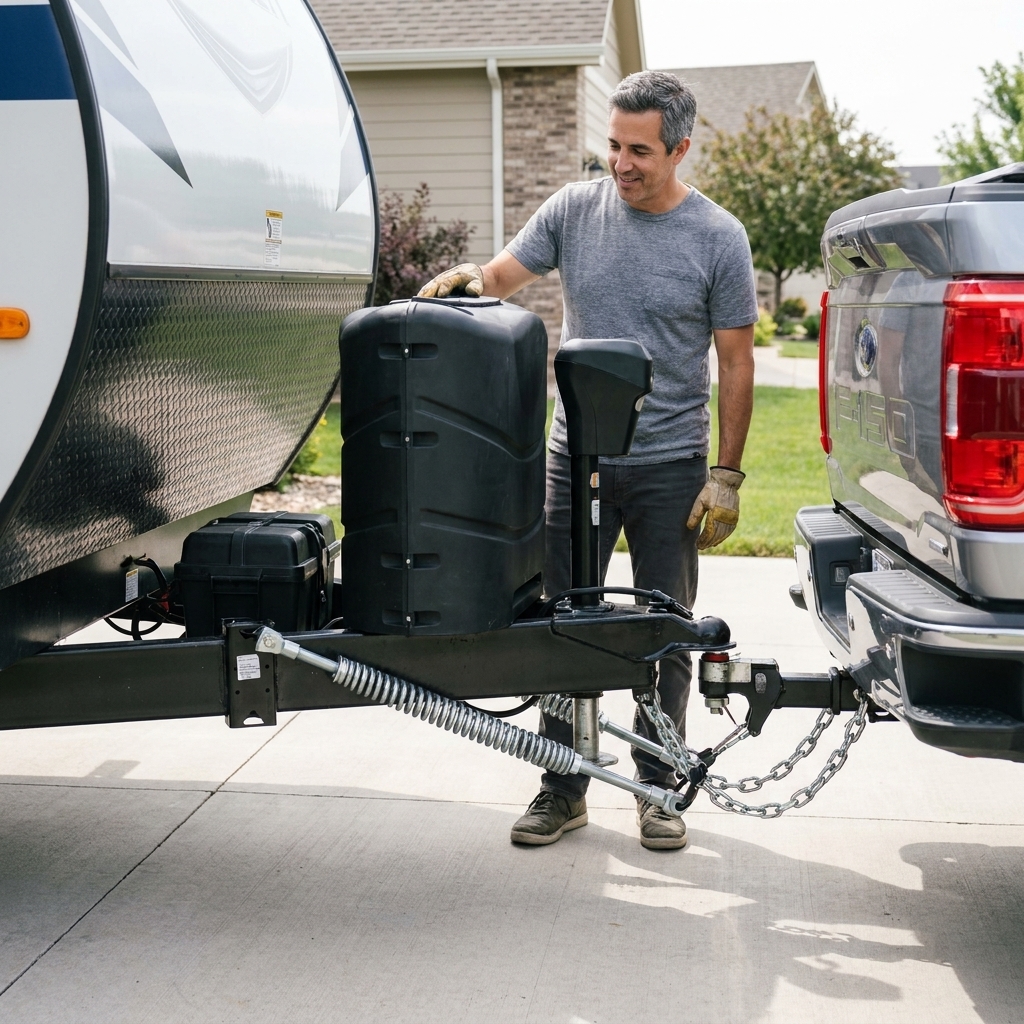
This is the classic mechanical sway control arm that mounts between the trailer frame and the ball mount. It adds friction resistance so the trailer cannot pivot freely side to side.
- Best for: smaller to mid-size travel trailers, lighter tongue weights, and drivers who want a budget-friendly stability bump.
- Pros: affordable, simple, widely available.
- Cons: must be adjusted correctly, can be less effective in severe winds.
Follow the sway control manufacturer’s instructions. Many friction-style bars require loosening or removal for backing, and some are not recommended on ice or slick roads.
If you run a friction arm, make it part of your routine to check mounting bolts, ball studs, and adjustment tension.
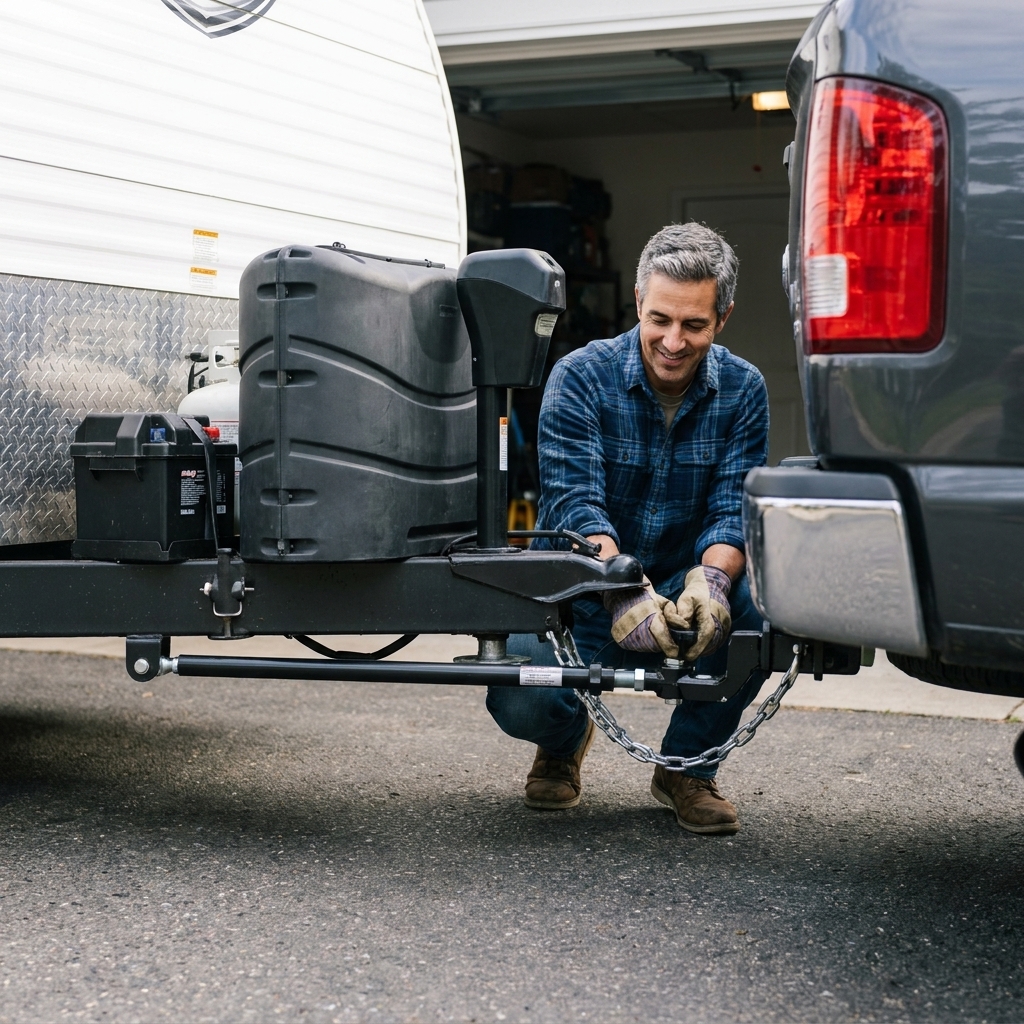
Integrated sway control
Many modern weight distribution hitches build sway control into the spring bar contact points. Instead of a separate arm, the hitch creates friction and resistance where the bars interface with the head and brackets.
- Best for: mid to larger travel trailers and frequent highway towing.
- Pros: fewer separate parts, good stability, consistent behavior.
- Cons: setup matters a lot, can be noisier, costs more than a friction arm.
Self-centering systems
Some systems are designed to actively help the trailer return to center. These can be excellent for longer or more wind-sensitive trailers when set up correctly.
- Best for: longer travel trailers, frequent towing in wind, drivers who want a more locked-in feel.
- Watch-outs: more sensitive to correct adjustment and proper bracket placement.
Pivot point matters
With bumper-pull trailers, the pivot point is behind the rear axle. That leverage is what allows sway to influence the truck. With a fifth wheel or gooseneck, the pivot point is typically over or slightly forward of the rear axle, which is one reason those setups tend to be inherently more stable. They are not immune to bad loading, but the geometry helps.
Tires and maintenance
I’m a mechanic by trade, so I’ll say it plainly: a lot of sway “mysteries” are just maintenance issues showing up at the worst time.
Trailer tires
- Inflate based on load: Use the tire manufacturer load and inflation table (or your trailer placard if applicable) to set pressure for the actual weight on the tires. Many ST trailer tires end up near max sidewall pressure when the trailer is loaded close to their capacity, but do not assume max is always correct for every situation.
- Use the right tire type: ST-rated trailer tires have stiffer sidewalls than passenger tires.
- Respect speed ratings: Many trailer tires are not happy living at high speed for long stretches.
- Replace aged tires: Tread depth is not the whole story. Old, heat-cycled tires can get unstable.
Truck tires and rear suspension
- Correct pressure: Set pressure to the truck placard for normal driving, and adjust appropriately for towing loads based on the vehicle manufacturer guidance and tire load tables.
- Worn shocks: Bad rear shocks let the truck and trailer start a bounce-sway combo.
- Helper springs or airbags: These can reduce sag, but they do not replace a properly set up WDH. Use them to level and stabilize, not to mask an overloaded setup.
Check the hitch basics
- Ball torque and correct size
- Coupler latch condition and adjustment
- WDH bracket tightness and frame clamp security
- Loose or cracked trailer frame components near the A-frame
If sway is persistent even after you correct loading, tongue weight, and hitch setup, it is worth having a shop inspect the trailer for things like axle alignment, bent suspension parts, worn bushings, and uneven tire wear.
Speed management
Speed is the multiplier. If your trailer starts to feel light or busy at 70 mph, dropping to 60 can make it feel planted again. That’s not you being timid. That’s you taking energy out of the system.
- Set a personal max towing speed based on your trailer length, wheelbase, wind conditions, and tire ratings.
- Leave bigger following distances so you do not have to make abrupt steering or braking inputs.
- Pick lanes wisely in gusty weather. Sometimes the right lane with a steady pace is the safest lane.
One more note: shorter wheelbase tow vehicles tend to feel more sensitive to longer trailers. That does not mean they cannot tow safely, but it does mean you should be extra disciplined about loading, tongue weight, and speed.
What to do if sway starts
This is the part everyone wants, because sway is terrifying in the moment. The key is to avoid feeding the oscillation.
1) Hold steady
Grip the wheel firmly, keep your eyes far ahead, and resist the urge to saw back and forth. Overcorrection is how minor sway becomes major sway.
2) Do not speed up
Accelerating to “pull it straight” is a persistent myth. It adds energy, reduces your margin, and can turn a manageable wiggle into a full event.
3) Avoid hard truck braking
A hard brake application can shift weight and sometimes worsen sway. If you have to slow, do it gently and deliberately.
4) Use trailer brakes smoothly if you can
If your brake controller has a manual lever, smoothly apply the trailer brakes to pull the trailer straight behind you and damp the oscillation.
- Do it gradually and back off if you feel wheel lockup.
- If the road is slick, traffic is tight around you, or you are already in a hard braking situation, prioritize keeping the truck straight and under control.
5) Ease off the throttle and let speed drop
Reduce throttle input and let the rig slow gradually. The goal is to get under the speed where the sway wants to keep growing.
6) Once stable, pull off and fix the cause
If you had true sway, don’t white knuckle it to the campground. Pull into a safe spot and check:
- Trailer loading and tongue weight
- Tire pressures on truck and trailer
- WDH tension and bracket security
- Loose gear or a suddenly empty rear storage area
Important: If sway becomes violent and you feel loss of control, focus on keeping the truck straight and reducing speed smoothly. A rollover can happen fast once the oscillation gets big.
Crosswind strategy
Wind is where good setups prove themselves. Even with sway control, you still need a plan.
- Watch the forecast for gusts, not just sustained wind. Gusts are what shove the trailer.
- Slow down before exposed areas like bridges, open farmland, and canyon gaps.
- Pass and be passed smart: When a semi passes, expect the push-pull effect and keep your inputs calm and small.
- Know when to call it: If you’re constantly correcting and the trailer feels light, it’s okay to stop and wait it out.
Pre-tow checklist
- Trailer loaded with heavy items low and forward
- Tongue weight in the 10 to 15 percent range for most bumper-pulls, often best closer to 12 to 15 percent when ratings allow
- Trailer sits level or slightly nose-down when hitched
- Weight distribution hitch adjusted per instructions
- Sway control arm or integrated sway system properly set and secured
- Truck and trailer tires aired correctly for the load and in good condition
- Brake controller tested, manual lever works
- All hitch pins, safety chains, and breakaway cable correct
FAQ
Can a sway control arm fix bad loading?
It can hide some symptoms, but it won’t fix the physics. If your tongue weight is too light or you’ve loaded heavy gear behind the axles, you’re still at risk. Use sway control as a helper, not a crutch.
Is it safe to tow at 70 to 75 mph?
It depends on tire ratings, trailer length, loading, road conditions, and wind. From a safety standpoint, most travel trailers tow more comfortably and with more margin in the 60 to 65 mph range. Also remember that some trailer tires have speed limits that make 75 a bad idea even if the truck feels fine.
Should I use the trailer brakes to stop sway?
If sway starts, smooth manual trailer brake application is often the best tool you have in the moment, assuming your brake controller is set correctly, you have room around you, and conditions are not slick. Avoid aggressive inputs that could lock the trailer tires.
What’s the biggest mistake you see?
Light tongue weight from rear-heavy loading. Close second is towing too fast for the setup, especially in wind.
Do modern tow aids fix sway?
Some trucks have trailer sway control and stability systems that can help, but they are not a substitute for correct tongue weight, proper loading, good tires, and a correctly set hitch.
Bottom line
Trailer sway is not a rite of passage. It’s a warning sign. Get your tongue weight right, tow level, keep tires and suspension in shape, and choose sway control equipment that matches your trailer and the kind of miles you run. Do that, and highway towing stops feeling like a fight and starts feeling like what it should be: steady, predictable, and safe.