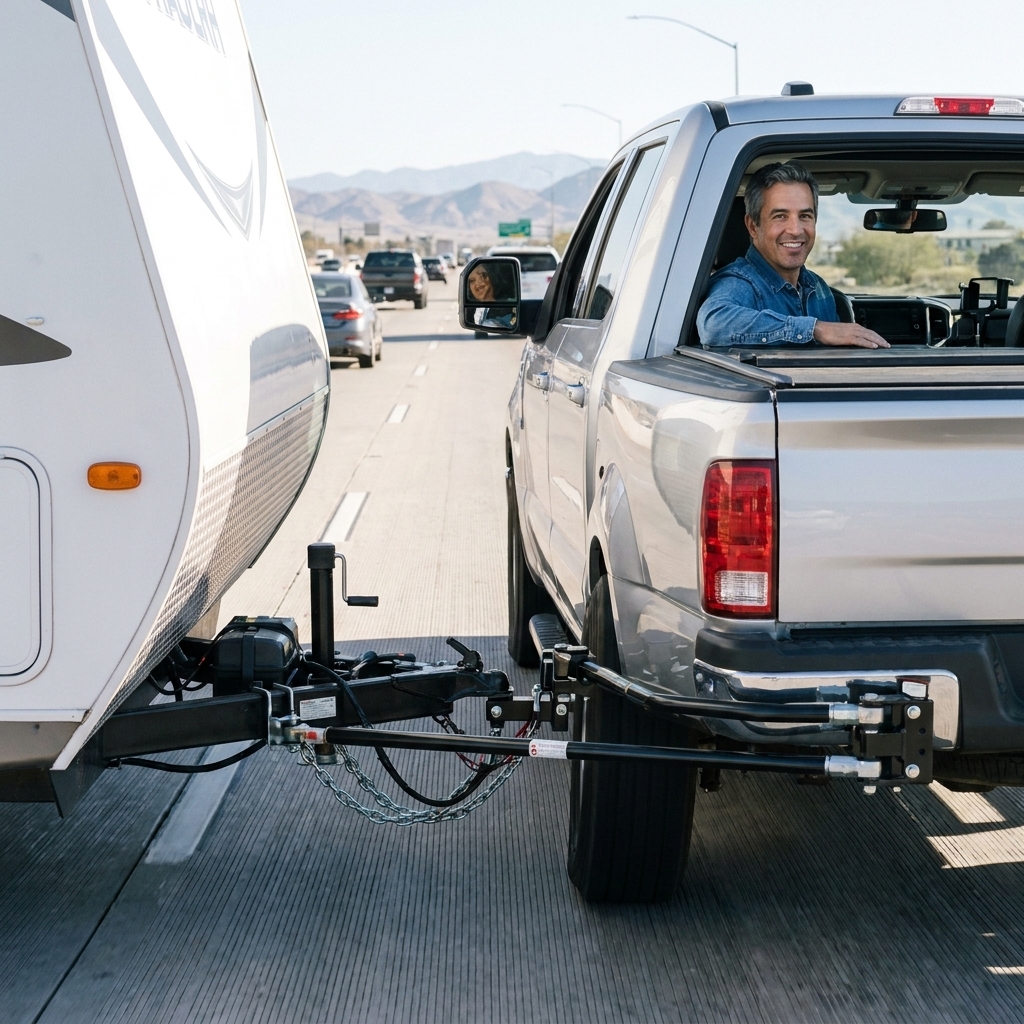
I have watched more than a few “perfectly fine” trailer setups turn white knuckle on the highway, and it usually comes down to one thing: where the weight is placed. You can have the right truck, the right hitch, and good tires, but if the trailer is loaded wrong, it can still sway, squat your rear suspension, and lengthen stopping distance.
This guide walks you through the 60/40 rule (what it is and what it is not) and a simple, repeatable method to load a trailer so it tows straight, brakes predictably, and does not beat up your truck.
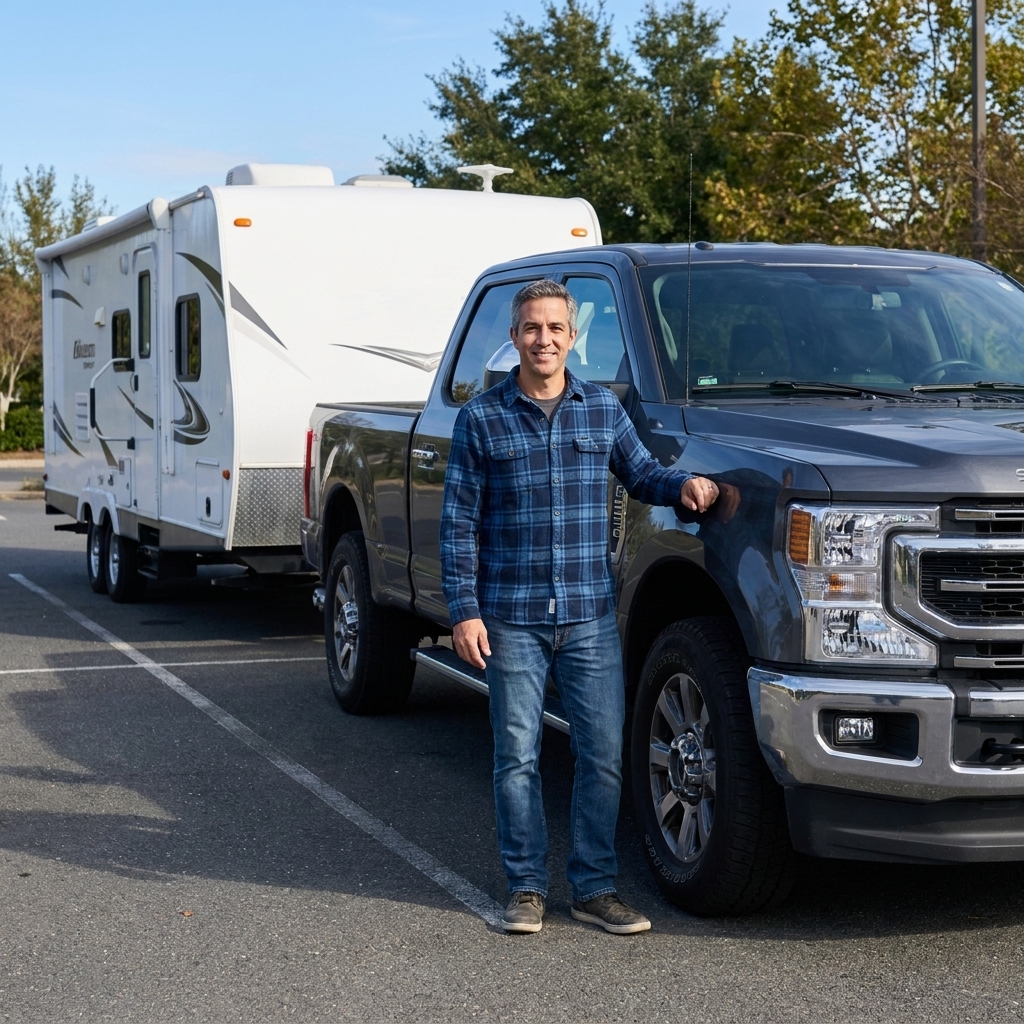
Start with the goal: tongue weight
When people say “load it for 60/40,” what they are really chasing is enough tongue weight to keep the trailer tracking behind the truck like it is on rails.
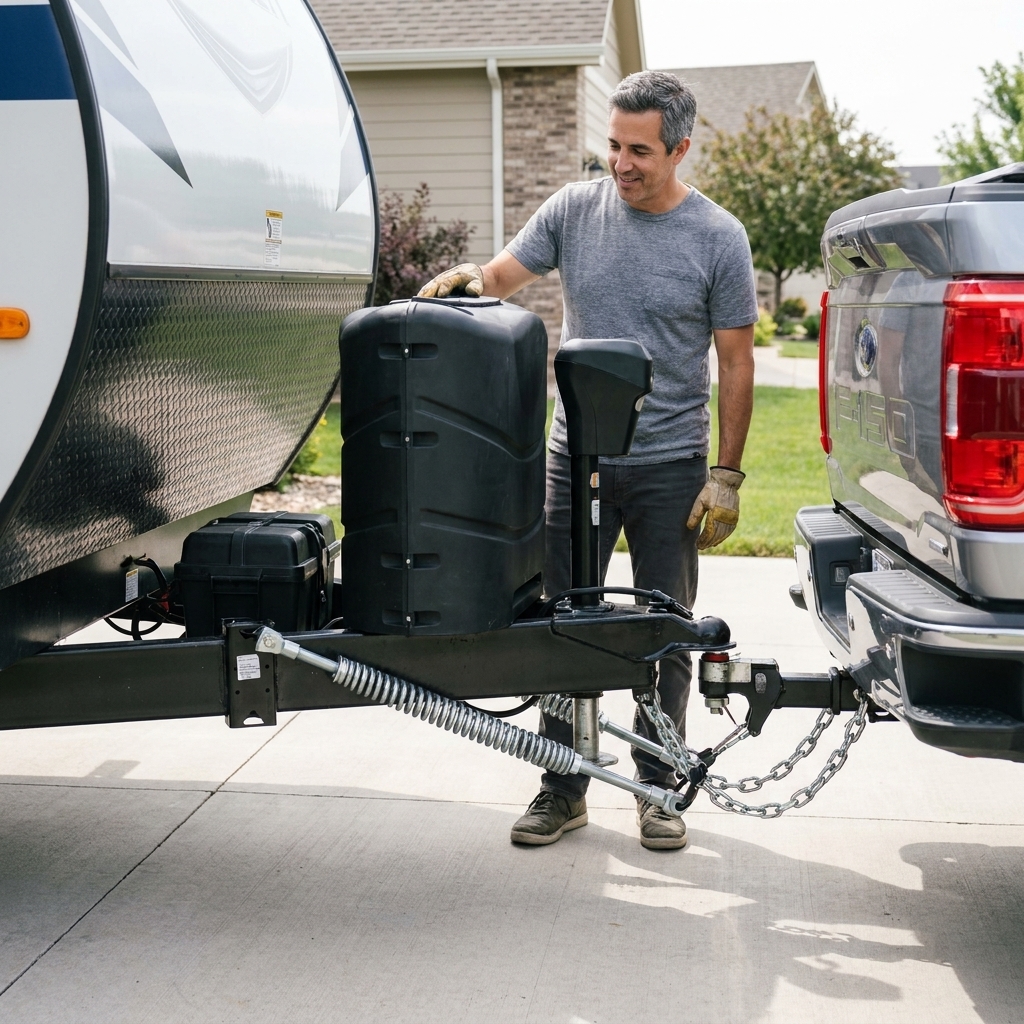
Tongue weight is the downward force the coupler puts on your hitch ball (we are talking bumper pull here). Too little tongue weight is one of the fastest ways to create trailer sway.
Quick tongue weight targets
- Most bumper-pull trailers: aim for 10 to 15 percent of the trailer’s total loaded weight on the tongue.
- Many travel trailers: often like 12 to 15 percent for calmer towing, especially in crosswinds.
- Boat trailers and some utility trailers: can be fine closer to 10 to 12 percent, but designs vary a lot.
Important: If your trailer manufacturer specifies a tongue weight range or loading method, that guidance wins over any rule of thumb.
Example: If your trailer weighs 5,000 lb loaded, you want roughly 500 to 750 lb of tongue weight.
Ben’s driveway rule: If your trailer is light on the tongue, it will try to steer the truck. If it is heavy on the tongue, it will try to squat the truck.
What the 60/40 rule means
You will hear the “60/40 rule” explained a few different ways. Here is the most useful version for real-world loading:
Aim for a forward bias. In plain language, you want more of your movable cargo weight forward of the trailer axle group than behind it.
Some people phrase that as “60 percent forward, 40 percent behind.” That can be a helpful mental check, but it is not a precise standard you can apply across every trailer. Tongue weight is about leverage (how far items sit from the axle group) plus the trailer’s built-in balance from its design, tanks, and fixed equipment.
So treat 60/40 as a directional reminder: do not accidentally turn the trailer into a tail-heavy pendulum.
Key cautions
- Do not overload the tongue. Your hitch, receiver, and truck payload all have limits.
- Multi-axle trailers are not “immune” to sway. A small rearward shift can still unload the tongue and get ugly at speed.
- Watch axle loads too. Moving weight changes tongue weight and can also overload a trailer axle. Stay under each GAWR, not just GVWR.
- A weight distribution hitch is not a fix for low tongue weight. A WDH can improve ride height and steering feel, but it cannot replace adequate tongue weight. If the tongue is too light, you must change loading.
Before you load: know limits
Good weight distribution starts on paper, not at the ramp.
1) Trailer ratings
- GVWR (trailer): the maximum the trailer is allowed to weigh when loaded.
- GAWR (axles): max allowed on each axle.
- Tire load rating: each tire’s max load at a given PSI.
2) Truck and hitch ratings
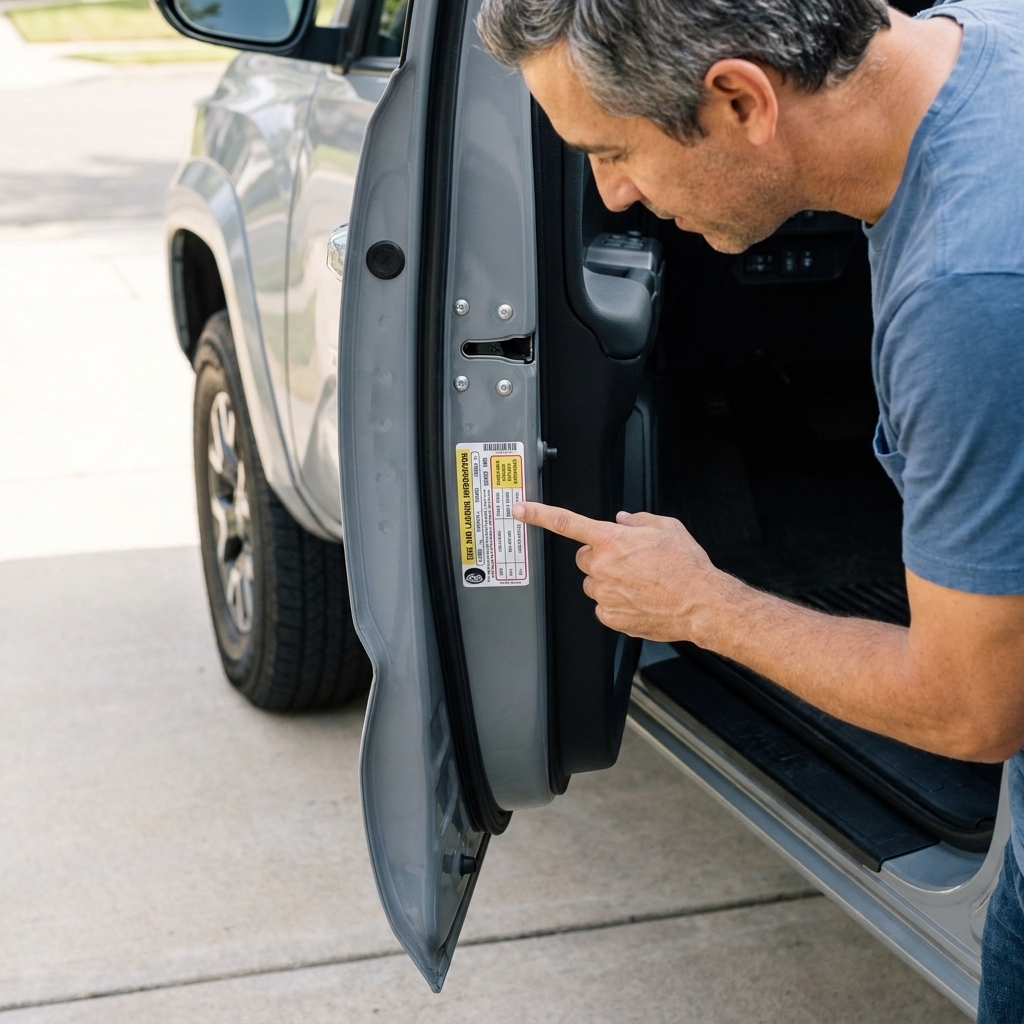
- Payload (driver door sticker): everything in the truck counts, including passengers, tools, the hitch itself, and tongue weight.
- Receiver rating: often listed as “weight carrying” and “weight distributing.” Use the right one for your setup.
- Tow rating: not the only number that matters. You can hit payload long before you hit max tow.
3) Measure what you can
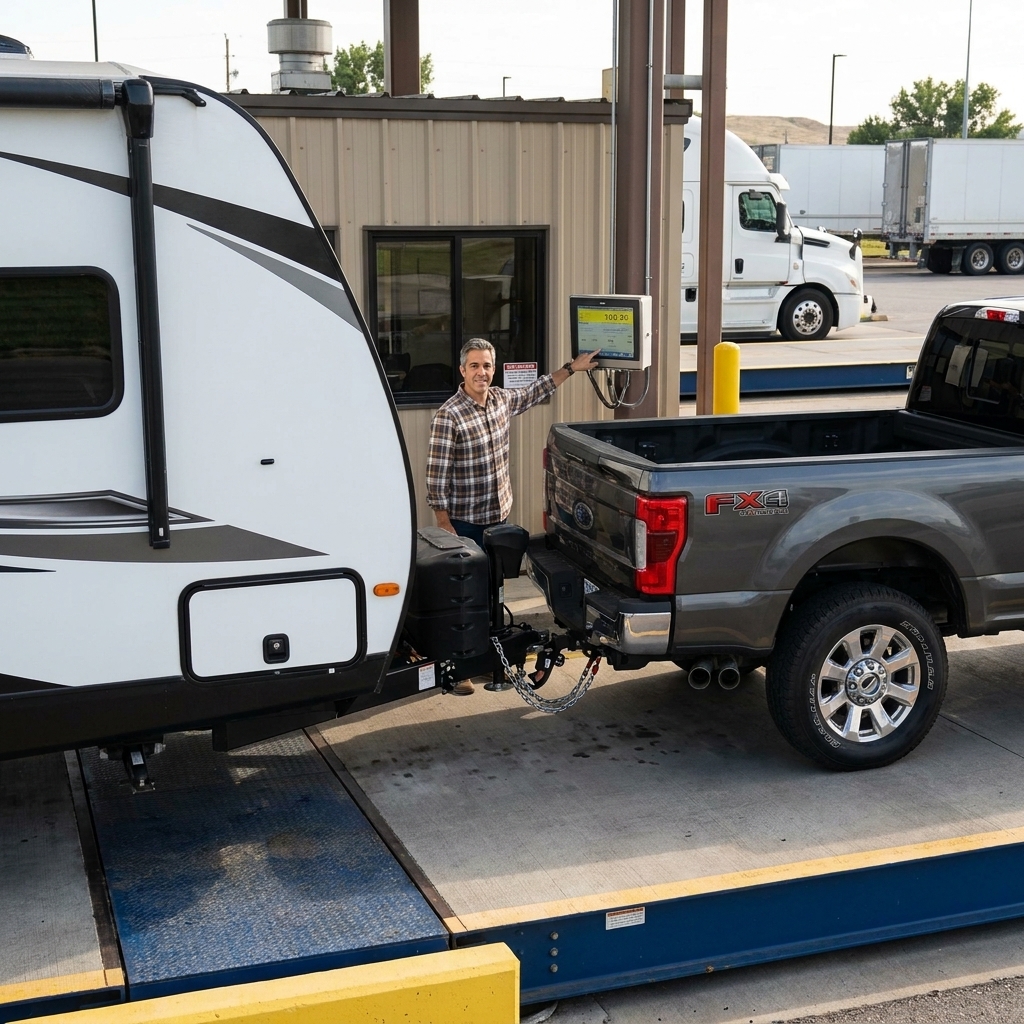
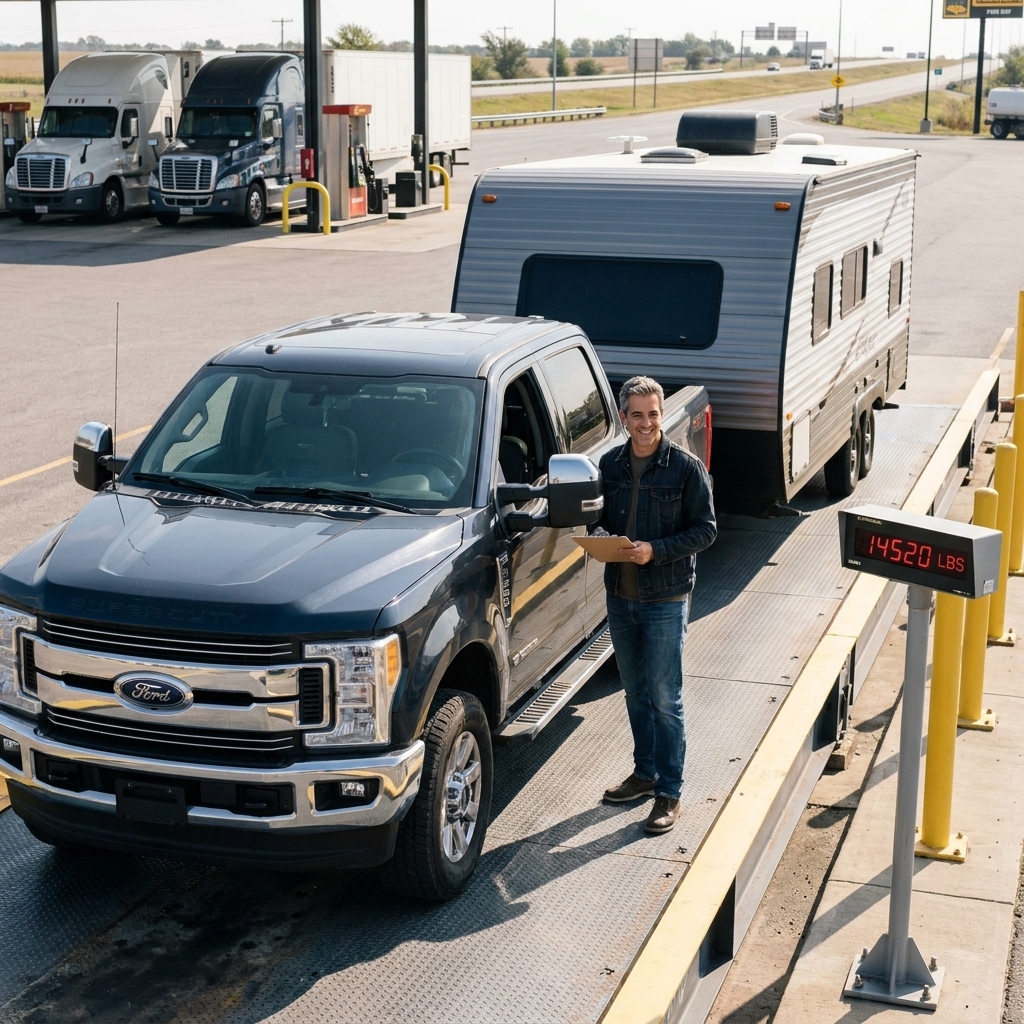
The best money you can spend for safer towing is a couple of scale tickets.
- Use a CAT scale (or any certified public scale) to get truck front axle, truck rear axle, and trailer axle weights.
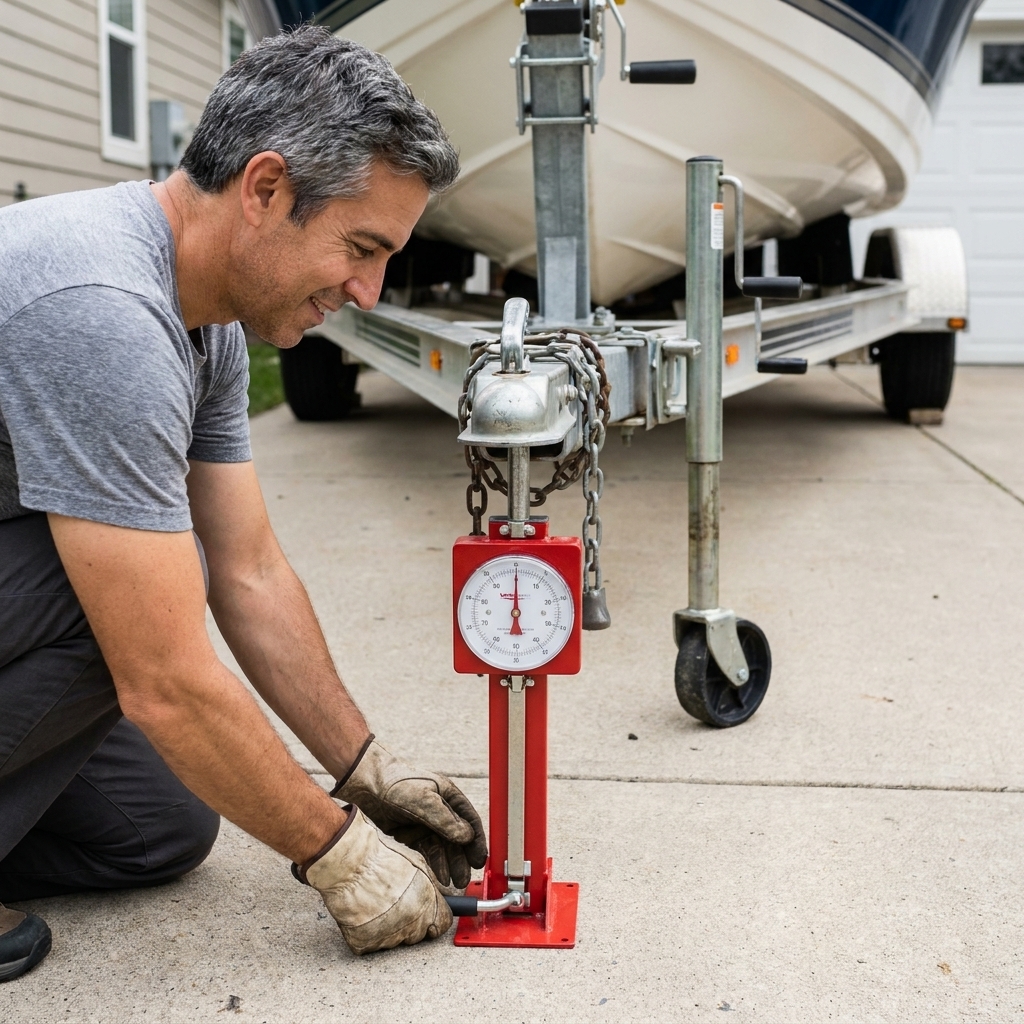
- Use a tongue weight scale if you want a direct tongue weight number at home.
Step by step: load it right
Step 1: Put heavy items low
Your heaviest cargo should generally sit as low as possible and close to the axle group. Low keeps the center of gravity down, and near the axles keeps you from wildly changing tongue weight.
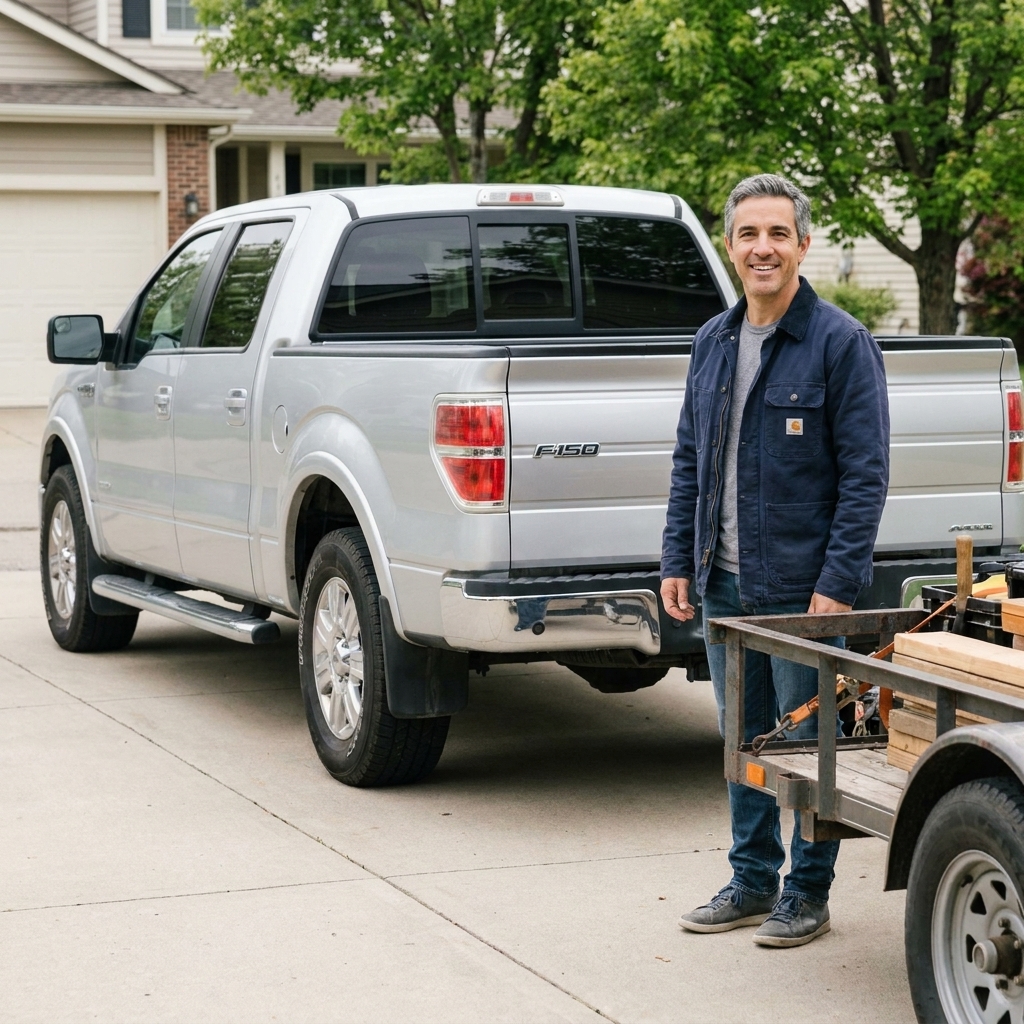
- Utility trailer: tool chests, generators, or pallets go low, slightly forward of the axle centerline.
- Enclosed trailer: heavy bins and shop equipment on the floor, not stacked.
- Travel trailer: heavy supplies in low compartments near the axles, not piled in the rear kitchen or rear storage.
Step 2: Bias forward, then verify
Once the heavy stuff is close to the axles, bias the overall load forward. If you imagine your trailer floor as a seesaw, you want it slightly tipped toward the coupler, not toward the rear bumper.
If you are fighting sway, one of the safest first adjustments is to move some mass forward in small steps, then verify with scale numbers or a tongue weight scale. Guessing is how people chase their tail.
Step 3: Balance left to right
Side-to-side imbalance can make the trailer lean, overload one tire, and feel twitchy in corners.
- Spread similar-weight items across both sides.
- If you must load one side heavier, do it intentionally and confirm tire pressures and ratings.
Step 4: Tie it down like it will move
Cargo that shifts is cargo that changes your tongue weight while you are rolling. That is when “it towed fine at 55” turns into “why is it swaying at 63?”
- Use rated tie-downs with a working load limit that matches the job.
- Cross-strap where possible to limit side movement.
- Block and brace rolling items. Wheels love to find the weakest corner.
- Recheck straps after the first 10 to 15 miles.
Step 5: Make it level
Stand back and look at the whole rig on level ground.
- Trailer should sit level or slightly nose-down.
- Truck should not look like it is dragging tail. A little squat is normal, but excessive squat means you are likely over on payload, tongue weight, or you need to revisit hitch setup.
Trailer sway: do this
Trailer sway is not just annoying. It can turn into a loss of control fast, especially on downhill grades or when a semi blows by you.
Do this
- Add tongue weight by moving cargo forward in small steps.
- Slow down. Sway is speed-sensitive. Dropping 5 to 10 mph often calms it immediately.
- Use your trailer brake controller if you have one. If sway starts, keep the wheel straight and manually apply trailer brakes gently to pull the trailer back in line. Avoid stabbing the truck brakes.
- Check tire pressure on truck and trailer. Underinflated trailer tires can feel squirrely and run hot.
- Confirm hitch height so the trailer tows level.
- Use the right hitch for the job. Many travel trailers tow better with a weight distribution hitch and integrated sway control.
Do not do this
- Do not load heavy items at the very rear to “balance” squat. That can reduce tongue weight and invite sway.
- Do not try to steer out of sway. Keep a steady wheel and let the rig settle.
- Do not rely on sway control to cover for low tongue weight. It is a helper, not a bandage for tail-heavy loading.
Brake controller basics
A brake controller can turn a tense tow into a calm one, but only if it is set correctly.
- Set gain in a safe, empty lot. At a low speed, apply the manual lever. You want the trailer brakes to slow the rig firmly without locking up.
- Recheck after loading changes. More trailer weight usually needs more gain.
- Confirm the brakes are actually working. A loose plug, a blown fuse, or a bad ground can leave you with little or no trailer braking, which can feel like sway or push in stops.
Truck squat: what it means
Truck squat is not automatically dangerous, but it is information. Too much squat can mean:
- Tongue weight is too high for your truck’s payload or rear axle rating.
- Your load is too far forward in the trailer.
- The hitch is not set up right (wrong drop or rise, or weight distribution not adjusted).
- Rear suspension is soft or worn (especially on older half-tons or work trucks).
Fixes that help
- Reposition cargo slightly rearward only if you can do it without going under safe tongue weight.
- Set up a weight distribution hitch correctly to transfer some load back to the front axle and trailer axles.
- Verify payload with real scale numbers. Guessing is how people overload trucks.
Skip the temptation to “solve squat” by moving everything behind the axles. That is how you trade squat for sway, and sway is the scarier problem.
Check tongue weight at home
You do not need a shop to get useful tongue weight info. Here are a few practical options:
1) Use a tongue weight scale
This is the easiest and most accurate DIY method. It is also fast enough that you will actually use it.
2) Use a public scale and do the math
A simple, reliable method:
- Weigh the truck alone (front axle and rear axle).
- Weigh the truck and trailer together with all axles on the scale (truck front, truck rear, trailer axles).
- Tongue weight is approximately: (truck front + truck rear with trailer) minus (truck front + truck rear alone).
This will not be perfect down to the pound, but it is accurate enough to diagnose a light tongue or an overloaded truck rear axle.
3) Use “feel” only as a last check
If the coupler is easy to lift by hand or your trailer jack feels suspiciously light, that can hint at low tongue weight. But do not let feel replace numbers, especially with bigger trailers.
Common trailer types
Utility trailers
- Load heavy items slightly forward of the axle centerline.
- Keep stacks low and strapped.
- Watch for side-to-side imbalance if you load mowers or ATVs.
Enclosed cargo trailers
- They hide problems because you cannot see shifting cargo.
- Use E-track or D-rings and strap in layers, not just at the rear door.
- Do not store the heaviest items in the rear to “make room.”
Travel trailers
- Keep heavy gear out of the rear bumper area and rear storage unless the manufacturer specifically rates it for weight.
- Water is heavy. If you tow with a full fresh tank, realize you just moved several hundred pounds to wherever that tank sits.
- Recheck balance after adding batteries, solar, generators, or bike racks.
Car haulers
- The vehicle position is the load. Move the car forward or back in small increments to dial in tongue weight.
- Secure by the wheels or manufacturer-approved tie-down points and recheck straps.
Trailer tires and hitch checks
Two small problems that cause big trouble are tired trailer tires and sloppy hitch setup.
- Trailer tires: use the tire type and load range recommended for the trailer. Many trailers are designed around ST-rated tires. Replace tires that are cracked, bulging, frequently losing air, or aging out, even if the tread looks fine.
- Ball size and coupler match: confirm the coupler and hitch ball are the same size, and the coupler fully seats before you lock it.
- Coupler and ball: keep parts in good shape. A worn coupler or undersized ball can create slop and noise you should not ignore.
Pre-trip walkaround
- Coupler: fully seated on the ball, latch locked, pin installed.
- Ball size: confirmed match to the coupler.
- Safety chains: crossed under the coupler, enough slack for turns, not dragging.
- Breakaway cable: clipped to the truck (not to the chains).
- Lights: running, brake, and turn signals confirmed.
- Brakes: controller shows connection and manual lever applies trailer brakes.
- Tires: correct PSI cold, no dry rot, no bulges.
- Load: straps tight, doors latched, nothing loose that can shift.
- Mirrors: adjusted so you can see down both sides of the trailer.
FAQ
Is the 60/40 rule the same as 10 to 15 percent tongue weight?
They are related, not identical. The 60/40 rule is a loading approach that usually helps you land in a safer tongue weight range. The tongue weight percentage is the target that actually matters, and it is worth verifying with a scale.
Should a trailer be level, or nose-down?
Level is a great baseline. Slightly nose-down is usually fine. Nose-up is where handling and braking can get weird fast because you can unload the tongue and overload the rear of the trailer.
Can I fix sway by adding airbags to my truck?
Airbags can help with ride height, but they do not automatically fix sway. Sway is most often a tongue weight and loading problem, sometimes combined with speed, wind, and soft tires.
What is the biggest loading mistake you see?
Heavy stuff at the very back. People do it to reduce squat or to keep the front storage clear. The trailer might look better parked, but it tows worse where it counts.
Bottom line
Load heavy items low and near the axles, keep the overall load biased forward, and aim for solid tongue weight in the 10 to 15 percent range. Then confirm you are under GVWR, under each GAWR, and under your truck’s payload with real scale numbers.
Rules of thumb are helpful, but the trailer and truck manuals, your ratings stickers, and the scale ticket are what keep you honest.