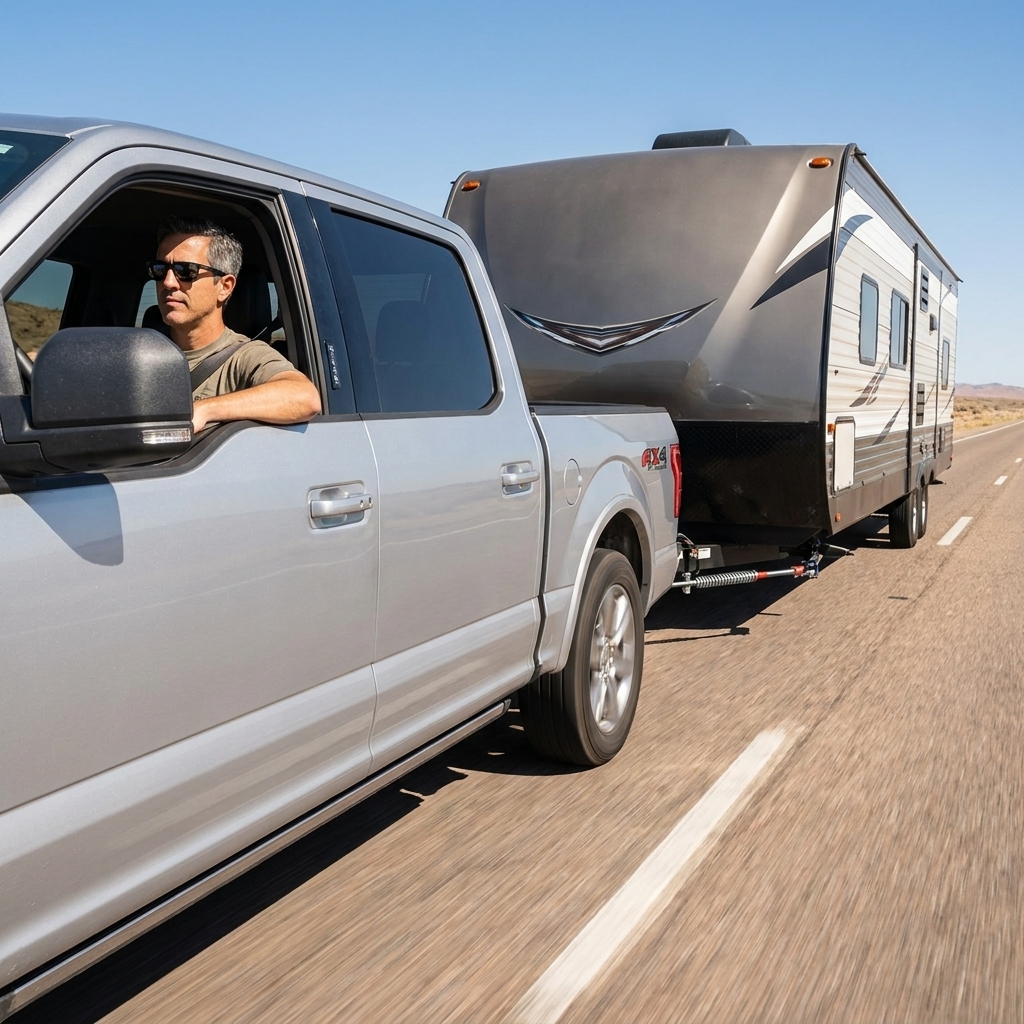
If I could fix one thing I see on the highway every summer, it would be this: folks buying a truck based on the biggest towing number in the brochure, then wondering why the rear end squats like a tired mule once the family and the camper are loaded up.
Here’s the truth from years of fleet work and too many weigh-station conversations: towing capacity tells you what your truck can pull. payload tells you what your truck can carry. A lot of real-world towing setups run out of payload before they run out of “tow rating.”
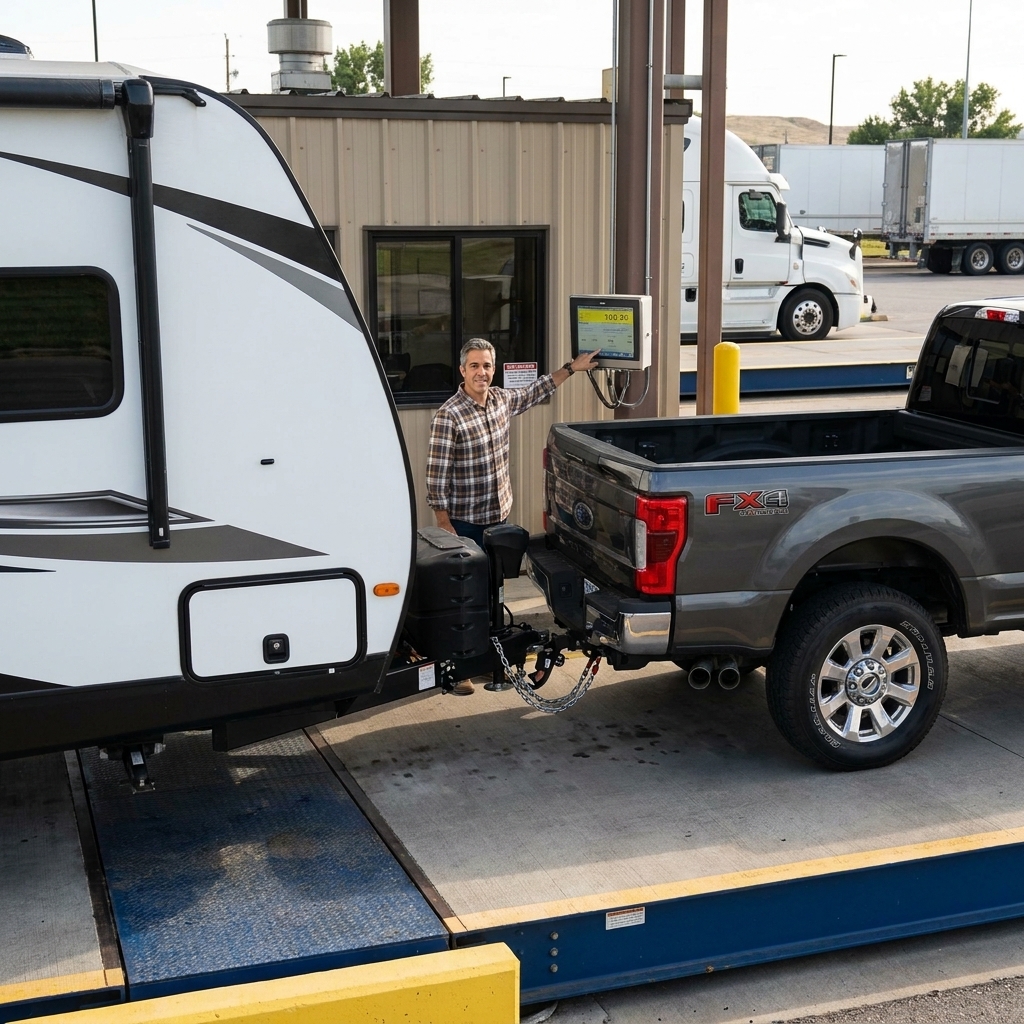
Let’s break it down in plain English, then I’ll show you how to run the numbers for your exact truck.
Quick definitions (no fluff)
Payload
Payload is how much weight your truck can carry inside it and on it. That includes:
- Driver and passengers
- Anything you put in the cab or bed (tools, coolers, firewood, generator)
- Aftermarket accessories (bed cap, heavy bumpers, winch, etc.)
- Trailer tongue weight or fifth-wheel pin weight
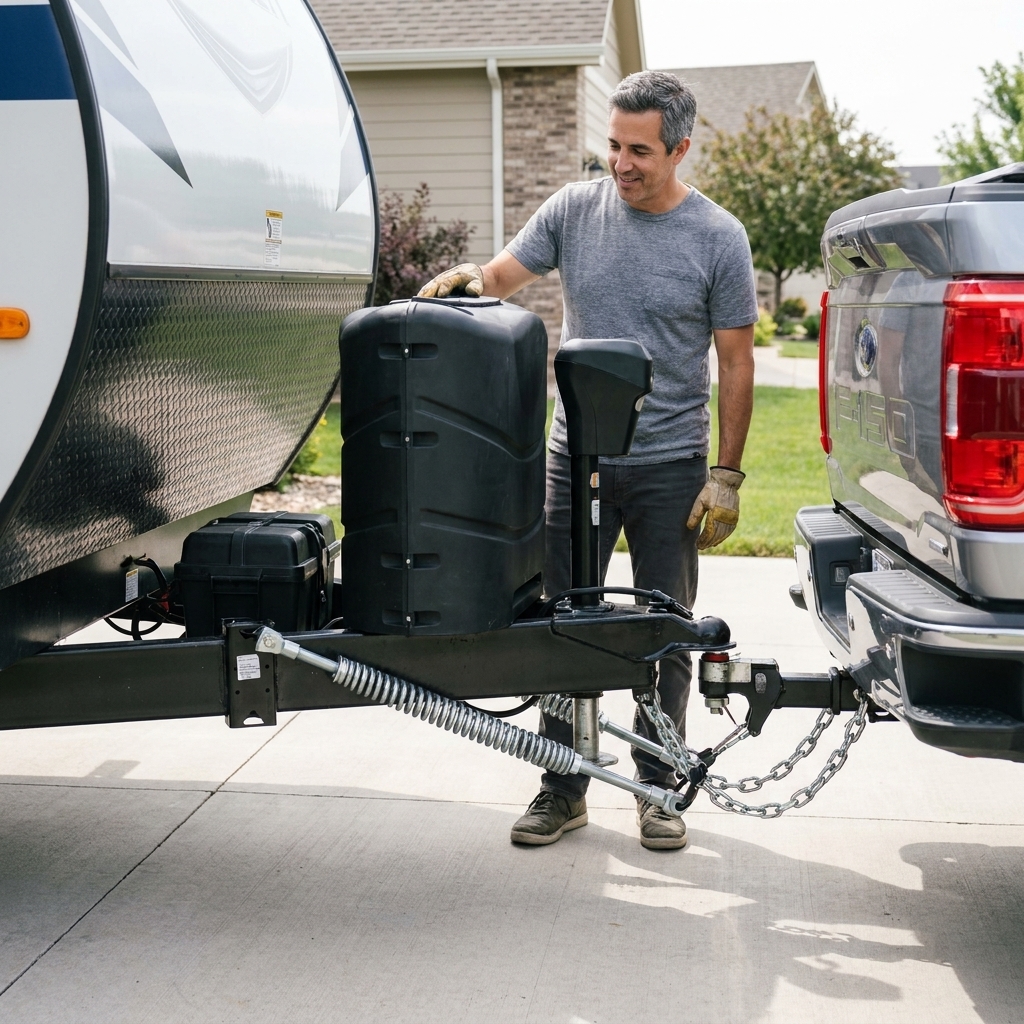
- The hitch itself (especially heavy weight distribution hitch hardware)
A quick but important note: payload comes from your truck’s certified ratings (GVWR and axle/tire limits). It is based on how that specific truck left the factory. If you want to be 100 percent sure how fuel, gear, and accessories are affecting you, the scale never lies.
Towing capacity
Towing capacity is the maximum trailer weight your truck can pull under a specific configuration. It is primarily limited by:
- Engine and cooling capability
- Transmission capability
- Axle ratio
- Brakes
- GCWR (Gross Combined Weight Rating)
- Hitch rating
- How the truck is configured (cab size, drivetrain, options)
The towing number is real, but it assumes a lightly loaded truck. Real families, real gear, and real tongue weight change the game fast.
The ratings that matter
If payload vs. towing capacity feels confusing, it is usually because people are looking at the wrong sticker or the wrong brochure table.
GVWR (Gross Vehicle Weight Rating)
GVWR is the maximum your truck is allowed to weigh fully loaded. That is truck, people, cargo, hitch weight, everything.
Curb weight
Curb weight is what the vehicle weighs with standard equipment and required fluids. Definitions vary a bit by manufacturer, which is why your door-jamb payload sticker is the better “for your exact truck” number than a generic curb-weight figure you find online.
Payload rating (the door sticker number)
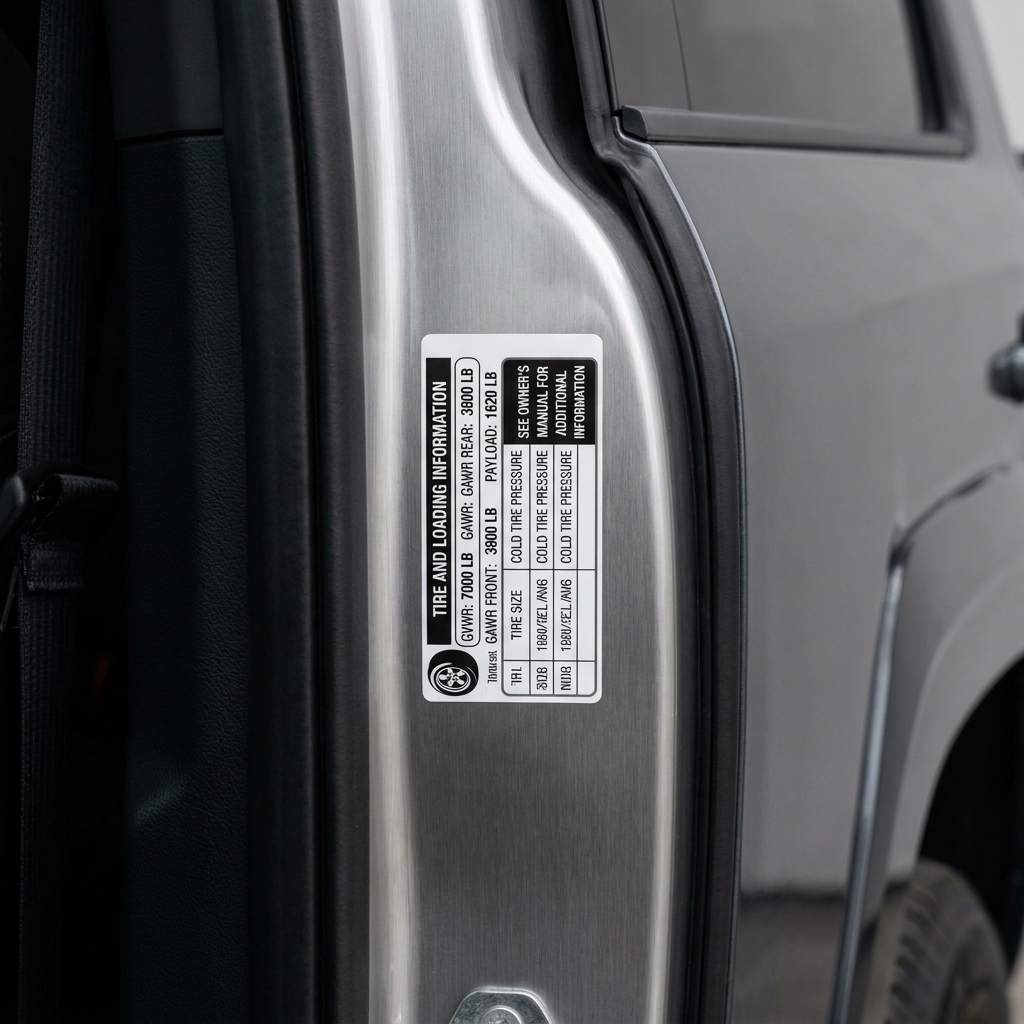
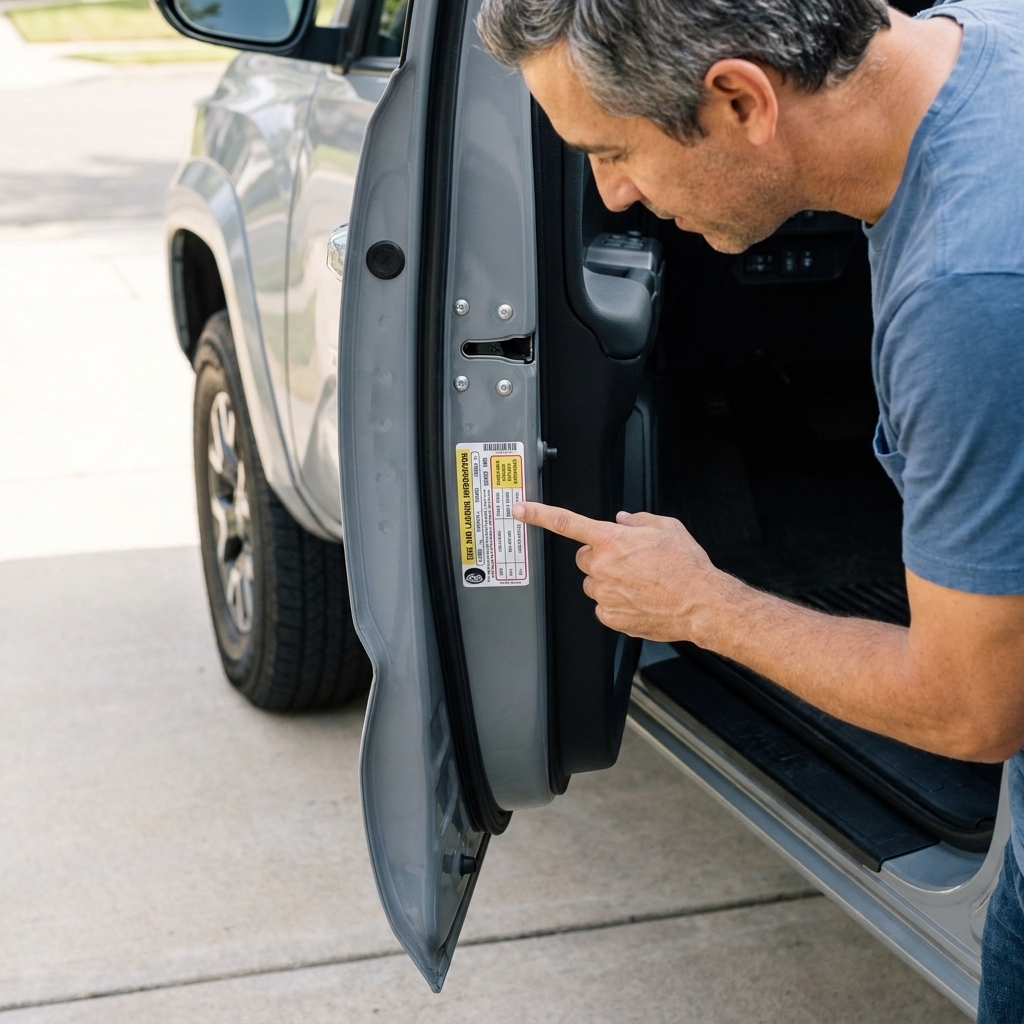
Your most trustworthy payload number is usually on the Tire and Loading Information label on the driver door jamb. It often reads:
“The combined weight of occupants and cargo should never exceed XXX lbs.”
That number is for your specific truck as built, including options. A sunroof, diesel engine, 4x4, bigger cab, fancy wheels, or a heavier trim package can all reduce payload.
One more nuance, because fuel trips people up: the sticker payload is calculated from the truck’s certified as-built weight. In practice, fuel is still part of the vehicle’s total weight. If you run with an extra tank, carry jerry cans, or simply want to verify where you really stand, weigh the truck the way you actually travel.
GAWR (Gross Axle Weight Ratings)
GAWR Front and GAWR Rear are the most each axle can carry. You can be under GVWR and still overload your rear axle if you have a heavy tongue weight and a bed full of gear.
GCWR (Gross Combined Weight Rating)
GCWR is the max allowed weight of the truck and trailer combined. This is the backbone of towing capacity math.
Hitch ratings
Your receiver hitch (and the ball mount) has its own ratings. You will typically see two sets:
- Weight Carrying (WC) rating
- Weight Distributing (WD) rating
Pay attention to the tongue-weight limit in each mode. Many receivers have a lower tongue rating in WC mode than they do with a WD hitch.
Exceeding hitch ratings is a fast way to turn a normal tow into a dangerous one, even if your engine “feels fine.”
Why payload runs out first
When you hitch up a trailer, you are not only pulling weight. You are also placing weight on the truck:
- Conventional bumper-pull travel trailer: tongue weight is usually 10 to 15 percent of loaded trailer weight
- Fifth-wheel or gooseneck: pin weight is commonly 15 to 25 percent of loaded trailer weight
That tongue or pin weight counts as payload. Add people and gear, and payload disappears quickly.
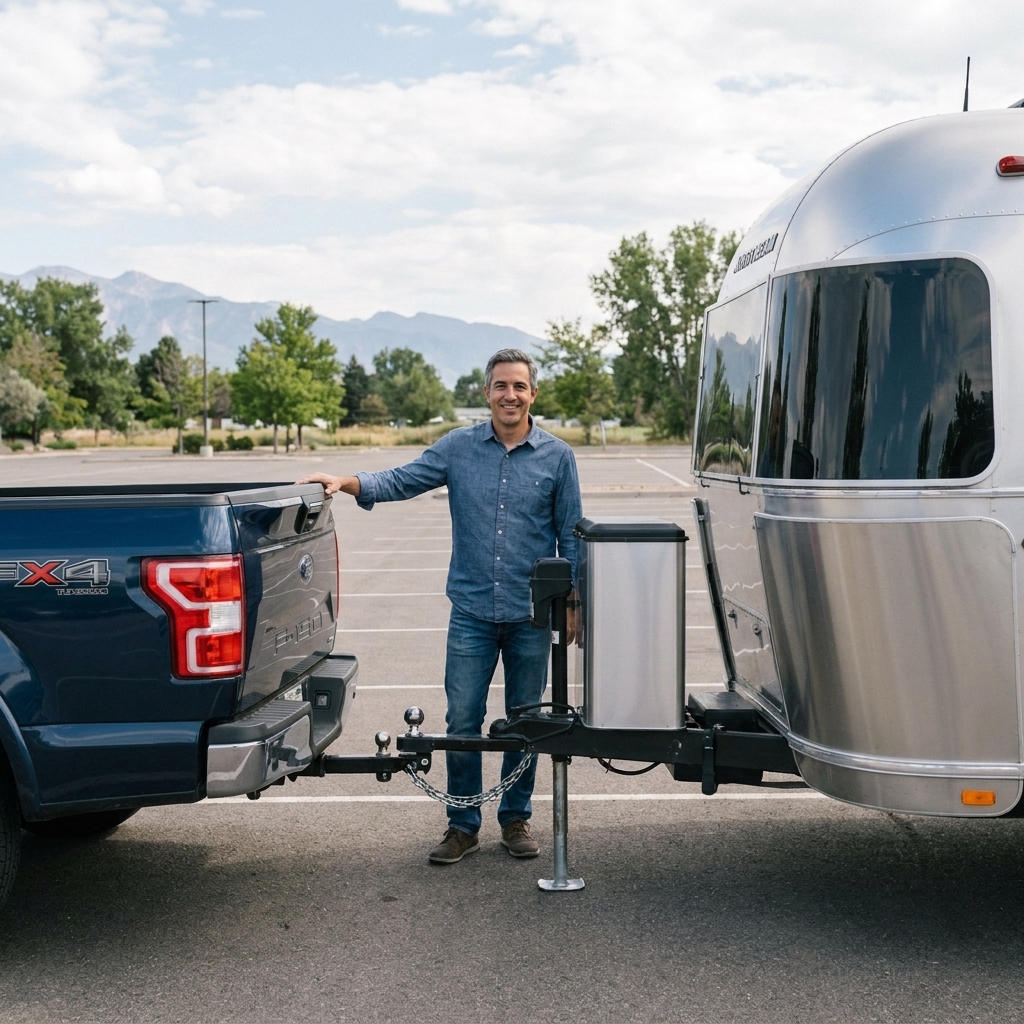
Example you will recognize if you tow a camper:
- 7,500 lb travel trailer (loaded for a trip)
- 13 percent tongue weight = 975 lb on the truck
- Two adults (about 350 to 450 lb total), two kids (120 to 200 lb total), plus a dog and everyday cab stuff (50 to 150 lb)
- Stuff in the bed (chairs, grill, tools, wood): often 200 to 500 lb
- Weight distribution hitch hardware: often 60 to 120 lb
It is very common to put 1,600 to 2,000 lb of payload demand on a truck while towing a “7,500 lb” trailer. Plenty of half-tons can pull that trailer weight from a power standpoint, but they cannot always carry the tongue weight and people without exceeding payload or rear axle limits.
How to run your numbers
Step 1: Find your payload on the door sticker
Open the driver door and look for the yellow and white Tire and Loading label. Write down the “occupants and cargo” number. That is your starting payload budget.
Step 2: Subtract what is in the truck
Subtract the real stuff that will be in the truck when you tow:
- Driver
- Passengers
- Car seats
- Coolers, tools, firewood
- Aftermarket add-ons you installed (bed cover, topper, etc.)
Be honest. People tend to “estimate light” and then wonder why the numbers do not work.
Step 3: Estimate tongue weight or pin weight correctly
Do not use the brochure “dry hitch weight” from the trailer manufacturer for safety decisions. Dry numbers are often measured with empty tanks and no batteries, propane, food, gear, or bikes.
If you have not weighed your trailer, the conservative planning approach is to work from the trailer’s GVWR (its max allowed weight) and a realistic tongue-weight percentage. It is a lot easier to be pleasantly surprised at the scale than to discover you are overloaded after you buy.
Use one of these methods:
- Best: measure tongue weight with a scale or at a CAT Scale using axle weights
- Good estimate: 12 to 15 percent of loaded trailer weight for travel trailers
- Good estimate: 18 to 22 percent of loaded trailer weight for many fifth-wheels
Step 4: Confirm rear axle and tire limits
Even if your math says “under payload,” your rear axle might be the real limiter. The easiest way to know is to weigh the truck:
- Weigh the truck alone (front axle and rear axle)
- Hitch the trailer and weigh again
- Compare axle weights to your GAWR ratings on the door sticker
If the rear axle or tires are overloaded, you need to reduce tongue weight, move cargo, adjust your setup, or step up to a more capable truck.
Step 5: Check GCWR to validate towing capacity
Towing capacity is essentially:
Max trailer (approx.) = GCWR minus actual loaded truck weight
That is why a truck with a high tow rating on paper can lose towing capacity as you add people, gear, and a heavy hitch.
Just keep in mind: even if you are under GCWR, you still must stay inside GVWR, GAWR, and hitch limits. Manufacturer tow ratings can also depend on specific equipment and configurations (axle ratio, cooling packages, and so on).
Real numbers example
Let’s say your door sticker payload is 1,650 lb. Here is a realistic weekend camping load:
- Driver and one adult passenger: 380 lb
- Two kids: 160 lb
- Dog and misc. cab items: 80 lb
- Stuff in bed (chairs, grill, tools): 250 lb
- Weight distribution hitch hardware: 90 lb
Total so far: 960 lb
Payload remaining: 1,650 - 960 = 690 lb
Now your trailer. If it is a 6,000 lb loaded travel trailer and tongue weight lands at 12.5 percent:
6,000 x 0.125 = 750 lb tongue weight
You are now 60 lb over payload before you even toss in the last-minute “Oh, we should bring that too” items.
In the real world, this is where you either:
- Reduce cargo in the truck (and ideally in the trailer too)
- Rebalance the trailer loading to keep tongue weight in the safe range, not too light and not too heavy
- Move to a lighter trailer
- Move to a truck with more payload
Myths that get people hurt
“My truck can tow 12,000 pounds, so I’m good.”
Maybe, maybe not. That 12,000 number often assumes:
- Base model configuration
- Minimal cargo
- One 150 lb driver
- Proper hitch setup
- No heavy accessories
Your truck as equipped might have far less payload than the configuration used to advertise that towing figure.
“A weight distribution hitch increases payload.”
A weight distribution hitch can improve handling and restore front axle weight by shifting some load forward onto the truck’s front axle and back onto the trailer axles. But it does not remove weight from the system, and it does not magically increase:
- GVWR
- GAWR
- Tire ratings
- Payload rating on your door sticker
If you are over payload, the solution is not a different hitch. The solution is less weight or more truck.
“Airbags fix overloading.”
Airbags can level the ride and help with stability. They do not change your legal or mechanical limits. Level does not automatically mean safe.
10-second warning signs
Here are the driveway quick checks I use before we even talk numbers:
- Rear squat that looks extreme, headlights pointing up
- Trailer nose high or nose low
- Soft, wallowy steering on a test drive
- Rear tires looking “rolled over” at the sidewall
- Braking feels delayed or the truck gets pushed around
These symptoms do not prove you are overloaded, but they are strong hints to go weigh the rig and check the math.
Best practices
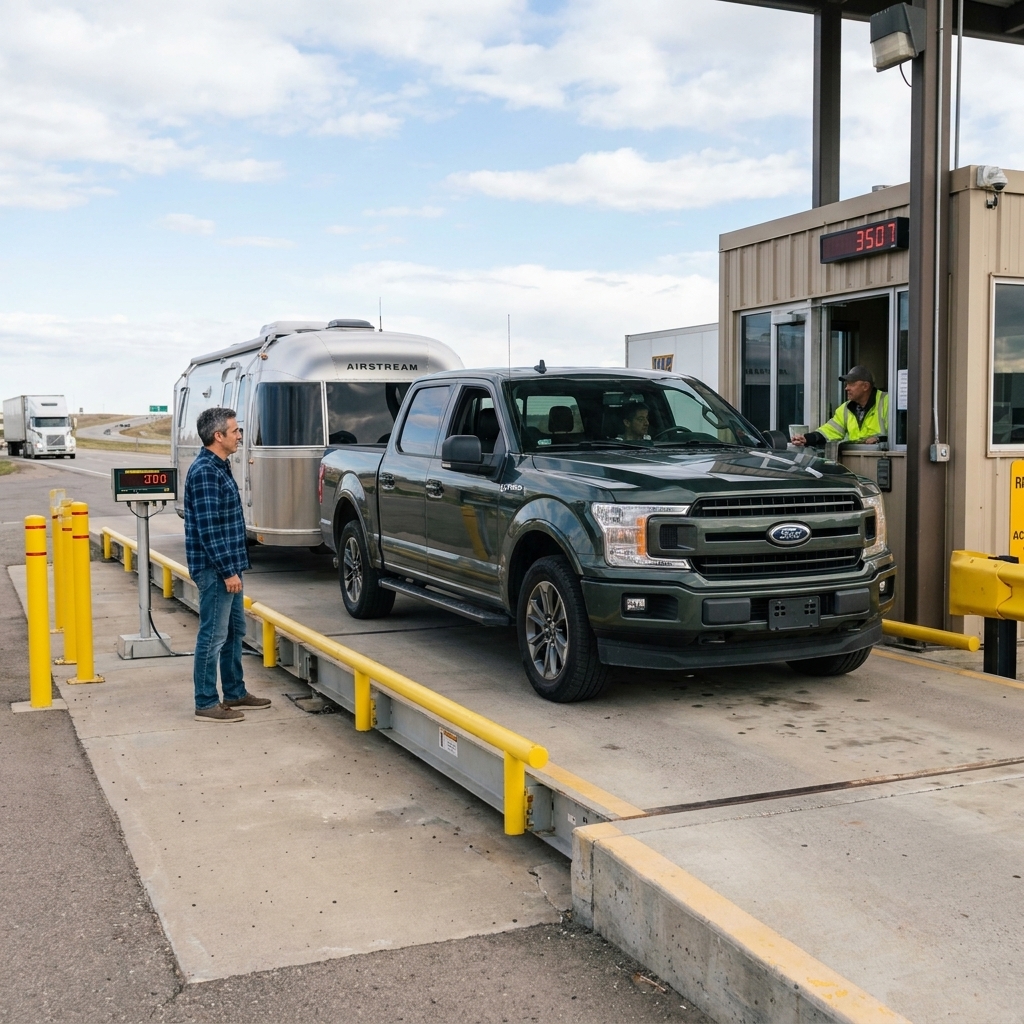
- Weigh your rig at least once. One trip to a public scale can answer more questions than 20 forum threads.
- Load the trailer for travel before you weigh. Water, propane, batteries, food, and gear change everything.
- Keep tongue weight in the safe zone. Too light can cause sway, too heavy can overload the rear axle.
- Match tires to the job. Tire load rating is a hard limit. Also keep pressures where they need to be for the load you are carrying.
- Use trailer brakes and set the controller correctly. A good brake setup is a safety multiplier.
- Do not forget the “small” weights. A bed full of firewood, a generator, or a steel toolbox can eat payload faster than you think.
FAQ
What is more important, payload or towing capacity?
They are both important, but for most travel trailers and campers, payload is the limit you hit first because tongue weight, passengers, and gear add up quickly.
Does tongue weight count toward towing capacity?
Tongue weight is part of the trailer’s weight, but practically speaking it matters most as payload on the truck. Your towing capacity might look fine while your payload or rear axle rating is overloaded.
Where do I find payload for my exact truck?
Look on the driver door jamb for the Tire and Loading Information label that lists the max combined weight of occupants and cargo.
Is payload the same as “cargo capacity”?
People (and even brochures) mix terms. In everyday truck talk, payload and cargo capacity are often used interchangeably. The number that matters for your truck is still the one on the door sticker: combined weight of occupants and cargo.
Can I increase payload with upgrades?
You can improve stability with things like better tires (within wheel limits), suspension components, and a properly set up weight distribution hitch, but you generally cannot increase the manufacturer ratings like GVWR and GAWR. If you need more payload, the cleanest answer is usually a more capable truck or a lighter trailer.
What is a safe tongue weight percentage for a travel trailer?
A solid general target is 10 to 15 percent of the trailer’s loaded weight. Many rigs tow best closer to the middle to upper end of that range, as long as your truck’s payload, rear axle ratings, and hitch tongue ratings allow it.
My neighborly takeaway
If you remember one thing: payload is your truck’s “carry” budget, and towing capacity is its “pull” budget. A safe tow means staying inside both budgets at the same time.
Before you buy a trailer, before you assume your truck is “rated for it,” do two things: read your door sticker payload, and take one trip to the scale. Your truck, your family, and everybody sharing the road with you will be better off for it.