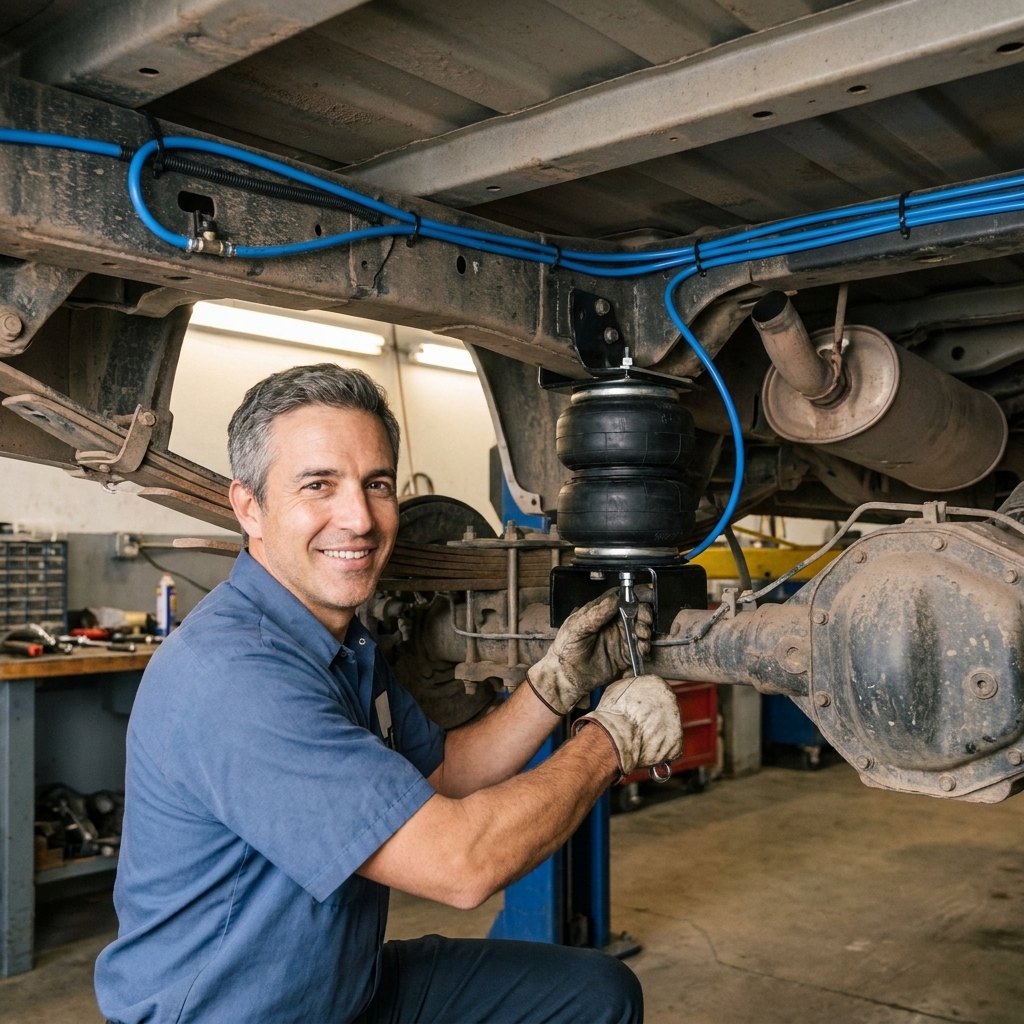
If you have ever stood in your truck bed staring at the floor thinking, “Alright, what am I bolting into here,” you are in the right place. 5th wheel and gooseneck hitches both live in the bed, both put the trailer’s weight over or near the rear axle, and both can be excellent. But they behave differently, they fit different trailers, and they ask different things from your truck, your bed space, and your budget.
I have set up a lot of work trucks for contractors who tow every day, and I also tow a travel trailer for fun. The best hitch is the one that matches your trailer first, then your hauling style, then your need for a clean bed when the hitch is not in use.
The quick difference
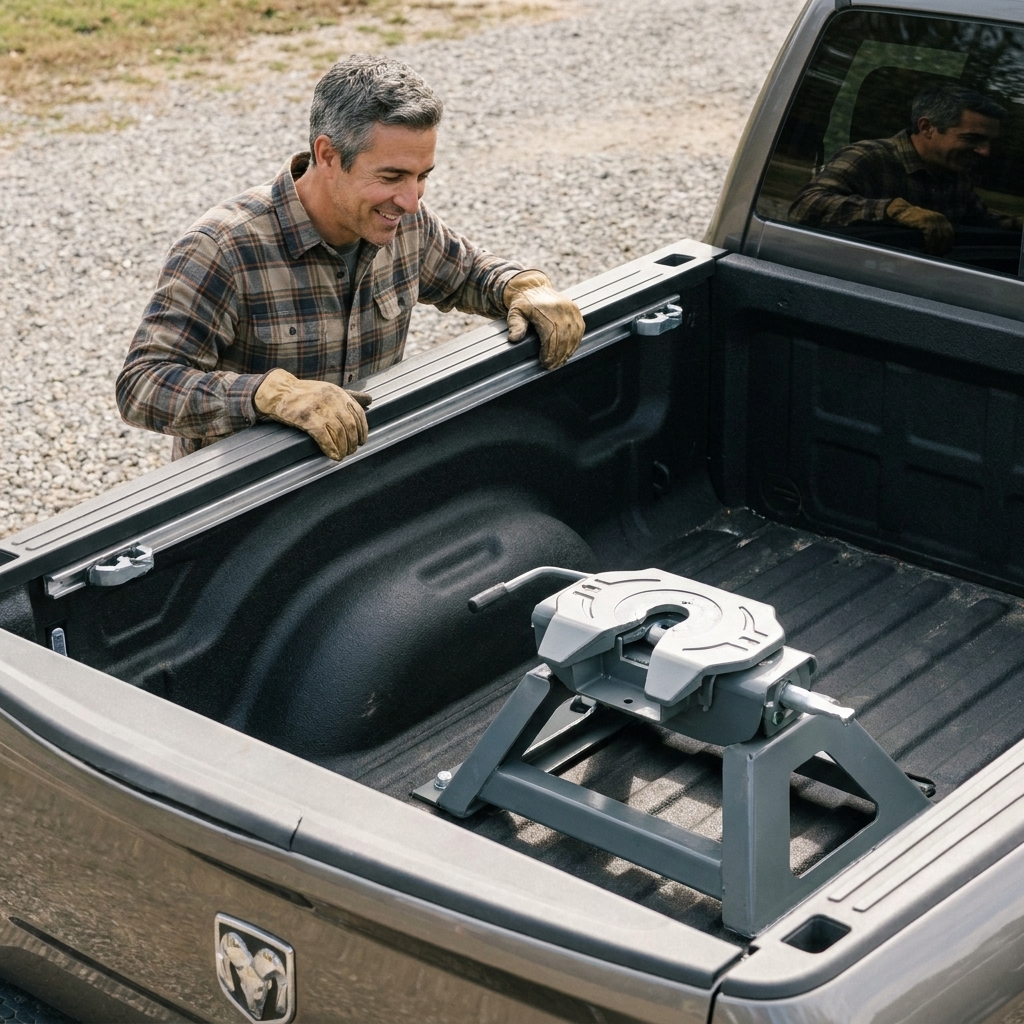
A 5th wheel hitch is a big plate-and-jaw coupler that locks onto a kingpin on the trailer. It is most common on RV 5th wheels and some commercial trailers. It typically rides smoother and is built for that style of pin box.
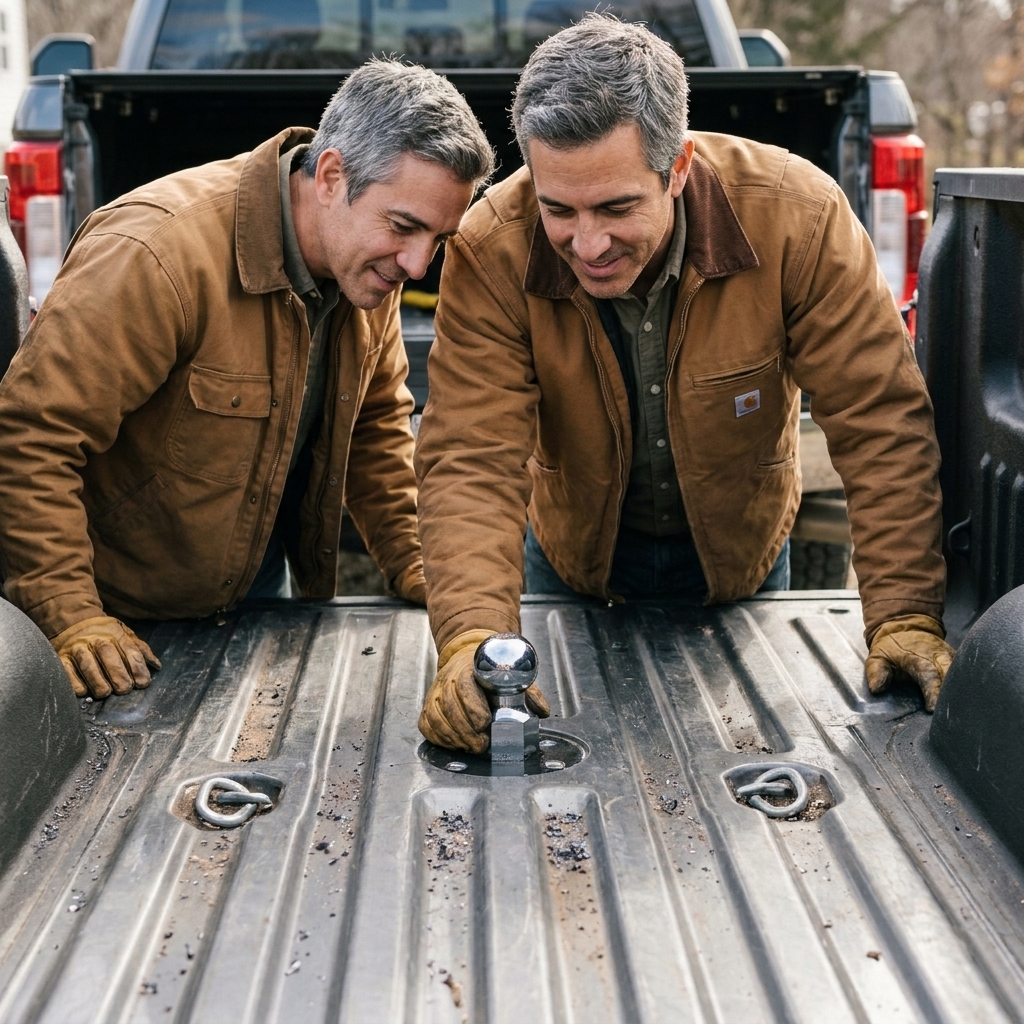
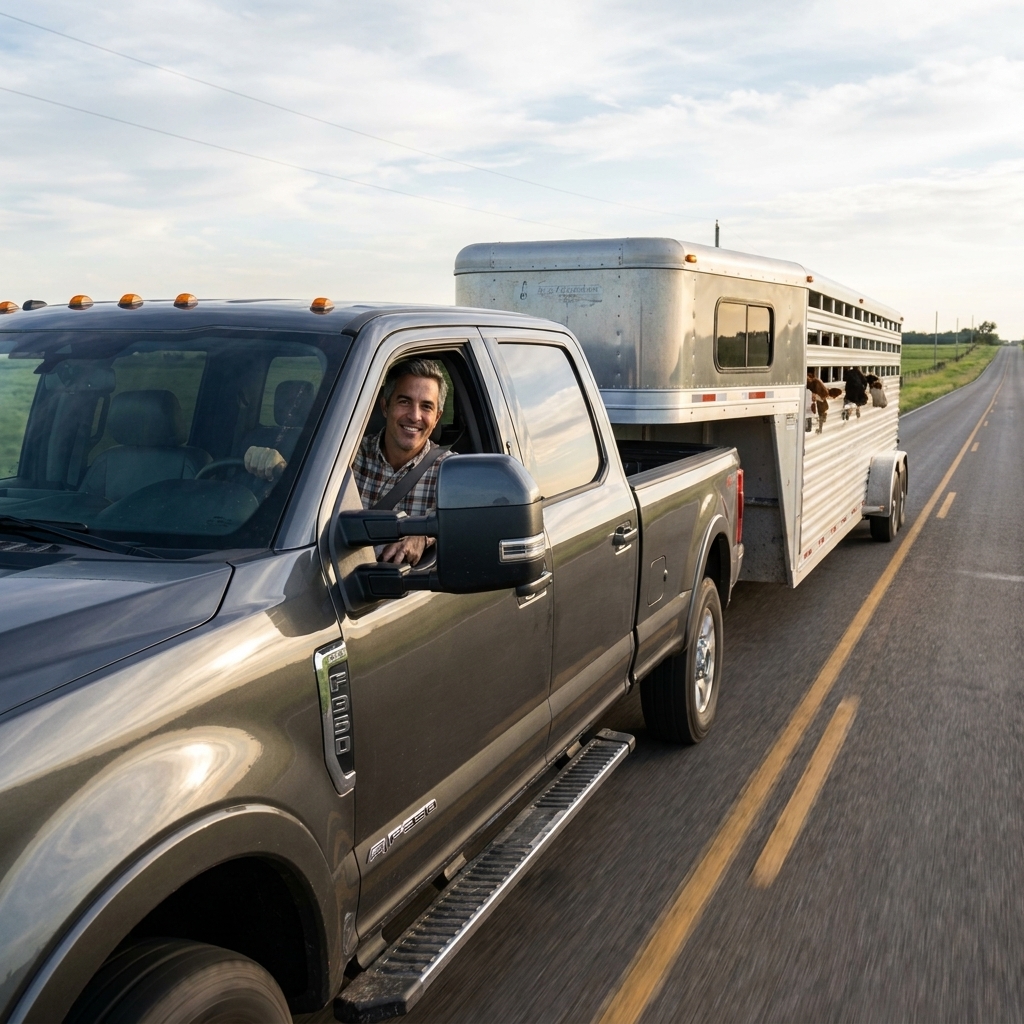
A gooseneck hitch is a ball mounted in the bed (most commonly a 2 5/16-inch ball on heavy-duty setups) that couples to a gooseneck coupler on the trailer. It is most common on flatbeds, livestock trailers, dump trailers, and equipment haulers. It is simple, strong, and leaves more usable bed space when you pull the ball.
How each hitch connects
5th wheel connection (kingpin and jaws)
A 5th wheel trailer has a kingpin that drops into the hitch head. When you back in, the jaws close around the kingpin, and the pin box rests on the hitch plate. This wide contact patch is a big reason 5th wheels feel steady and controlled.
- Mounting: typically on bed rails or a rail-less puck system (OEM prep packages on many HD trucks).
- Coupling: jaws lock around the kingpin. You do a visual check and a pull test.
- Height adjustment: usually several inches of adjustment to level the trailer.
Gooseneck connection (ball and coupler)
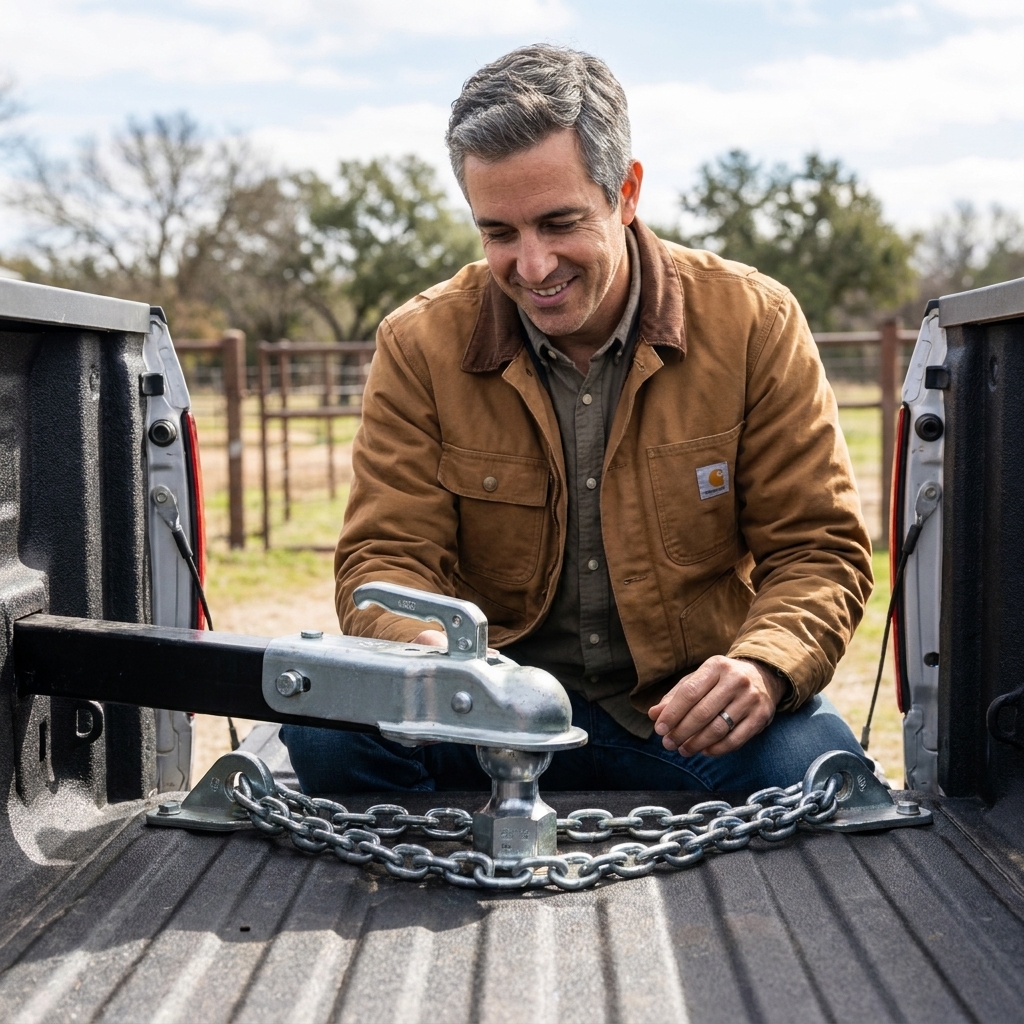
A gooseneck trailer has a coupler that drops over the ball, then a latch closes around it. Safety chains attach to in-bed loops. Because it is a single ball point, there is more articulation, which is great on uneven ground but can feel a bit more busy than a 5th wheel on rough pavement.
- Mounting: under-bed system with a ball in the bed floor, or a flat gooseneck plate with a ball.
- Coupling: coupler drops over the ball, latch closes, chains go on, breakaway cable attaches.
- Bed space: many setups allow the ball to flip, remove, or sit nearly flush.
Pros and cons that matter
Ride quality and chucking
5th wheel: generally the smoother option on the highway, especially with RVs. The wide plate and jaw engagement tends to reduce the start-stop tug you feel through the truck.
Gooseneck: can tow very well, but more drivers notice chuck on concrete seams or rough roads, especially with shorter trailers or stiff suspensions. Some gooseneck trailers tow like a dream, others remind you they are work trailers.
If ride feel is a top priority, it helps to know the common comfort upgrades:
- 5th wheel: cushioned or air-ride 5th wheel hitches, and air-ride or cushioned pin boxes.
- Gooseneck: cushioned or torsion-style gooseneck couplers, and some trailers offer suspension upgrades that calm things down.
Turning clearance and cab contact
5th wheel: on short-bed trucks, cab-to-trailer clearance is the big gotcha. Many RV 5th wheel owners need a slider hitch (manual or auto) or a properly designed pin box to avoid crunching the cab during tight turns.
Gooseneck: often offers better cab clearance because the neck is long and the pivot point can be positioned farther forward than many 5th wheel setups. But it still depends on bed length, ball placement, and the trailer’s nose shape. Very short beds and wide trailer fronts can get close.
Bed usability when you are not towing
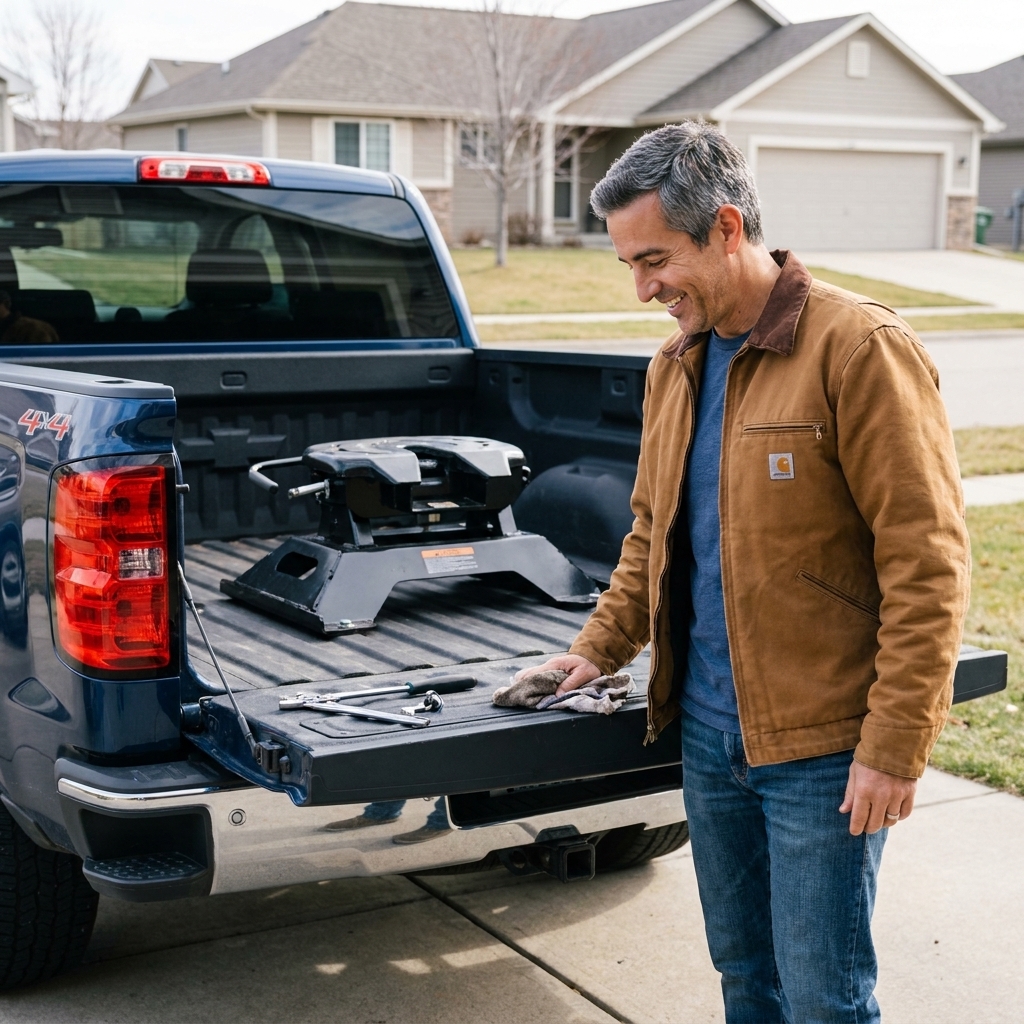
5th wheel: the hitch is large and heavy. Rail systems leave rails in the bed. Puck systems can be cleaner, but the hitch still takes up space unless you remove it.
Gooseneck: often wins here. Many under-bed kits let you remove or flip the ball, leaving a mostly flat bed. For folks who use the truck like a truck Monday through Friday, that matters.
Install complexity and cost
5th wheel: hitch hardware costs more, and the hitch itself is a major purchase. If your truck has OEM pucks, installation is easier, but the hitch still is not cheap.
Gooseneck: typically lower cost for the hitch hardware. Many gooseneck balls are part of an under-bed kit. Labor can be similar depending on truck and kit, but the parts bill is often smaller.
Daily hookup and alignment
5th wheel: backing into a 5th wheel can be very predictable once you learn your truck’s sight lines. You will usually need to get the trailer height just right so you do not high hitch (kingpin riding on top of jaws instead of inside them).
Gooseneck: you can often be a little off and still drop over the ball, but you may find yourself hopping in and out to check latch seating, chain routing, and breakaway placement. Good habits matter more than style of hitch.
Best uses for each
When a 5th wheel fits best
- RV 5th wheels: This is what they are built for. The pin box geometry and hitch plate work together for stability.
- Long-distance towing: If you rack up highway miles, comfort and reduced chucking are a real quality-of-life improvement.
- Higher pin weight RV loads: A properly rated 5th wheel hitch is purpose-built for that vertical load and repeated coupling cycles.
When a gooseneck fits best
- Work trailers: equipment, flatbed, dump, and livestock trailers are commonly gooseneck for a reason. Simple, strong, and practical.
- Uneven job sites and farm ground: the articulation helps when you are cresting ramps, crossing ditches, or working off pavement.
- Trucks that need a clean bed: if you remove the ball and go back to hauling pallets, toolboxes, or hay bales, it is hard to beat.
Weight and bed length basics
Pin weight and tongue weight
Here is the quick context most people are really asking about: how much weight is going to land in the bed.
- 5th wheel pin weight: often lands in the neighborhood of 15 to 25 percent of the loaded trailer weight. Some combinations run outside that range.
- Gooseneck vertical load: commonly in a similar ballpark, but it varies a lot with how the trailer is built and where the load is placed. A skid steer shoved forward is a different day than a load centered over the axles.
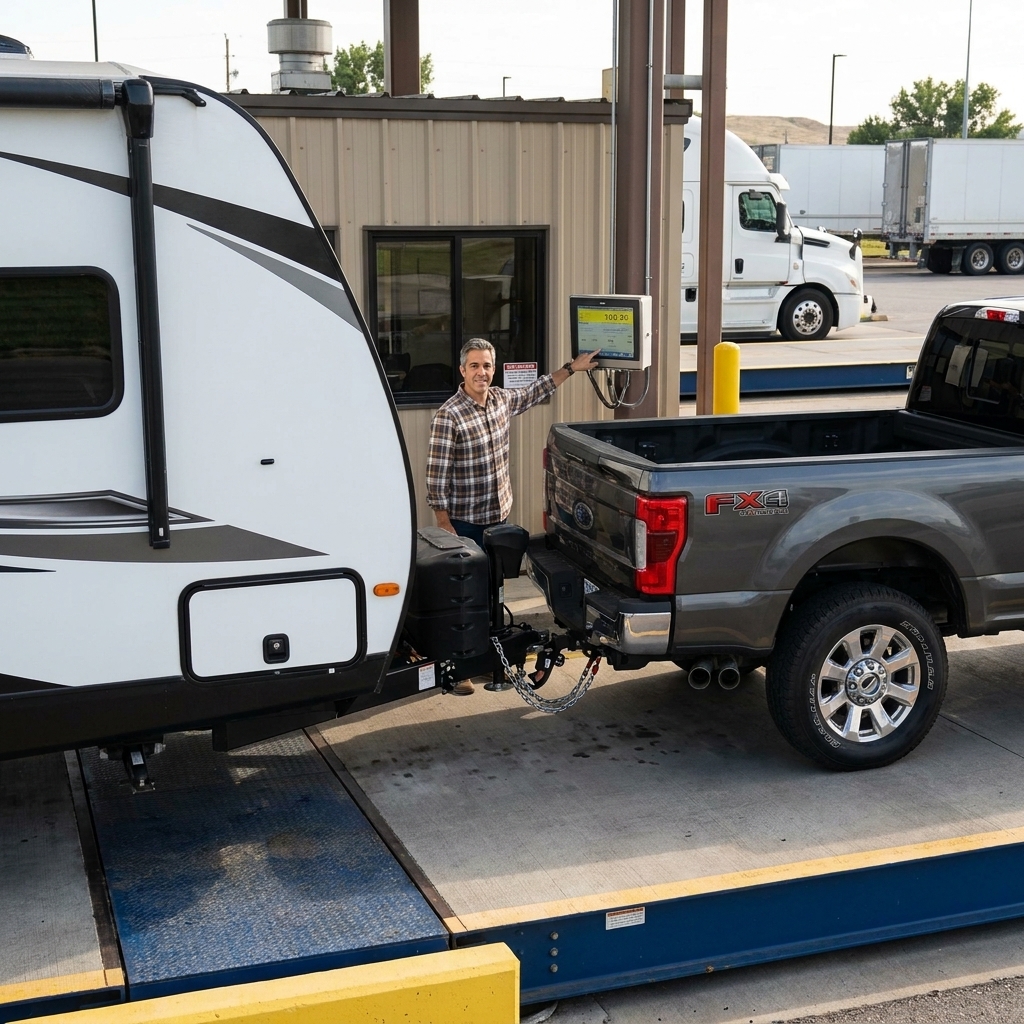
Those are rules of thumb, not guarantees. The only number that wins arguments is a scale ticket.
What counts as short bed
Clearance advice hinges on bed length. A “short bed” is usually around 5.5 to 6.75 feet. A long bed is typically about 8 feet. Short beds can tow both styles, but 5th wheel RVs are where you most often need to think about a slider or a clearance-friendly hitch and pin box combo.
Safety and ratings (do not skip)
Most towing problems I see are not bad hitches, they are mismatched ratings or sloppy setup. Whichever route you go, confirm these items before you spend money:
- Trailer connection type: A 5th wheel trailer needs a 5th wheel hitch. A gooseneck trailer needs a ball setup. Conversions exist, but they are not always the right move.
- Hitch rating: Match GTWR (gross trailer weight rating) and vertical load rating (pin weight for 5th wheel, vertical tongue load for gooseneck). Do not close enough this.
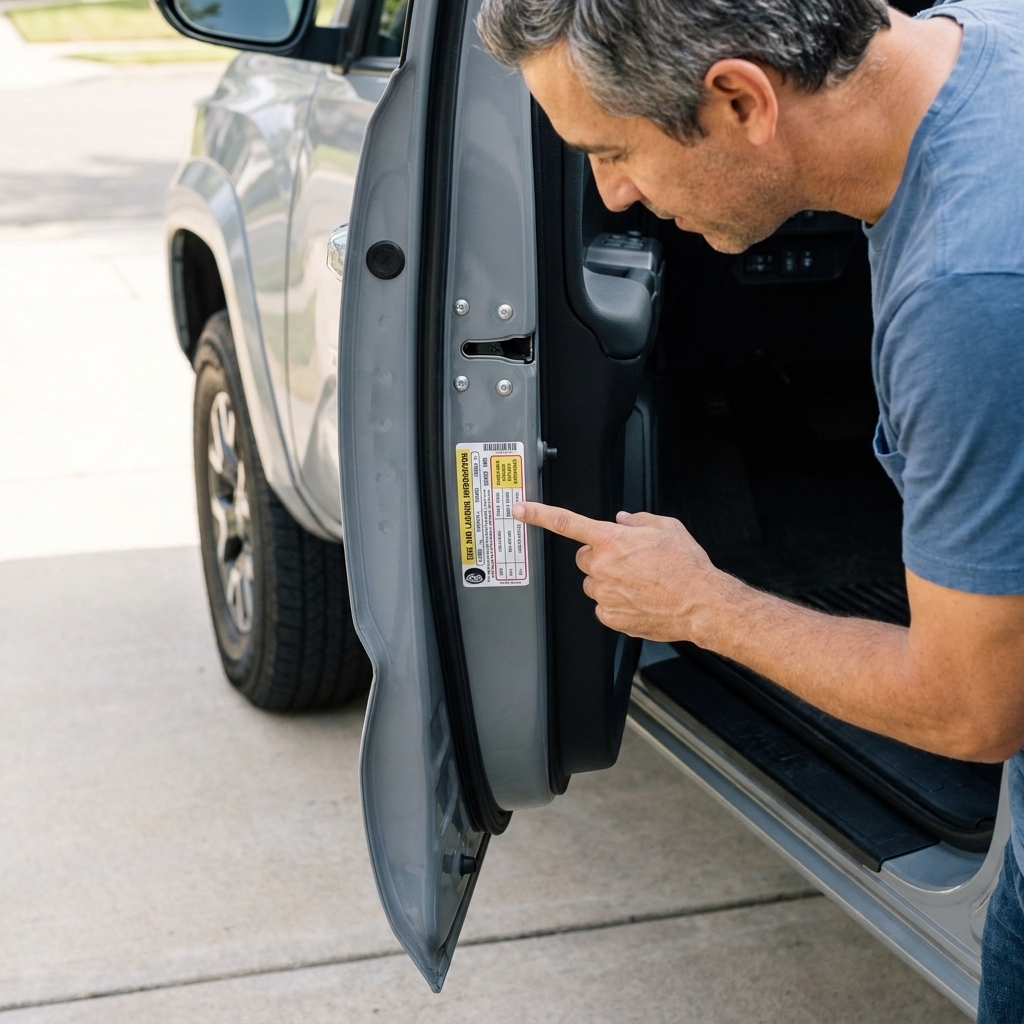
- Truck ratings: Verify payload, rear axle rating, tire ratings, and GCWR. In-bed towing loads the rear axle quickly.
- Bed length and clearance: especially critical for 5th wheels on short beds. Plan for a slider if needed.
- Brake controller and breakaway: working trailer brakes and a properly connected breakaway cable are non-negotiable.
Driveway advice: If you are unsure about your actual pin weight or vertical tongue load, spend the money on a scale ticket. Guessing is how trucks end up squatting on the bump stops with overloaded rear tires.
Two hitching habits worth keeping
- Chock before you unhook: chock the trailer wheels before you drop the landing gear or lift off the hitch. It is cheap insurance against a bad day.
- Confirm the lock: on a 5th wheel, verify jaw engagement and the handle position, then do a pull test. On a gooseneck, confirm the coupler is fully seated on the ball, the latch is pinned or locked if applicable, and the chains and breakaway are correctly attached.
Adapters and conversions
You will see adapters and conversion pin boxes that let a 5th wheel trailer connect to a gooseneck ball. Sometimes they are used to free up bed space or to standardize a fleet on one hitch type.
Here is the plain talk: it depends on the trailer manufacturer’s approval and the exact adapter. Some RV frames and pin boxes can see different leverage and shock loads with certain gooseneck adapters, and many RV manufacturers address this in their warranty language. That can mean accelerated wear, cracked components, or frame damage in worst-case scenarios. If your trailer maker does not approve it in writing, I treat it as a no.
Going the other direction, towing a true gooseneck trailer with a 5th wheel hitch is uncommon. It generally requires a specialized coupler or adapter, and you still must match ratings and ensure proper chain and breakaway provisions.
What to buy
If you are leaning 5th wheel
- Decide rails vs. pucks: OEM puck systems are clean and convenient if your truck has them.
- Short bed: price in a slider or a hitch designed for extra turning clearance.
- Consider hitch weight: some 5th wheel hitches are over 150 pounds. Plan how you will remove it.
- Look for easy inspection: you want clear visibility of jaw engagement for a quick safety check.
If you are leaning gooseneck
- Choose an under-bed kit: they keep the bed usable and usually look factory-clean.
- Do not skip chain anchors: proper in-bed chain loops are part of a correct installation.
- Plan the small stuff: a removable ball, a lock, and a turnover-ball style system keep things tidy and harder to steal.
FAQ
Which tows better?
All else equal, a 5th wheel usually feels smoother and more stable on the highway. Goosenecks can tow extremely well too, but they tend to transmit more fore-aft movement depending on trailer design, suspension, and load placement.
Which is safer?
Both are safe when properly rated, installed, and hitched. Safety is more about correct weights, working trailer brakes, proper coupling checks, and tire condition than it is about hitch style.
Which is better for a short bed truck?
Goosenecks often have an easier time with cab clearance, but it still depends on ball placement and trailer shape. For 5th wheels on short beds, a slider hitch or a clearance-friendly pin box is commonly needed.
Will a gooseneck give me more payload?
No hitch magically increases your truck’s payload. Pin weight or vertical tongue load still counts against payload, and in-bed towing can load the rear axle heavily. The limiting factor is the truck’s ratings, not the hitch style.
My rule of thumb
If your trailer is an RV 5th wheel, pick a quality 5th wheel hitch that matches your truck’s bed length and your trailer’s pin weight. If your trailer is a work-style gooseneck, a solid under-bed gooseneck kit is usually the cleanest, most practical setup.
And if you are on the fence because you want one hitch to do everything, slow down and choose based on the trailer you tow the most. The safest towing setups are the boring ones that match the hardware the trailer was designed around.