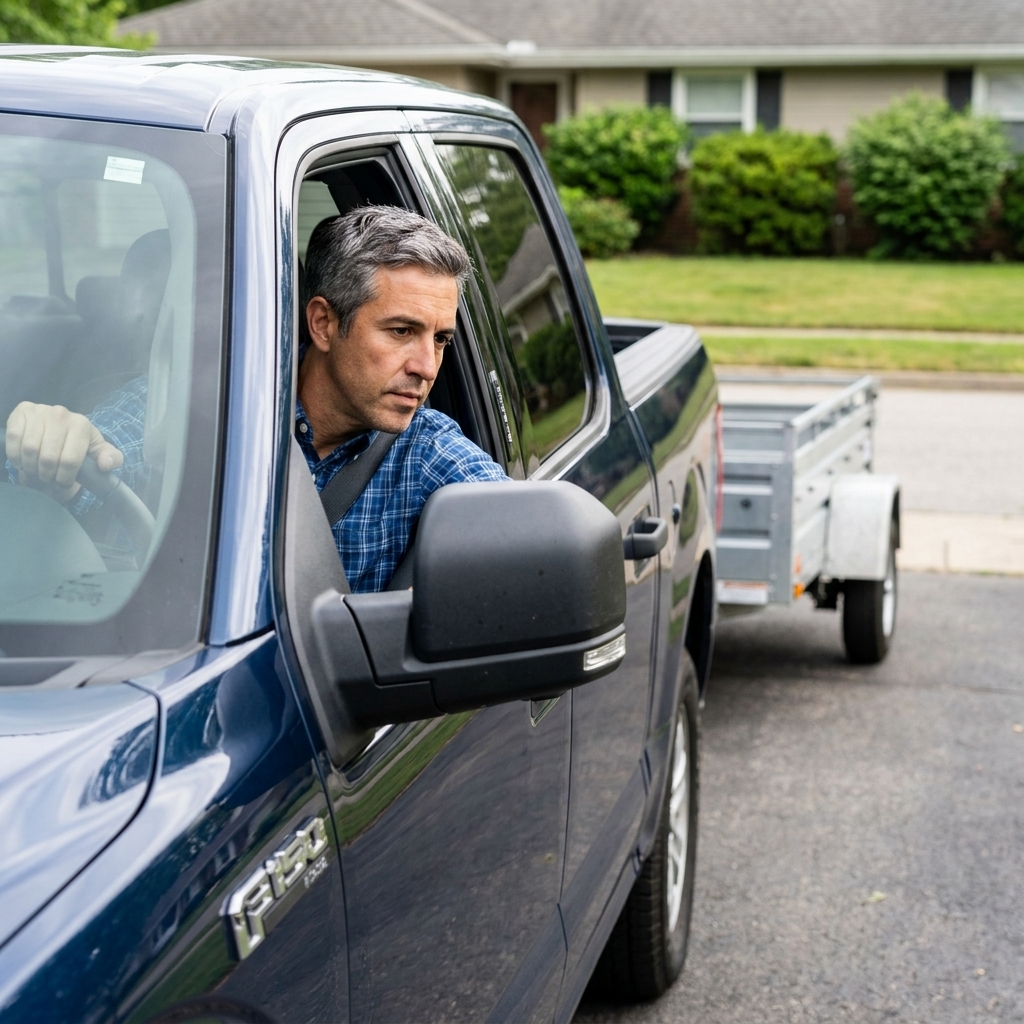
If you have ever merged while towing a trailer and felt like you were driving with blinders on, it is usually not the truck. It is your mirror setup. The good news is you can often fix it in the driveway with a helper and a couple simple reference points.
This is the pre-trip part a lot of folks skip. I am not talking about how to steer while backing up. I am talking about how to set your mirrors so you can see both trailer sides and the lanes next to you before you ever put it in gear.
Plan on 10 to 20 minutes once you have done it before. The first time, give yourself closer to 10 to 30 minutes, depending on mirror type, trailer width, and how much room you have to work.
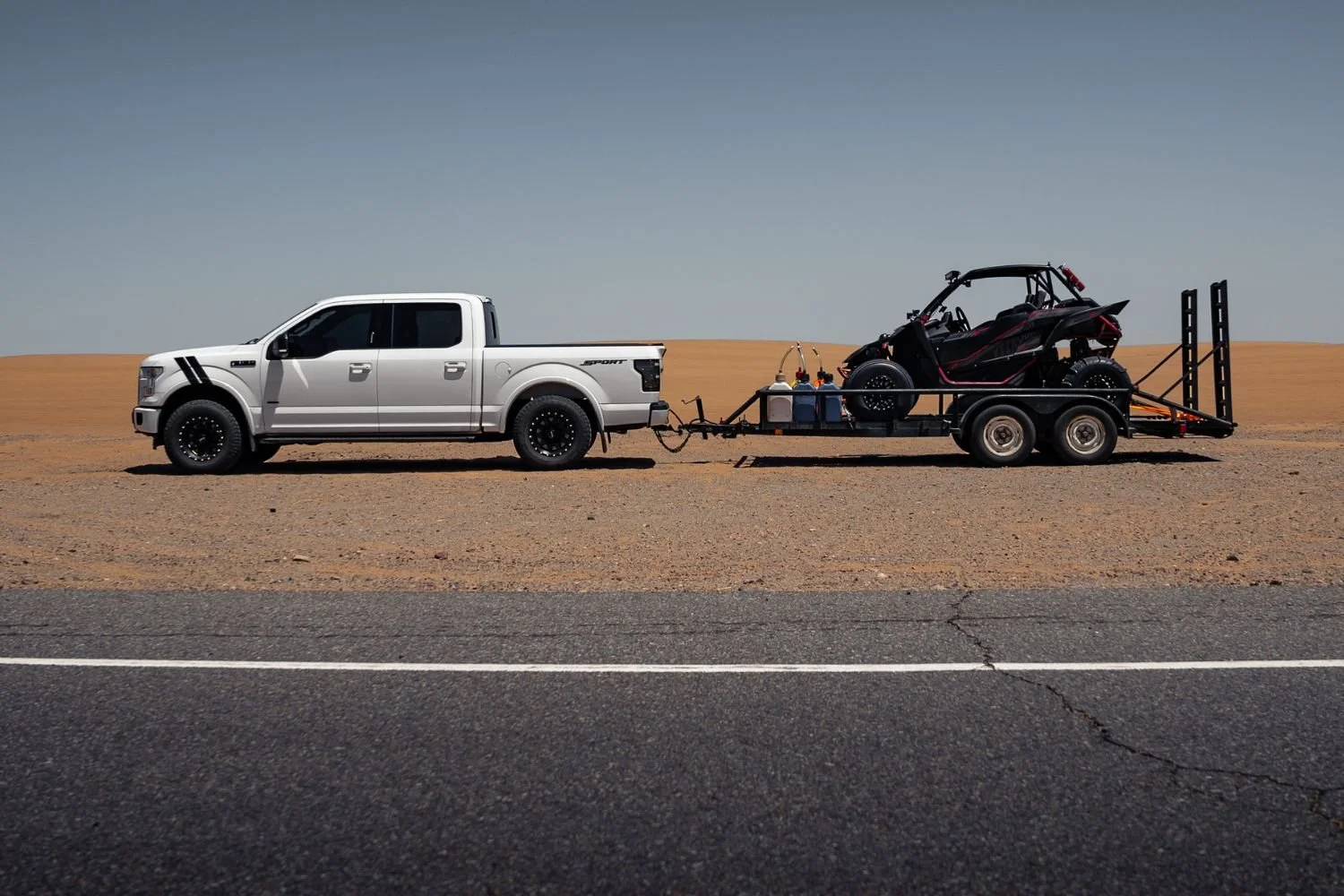
What you are trying to see
When mirrors are set correctly for towing, you should be able to do two things at the same time:
- Keep a steady reference of your trailer so you can track it in your lane and spot trailer movement sooner.
- Cover the adjacent lanes so a car is not living in your blind spot for five seconds before you realize it.
Most people aim their mirrors too far inward because it feels comforting to see a lot of their trailer. The tradeoff is you lose the next lane over, and that is where problems start during merges and lane changes.
Your consistent reference point is the same one every time: a thin sliver of trailer in the flat mirror. That sliver tells you where the trailer is, while the rest of the glass does the real work of watching traffic.
Quick safety setup first
Before you start turning mirror glass, get the basics right so you are not chasing your tail:
- Park on level ground and keep the truck and trailer straight.
- Set the trailer at normal towing height. A nose-high or nose-low trailer changes what you can see.
- Load the trailer the way you will actually travel, or at least close to it. Rear sag changes mirror angles.
- Set your seat where you drive, including seat height and backrest. Mirror adjustment should be done from your normal posture.
- If you use a weight distribution hitch, set mirrors with it engaged the way you will tow. Changing tension can change squat and sightlines.
- If you have power-fold mirrors, unfold them fully. If you have tow mirrors with slide-out extensions, slide them out now.
And do not skip the basic safety stuff. Chock the trailer wheels if you are on anything but dead flat ground. Keep the transmission in park, set the parking brake, and make sure your helper stays in clear view and well away from the tire path. Do not let them stand between the truck and trailer while you are adjusting.
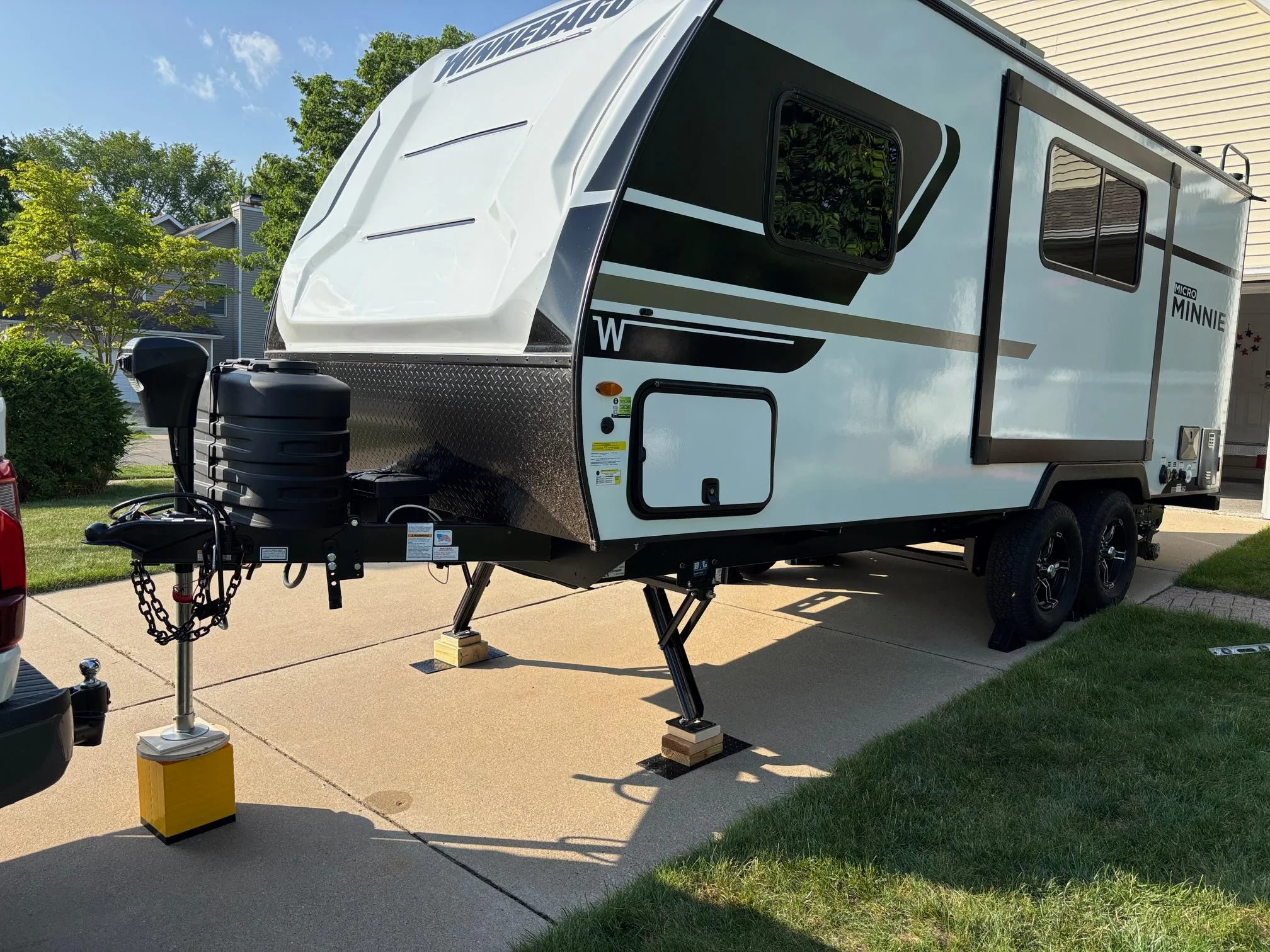
The helper method
This is the method I used in fleet because it is repeatable. You are creating two reference points for each side: one close to the trailer and one about a lane over. Your goal is simple: as your helper moves outward, they should transition from the flat mirror to the convex mirror without disappearing in a gap.
What you need
- A helper you trust to stand where you tell them
- Two small cones, a couple buckets, or even water bottles to act as markers
- Painter's tape or a wax pencil if you want to mark temporary points on the mirror housing for repeatability
Step 1: Set the trailer reference
Have your helper stand near the rear third of the trailer on the driver side, about 2 to 3 feet out from the trailer body. You want them close enough that if you can see them clearly, you are seeing that trailer side and the space immediately next to it.
Now adjust the main (flat) mirror so you can see:
- The trailer side running straight back, ideally with just a sliver of trailer showing
- Your helper's upper body without leaning
If you see a lot of trailer and almost none of the lane next to you, angle outward a bit.
Step 2: Set the adjacent lane marker
Put a cone or marker about one lane width away from the trailer, roughly in line with your trailer axles. In a driveway, you can approximate this by placing it about a lane width out, roughly 10 to 12 feet in many areas. Have your helper stand next to that marker.
Now adjust the convex (spot) mirror so you can see:
- The marker and your helper
- The area from the trailer corner outward into the next lane
Aim the convex mirror outward until it overlaps slightly with the edge coverage of your main mirror. You do not want a gap between what the flat mirror sees and what the convex mirror sees.
Step 3: Repeat on the passenger side
Do the exact same steps on the passenger side. This side is where most blind spots hide because you naturally look less often, and judging distance is harder.
When you are done, your helper should be able to walk from near the trailer side out toward the adjacent-lane marker and you should be able to keep them in view by transitioning from main to convex without them disappearing.
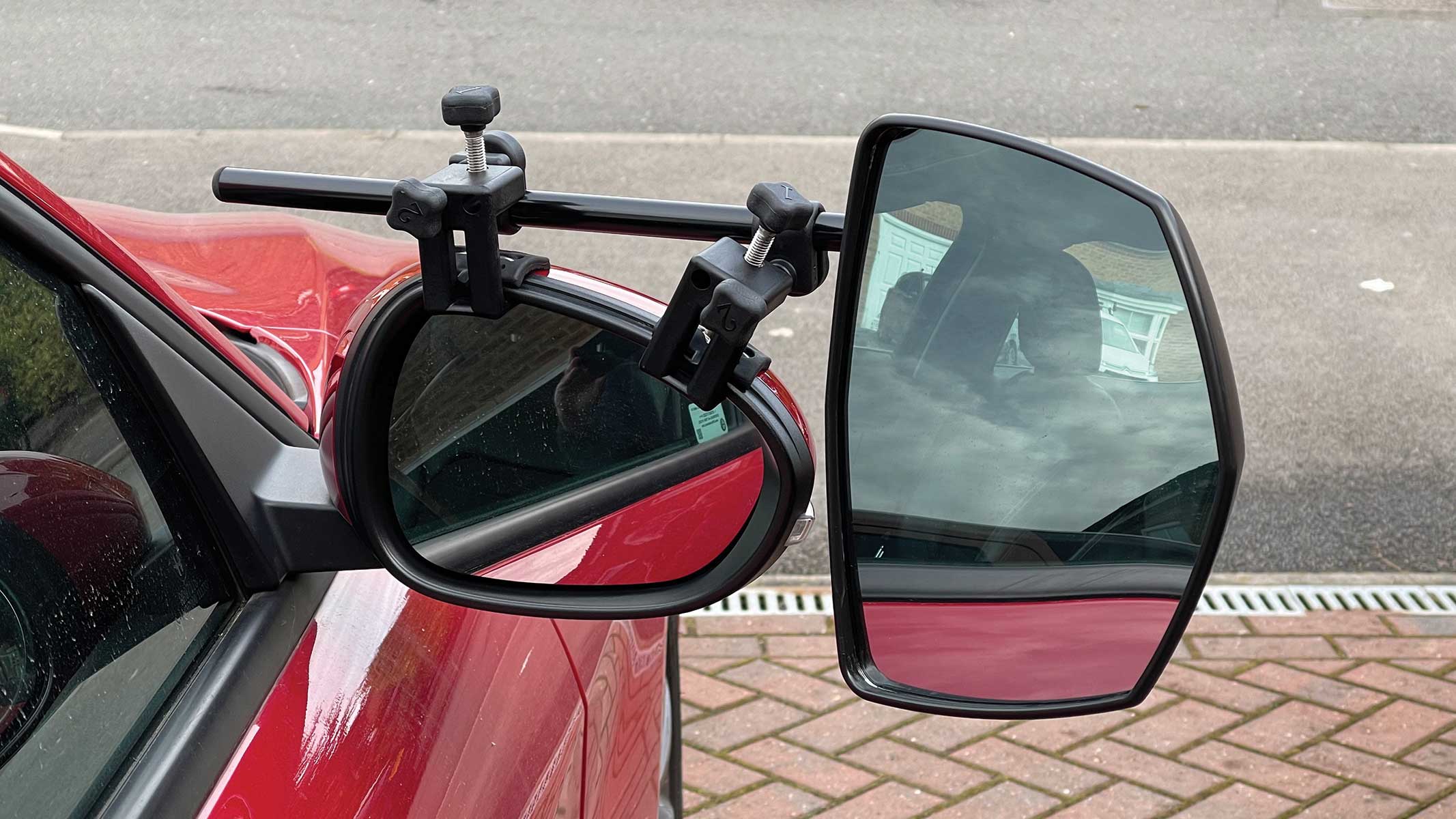
Main vs convex
Think of your mirrors like a team:
- Main (flat) mirror: Your distance judgment tool. Use it to track your trailer and confirm a lane is truly clear before you move over.
- Convex mirror: Your blind-spot catcher. Use it to pick up cars and motorcycles that would otherwise vanish next to your trailer.
A good baseline
- Main mirror shows a thin slice of trailer, not the whole side.
- Convex mirror shows the trailer corner plus the next lane over.
- Minimal overlap between main and convex, but no dead zone gap.
If your convex mirror is showing mostly your own truck body or a big chunk of trailer, it is aimed too far inward.
If your mirror setup is different
Not every vehicle has a separate convex section built into the mirror. Some tow mirrors are two-pane, some are a single wide-angle shape, and some trucks just have a standard flat mirror.
If you do not have a dedicated convex section, you can still use the same helper-and-marker approach, but you may need clip-on extensions or a stick-on convex add-on to cover the adjacent lane. If you do use a stick-on fisheye or convex dot, treat it as extra coverage, not your primary mirror.
Confirm both sides
With the rig straight, do this quick check:
- Look in the driver main mirror. You should see the driver-side trailer running back and the rear corner.
- Look in the passenger main mirror. You should see the passenger-side trailer running back and the rear corner.
- Now check both convex mirrors. You should see the space just outside each trailer corner and into the adjacent lanes.
If you cannot see both trailer sides unless you lean forward or shift in the seat, stop and re-adjust. Mirrors need to work from your normal driving posture because that is how you will actually use them at highway speed.
Re-check your mirrors any time the load changes, the rear sags more or less than usual, you change hitch height, you adjust weight distribution tension, or you swap drivers.
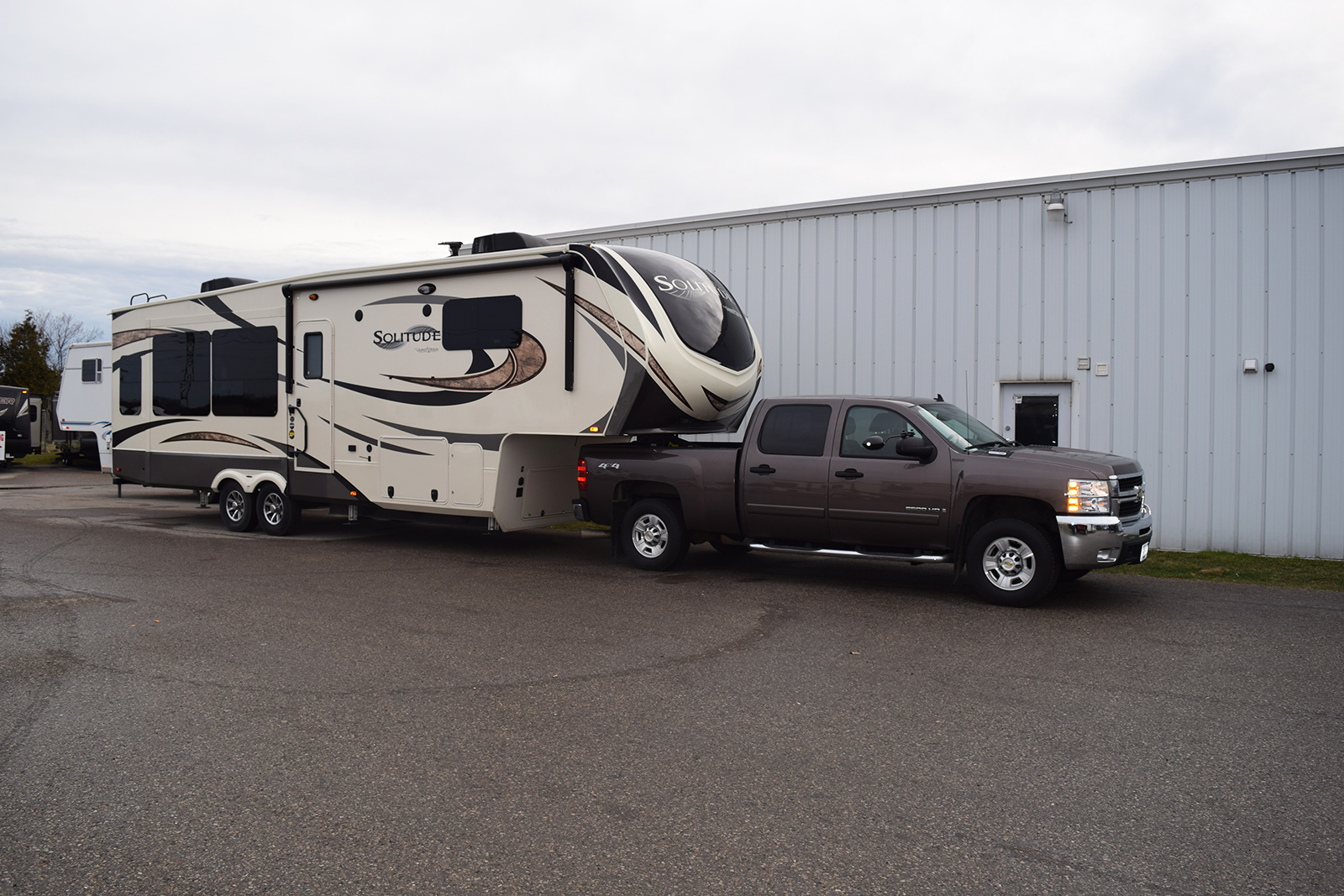
When you need extensions
There is a point where no amount of mirror tweaking makes up for a trailer that is simply wider than what your stock mirrors can cover.
You should strongly consider mirror extensions or dedicated tow mirrors if:
- Your trailer is wider than your truck body by a noticeable margin, especially many travel trailers and enclosed cargo trailers.
- You cannot see the full length of the trailer side and the adjacent lane at the same time.
- Your convex mirror has to be aimed so far outward that distance judgment becomes difficult.
- You find yourself leaning, craning, or re-adjusting constantly once you are rolling.
Clip-on vs tow mirrors
- Clip-on extensions: Affordable and quick. The downside is some shake and vibration, especially on rough pavement.
- Factory-style tow mirrors: More stable and a better long-term solution if you tow often, but more expensive.
Whatever you choose, make sure the extension does not interfere with power folding, turn signals, or window clearance.
Rules vary
Mirror requirements can be jurisdiction-specific, and enforcement varies. The common theme is simple: you need mirrors that let you see along both sides of the vehicle and trailer for a set distance behind you, or provide an adequate rearward view as defined by local law.
Because those details vary, here is what I recommend doing before a big trip:
- Check your state DOT or DMV site for towing mirror requirements if your trailer is wide.
- If you are crossing state lines or heading into Canada, do a quick check for each jurisdiction on your route.
- If your trailer width is close to common legal thresholds, treat that as your cue to use extensions instead of hoping your standard mirrors are enough.
Practical rule of thumb from the road: if you cannot confidently account for a car traveling in the lane next to you without guesswork, your setup may not meet the intent of the rules, and it is definitely not meeting the safety standard you want.
Common mistakes
- Too much trailer in the main mirror. You feel informed, but you are losing the next lane over.
- Convex mirrors aimed at the ground. Great view of pavement, terrible view of traffic.
- Adjusting while the rig is jackknifed. Set mirrors with the truck and trailer straight first.
- Ignoring seat position. If two drivers share the truck, set mirrors each time you swap.
- Assuming a camera replaces mirrors. Cameras help, but rain, glare, dirt, and equipment failures happen. Mirrors still give you your primary, always-available view even when a camera is obscured.
- Forgetting night glare. Dirty glass and mis-aimed mirrors amplify headlight glare. Clean the mirrors and make small adjustments if needed for comfort, without sacrificing lane coverage.
Quick mirror check
Once you have your mirrors set, use this 20-second check every time you hook up:
- Trailer corners visible in both main mirrors
- Adjacent lanes visible in both convex mirrors
- No big blind zone gap between main and convex
- Mirrors stable and not vibrating excessively
If something feels off on the highway, do not live with it. Take the next safe pull-off and fine-tune. A two-degree mirror change can make a night-and-day difference.
FAQ
Should I be able to see the side of my trailer in my mirrors?
Yes, but only a sliver in the main mirror. You want just enough trailer to track it. The rest of the mirror should be working for the lane next to you.
How far out should I aim the towing mirrors?
Far enough that the main mirror shows your trailer edge and the space next to it, and the convex mirror picks up the adjacent lane with no dead zone. If aiming outward makes the main mirror difficult to use for distance, you likely need extensions.
Do I need towing mirrors for a small utility trailer?
Not always. If the trailer is narrower than the truck and you can see down both sides plus the adjacent lanes, your standard mirrors can be fine. The moment the trailer blocks your view down the sides, it is time to upgrade.
What about fisheye stick-on mirrors?
They can help fill gaps, especially on the passenger side, but I still treat them as a supplement. You want solid coverage from your main mirror first, then use convex or add-ons to eliminate the last blind spots.