If you have ever watched someone back a trailer into a campsite in one smooth move and thought, “I will never be that person,” I promise you can. Backing up a trailer is not magic. It is a repeatable skill built on a few simple rules, good mirror setup, and practice that is structured instead of stressful.
I spent years setting up and maintaining work trucks for a construction fleet, and I have backed everything from little utility trailers to long travel trailers. The pattern is always the same: most people struggle because they are guessing. This guide is about taking the guesswork out.
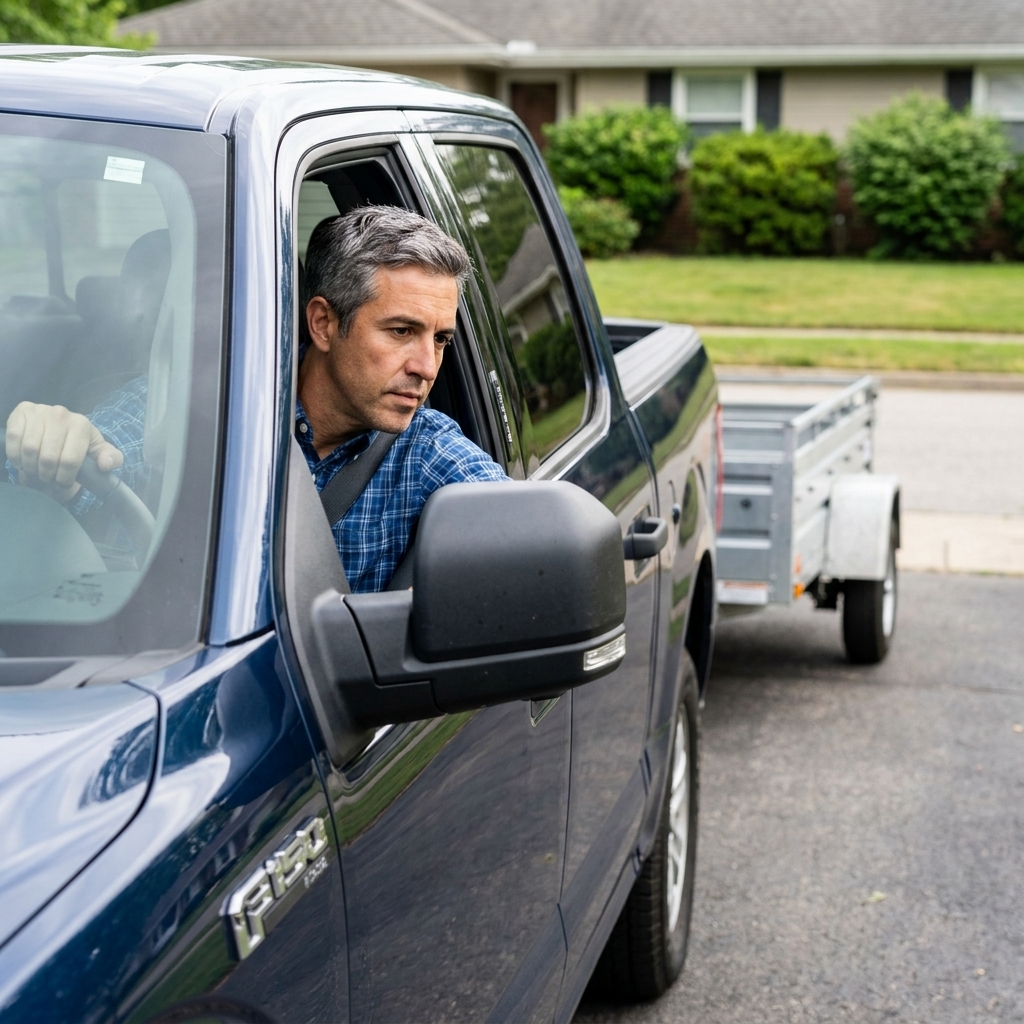
Safety first: the 60-second walk-around
Before you ever put the truck in reverse, do a quick lap. This is where pros save bumpers, taillights, and friendships.
- Look for the stuff mirrors miss: low rocks, fire rings, curbs, stumps, kids’ bikes, picnic tables, and parking blocks.
- Check overhead: branches, awnings, building eaves, and power lines if you are in a work yard.
- Confirm trailer basics: coupler latched, safety chains crossed and not dragging, breakaway cable attached to the truck (not the chains), and the trailer plug connected.
- Check tire path: your trailer tires will cut inside your truck’s path on turns. If there is a curb, that matters.
If you are in a campground or tight lot, I also like to pick a “stop line” in my head. For example: “When the trailer axle reaches that crack in the pavement, I stop and reassess.” Planned stops reduce panic moves.
Mirror setup that makes backing easier
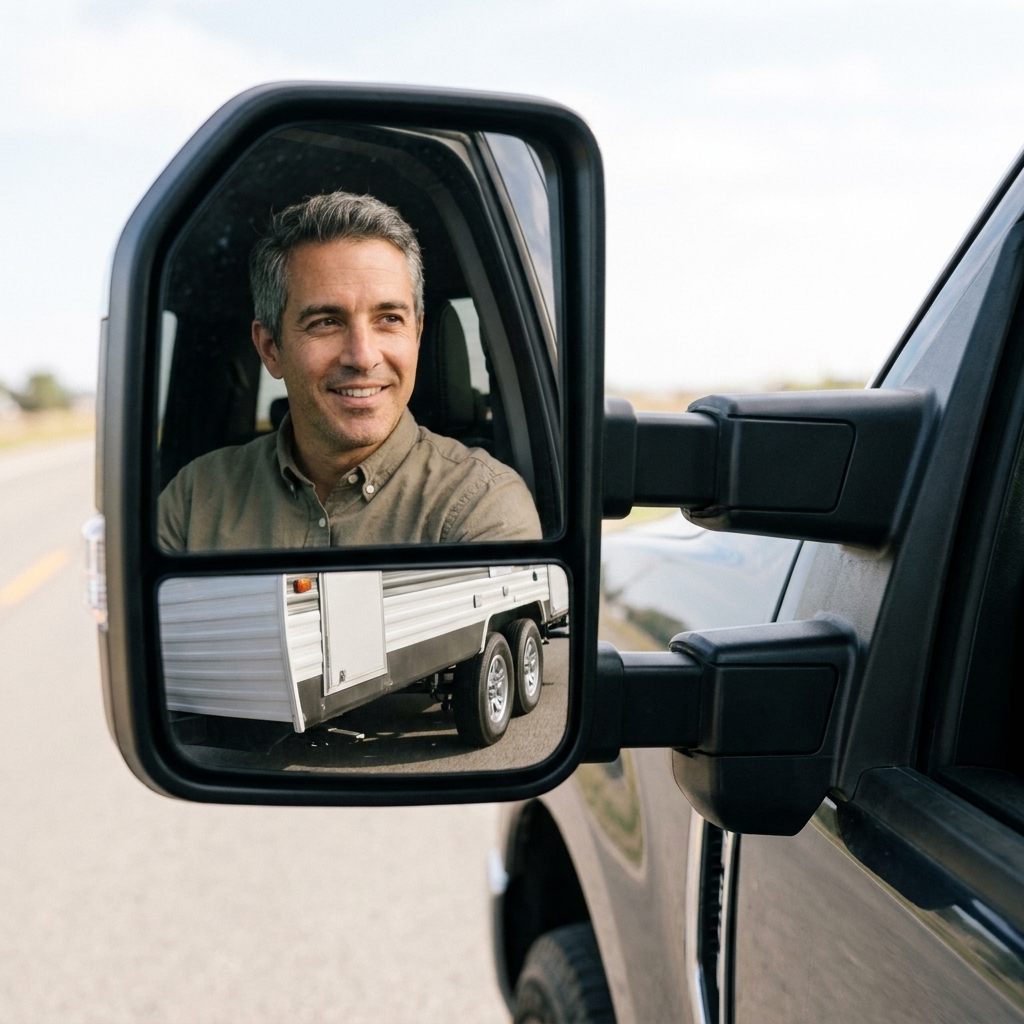
Most beginners aim their mirrors like they are driving forward on the highway. For backing, you want to see the trailer tires and the “lane” you are creating.
Adjust your mirrors for backing
- Start with the truck straight: truck and trailer in a straight line on level ground.
- Left mirror: set it so you can see the side of the trailer and the left trailer tire area. You do not need to see a ton of your own truck body.
- Right mirror: do the same. If you can see the trailer fender and tire area, you are in good shape.
- If you have tow mirrors: use the wide-angle to keep the trailer in view and the flat mirror to judge distance and angle.
If your trailer is wider than the truck and you cannot see down the sides, you may need extended mirrors. Guessing where the trailer is becomes expensive fast.
The one rule that makes steering click
There are a dozen sayings about backing a trailer. Here is the one I teach because it stays true no matter what you are towing:
Watch the bottom of the steering wheel. Move the bottom of the wheel the direction you want the trailer to go.
Want the trailer to go left? Slide the bottom of the wheel left. Want it to go right? Bottom of the wheel right. This keeps your brain from doing that backward-math spiral that happens when you are stressed.
Hand position that helps
If you are learning, try using one hand at the bottom of the wheel. It matches the rule above and naturally limits you to smaller, smoother inputs. Big, fast wheel spins are what get beginners in trouble.
Make small inputs, then wait
The trailer reacts after the truck’s angle changes. Beginners over-steer because they do not wait long enough to see what the trailer is about to do. Think of it like guiding a shopping cart with a loose wheel. Gentle nudges work better than wrestling.
Understand the three trailer positions
Most bad backing situations come from letting the trailer get too far out of shape. If you can recognize these three positions, you will know what to do next.
1) Straight
Truck and trailer are lined up. This is your “reset” position. If you get confused, pull forward and straighten out. That is not failure. That is skill.
2) Turning (controlled angle)
The trailer is angled slightly left or right, and you are guiding it into the spot. This is where you want to live most of the time.
3) Jackknifing (too much angle)
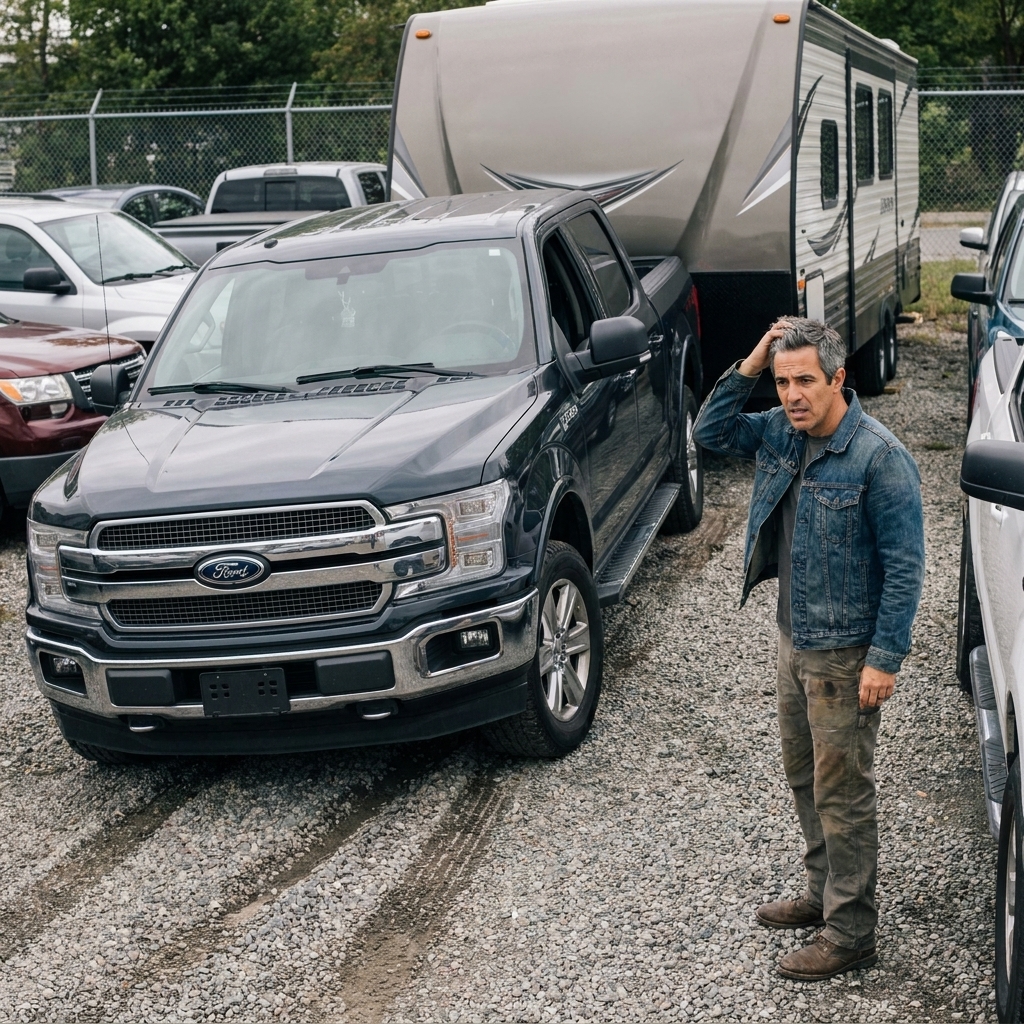
The trailer is folding hard toward the truck. This is where damage happens: smashed taillights, bent jacks, dented truck bed sides, and in extreme cases, contact between trailer and truck.
If you see the angle tightening fast, stop. Pull forward to reduce the angle and try again.
Backing techniques that actually work
Use the chase method
When the trailer starts turning the direction you want, you “chase” it with the truck. That means you steer the truck slightly toward the same direction to follow the trailer and keep the angle from getting too sharp.
Example: You are backing and the trailer is moving left into the driveway. Once the trailer is committed left, steer a little left to follow it. That reduces jackknife risk and keeps everything smooth.
Take the wide setup
If you are backing into a spot on the left, set up on the right side of the lane first so you have room for the trailer to swing. Tight setups force big steering inputs. Big steering inputs create big problems.
Go slow enough to stop smoothly
Idle speed is your friend. If your truck wants to roll fast in reverse, ride the brake lightly. You should be able to stop smoothly mid-thought without a panic jab.
Use reference points
Pick a consistent reference point you can see in a mirror, like the front corner of the trailer. Decide what you want it to do, then steer to make that happen. Backing is easier when you focus on one “corner” instead of the whole trailer at once.
Where to look: mirrors, windows, and cameras
If you take nothing else from this guide, take this: backing is a visual task. Your hands will do the right thing when your eyes are looking at the right thing.
Use mirrors as your primary view
- Check both mirrors constantly. The trailer can look perfect on one side and be chewing up a curb on the other.
- Look for tire position. Tires tell the truth about where the trailer is going.
Lean out the window when needed
There is no rule that says you must stay glued to the seatback. If your visibility is limited, open the window and lean out for a quick check, then return to mirrors.
A quick caution from the real world: if you cannot stay seated and controlled, stop the truck first, get a better look, and then continue. If you do lean out while moving, creep at idle speed and keep your body position stable so you are not fighting the wheel.
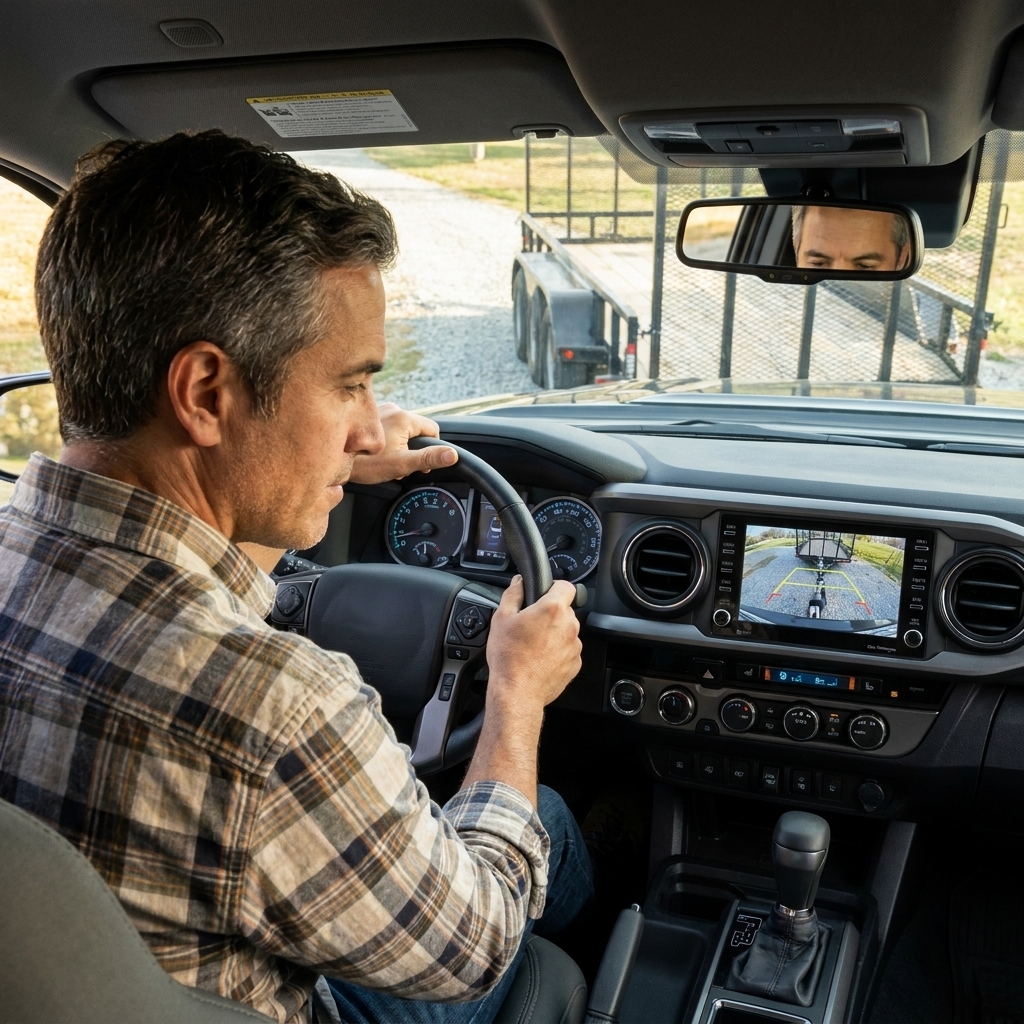
Use a backup camera as a helper
Cameras are great for seeing what is directly behind you, but they can distort distance and do not always show trailer tires. I like cameras for confirming rear clearance, but I still steer using the mirrors.
Working with a spotter without chaos
A good spotter is gold. A bad spotter can make you hit something faster. If you are using a spotter, agree on a simple plan before you move.
Spotter rules I use every time
- One spotter only. Two people waving arms from different directions is how mirrors become useless.
- Decide where they stand: they should be visible in your mirror, out of your path, and not directly behind the trailer where they can disappear.
- Use clear hand signals: stop, come back, driver side, passenger side. Keep it simple.
- “If I cannot see you, I stop.” This should be a hard rule for both of you.
- Stop means stop. No rolling while you interpret signals.
If you are at a campground, I recommend walkie-talkies or a phone call on speaker at low volume. Shouting works until it does not.
Foolproof practice drills
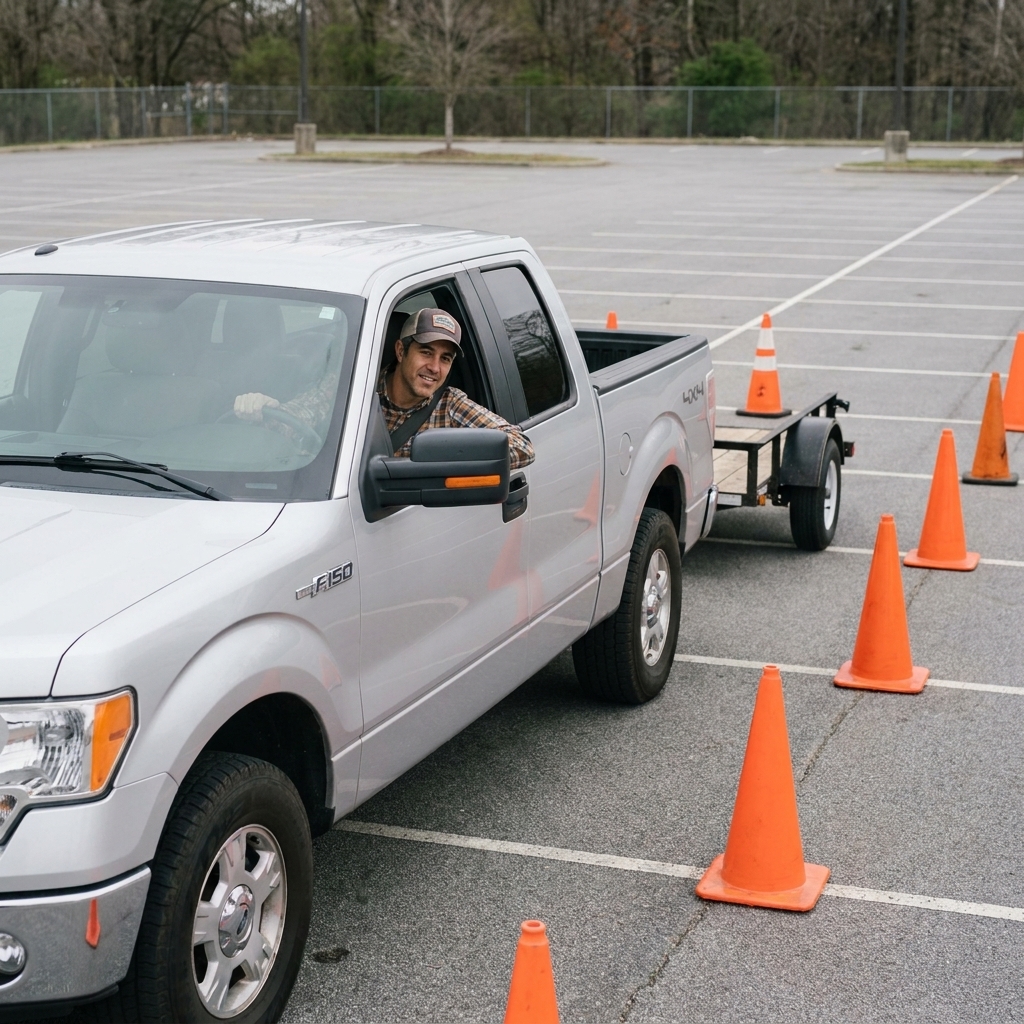
The fastest way to get good is to practice when nobody is watching and nothing is at stake. Find a big empty parking lot and bring a few cones or even plastic buckets.
Drill 1: Straight-line backing
- Set two cones about a trailer-width apart.
- Start 40 to 60 feet back.
- Back straight through without touching brakes hard or making big steering moves.
This drill teaches tiny corrections and patience.
Drill 2: The gentle S-turn
- Set up three cones in a line, each 25 to 30 feet apart.
- Back toward the first cone, then aim to pass the second cone on the opposite side, then the third on the original side.
This builds your ability to create an angle and then chase it back to straight.
Drill 3: 90-degree back into a “site”
- Create a “parking spot” with cones.
- Practice both driver-side and passenger-side backs.
- Start wide, then gradually challenge yourself with tighter setups.
Most people favor one side. Practicing both is how you stop dreading weird campsite angles.
Drill 4: Reset on purpose
On every drill, force yourself to do a reset. Pull forward, straighten, then back again. The pros do this all the time. The difference is they do it early, before things get ugly.
Common beginner mistakes
Turning the wheel too much
Fix: make smaller inputs and wait. If the trailer starts to swing faster than you can manage, stop and pull forward to reduce angle.
Backing too fast
Fix: idle speed only. Cover the brake. You should feel like you have time to think between corrections.
Only watching one mirror
Fix: scan left, right, left, right. If one side matters more because of an obstacle, your spotter should be on that side and in your mirror.
Trying to save a bad setup
Fix: pull forward and reset early. A good setup makes the back easy. A bad setup makes even experts look sloppy.
Forgetting trailer swing and tail swing
Fix: remember the trailer cuts inside, and the rear of the trailer can swing wide when it pivots. Give yourself clearance on both ends.
Quick tips by trailer type
Short utility trailers
They react fast. That means you need even smaller steering inputs. Practice is the cure, but start slow and expect quick changes.
Long travel trailers
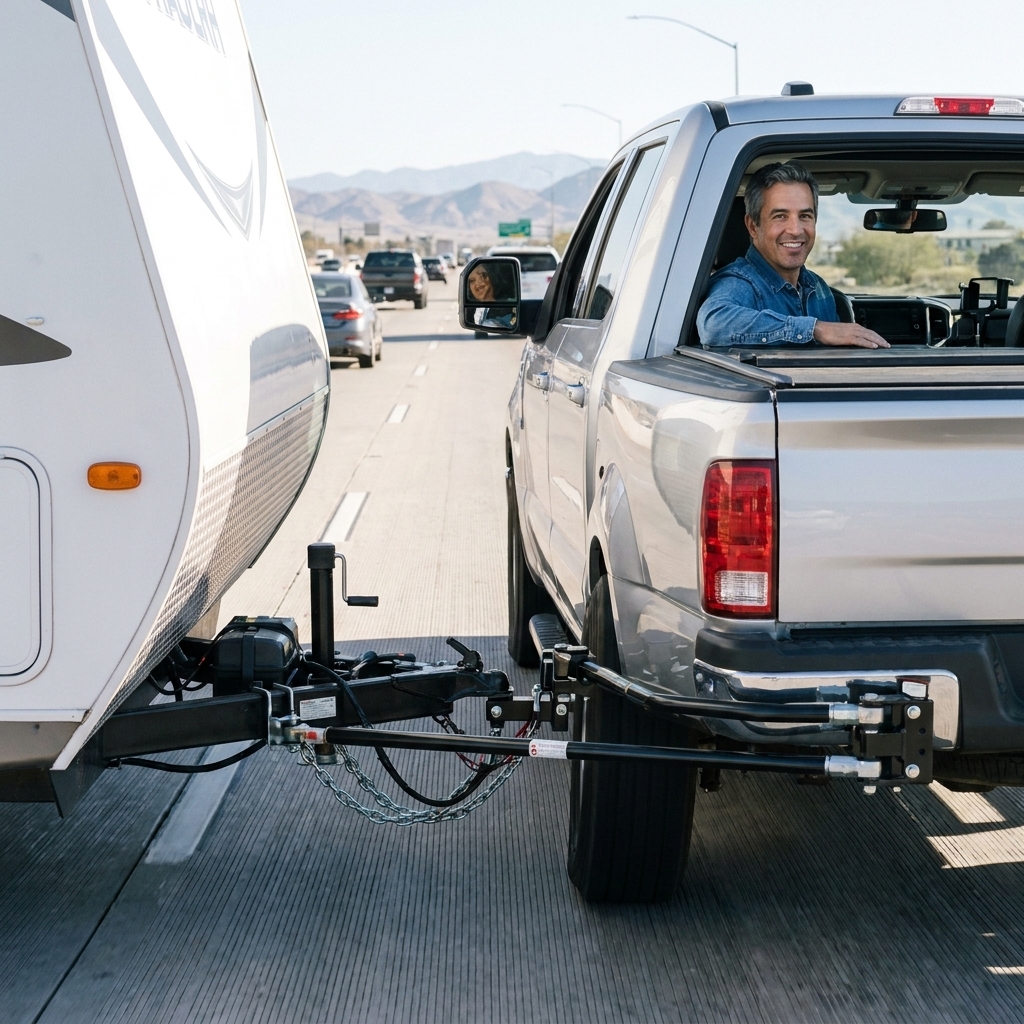
They respond slower, which many drivers find easier. But they also have more tail swing, and more to hit. Use reference points and a spotter in tight spaces.
Gooseneck and fifth-wheel trailers
These pivot over the rear axle instead of behind the bumper, so many drivers find they back more predictably. You can still jackknife, and you still need to watch bed rail clearance and cab clearance on tight turns.
Boat trailers
The trailer is often narrower than the boat, and the fenders can be hard to see. Make sure your mirrors show the tires and use a slow approach. Ramps get slippery and crowded, so the walk-around matters.
Troubleshooting
The trailer keeps drifting one way
Check that you started straight. Then make a tiny correction and hold it. If you are constantly sawing the wheel, you are over-correcting.
I am about to jackknife
Stop. Pull forward while turning the wheel to bring the truck back in line with the trailer. Once the angle is reduced, straighten the wheel and try again with smaller inputs.
I cannot see the trailer in my mirrors
Stop and straighten. If you still cannot see it, you likely need mirror extensions or a different mirror adjustment. Do not back blind.
I am stressed and people are watching
Turn your flashers on, take a breath, and commit to going slow. If needed, pull forward and reset as many times as it takes. I would rather you reset five times than back once in a hurry.
FAQ
Should I practice backing with weight in the trailer?
Start empty in a safe lot, then practice again with a realistic load. A loaded trailer will definitely stop differently, and you may notice small differences in how it feels as it rolls and settles. Just keep the load secured and balanced.
Is backing up easier with 4WD?
On dry pavement, 2WD is fine. On soft ground, gravel, or wet grass, 4WD can help you creep smoothly without spinning. It does not change the steering physics of the trailer.
What is the easiest way to back into a campsite?
If you have the option, a driver-side back is usually easier because you can see more out the window and mirror. But you should still learn passenger-side backs for the times the campsite forces it.
How do I know if I am turning too sharp?
If the trailer is disappearing from the mirror quickly, or you are seeing the side of the trailer more than the rear corner, your angle is getting aggressive. Stop early and pull forward to reduce it.
Any tips for backing on a slope?
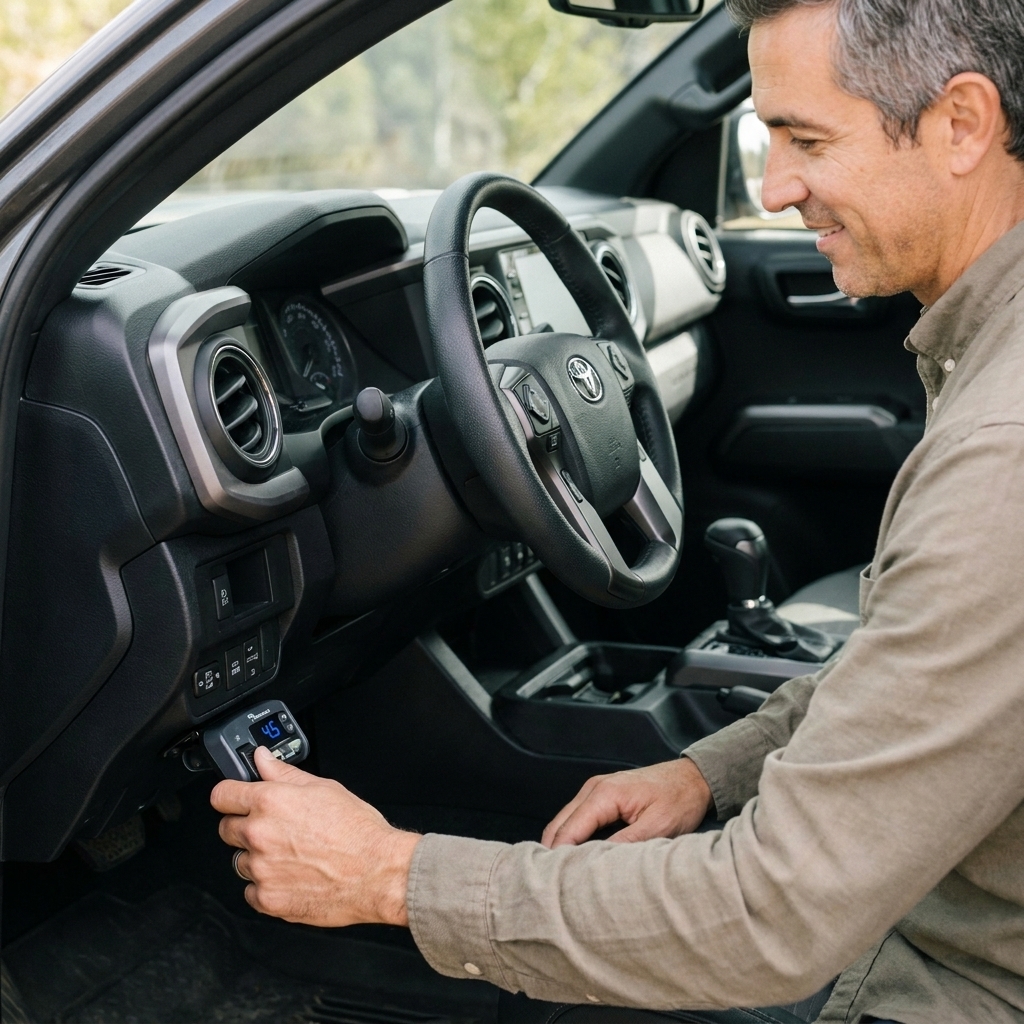
Go even slower than normal and plan extra room for stopping. If you have a trailer brake controller, you can use the manual lever to help hold the trailer from pushing the truck while you reposition, but only in smooth, controlled touches. When in doubt, stop, pull forward to straighten, and set up again.
My driveway-fence pep talk
Backing a trailer is one of those skills that feels impossible right up until it clicks. Once it clicks, it sticks. Start slow, set your mirrors to see the tires, use the bottom-of-the-wheel rule, and give yourself permission to reset early.
Your goal is not to look cool. Your goal is to be safe, predictable, and calm. Do that, and you will be the person who makes it look easy.