If you tow long enough, you learn this the hard way: most “towing problems” start as basic maintenance problems. Heat builds, parts flex, and little issues that you never notice on a grocery run turn into white-knuckle moments at highway speeds with a trailer pushing you.
This is the same pre-trip routine I used managing work trucks and the same one I run before I hook up our travel trailer for a mountain weekend. Use it as a checklist, not a perfection contest. The goal is simple: catch the stuff that fails first when you add thousands of pounds and hours of highway.
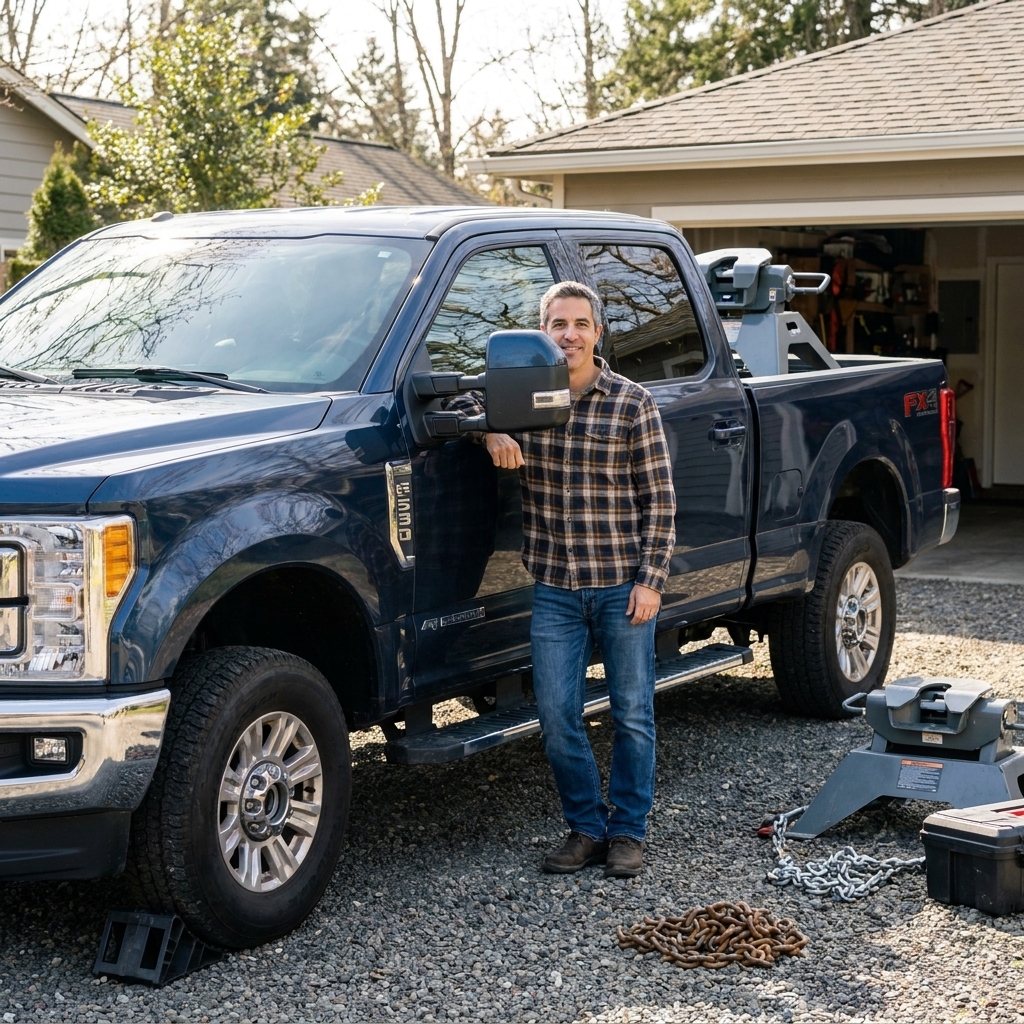
Start with the basics: weights and the door sticker
Before you buy parts or change fluids, confirm you are not asking the truck to do the impossible.
- Payload often matters more than tow rating for bumper-pull setups, because tongue weight, hitch hardware, passengers, and cargo all eat payload fast.
- Also check the limits that can bite you first: GCWR (combined weight), GAWR (especially RAWR), and the ratings on the receiver and weight distribution hitch (if you use one). Any one of these can be the real limiting factor.
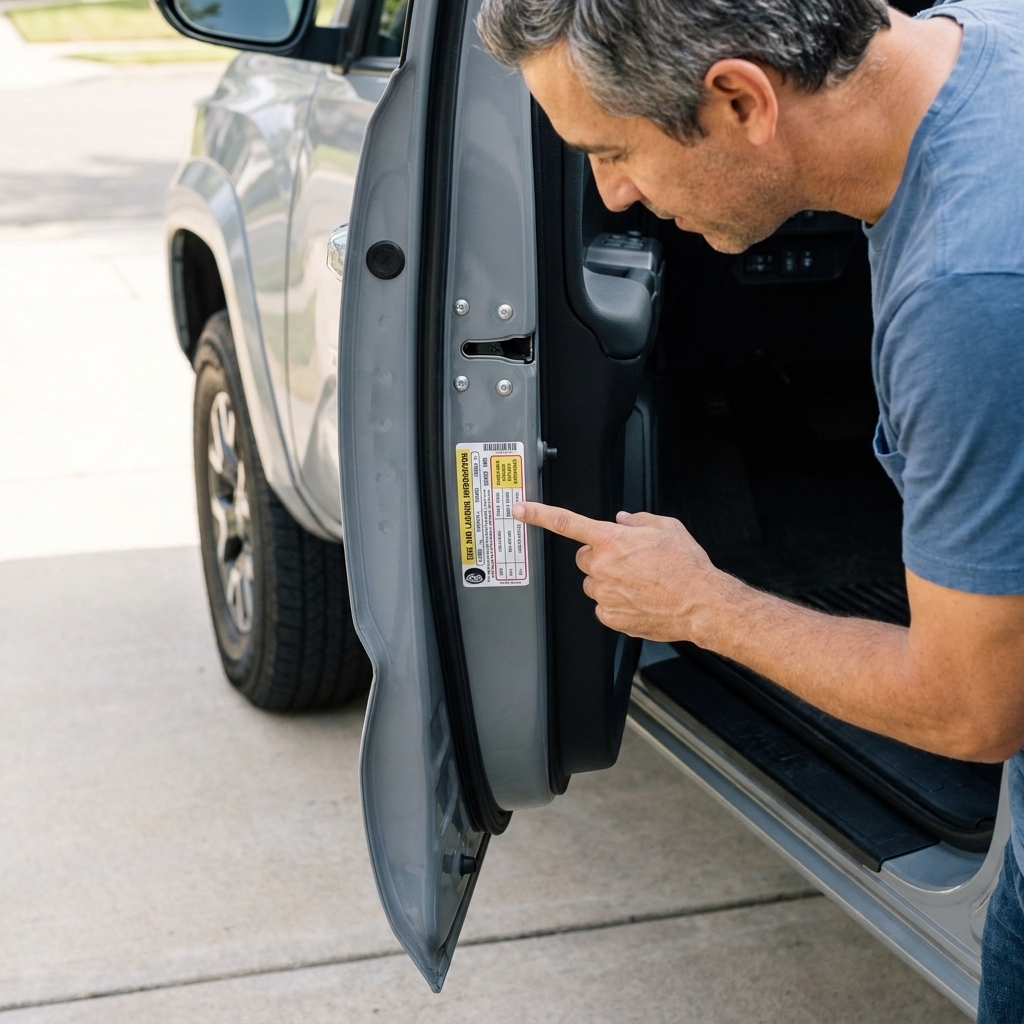
- Check the Tire and Loading Information label on the driver door jamb for payload and OE tire size and pressures.
- Know your target tongue weight: generally 10 to 15 percent for bumper-pull trailers, with many travel trailers happiest around 12 to 15 percent for sway resistance. Fifth-wheels typically run higher pin weights.
If you are close to any limit, maintenance becomes even more important because you have less margin when something gets hot or starts to fade.
Fluids: heat is the enemy
Long pulls and summer temps punish fluids. Fresh, correct fluid levels are one of the cheapest ways to buy peace of mind.
Engine oil and filter
- Change it if you are within 1,000 miles of your interval, especially on turbo gas engines and hard-working diesels.
- Verify the oil level on level ground. Towing with low oil is how engines get loud and expensive.
- Look for fuel dilution or coolant contamination: oil that smells strongly of fuel, looks milky, or rises on the dipstick needs attention before the trip.
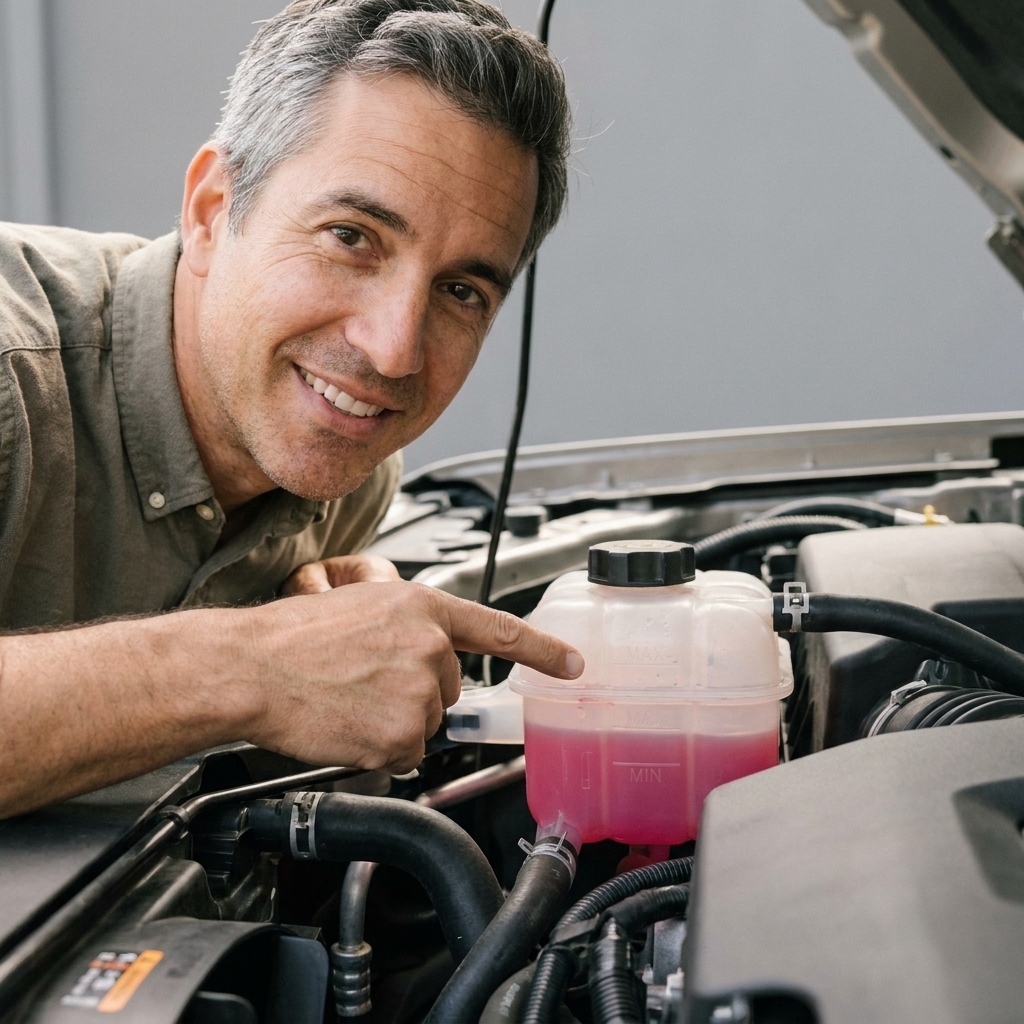
Coolant
- Check the overflow bottle level cold, and inspect the radiator cap area for crusty residue that suggests a slow leak.
- Squeeze the upper radiator hose when cool. If it feels overly soft, swollen, or cracked, replace it now, not in a campground.
- Confirm the cooling fan works. Electric fans should cycle. Clutch fans vary, but you should generally feel some drag when spinning by hand with the engine off and cool. If it free-spins with no resistance or feels locked solid all the time, investigate before you leave.
Transmission fluid
Transmission heat is a trip killer. Even modern 10-speeds can overheat if fluid is old or low.
- Check level only using the correct procedure in your owner’s manual. Many late-model trucks have sealed transmissions with no dipstick and require a shop-level check. Do not improvise.
- Smell matters: burnt odor or very dark fluid is a red flag.
- Consider a service if overdue, especially if you tow often. If you are unsure, have a shop evaluate it rather than guessing.
Brake fluid
- Brake fluid absorbs moisture over time, which lowers boiling point. Long downhill braking can push old fluid into fade territory.
- Check level and color. Very dark fluid is often overdue for a flush.
Power steering (if applicable)
Many newer trucks are electric-assist and have no fluid. If yours does, check level and look for seepage at the pump and hoses. Heavy trailers and tight turns work the system hard.
Differentials and transfer case
- Look for leaks around axle seals, pinion seals, and the diff cover.
- If you are near the service interval, do it before the trip. Towing loads ring and pinions hard, especially at highway speed in hot weather.
Tires and wheels: where trouble starts
I have seen more trips ruined by tires than by engines. Tires carry the whole program, and towing multiplies the consequences of a small mistake. This is also where speed discipline pays off. If something feels off, slow down early and sort it out at the next safe stop.
Set cold pressures correctly
- Inflate truck tires to the pressure needed for the load. Your door label is a starting point for stock tires. If you run LT tires or a different size, follow the tire maker load and inflation tables.
- Inflate trailer tires to the pressure on the tire sidewall unless the trailer manufacturer specifies otherwise. Many ST trailer tires are designed to run at or near max sidewall pressure.
- Never exceed the wheel’s max pressure rating. Tires and wheels are a system, and the wheel can be the limiting factor.
- Check pressures cold, before driving. A tire that is 10 psi low on the trailer is a blowout waiting for the right pothole.
Inspect tread and sidewalls
- Look for irregular wear (cupping, feathering, inside-edge wear). That can point to alignment, worn shocks, or suspension play.
- Check sidewalls for weather cracking. Trailer tires often “age out” before they wear out. If you do not know the tire age, check the DOT date code on the sidewall.
- If you find a screw or nail, do not yank it out. Mark it and address it properly when you are ready to repair. Pulling it can turn a slow leak into a fast one.
Lug nuts, wheel bearings, and hubs
- Torque lug nuts with a real torque wrench, not “good and tight.” Recheck trailer lug torque after 50 to 100 miles if wheels were recently removed.
- Check trailer wheel bearings: jack each wheel, spin it, and listen. Any grinding, wobble, or grease leakage at the back of the hub means service time.
- Temperature check at fuel stops: hubs can get hot enough to burn skin, especially when a bearing is failing. The safe, repeatable way is an inexpensive infrared thermometer. If one hub is noticeably hotter than the others, treat it as an early warning.
Brakes: balance matters
Towing safely is not about having brakes. It is about having brakes that are balanced and predictable.
Truck brakes
- Pad thickness: if you are anywhere near the wear indicators, replace them before the trip.
- Rotor condition: deep grooves, heavy rust ridges, or steering wheel shake under braking should be addressed.
- Parking brake: confirm it holds the truck on a slight incline. You will use it during hitching and unhooking.
Trailer brakes and brake controller
- Test the manual override in a safe area at low speed. You should feel the trailer tug the truck back slightly.
- Set gain correctly: enough to slow confidently without locking up. Adjust for wet roads and changing loads.
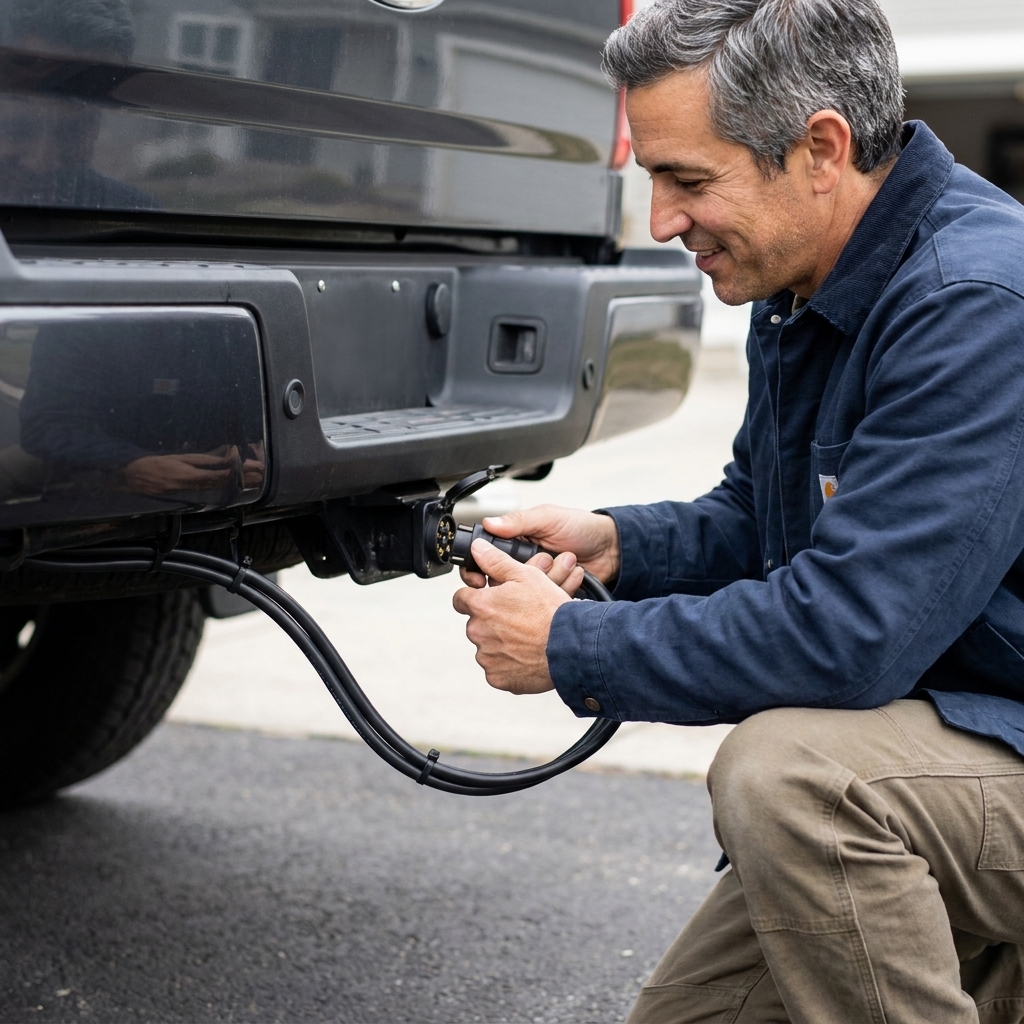
- Inspect the wiring plug for corrosion and bent pins. A flaky ground can cause weak braking and weird light behavior.
Fence-post advice: If you have to stand on the truck brake pedal to stop the whole rig, your trailer brakes are not doing their job.
Suspension and steering: stability
When people talk about “towing feels sketchy,” they are usually describing a stability problem. That comes from worn components, bad shocks, or an overloaded rear axle.
Shocks and struts
- Look for oil seepage down the shock body.
- Do the bounce test: excessive bouncing after you push down on a corner points to weak damping.
Steering and front end
- Check tie rod ends and ball joints for play. Any looseness gets worse under tongue weight and crosswinds.
- Listen on a test drive for clunks over bumps and wandering at speed.
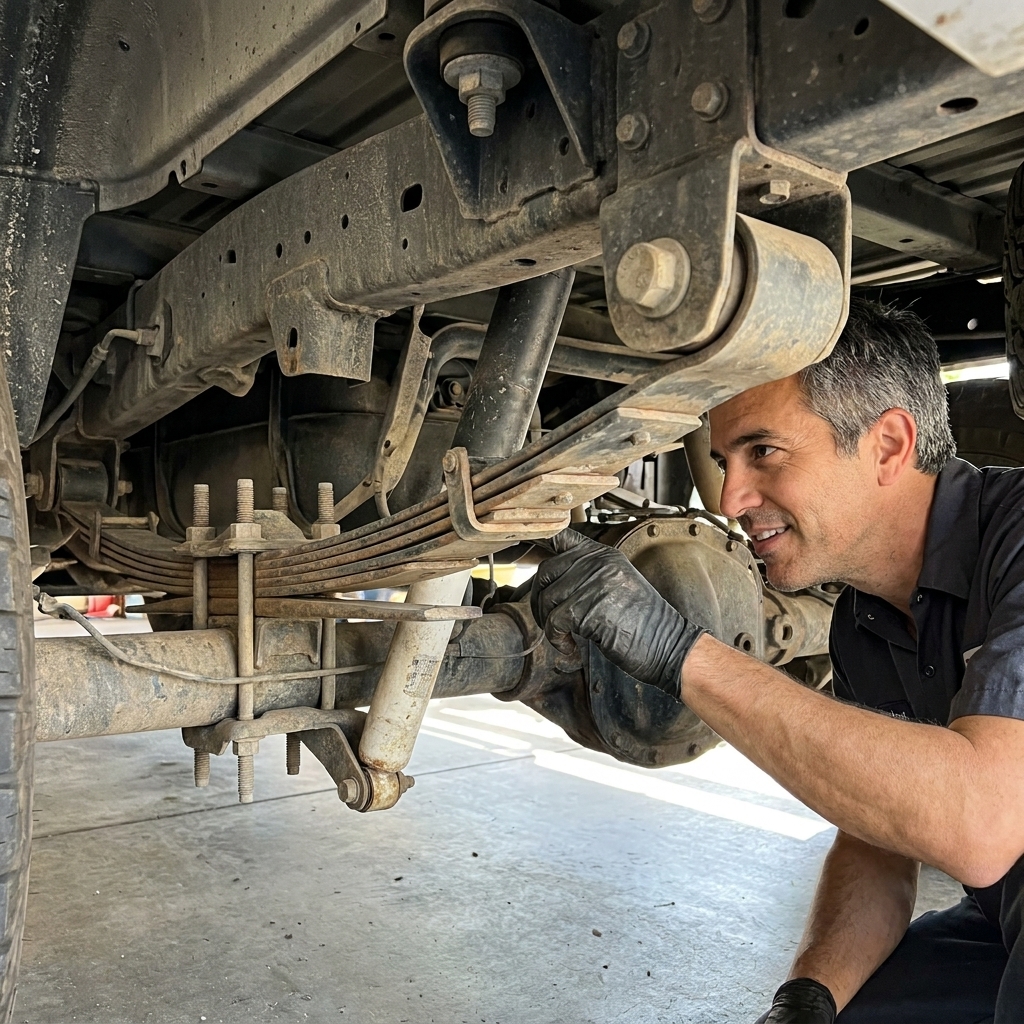
Rear suspension and load support
- Inspect leaf springs and shackles for cracks, broken leaves, or shifted center pins.
- Check bump stops. If you are riding on them while hitched, you are overloaded or need a better setup.
- Airbags and helper springs can help ride height, but they do not increase payload rating. Use them to level, not to justify extra weight.
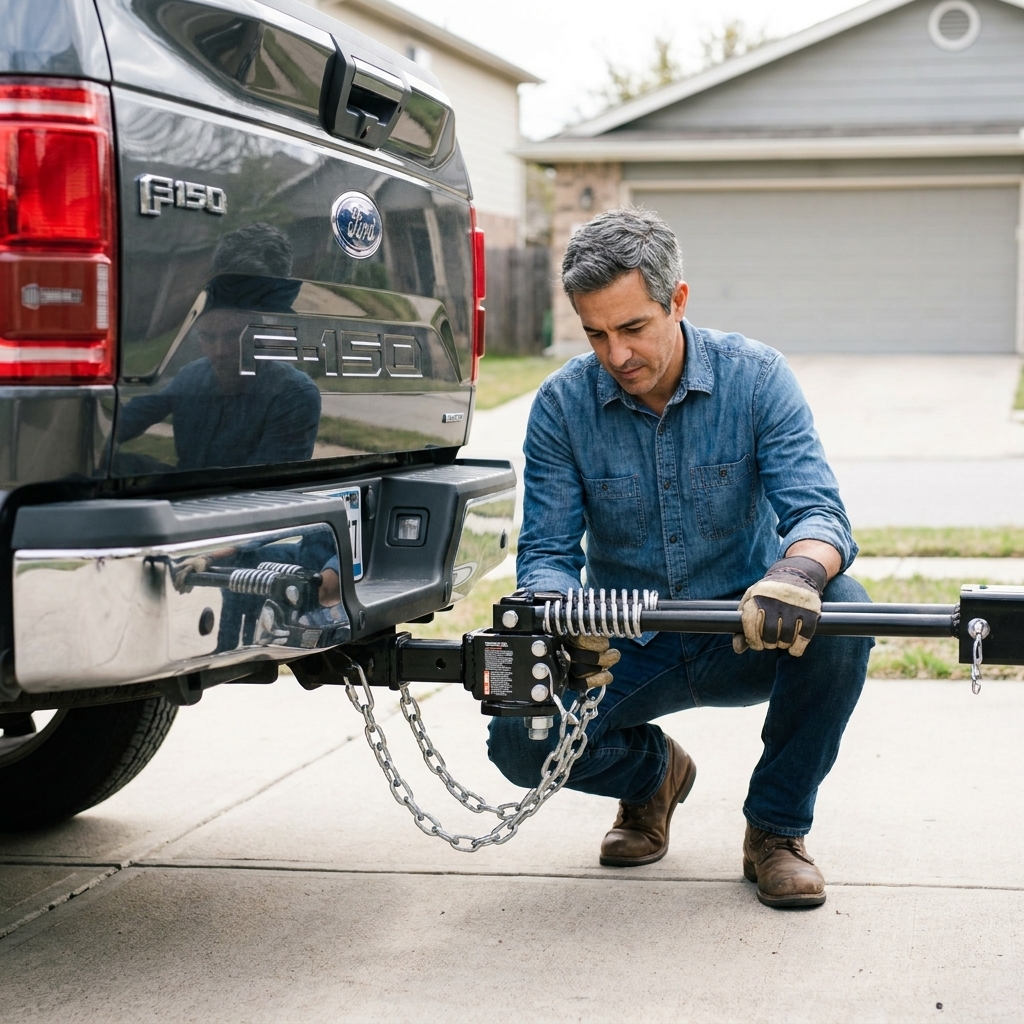
Hitch and safety gear: no shortcuts
This is the part I wish everyone treated like an airplane pre-flight. Most hitch failures are setup failures, not “bad luck.”
Receiver, hitch, and ball
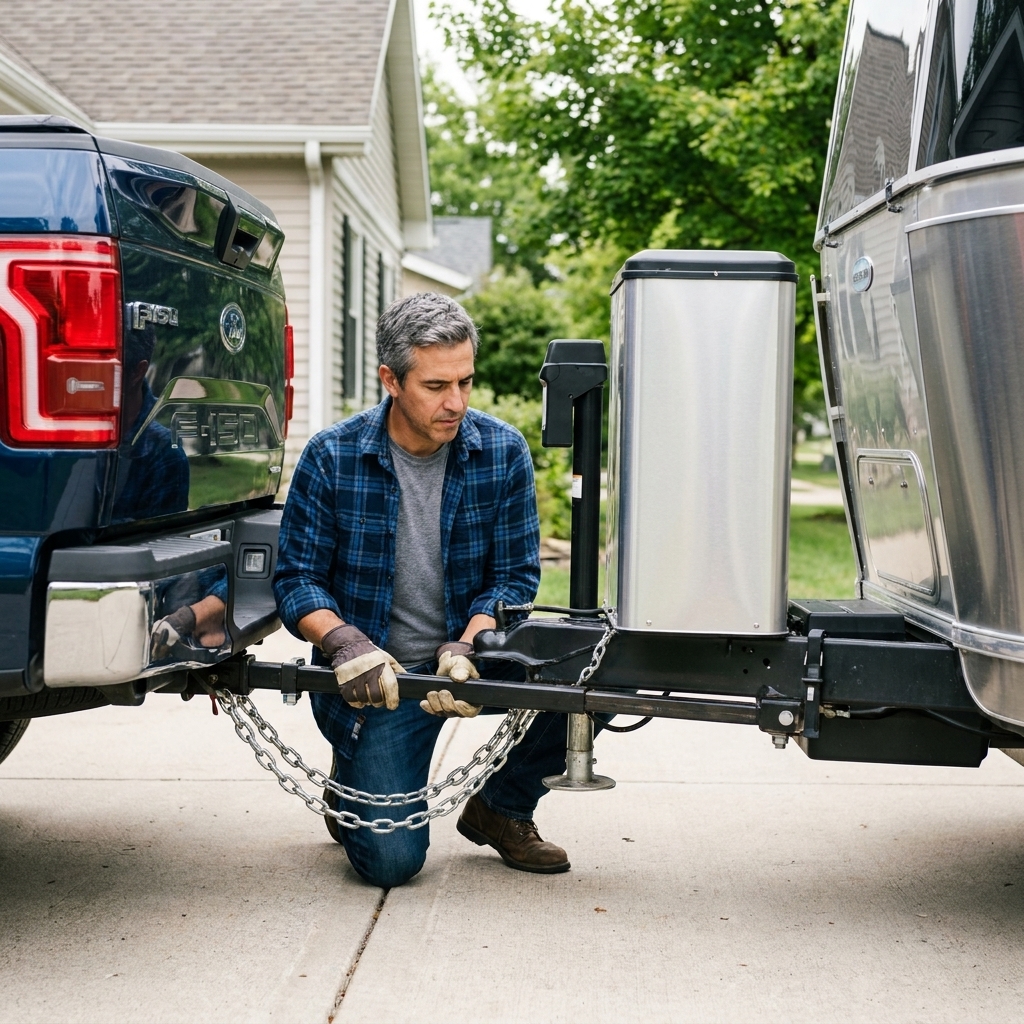
- Match every rating: receiver, ball mount, hitch head, ball, and pins all need to meet or exceed the trailer’s loaded weight and tongue weight. If you use weight distribution, confirm the receiver and the hitch are rated for it.
- Inspect for cracks, elongation, or rust jacking, especially around pin holes and welds.
- Torque the hitch ball nut to spec. A loose ball is a real thing, and it is terrifying.
Weight distribution and sway control (if used)
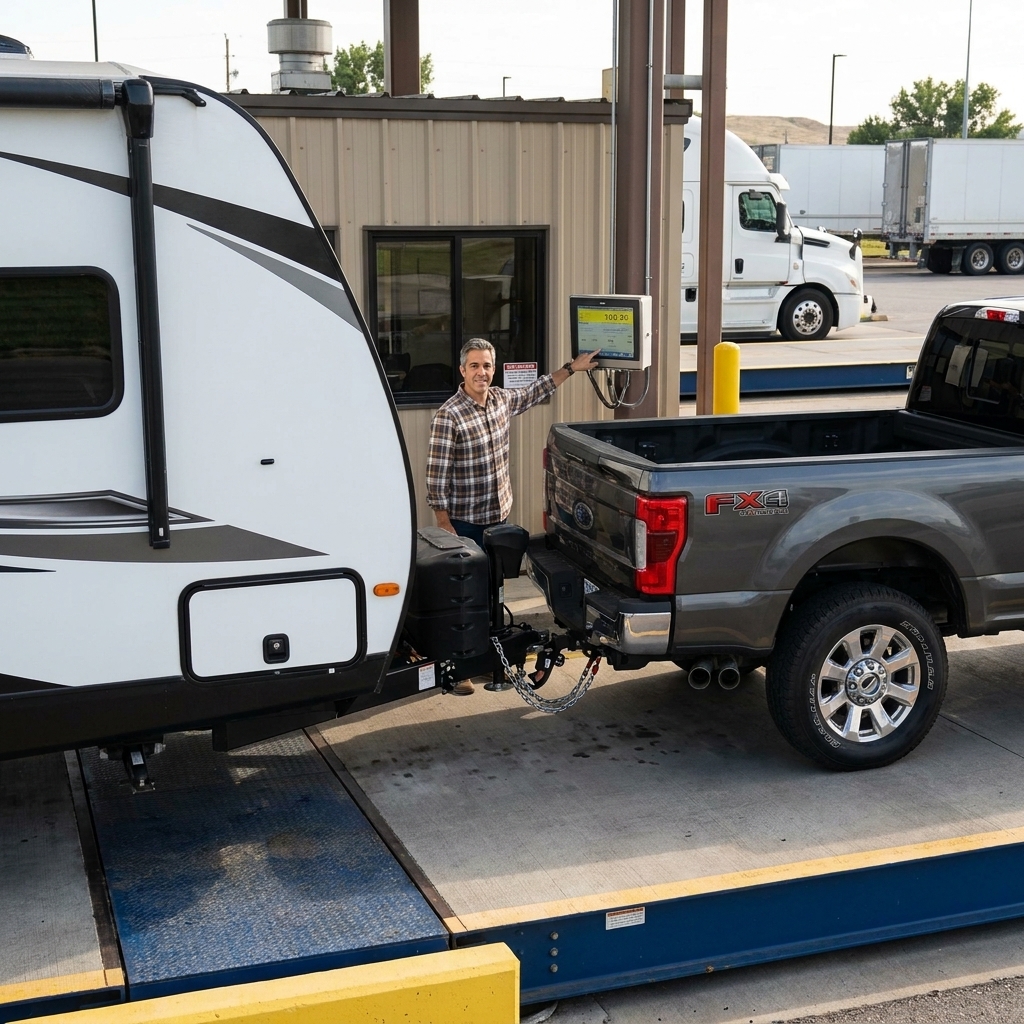
- Set it to bring the truck back into balance. A good quick check is fender height before and after, and the goal is to restore some front-axle weight, not just crank the rear back up. If you want the truth, hit a scale.
- Confirm correct chain link count or bar tension and that the truck sits level enough that headlights are not pointing at tree tops.
- Inspect L-brackets, friction pads, and fasteners. Replace worn friction surfaces before they glaze.
Coupler and jack
- Check coupler latch operation and that it locks fully onto the correct ball size.
- Grease the coupler if required and make sure the jack cranks smoothly and retracts fully.
Safety chains and breakaway
- Cross the safety chains under the coupler and ensure you have enough slack for turning, not enough to drag.
- Test the breakaway switch per the trailer manufacturer instructions. Replace the breakaway battery if it is weak.
- Know the rules where you are traveling. Brake requirements, safety chain rules, and breakaway requirements vary by state and province. It is worth a two-minute check before a long trip.
Lights
- Confirm running lights, brake lights, and turn signals with someone watching or by using a reflective surface.
- Check marker lights on travel trailers and utility trailers. A dead side marker is easy to miss until a cop points it out at night.
Under the hood: belts and leaks
Belts and hoses
- Inspect serpentine belts for cracking, fraying, or glazing.
- Check clamps and hose ends for seepage. A hose that is “just sweating a little” can become a leak under towing heat.
Air filter
If you are heading into dusty areas, a clean engine air filter helps power and fuel economy. Replace it if it is dirty or older than you can remember.
Battery and charging
- Clean corrosion on terminals and confirm the battery is secured tightly.
- Watch for slow cranking. Towing trips often involve extra starts and accessory loads.
- Check trailer charge circuit if you rely on it for trailer batteries.
Leaks
Do a “cardboard test” overnight if you suspect a leak. A few drops on the driveway can become a few quarts on the interstate.
Trailer checks people skip
Your truck can be perfect and the trailer can still ruin your day. Spend 20 minutes here and you avoid most roadside drama.
Tire age and spares
- Carry a trailer-rated spare in the correct size and load range, aired up.
- Bring a jack that fits the trailer and a lug wrench that matches the lug size. Do not assume your truck tools fit the trailer.
Propane and appliances (travel trailers)
- Leak check propane connections and confirm cylinders are secured.
- Latch and lock exterior compartments. I have watched more than one baggage door turn into a kite.
Interior load security
- Distribute weight low and forward.
- Secure heavy items so they cannot shift under braking.
Mirrors and visibility
- Set your mirrors for the trailer you are actually towing. If you cannot see down the sides, add clip-on or extended mirrors before you leave.
- Confirm cameras work if you rely on them, but do not let them replace mirrors.
Timeline I actually use
One week out (or earlier)
- Schedule any needed services (oil, transmission, brakes, alignment).
- Order parts you might need: brake controller, breakaway battery, bearing kit, spare tire.
- Do a short tow test drive to listen for noises and check brake balance.
- Confirm trailer registration and insurance are current, and keep proof where you can reach it.
Two days out
- Torque lug nuts on truck and trailer.
- Set tire pressures cold.
- Confirm lights and brake controller operation.
Morning of departure
- Walkaround: hitch latch, pin, chains, breakaway, wiring, jack up and stowed.
- Quick leak check under truck and trailer.
- Mirror setup and route review for fuel stops.
Roadside kit for towing
- Tire pressure gauge you trust, plus a portable compressor
- Infrared thermometer (for hubs, brakes, and tires)
- Torque wrench and correct sockets for truck and trailer lugs
- Wheel chocks, gloves, and a headlamp
- Basic hand tools, zip ties, electrical tape, spare fuses
- Spare trailer breakaway pin, spare hitch pin and clip
- Extra engine oil and the right coolant
- Reflective triangles or flares
Quick driving notes
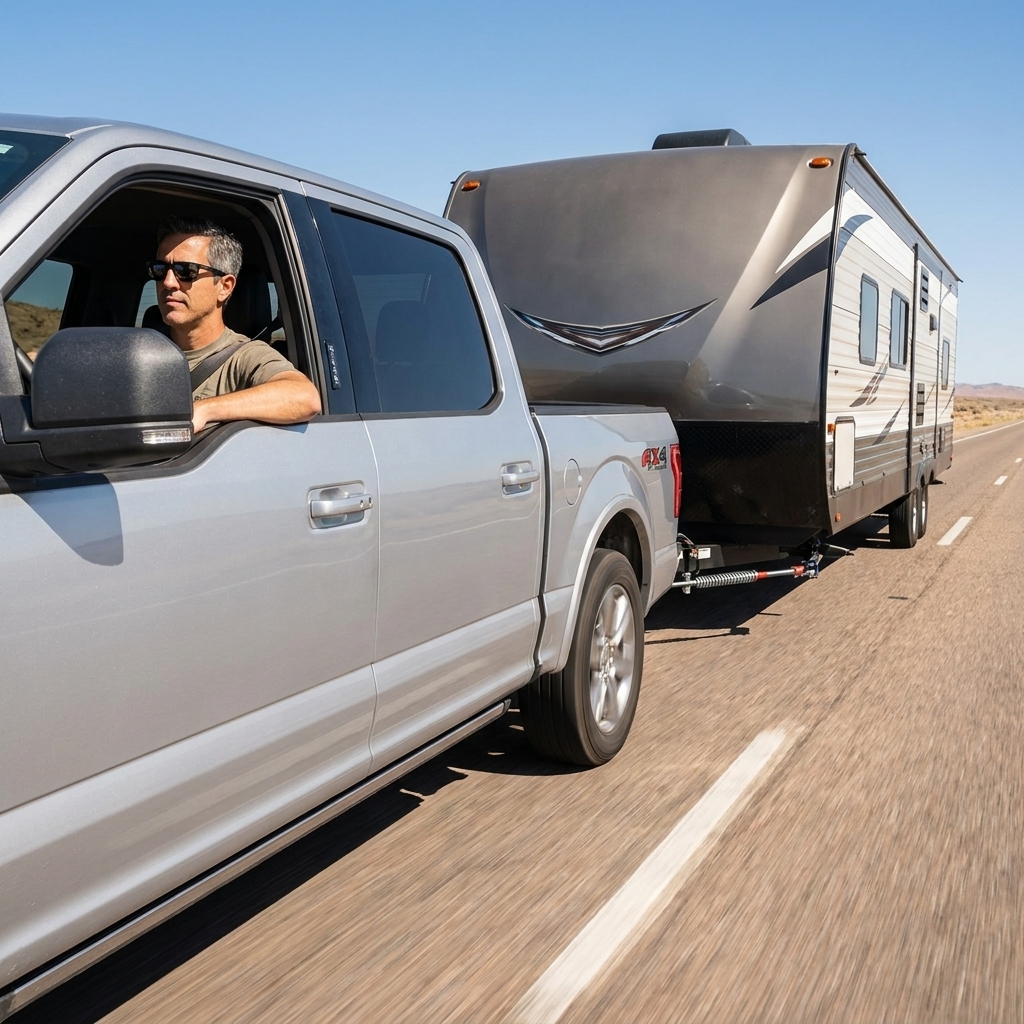
- Give yourself more space. Longer following distance fixes a lot of bad situations before they start.
- Use gears on grades. Downshift early, use engine braking when available, and avoid riding the brakes.
- If sway starts, take your foot off the throttle and hold the wheel straight. Do not accelerate through it. If you have a brake controller, a light manual-override squeeze can help pull the trailer straight. Once it is stable, slow down and find out why it started.
Quick FAQ
Should I change oil before towing if it is not due yet?
If you are within about 1,000 miles of your interval, yes, I would. Fresh oil is cheap insurance when you are running hot for hours.
What tire pressure should I run while towing?
For the trailer, use the pressure that matches the tire and trailer manufacturer guidance, and do not exceed the wheel’s max pressure. Many ST trailer tires are designed to run at or near max sidewall pressure. For the truck, use the pressure that matches your load. The door label is a baseline for stock tires, but LT tires and different sizes may require using the tire manufacturer’s load tables.
How do I know if my trailer brakes are adjusted right?
At low speed in a safe area, use the manual override. You should feel the trailer slow the rig without instantly locking up. Fine-tune gain until stops feel controlled and straight.
What is the most important inspection if I only have 20 minutes?
In order: trailer tire pressures and condition, lug torque, hitch and coupler latch, trailer brake function, then a quick leak check and fluid levels under the hood.
Final reminder
You do not need to be a pro mechanic to tow safely. You just need a routine and the patience to do it the same way every time. If something feels off on the test drive, handle it now. The highway is the worst place to learn your “small issue” was actually the beginning of a failure.