If you tow often, your transmission fluid is not a “set it and forget it” item. Heat, load, and time spent gear-hunting beat up automatic transmission fluid (ATF) way faster than normal commuting. And once ATF starts breaking down, the transmission can start slipping, shifting gets weird, and temperatures climb further. It is a snowball you do not want.
I have seen plenty of trucks that could have lived a long, happy towing life if the owner treated ATF like the working fluid it is, not a lifetime fill. Let’s walk through what towing does to ATF, how to set realistic check and change intervals, and the best habits that keep your transmission alive.
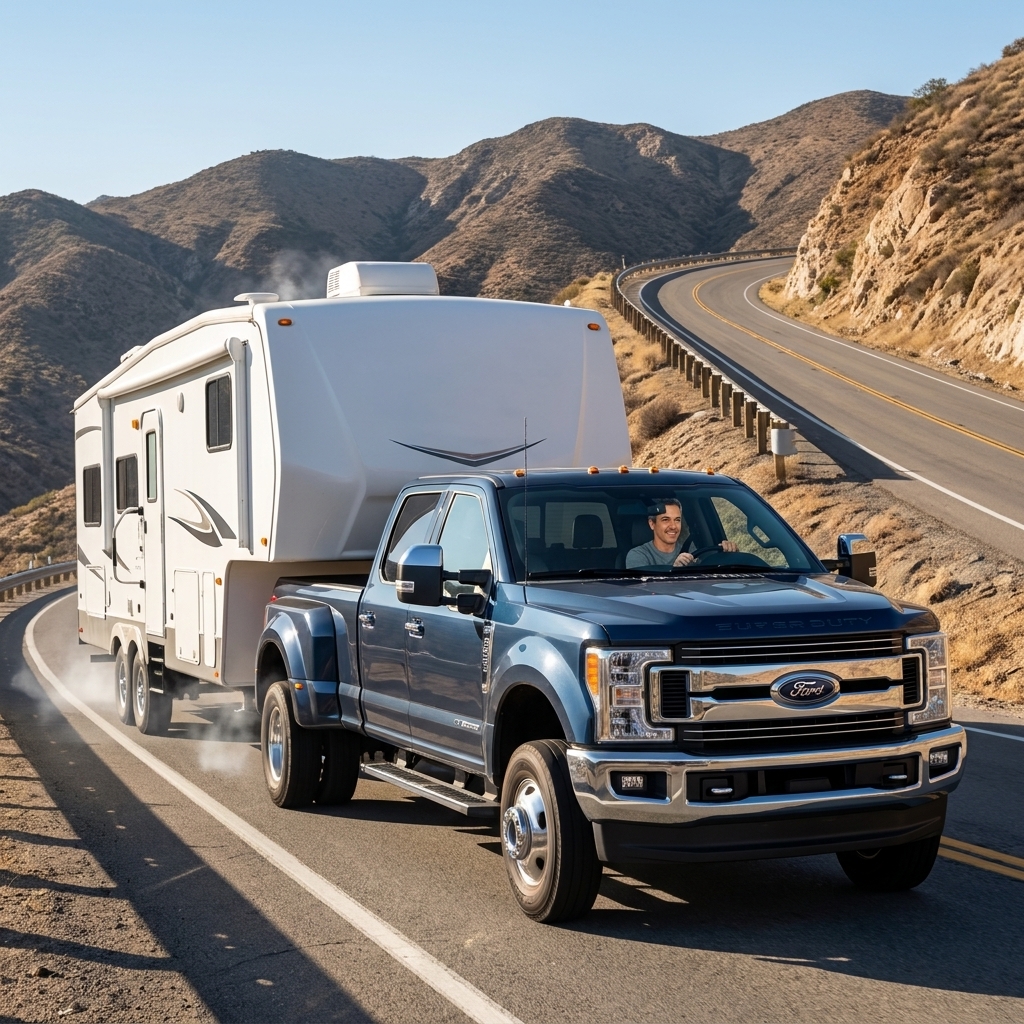
Why towing is hard on transmission fluid
Your transmission does three big jobs while towing:
- Hydraulic power: ATF is the hydraulic fluid that applies clutches and bands.
- Lubrication: Gears, bushings, bearings, and thrust surfaces rely on it.
- Cooling: It carries heat out to the cooler in the radiator or auxiliary cooler.
When you hook up a heavy trailer, you increase torque load and heat. Heat is the enemy because it oxidizes the fluid, reduces lubricity, and can contribute to seals aging and hardening over time. Add in stop and go traffic, long grades, hot weather, or headwinds, and you are basically asking the transmission to do its hardest work for extended stretches.
What “too hot” looks like
Exact numbers depend on transmission design and where temperature is being measured. A pan sensor, a valve body sensor, and a converter outlet sensor can show different numbers on the same pull. If your owner’s manual or OEM tow guide gives target ranges, use those first. Otherwise, these rules of thumb are still useful for many tow rigs:
- Normal towing temps: Often somewhere in the 160°F to 210°F range, depending on ambient temps and load.
- Elevated temps: Sustained temps above about 220°F mean the fluid is aging faster.
- Warning zone: Spikes happen, but repeated climbs into the 240°F-plus range are a sign you need to change something, whether that is driving technique, cooling capacity, or service interval.
If you do not have a temp readout, that is fine. You just need to be more conservative with service intervals and watch for behavior changes like soft shifts, delayed engagement, or a burnt smell.
When to check transmission fluid if you tow
I like simple routines you can actually stick to. Here is a practical schedule for tow rigs.
Quick check: every fuel fill on big trips
On a dedicated towing trip, make transmission checks part of your walk around:
- Look under the truck for fresh red, amber, or brown drips.
- Give the cooler lines a quick visual for wetness at fittings.
- After a hard pull, stay clear of hot components and pay attention to any sharp burnt odor. Smell alone is not a diagnosis, but it can be a clue that ATF ran hotter than normal.
On many modern trucks, you cannot easily check level with a dipstick. That is not your fault. In that case, focus on leak checks and temperature monitoring.
Level and condition check: monthly during towing season
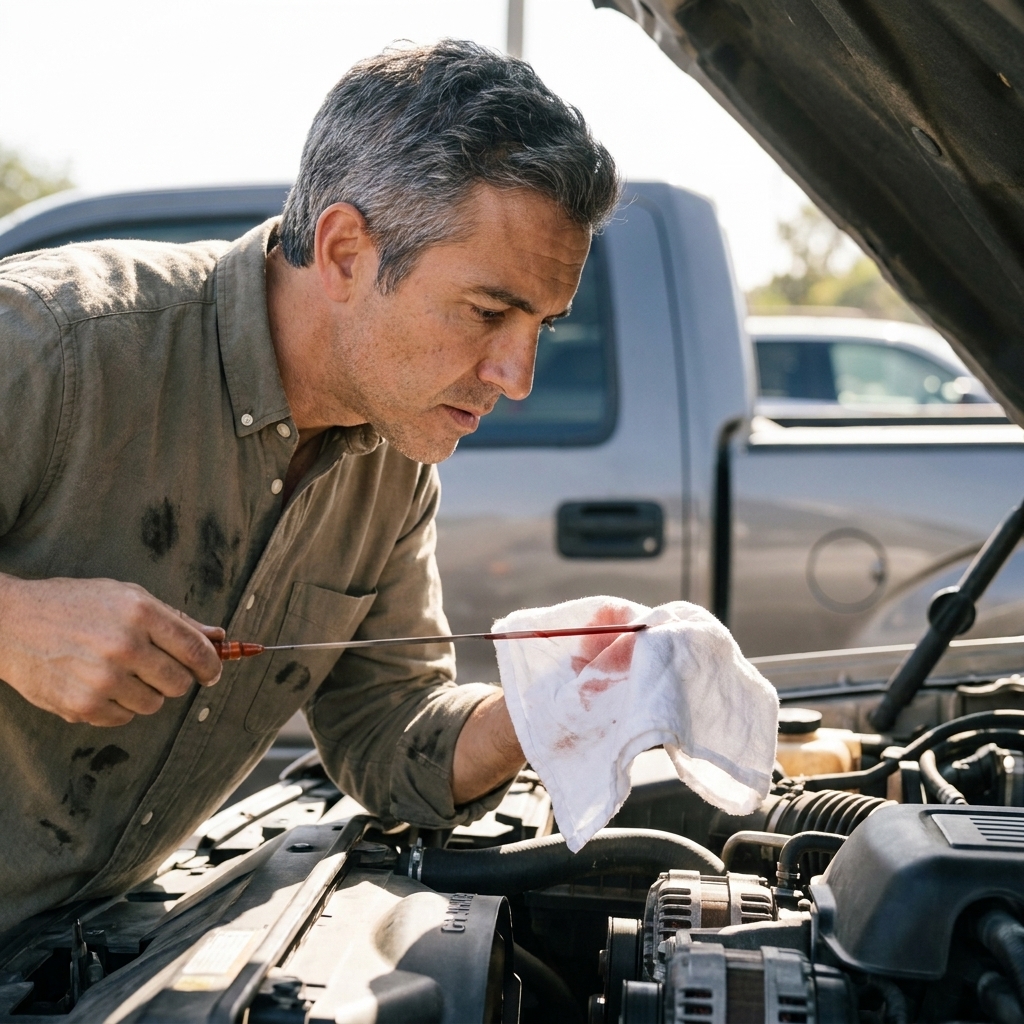
If your truck does have a dipstick, check it about once a month when you are towing regularly, or before any long haul. Do it the right way:
- Follow the owner’s manual for the checking procedure. Some want the truck hot, idling, in Park. Others are different.
- Pull the stick, wipe, reinsert, and read level.
- Check color and smell. Healthy ATF is often red or amber depending on spec. Dark fluid with a burnt smell means it is time to act.
Real world advice: If the dipstick looks like used engine oil and smells burnt, do not “see how long it goes.” Service it now and figure out why it got cooked.
When to change transmission fluid for heavy towing
This is where folks get tripped up because the manual might say something like “change at 60,000 miles” or “lifetime fluid” in normal service. Towing often counts as severe service. If your OEM has a severe-service interval for your exact transmission, that is the schedule to follow. If it does not, or if you tow harder than the manual assumes, use a more conservative interval.
Severe service usually includes one or more of these:
- Towing trailers regularly
- Hauling heavy payloads
- Stop and go driving, especially in heat
- Mountain driving or long grades
- Commercial use or lots of idling
Here are realistic planning ranges that work well in the real world. Unless noted otherwise, “service” here means a drain and fill, ideally with a pan drop and filter change if your transmission uses a serviceable filter.
Good baseline intervals
- Light occasional towing (a few weekends a year): Consider a fluid service around 40,000 to 60,000 miles, or every 3 to 4 years, whichever comes first.
- Frequent towing (monthly or seasonal, travel trailer life): Consider 30,000 to 45,000 miles, or every 2 to 3 years.
- Heavy towing (work trailers, hot climates, mountains): Consider 20,000 to 30,000 miles, or every 1.5 to 2 years.
These are not magic numbers. They are safe planning ranges. If you regularly see high transmission temps, or you are at the top end of your truck’s ratings, shorten the interval.
If you already overheated the fluid once
Overheat events matter. If you towed too heavy, got stuck in deep sand, climbed a long grade in the wrong gear, or saw temps spike repeatedly, treat that as an early service trigger. Fresh fluid is cheaper than a rebuild.
Service options: drain and fill vs exchange
Not all “transmission fluid changes” are the same. Here is what you are usually choosing between.
Drain and fill (with filter if serviceable)
This is my go-to for most towing trucks on a regular schedule. The pan comes down, the filter gets replaced if the design allows it, the magnet gets cleaned, and you refill what you drained.
- Pros: Gentle, you can inspect the pan for clutch material, usually lower risk, great for maintenance.
- Cons: You do not replace all the fluid because some stays in the torque converter and cooler circuits.
Fluid exchange (machine or cooler-line method)
This replaces more of the total fluid volume.
- Pros: More complete refresh, helpful if fluid is old but the transmission is otherwise healthy.
- Cons: If a transmission is already worn and slipping, an exchange can reveal the problem more clearly. Also, problems come from the wrong fluid, poor process, or incorrect level far more often than the exchange itself.
If your transmission has a serviceable filter and pan, I like pan drop and filter on a schedule, and an exchange only when it makes sense for your situation. If it is a sealed unit with no traditional dipstick, follow the manufacturer service procedure exactly. Many require a specific temperature window and level-plug method, and overfill or underfill can cause real issues.
Best practices to make ATF last
You can stretch transmission life a lot just by reducing heat and unnecessary shifting. Here is what I recommend for everyday towers.
Use Tow/Haul mode
Tow/Haul typically changes shift timing and can use engine braking more aggressively. Depending on the calibration, it may also command different converter behavior and line pressure to reduce clutch slip and heat. If you are towing, Tow/Haul should usually be on.
Lock out gears when it hunts
If your truck keeps bouncing between two gears on rolling hills, the transmission is generating heat every time it shifts. Many trucks allow you to limit the top gear. Locking out the hunting gear often lowers temps and feels more stable.
Slow down a little and watch temps
A small speed reduction can mean fewer downshifts and less torque converter slip. On long grades, I would rather go a little slower in a stable gear than faster while the transmission is constantly working overtime.
Keep the cooling stack clean
Your transmission cooler depends on airflow through the radiator and condenser area. Bugs, mud, and cottonwood fuzz block airflow. If you tow in the summer, rinse the cooling stack gently and keep fins clear.
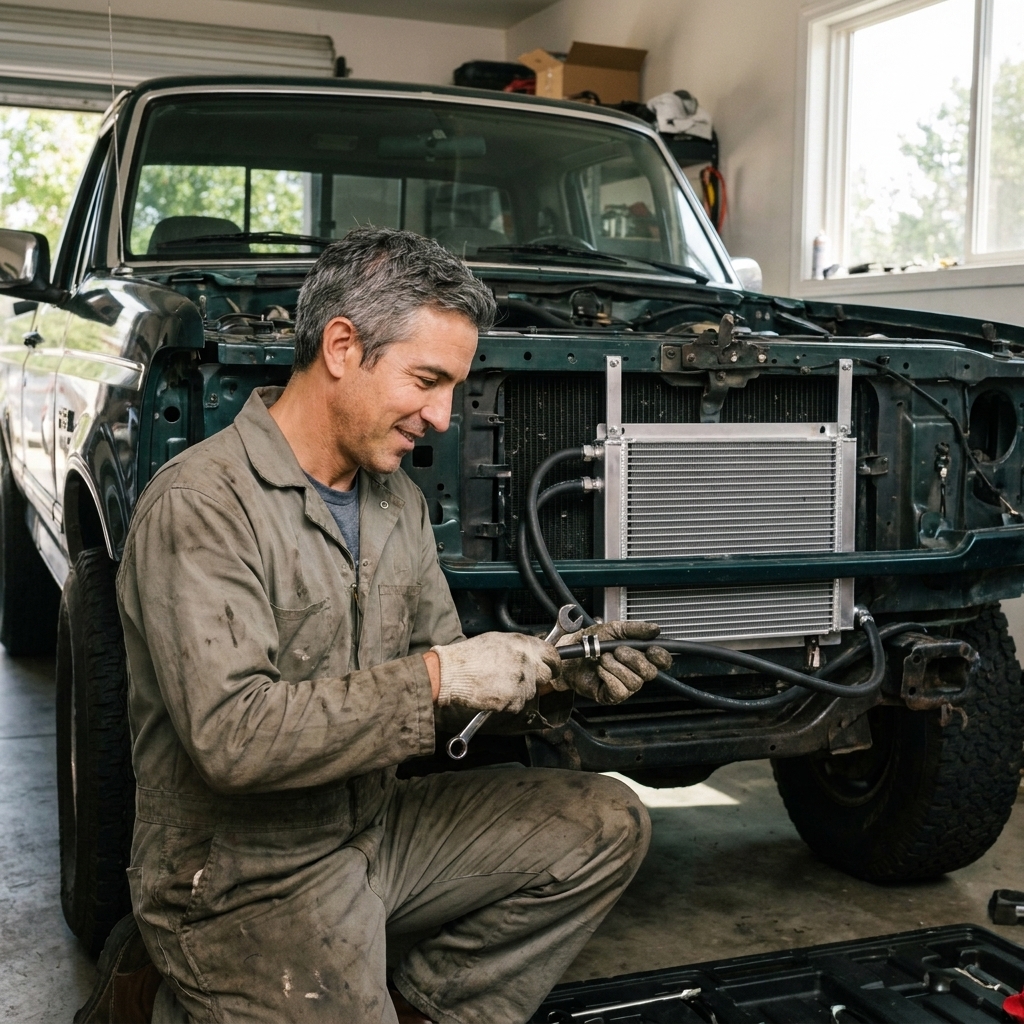
Consider an auxiliary cooler if you tow heavy
If your truck is frequently near its limits, an additional cooler or an upgraded cooler setup can be a game changer. The goal is not to run ice-cold. The goal is to avoid sustained high temps on hard pulls. Use quality parts and proper hose routing and clamps. Leaks are no fun on the side of a mountain pass.
Choosing the right fluid
Modern transmissions are picky. Different fluid specs have different friction modifiers, viscosities, and additive packages. Using “close enough” ATF can cause shudder, harsh shifts, or accelerated wear.
- Use the exact spec listed in your owner’s manual or service information, not just a brand recommendation on the bottle.
- Do not mix fluids unless the fluid explicitly meets the required specification.
- If you upgraded the transmission or added a deeper pan, make sure the shop notes the new capacity and fill procedure.
If you are unsure what is in the transmission now, that is one more reason to do a proper service and document it going forward.
Signs your towing schedule is overdue
Fluid and filters do not fail politely. Here are common warning signs I see on tow rigs:
- Delayed engagement when shifting into Drive or Reverse
- Soft or flaring shifts under load
- Harsh shifts after climbing grades (hot fluid and pressure changes)
- Shudder at steady speed or light throttle
- Burnt smell or very dark fluid
- Transmission temperature creeping higher than it used to on the same route
- New leaks around cooler lines, pan gasket, output shaft seal, or transfer case area on 4x4s
If you get any of these, do not just change fluid and hope. Scan for codes, verify temps, and inspect for cooling issues. Sometimes the fix is as simple as a restricted cooler or a failing thermostat style bypass valve in the cooler circuit, depending on your truck.
A towing-friendly maintenance plan
If you want a no-drama plan that fits most towing lifestyles, here is one I would put on the garage wall.
Before a towing season or big trip
- Check for leaks around pan and cooler lines
- Verify transmission temps (dash gauge or scan tool)
- Confirm ATF level if your truck has a dipstick
- Inspect cooling stack for blockage
During the season
- Quick leak check at fuel stops on long tows
- Watch for gear hunting and manage gears
- Pay attention to any change in shift feel
Service interval target
- Frequent towers: plan on a pan drop and refill in the 30,000 to 45,000 mile range
- Heavy work towing: move that closer to 20,000 to 30,000 miles
Write the mileage and date in your phone notes. Future you will thank you.
FAQ
Is “lifetime” transmission fluid real if I tow?
“Lifetime” usually means “lifetime under normal conditions, as defined by the manufacturer.” Heavy towing is often severe service, which shortens the fluid’s useful life. If you want the transmission’s lifetime to be long, do not treat the fluid as lifetime.
Should I change fluid more often if I added bigger tires?
Often, yes. Larger tires can change effective gearing and make the transmission work harder, especially on grades. More load usually equals more heat, and more heat usually means shorter ATF life.
Is a deeper transmission pan worth it for towing?
Sometimes. More fluid capacity can help with heat management, and many deeper pans add cooling fins. It is not a substitute for proper cooling or proper service, but it can be a helpful piece of a towing setup.
Can I just top off fluid instead of changing it?
Topping off helps if you are low, but it does not remove oxidized fluid, worn additive packages, or debris in the pan and filter. If the fluid is worn out, you need service, not just a top-off.
What should I do with used ATF?
Do not dump it. Collect it in a clean container and take it to a recycling center or parts store that accepts used oil and fluids. Keep it off the ground, because it is hard to clean up and easy to track everywhere.
Bottom line
If you tow heavy, transmission fluid maintenance is cheap insurance. Check for leaks and heat often, follow severe-service intervals instead of commuter intervals, and prioritize temperature control with smart driving and good cooling. Do that, and your truck’s transmission has a much better shot at being the dependable work partner it was built to be.