Rust is sneaky. It starts as a little orange bloom you can wipe with a finger, then turns into flaky scale that swells seams, traps moisture, and quietly weakens the parts that actually carry the load. On tow rigs, that matters more than most folks realize because corrosion does not just look ugly. It can compromise hitch mounting points, spring hangers, brake lines, and trailer structure over time.
I spent years keeping work trucks alive through Ohio winters and I still drag a travel trailer through plenty of salted mountain passes. Add a boat trailer that gets dunked in the lake or backed into the surf, and you have the perfect recipe for corrosion if you are not intentional about cleaning and protection.
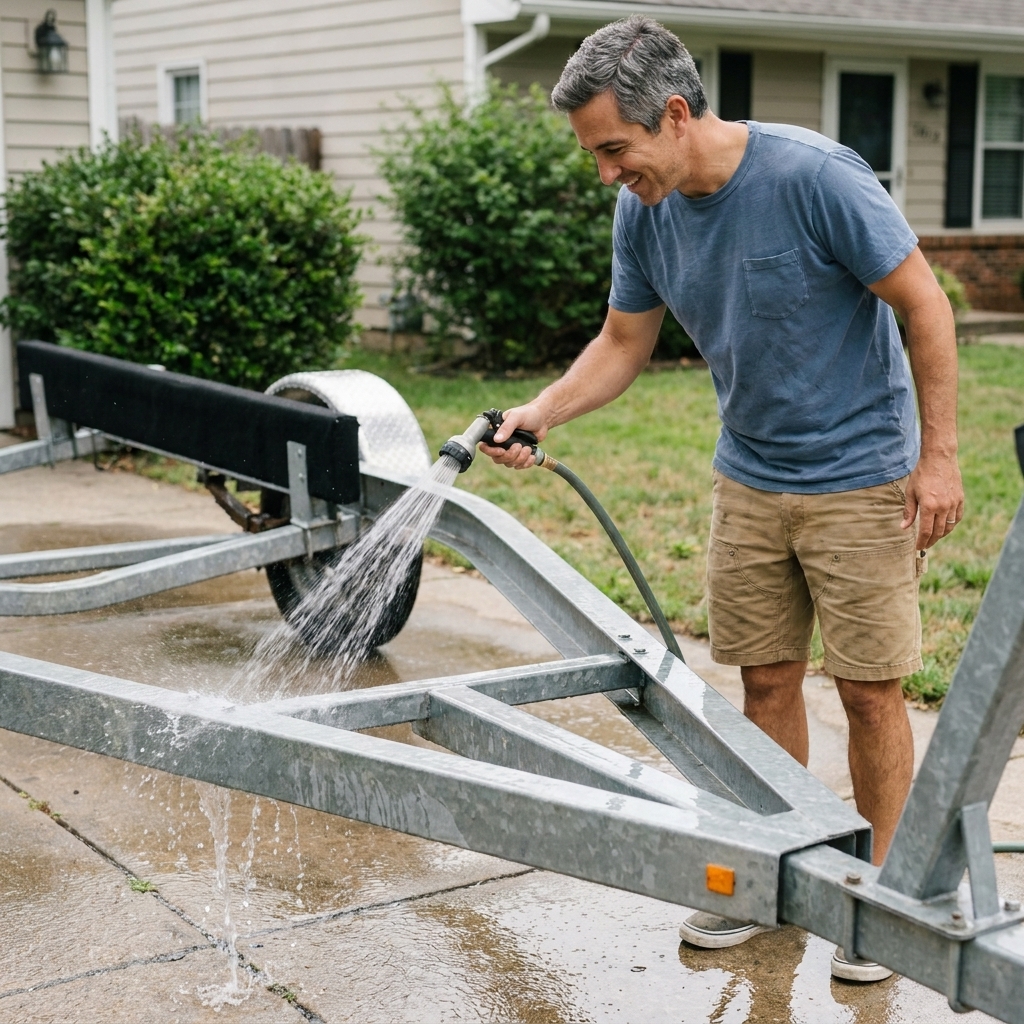
Below is a practical routine you can follow whether you tow on salted roads, launch at brackish ramps, or both. We will cover prevention first, then what to do when you already have rust showing.
Why tow rigs rust faster
Trucks and trailers rust for the same basic reason: steel plus oxygen plus moisture. The accelerant is contamination, mainly salt and grime.
- Road salt and brine: Chlorides increase conductivity and accelerate electrochemical corrosion. Brine also creeps into seams and stays there.
- Marine environments: Salt spray, salty ramps, and dunking hot hubs in cold water can pull moisture and salt into places you cannot see.
- Trailer design: Crossmembers, boxed sections, and overlapping brackets trap wet sand and lake muck.
- Heat cycles: Exhaust, brakes, and hubs heat and cool, pulling humid air in and out of cavities. That air carries moisture.
The goal is simple: keep salt and grime from living on the metal, and keep a protective barrier between steel and the elements.
Start with a smart wash routine
Most “rust proofing” fails because the surface was never truly cleaned. If you spray fancy coating over salt residue, you are basically sealing in the problem.
For tow trucks in winter salt
- Rinse often, wash weekly when roads are white: A quick rinse after every salty run is better than one big wash a month later.
- Hit the underside first: Wheel wells, inside the frame rails, behind bumpers, and the back side of cab corners catch the most spray.
- Use a sprinkler-style undercarriage wand: The rolling wands are not perfect, but they get consistent coverage under a truck that is hard to crawl under in the slush.
- Choose a salt-focused soap occasionally: A normal car wash soap removes dirt. A salt remover helps break down chloride residue.
For boat trailers after every launch
If you only take one thing from this article, take this: rinse the trailer, axles, brakes, hubs, and springs every single time, especially after salt or brackish water.
- Rinse at the ramp if possible: A quick rinse before the salt dries is huge. Then do a thorough rinse at home.
- Do not forget inside the frame: If your trailer has drain holes, flush until the water runs clear.
- Let it dry before covering: A tight cover over a wet trailer traps humidity like a greenhouse.
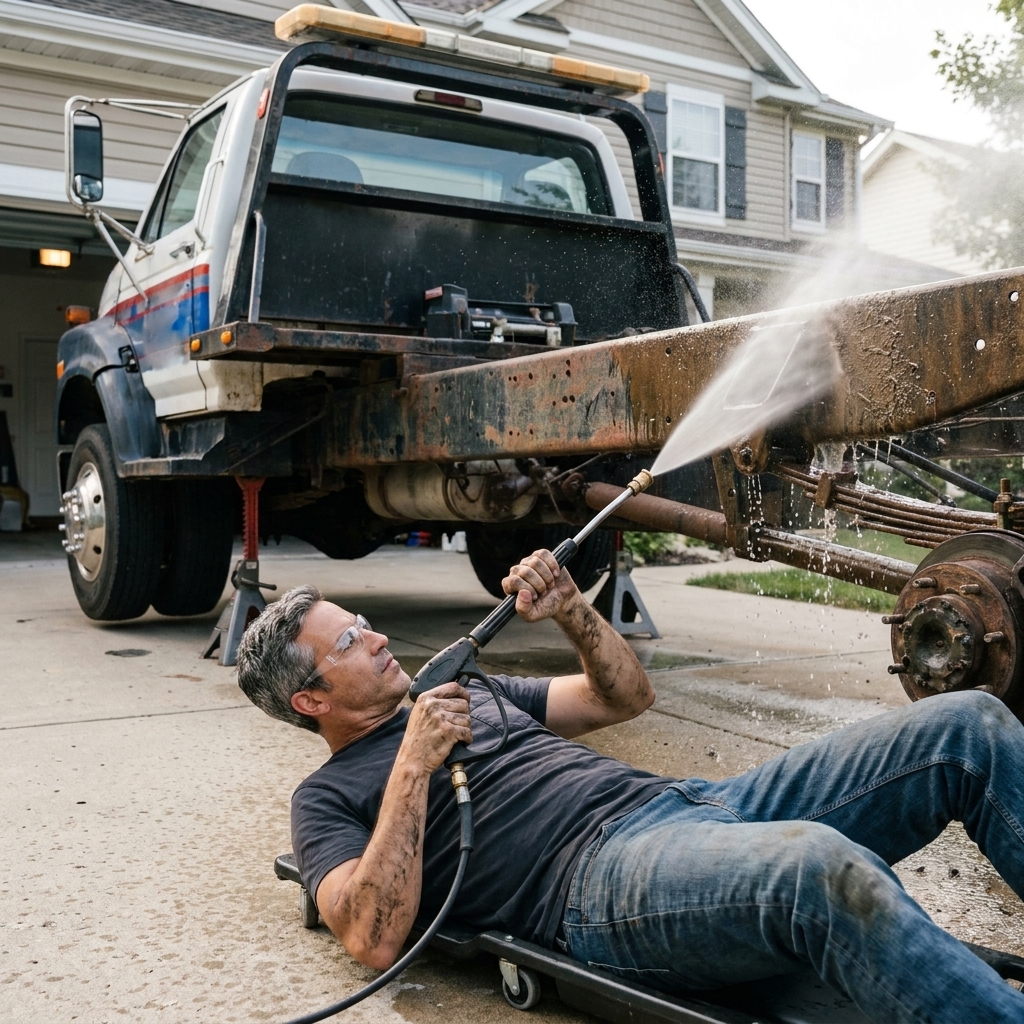
Quick caution: Pressure washers are great for cleaning, but do not blast directly at wiring connectors, brake backing plates, or hub seals from inches away. Use common sense distance and angle.
Inspect where rust matters
I am not here to shame anyone over a little surface rust. Most trucks and trailers get it. What matters is knowing where to look so you catch structural issues early.
Tow truck hot spots
- Frame rails and crossmembers: Especially around welded seams and where mud packs on.
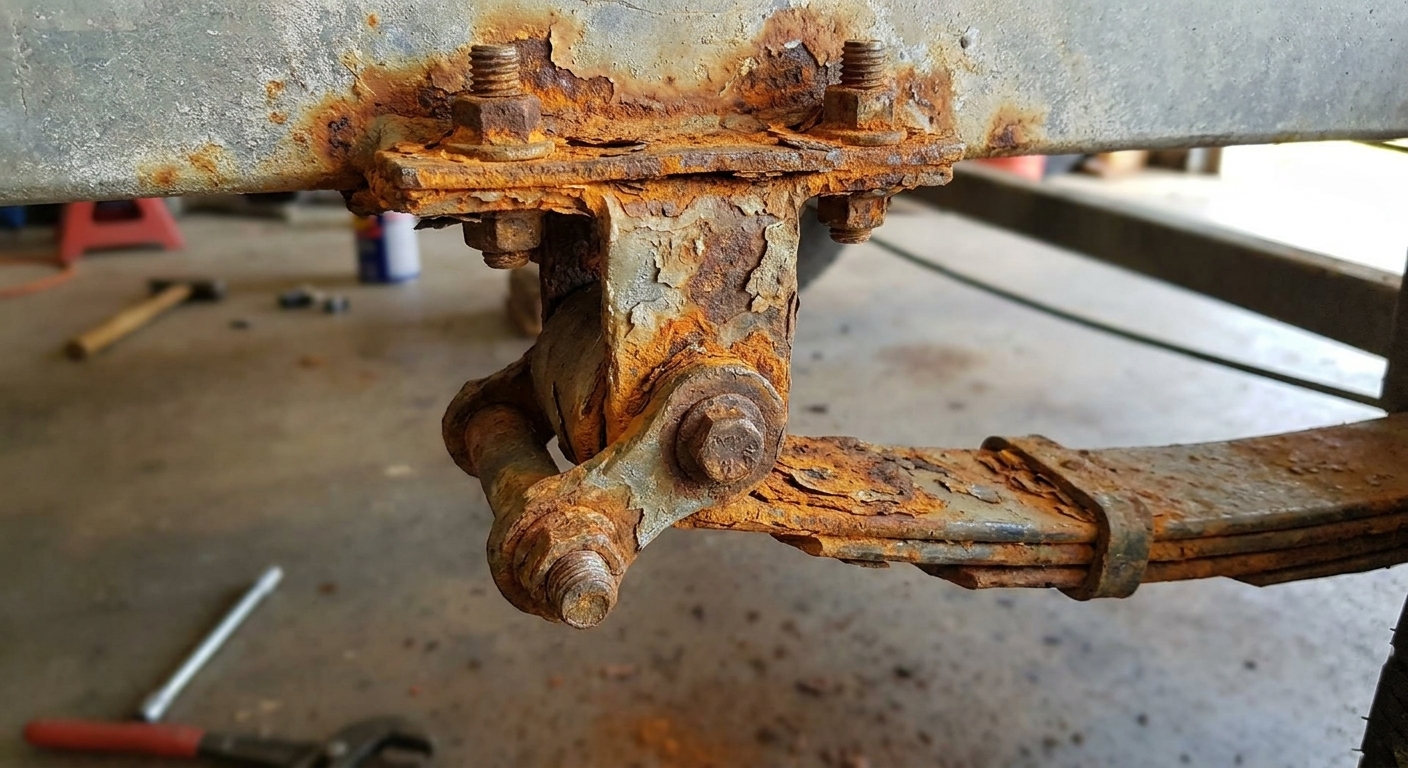
- Rear spring hangers and shackles: Rust loves layered brackets.
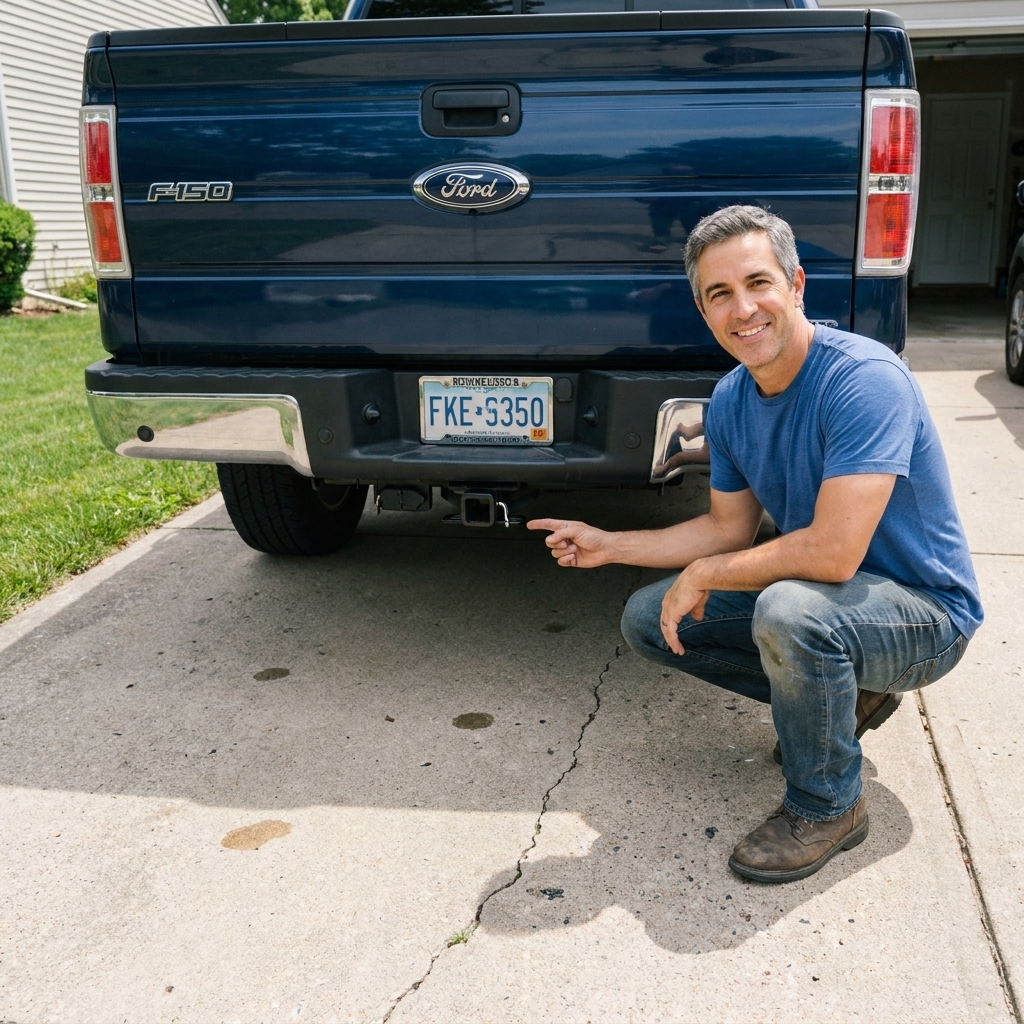
- Hitch receiver area: Check the receiver tube, safety chain loops, and the frame attachment points.
- Brake and fuel lines: Look for crusty scaling, wet spots, and bubbling coating.
- Cab mounts and body mounts: Rust here can turn into squeaks and alignment problems, and it is expensive if it gets bad.
Boat trailer hot spots
- Spring hangers and equalizers: The “stacked steel” zones where corrosion can hide.
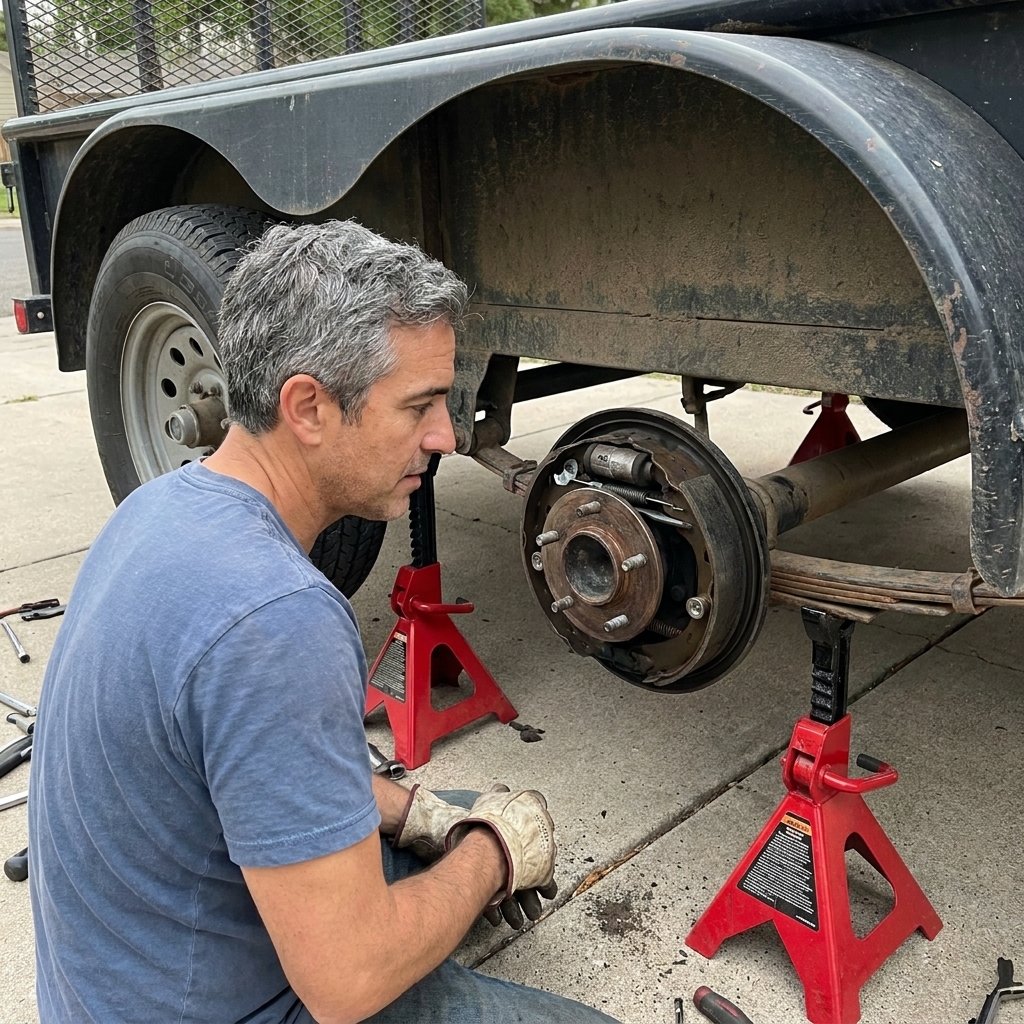
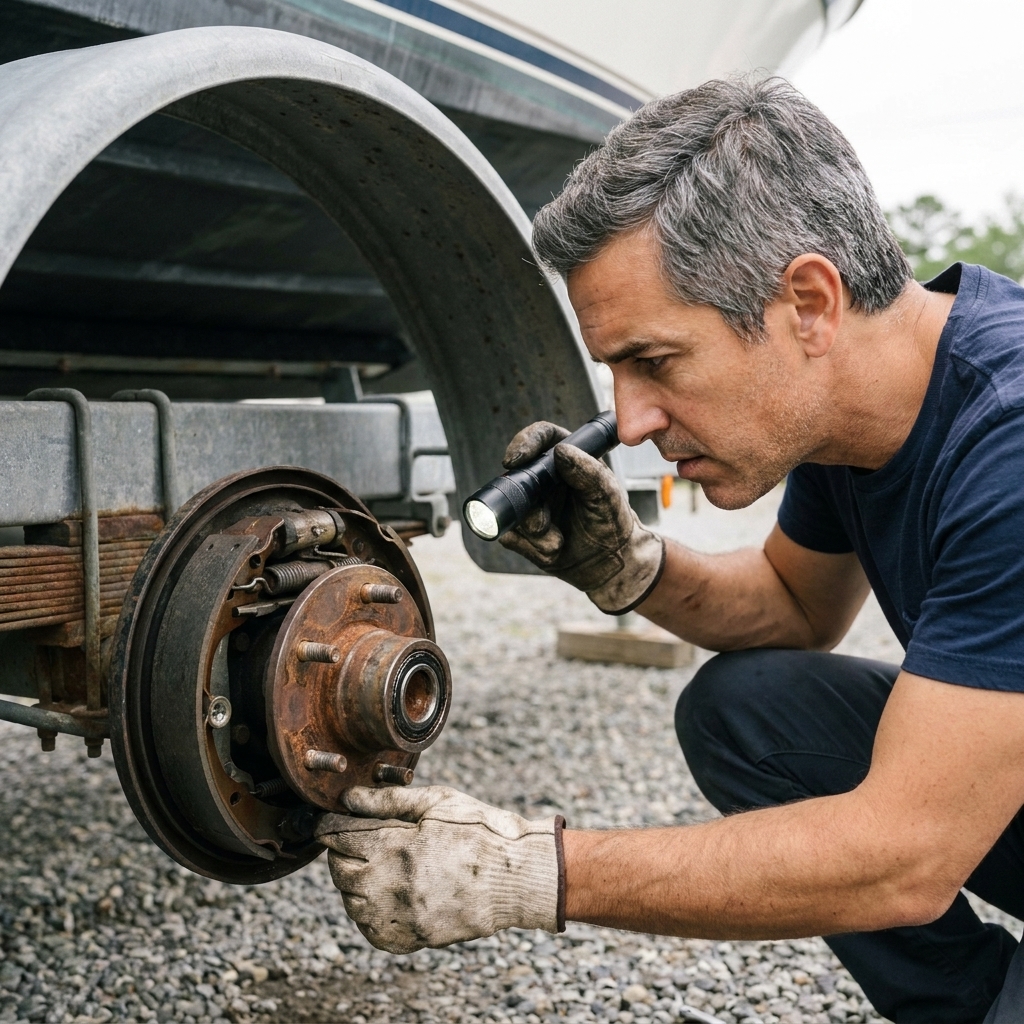
- Axle tubes and brake mounts: Pay attention to the welds and backing plate area.
- U-bolts: They are small, but they hold your axle where it belongs. Replace before they look scary.
- Bunks, brackets, and hardware: Carpet stays wet. Bolts trap moisture.
- Tongue and coupler: Chips in paint at the tongue are common and become rust points fast.
My driveway test: Use a bright flashlight and a flat screwdriver. If you can flake off thick layers or poke into soft metal, you are past “cosmetic.”
Pick rust protection that fits
Not all rust protection is the same. You are balancing durability, ease of touch-up, and whether you need something that creeps into seams.
1) Oil and wax films
These are the sprays that stay a little tacky or waxy and “self heal” when gravel hits. They are excellent for frames and inside cavities. I will call them cavity wax and oil film for the rest of this article.
- Pros: Creeps into seams, great for hidden spots, easy to reapply.
- Cons: Can attract dust, may need annual refresh, not ideal right on hot exhaust.
2) Rubberized undercoating
Rubberized coatings can protect well, but only if the surface is clean, dry, and solid. If you trap moisture or spray over scaly rust, it can peel and hide corrosion.
- Pros: Durable barrier, good chip resistance when applied correctly.
- Cons: Poor prep can make it worse, harder to inspect underneath later.
3) Rust converting primer and chassis paint
If you are actively fixing rust spots, converters and quality chassis paints are your friend. They are not magic, but they can stabilize light rust and provide a solid base coat.
- Pros: Great for targeted repairs, dries hard, cleaner than oil film.
- Cons: Needs prep time and dry conditions, does not creep into seams like cavity wax and oil film.
4) Galvanized and aluminum parts
Galvanized boat trailers resist corrosion better than painted steel, but hardware, welds, and cut ends can still corrode. Aluminum does not rust, but it can suffer galvanic corrosion when dissimilar metals meet, especially around stainless hardware in saltwater.
- Galvanized: Avoid aggressive grinding that removes zinc. Touch up bare steel at cuts and welds, and keep the trailer rinsed.
- Aluminum: Isolate dissimilar metals, keep contact points coated, and rinse off salt. Some setups may also use sacrificial anodes depending on the trailer and how it is used.
My step-by-step routine
This is the routine I recommend for most tow trucks and boat trailers. You can do it in a driveway over a weekend.
Step 1: Wash, then let it dry
- Do a thorough underbody wash.
- Drive it a few miles if needed to shake water off.
- Let it dry overnight if you can. Coatings hate damp metal.
Step 2: Knock off loose rust and flaky coating
- Use a wire brush, scraper, or a drill with a wire wheel.
- Focus on scale and edges where coatings are lifting.
- Vacuum or blow off dust so your coating bonds.
Safety note: Wear eye protection and a respirator when wire-wheeling. Keep sparks away from fuel vapors, solvents, and oily rags.
Step 3: Spot treat bare steel
- Apply a rust converting primer on light rust you cannot fully remove.
- On clean bare steel, go straight to a quality primer if your system calls for it.
Step 4: Topcoat for durability
For high-impact areas like frame rails, crossmembers, and the trailer tongue, a chassis paint or durable topcoat is worth it. Let it fully cure per the product directions before you go back into wet conditions.
Step 5: Protect seams and cavities
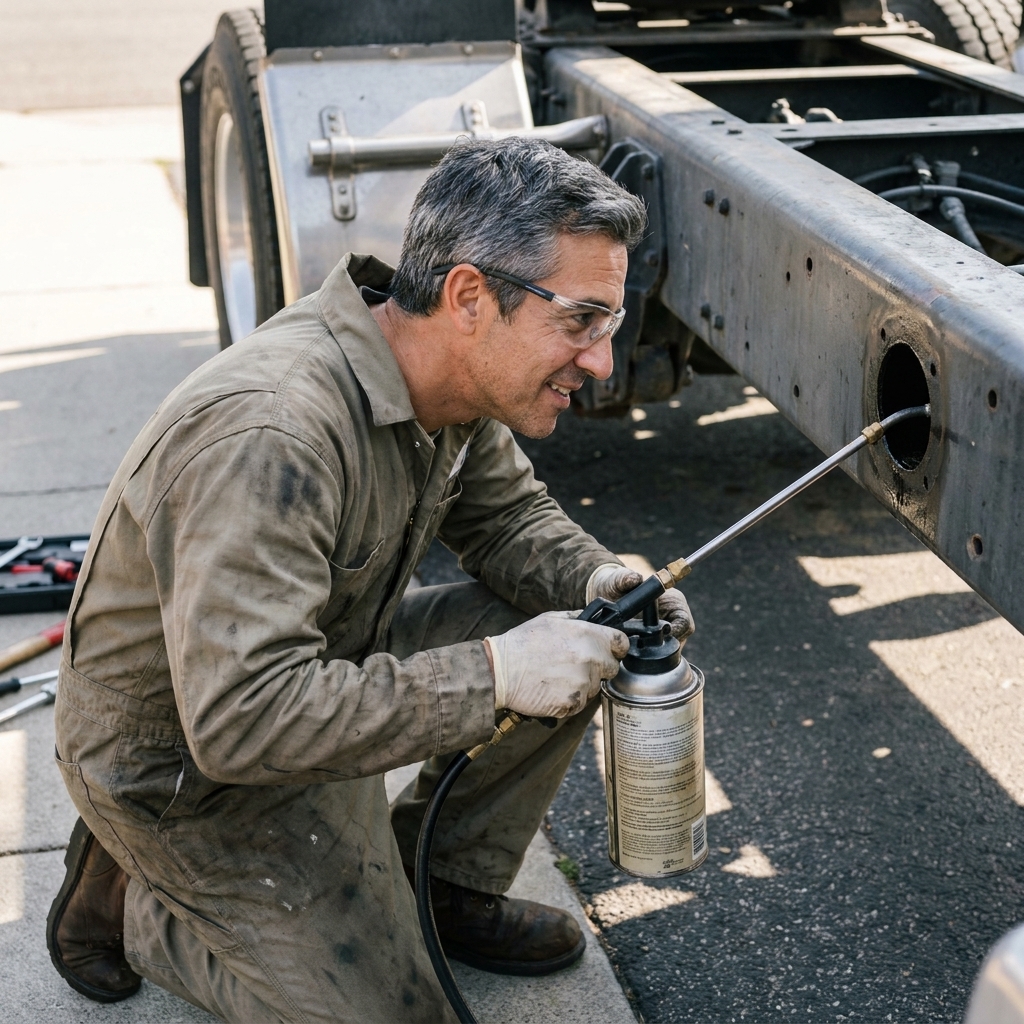
This is where cavity wax and oil film shine. Spray inside frame rails, crossmembers, bed supports, and trailer tongues through factory holes. Wipe drips from brake rotors and pads.
Step 6: Make it easy to maintain
- Salt road trucks: Inspect monthly in winter, reapply cavity wax or oil film once a year, touch up chips any time you see bare steel.
- Boat trailers in salt or brackish water: Rinse every launch, inspect monthly in-season, refresh protection mid-season and again before storage.
- Freshwater-only rigs: You can stretch the interval, but still inspect at least twice a year.
Treat rust that is already there
If you already have rust, the correct response depends on what kind of rust it is.
Surface rust
- Wash and dry.
- Scuff with a Scotch-Brite pad or wire brush.
- Apply a rust converter or primer, then topcoat.
- Finish with cavity wax or oil film in seams nearby.
Scale rust
- Mechanically remove as much scale as possible.
- Check thickness. If the metal is pitted deep, compare side to side if possible.
- Use converter only after you get back to firm metal.
- Prime, paint, then protect.
Structural rust
This is where I stop giving “spray it and pray” advice. If you can poke through, or a bracket is thinning, you need a real repair.
- Truck frames: Consult a reputable shop that understands frame repair and local inspection rules.
- Trailers: A trailer shop can replace crossmembers, spring hangers, or brake components. Do not tow a questionable trailer “one more trip.”
If rust is anywhere near your hitch mounting points, receiver area, or trailer suspension mounts, take it seriously. Those parts do not get a “grace period” when you hit a pothole at 60 mph.
Boat trailer specifics
Boat trailers live a harder life than most utility trailers. Here are the rust-related issues I see most often.
Do not ignore trailer brakes
Salt destroys brake hardware fast. Even freshwater ramps can be brutal because of grit.
- Rinse the brakes gently after launch and avoid high-pressure spray aimed directly at seals, wiring, or backing plates.
- Inspect brake lines for cracking and corrosion at fittings.
- Flush brake fluid per the brake manufacturer’s schedule if your system has serviceable fluid and a reservoir, such as surge or electric-over-hydraulic setups.
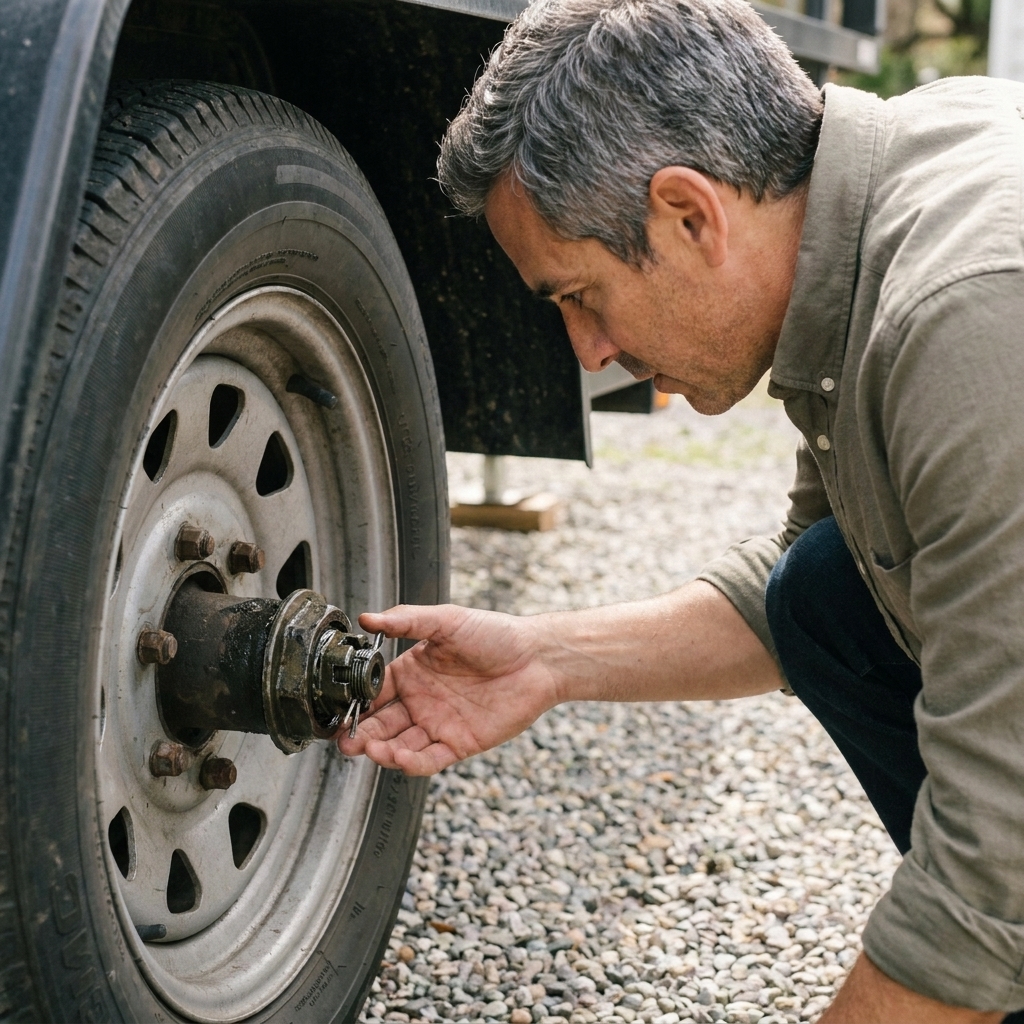
Protect hubs like your trip depends on them
Because it does. Hot hubs dunked in cold water can suck water past seals.
- Let hubs cool a few minutes before backing in when practical.
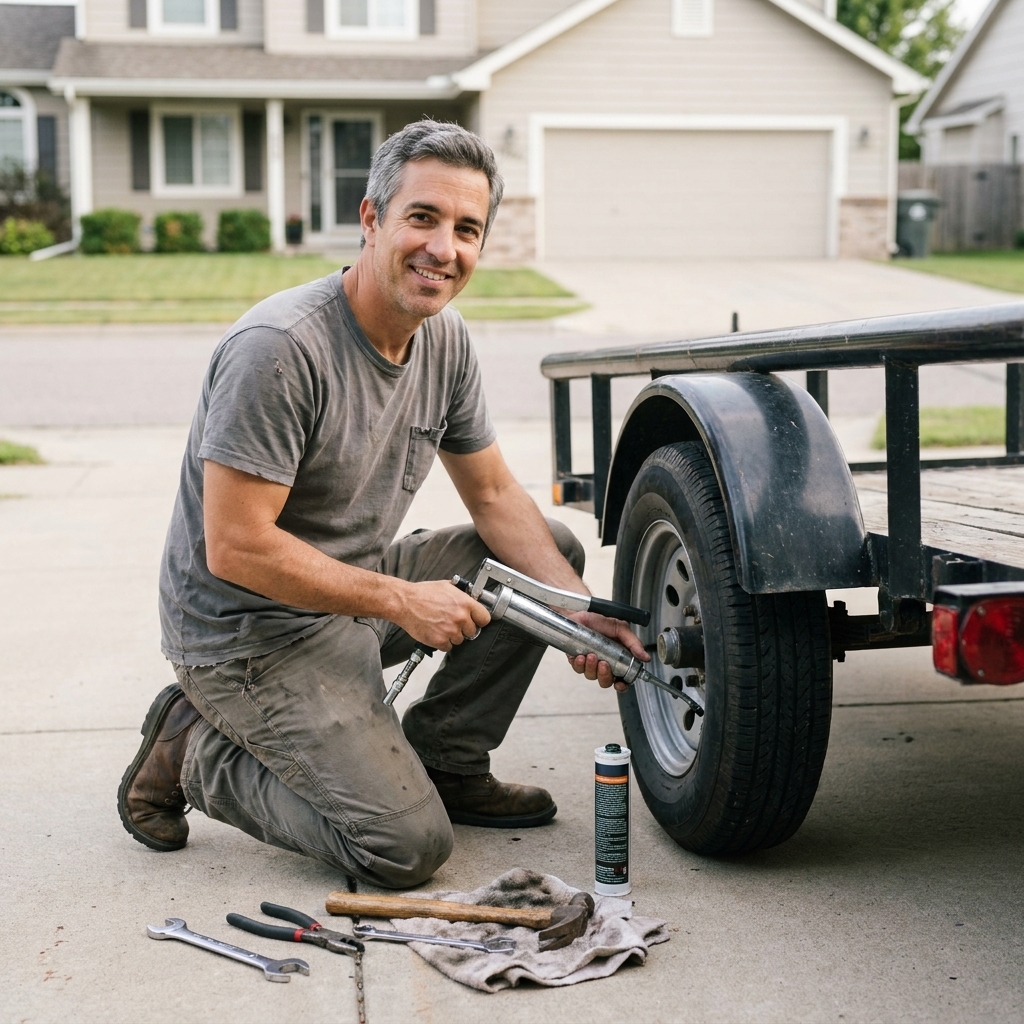
- Inspect seals and grease condition regularly.
- After rinsing, take a short drive to warm and dry things out.
Watch dissimilar metals
On aluminum trailers, stainless hardware and steel brackets can create galvanic corrosion in salty conditions.
- Use isolating washers, bushings, or coatings where metals meet.
- Use anti-seize where appropriate and keep protective coatings intact at contact points.
- Rinse thoroughly to remove electrolyte residue. Depending on your setup, sacrificial anodes may also be part of the corrosion control plan.
Mistakes that make rust worse
- Undercoating over dirt, salt, or wet metal: It will peel, trap moisture, and hide problems.
- Skipping the inside of frames: Boxed sections can rust from the inside out, especially on trailers that trap moisture.
- Blocking drain holes: Some thick coatings can clog drains. Water must be able to escape.
- Forgetting touch-ups: A small chip on the trailer tongue turns into a scab fast.
- Washing but not drying: Parking a wet trailer on grass or covering it immediately keeps humidity high.
FAQ
Is rust on a truck frame always a deal-breaker?
No. Light surface rust is common. The deal-breakers are deep scaling, soft metal, holes, or rust around critical mounting points like spring hangers, steering components, and hitch attachment areas.
Should I use rubberized undercoating on my trailer?
You can, but only if the surface is clean, dry, and solid. For boat trailers that get submerged, I prefer clean paint work on exposed steel plus cavity wax or oil film in seams and cavities because it is easier to inspect and touch up.
How often should I reapply rust inhibitor?
For salted winter roads, plan on once a year for most oil and wax film products, with touch-ups after any major cleaning or off-road mud. For saltwater boat trailers, I like a mid-season refresh plus a final treatment before storage.
Can I just spray oil on everything underneath?
Be careful. Keep coatings off brake rotors, pads, trailer brake friction surfaces, and tires. Also avoid spraying directly on hot exhaust components. When in doubt, mask sensitive areas and apply in a controlled way.
What is the best time of year to rust-proof?
Right before winter for salted-road tow trucks, and either pre-season or early season for boat trailers. The best time is when you can wash thoroughly and give the rig enough dry time before you coat it.
Checklist before your next tow
- Rinse the undercarriage and trailer after salty or marine exposure.
- Inspect hitch, safety chain mounts, spring hangers, brake lines, and crossmembers.
- Touch up chips to bare steel quickly.
- Use a durable coating for exposed areas and cavity wax or oil film for seams and inside cavities.
- Do not ignore structural rust. If it looks questionable, get it evaluated before you put a family, a boat, or a work crew behind it.
If you take care of your truck and trailer a little at a time, you avoid the big scary rust weekend later. And more importantly, you tow with confidence, which is what Tow Vox is all about.