I have managed fleets where the trucks got all the attention and the trailers got “whatever’s left.” That is usually fine right up until a wheel bearing cooks itself on the shoulder or a rotten deck board lets a mower tire punch through. The good news is utility trailers are simple machines. A little preventative maintenance goes a long way, and most of it can be done in your driveway with basic tools.
Below are 10 maintenance tasks I consider non-negotiable if you want your utility trailer to last for the long haul, stay legal, and tow without surprises.
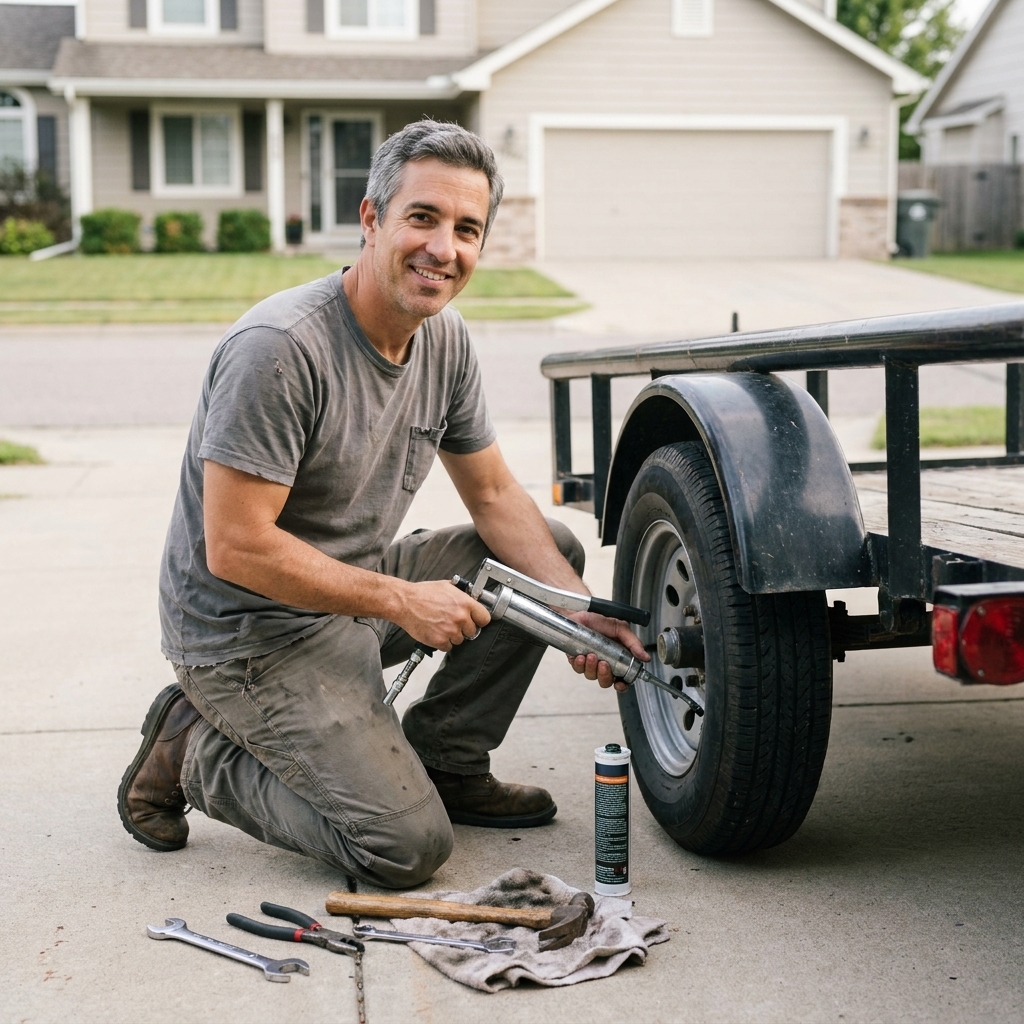
1) Check tire pressure and condition every trip
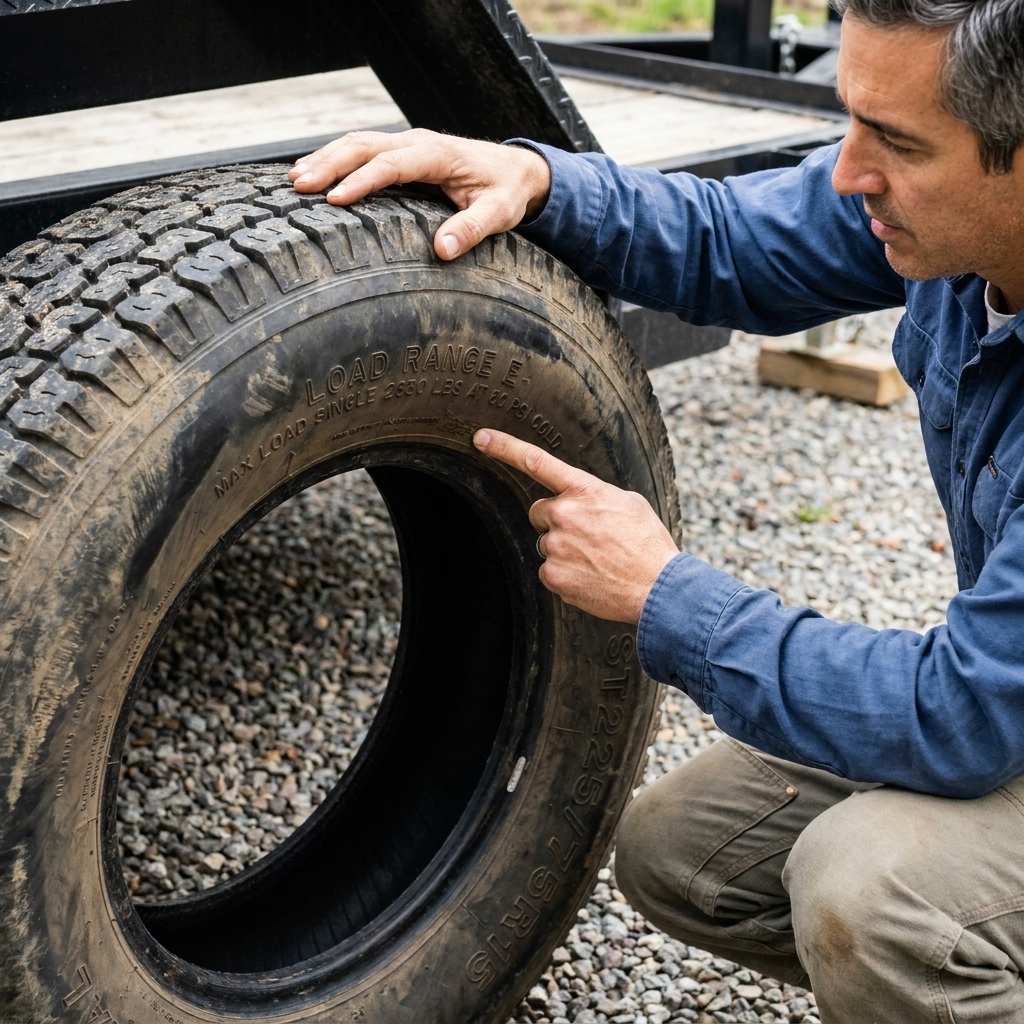
Trailer tires live a hard life. They sit, they age out, and they often get run underinflated because the tow vehicle feels fine. Underinflation is one of the fastest ways to overheat a trailer tire and turn your Saturday into a roadside tire change.
What to do
- Set pressure cold using the tire maker’s load and inflation chart for your actual load. In the real world, many ST trailer tires that run near their rated capacity end up at (or close to) the max PSI on the sidewall, but it is not a universal rule.
- Inspect for weather cracking (tiny sidewall cracks), bulges, nails, and uneven wear.
- Watch the valve stems. Dry, cracked rubber stems leak. Metal stems are a nice upgrade for higher pressures.
- Check tire age. Find the DOT date code on the sidewall and treat old trailer tires with suspicion even if the tread looks fine. Many owners replace around the 5 to 7 year mark depending on condition and storage.
Rule of thumb: If your trailer sits more than it rolls, check pressure before every tow. Sitting is what makes trailer tires lie to you.
2) Service wheel bearings on a schedule
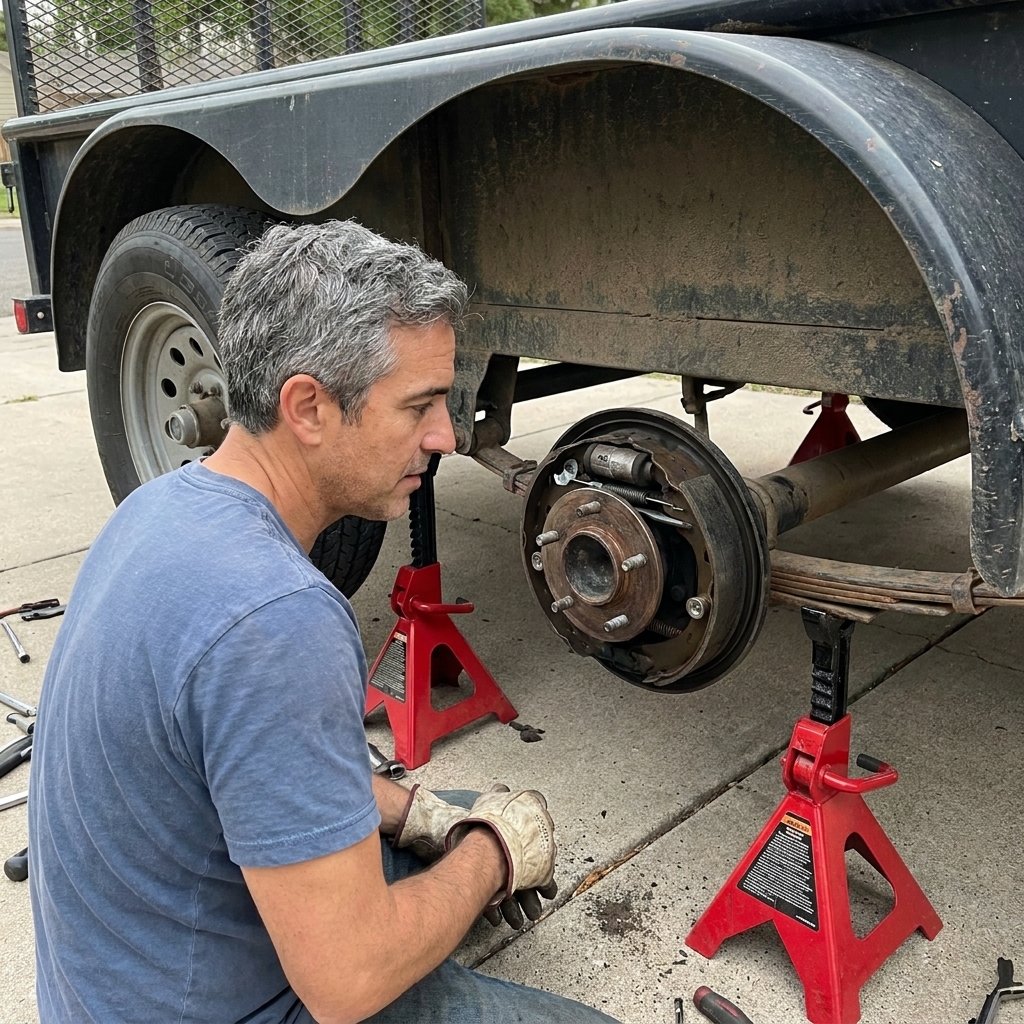
Wheel bearings are the heart of a trailer axle. When they fail, you can lose a wheel, damage the spindle, and tear up a fender in seconds. Most bearing failures I have seen started as simple neglect.
What to do
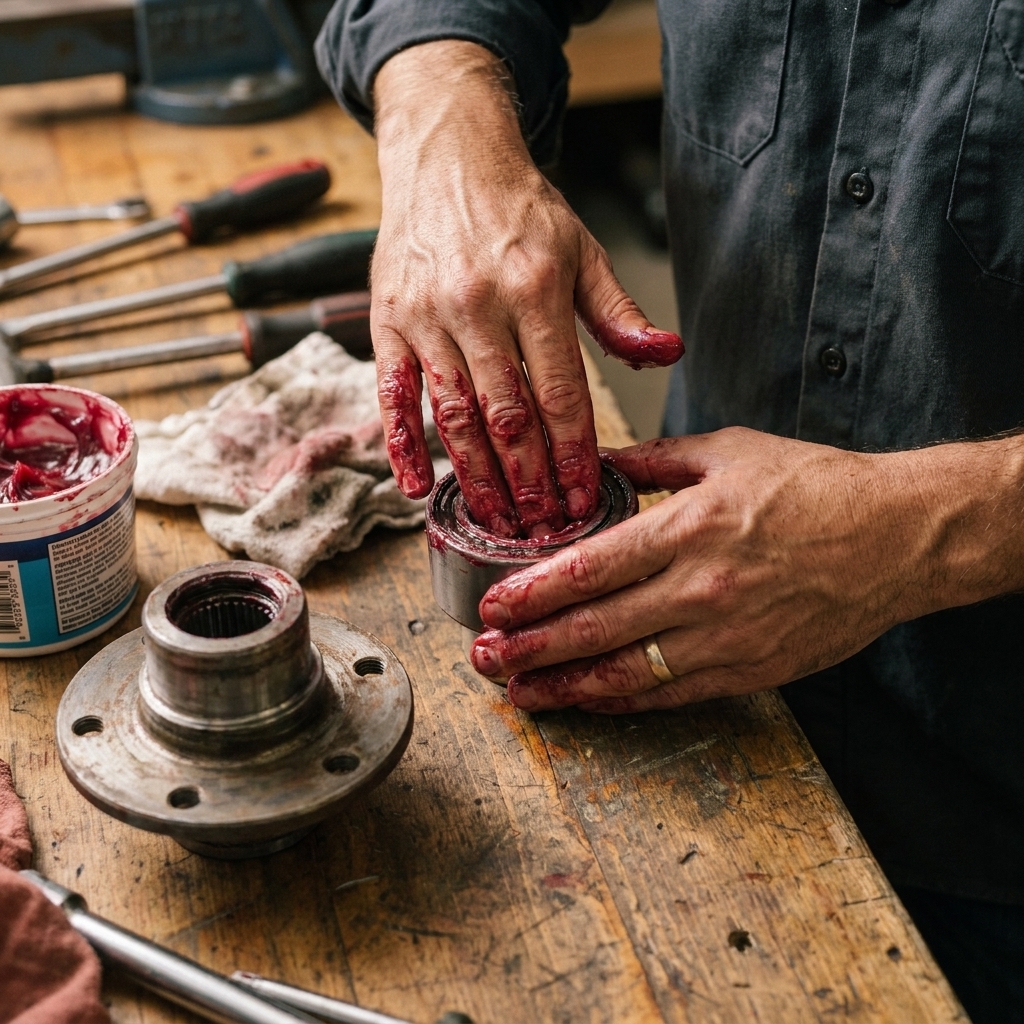
- Common practice: annually for frequent towing, or about 12,000 miles as a starting point: clean, inspect, repack with quality high-temp wheel bearing grease, and install new seals. Then adjust based on what your axle maker recommends.
- Go more often for boat trailers, frequent water crossings, heavy loads, or high heat routes.
- Before each trip: jack one side (safely), spin the wheel, and feel for roughness. Grab tire at 12 and 6 o’clock and check for play.
- After a short tow: carefully feel the hubs by hand. Warm is normal. Hot enough you cannot keep your hand on it is not.
If your trailer has bearing protectors or EZ-Lube style spindles, remember they are not “set it and forget it.” You can still blow a rear seal if you over-grease them, and you still need inspections.
3) Torque lug nuts and recheck
Utility trailers shake, bounce, and flex. Wheels can loosen, especially after a wheel-off service or a brand-new trailer break-in period.
What to do
- Use a torque wrench and tighten in a star pattern.
- Re-torque after 25 to 50 miles any time a wheel has been removed.
- If you see shiny metal dust around a lug or ovaled holes in the wheel, stop and investigate.
Impact guns are fine for removal, but for tightening, precision beats “good and tight” every time.
4) Inspect and adjust brakes
Braked utility trailers are safer, easier on your truck, and often legally required above certain weights. The tradeoff is they need periodic attention.
What to do
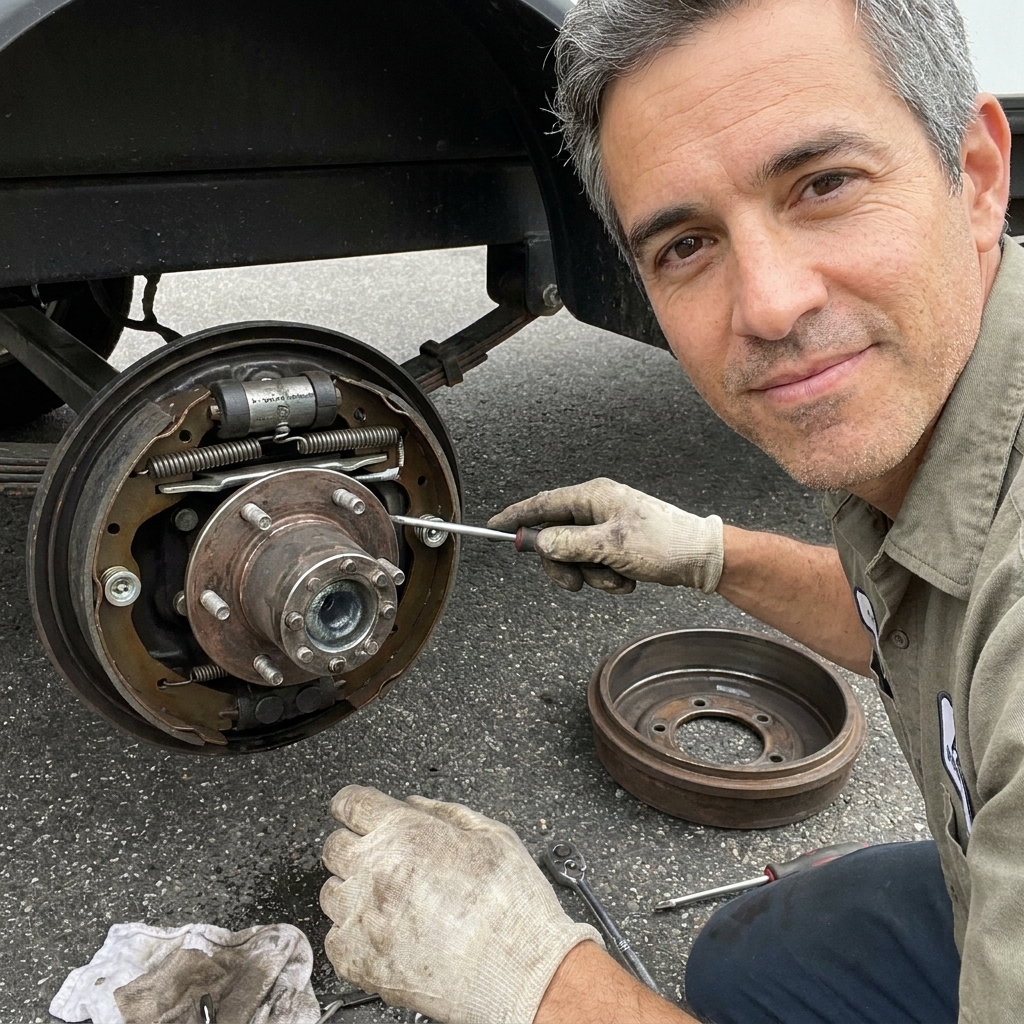
- Electric drum brakes: check wiring at the backing plate, inspect magnets and shoes, and adjust so you get a slight, even drag when spinning the wheel by hand.
- Surge brakes: inspect the actuator for smooth travel and check the brake fluid level and condition. Use the fluid type specified on the actuator cap or in the manual (DOT 3 and DOT 4 are common; do not guess).
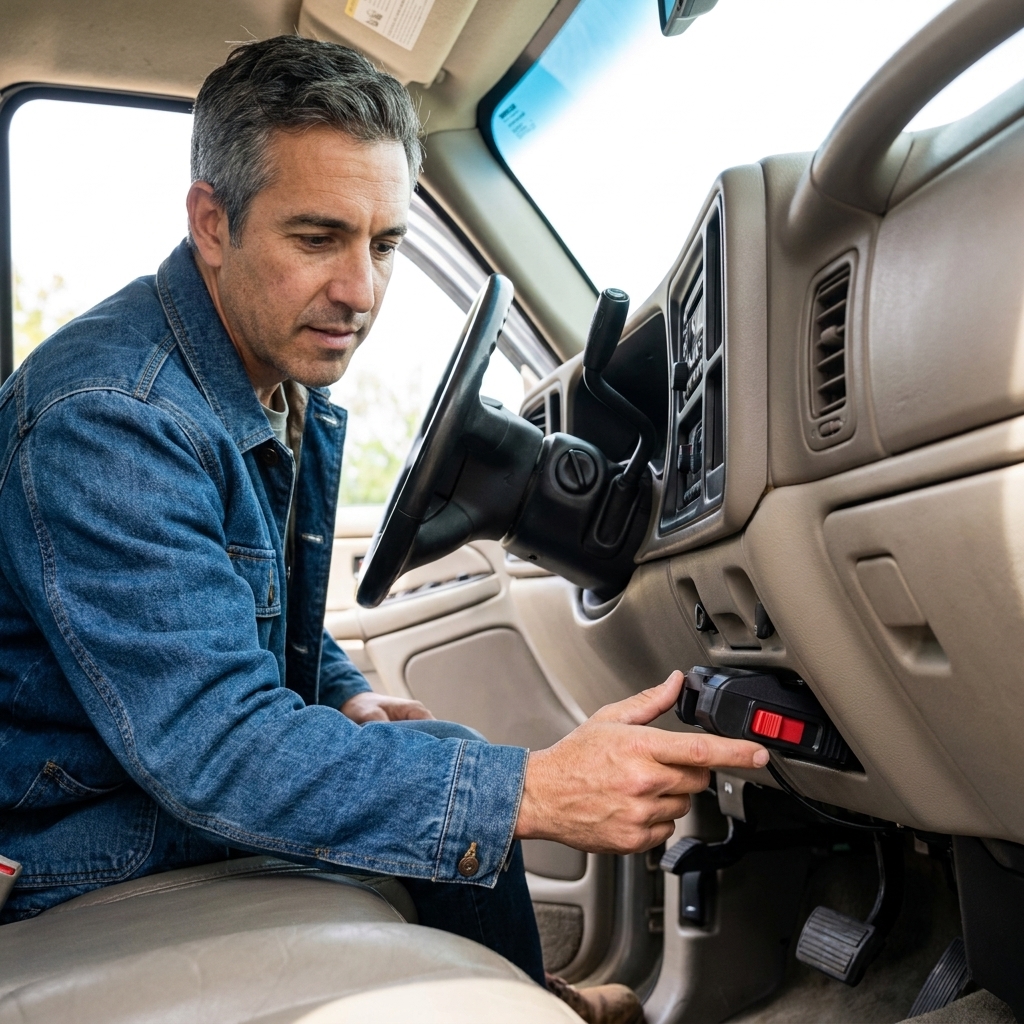
- Test the breakaway switch (electric) and make sure the battery is charged and secured.
If your brake controller setting keeps creeping up over time, that is often your trailer brakes asking for an adjustment or service.
5) Inspect suspension and axle hardware
This is the stuff that gets ignored until something looks crooked. Springs sag, shackles egg out, and U-bolts loosen. If the suspension gets sloppy, the trailer tows worse, tires wear faster, and parts break when you hit a pothole loaded.
What to do
- Inspect leaf springs for cracks, broken leaves, and shifting center pins.
- Check U-bolts for looseness and rust stretch. If you see fresh shiny metal or the axle has walked, stop and fix it.
- On tandem trailers, inspect equalizers, shackles, and bushings for wear and side-to-side slop.
- Look at the spring hangers and mounting bolts for cracks around welds.
If the trailer suddenly sits lower on one side, do not keep towing and hope it “settles out.” It will not.
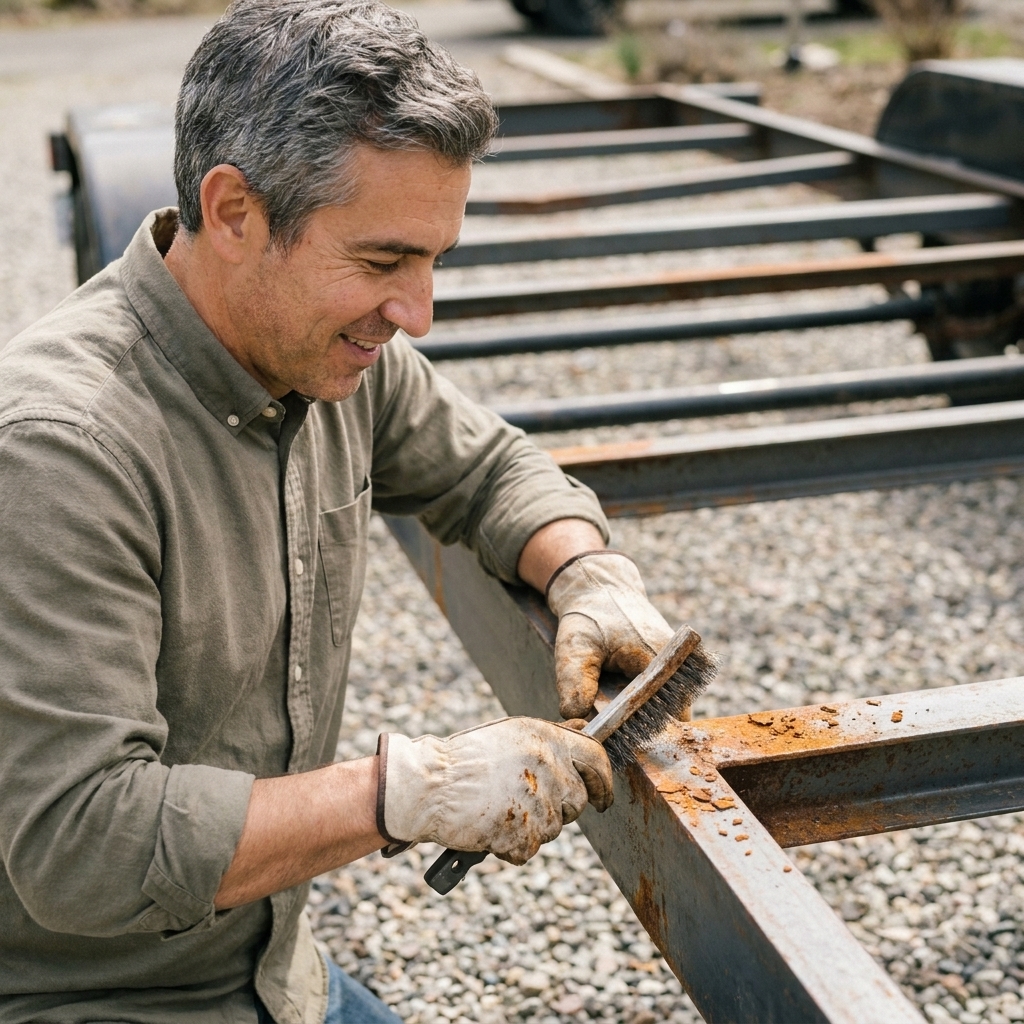
6) Protect the frame from rust
Rust is like termites for trailers. It starts in corners you do not look at, then shows up as flaking metal right where the spring hangers and crossmembers matter most.
What to do
- Wash off road salt and mud, especially after winter towing or hauling gravel.
- Touch up chips and scrapes with a rust-converting primer and a durable topcoat.
- Pay extra attention to weld seams, spring hangers, and around the fenders.
If you store outside, a breathable cover helps, but airflow matters more than sealing moisture in. Avoid wrapping it like a sandwich.
7) Check lights and wiring every tow
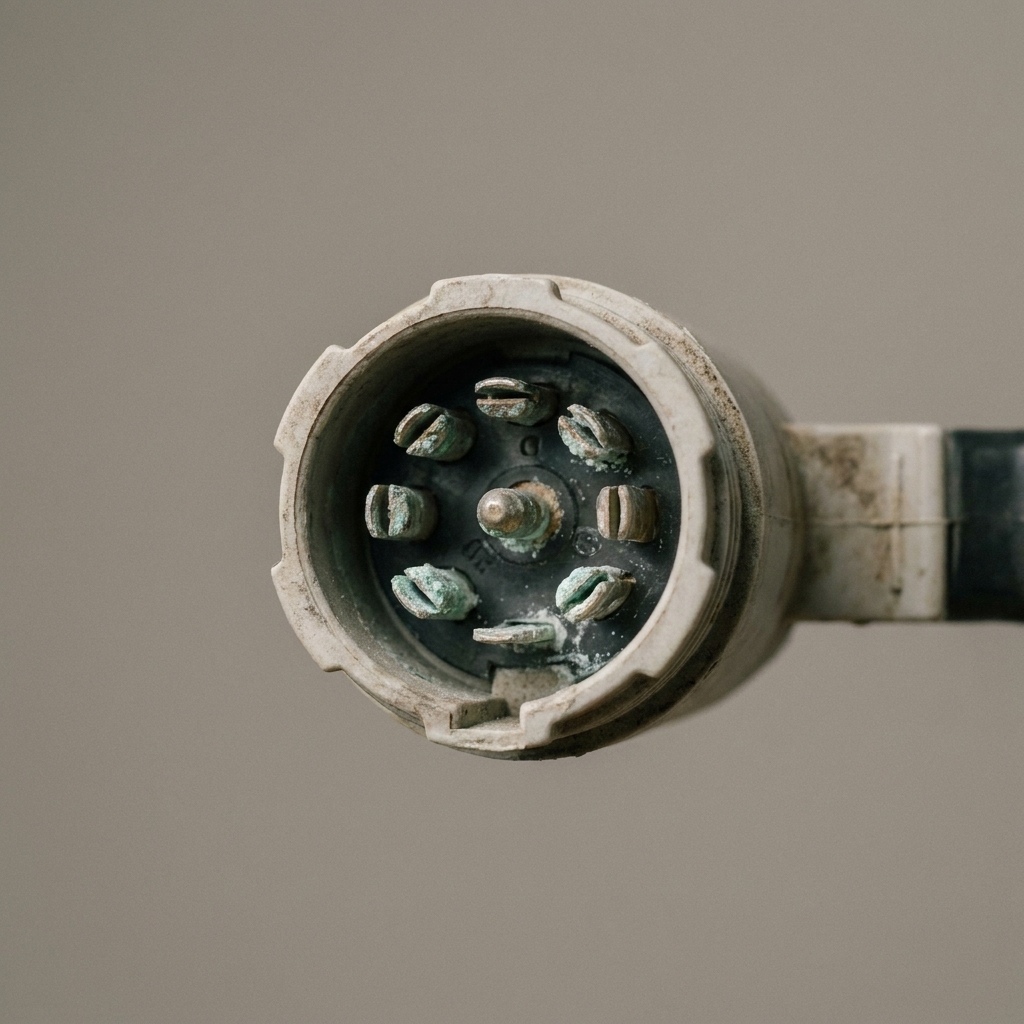
Most “my trailer lights quit” problems are not the bulbs. It is the ground. Trailers live in the weather, get dunked in puddles, and their connectors get yanked and dragged.
What to do
- Before each trip: confirm running lights, brake lights, and turn signals.
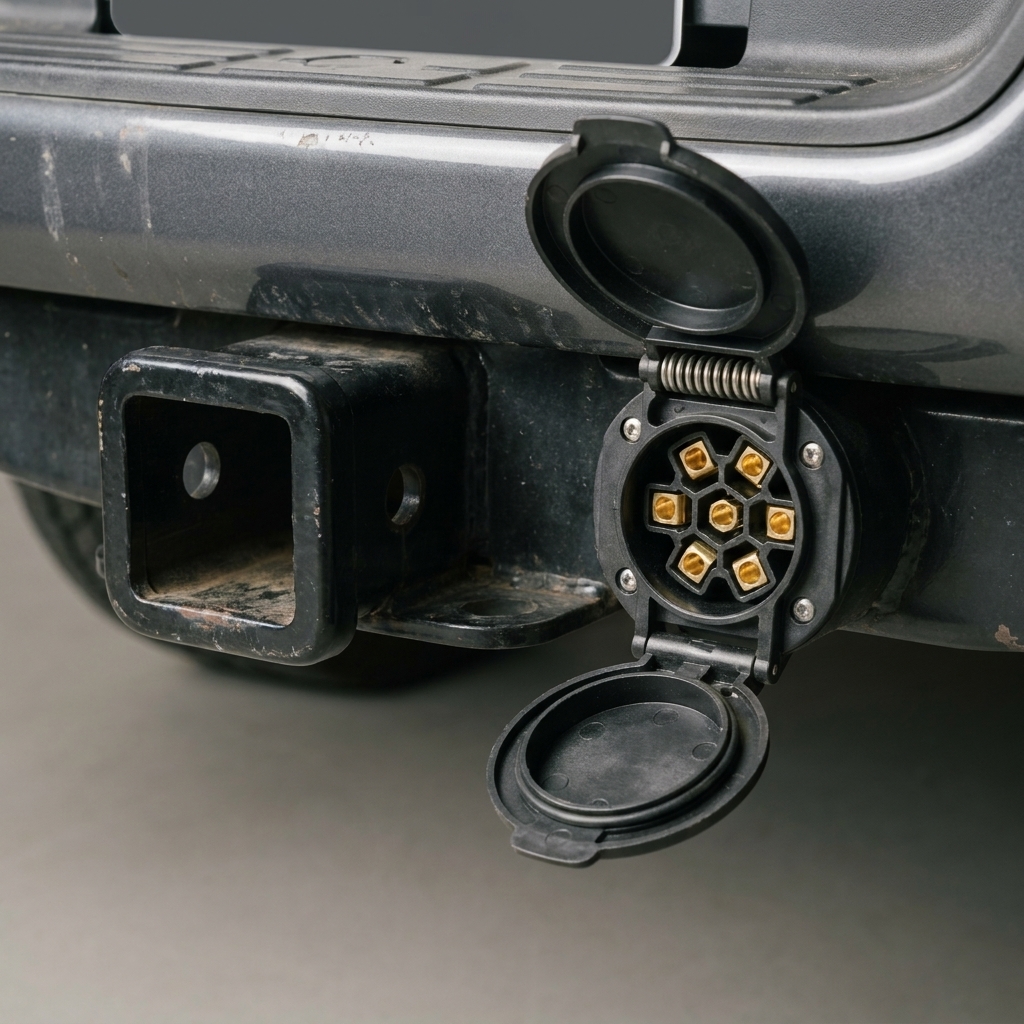
- Inspect the trailer plug for corrosion and bent pins. A tiny dab of dielectric grease helps keep moisture out.
- Look for rubbed-through wires where the harness passes through the frame.
- Make sure the ground wire is secure to clean metal. Painted and rusty contact points cause intermittent gremlins.
LED lights are a worthwhile upgrade on work trailers because they usually handle vibration better and draw less power, but buy decent ones. Cheap LEDs fail too.
8) Inspect the coupler and chains
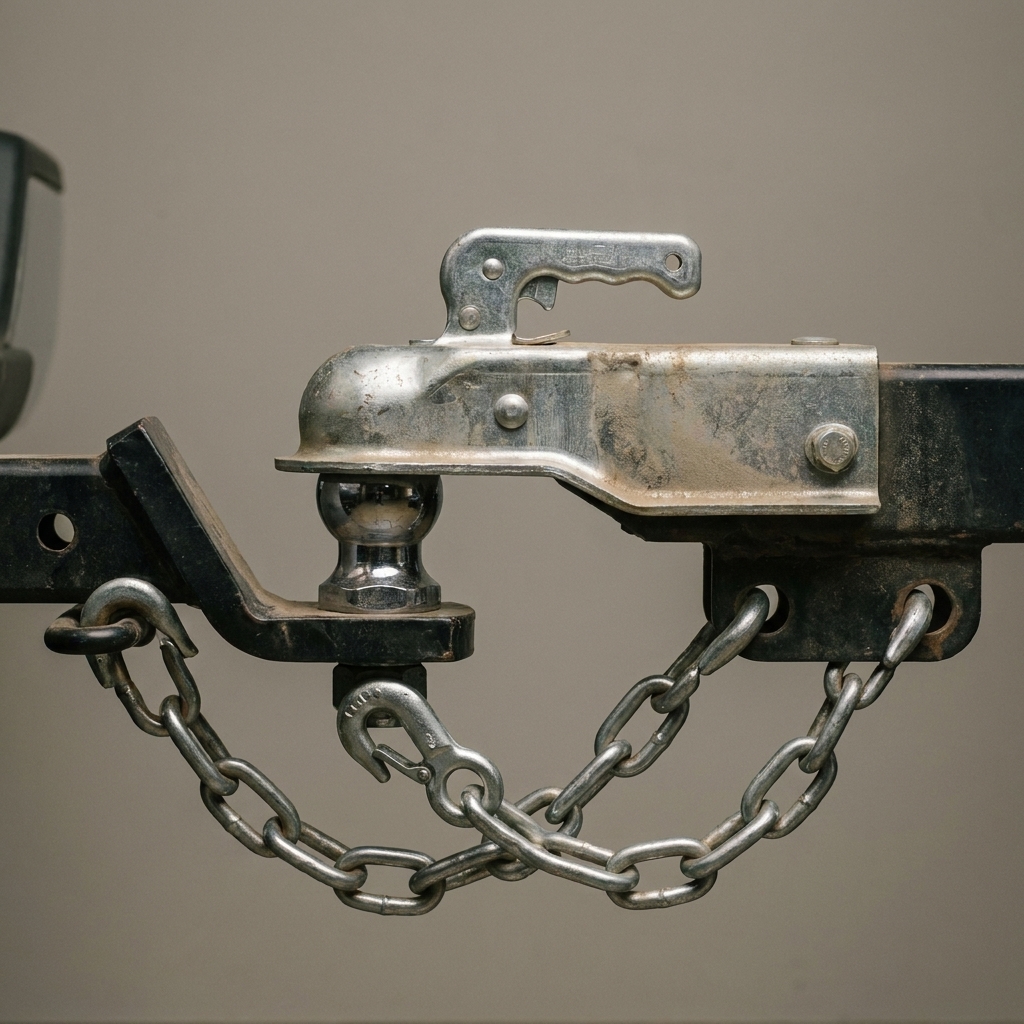
Your coupler and chains are the last line of defense between “everything is fine” and a runaway trailer. This is not the place for “looks good from here.”
What to do
- Confirm the coupler size matches your ball (2-inch and 2 5/16-inch get mixed up constantly).
- Inspect the latch mechanism for wear and ensure it fully locks. Use a coupler lock or pin if your setup supports it.
- Look for cracked welds on the tongue and chain mounts.
- Cross the safety chains under the coupler so they can cradle the tongue if it ever drops.
If your coupler is sloppy on the ball even when latched, it may be worn. Replace it. Couplers are cheaper than bodywork and lawsuits.
9) Maintain jacks, ramps, and hinges
A trailer can be mechanically perfect and still drive you nuts if the jack binds, ramp pins seize, or a hinge wears into an oval.
What to do
- Grease or oil the jack screw and pivot points.
- Lubricate ramp hinges and latches, then wipe off excess so it does not collect grit.
- Replace missing cotter pins, hairpins, and snap rings immediately. They are small parts that prevent big failures.
- Check ramp spring assist hardware for cracks or loose bolts.
A quick shot of lubricant is good. A quick inspection while you are down there is better.
10) Keep the deck solid and loads secure
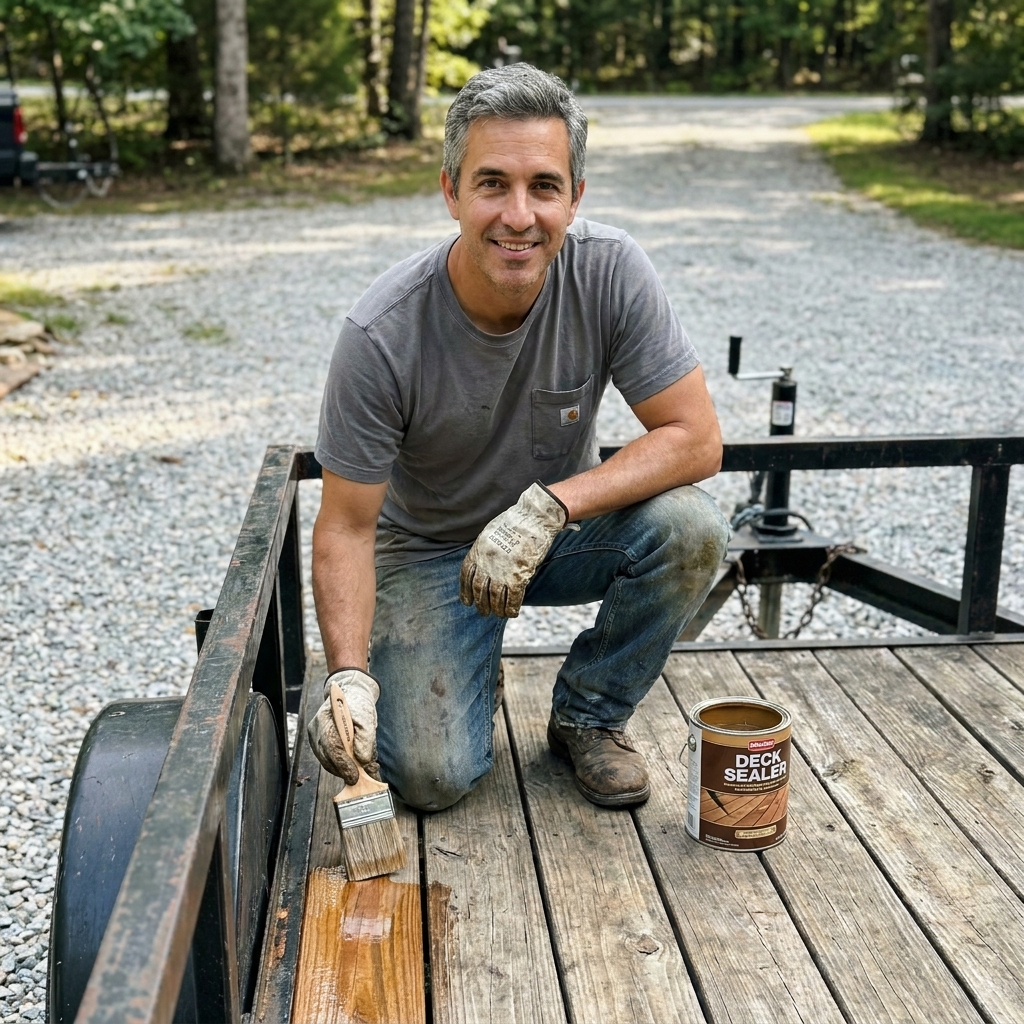
Deck failures usually show up right when you are loading something heavy. Wood decks fail from the top down and the bottom up. Sun and water from above, road spray from below. The result is soft boards, popped fasteners, and slick algae in shaded areas. Meanwhile, sloppy load securement is how good trailers end up on the evening news.
What to do
- Clean it: sweep off gravel and dirt that traps moisture. Wash mud off after messy loads.
- Inspect boards: look for soft spots, cracks at bolt holes, and warped edges. Replace questionable boards before they become a problem under load.
- Seal it: use a quality exterior wood sealer or penetrating oil designed for decks. Focus on board ends and fastener holes where water enters fastest.
- Fasteners: tighten loose carriage bolts and replace rusted hardware. If the heads are pulling into the wood, the board may be done.
- Straps and chains: use rated tie-downs, hook to real anchor points (not a flimsy rail), and replace frayed straps. After 5 to 10 miles, pull over and recheck tension. Loads settle.
If your trailer lives outside, sealing once a year is cheap insurance. If it lives under cover, every couple years is still smart.
Quick checklist
- Every trip: tire pressure, tire age and condition quick scan, lug visual check, lights test, coupler latch, crossed chains, load securement check.
- Monthly (or every few tows): inspect wiring, look for rust, lube jack and hinges, check deck condition, suspension walk-around.
- Yearly: service bearings (or per axle maker), adjust brakes, touch up paint, seal wood deck, full suspension hardware inspection.
Store it smart
Storage is maintenance. A trailer that sits wrong for six months will tow wrong when you need it.
What to do
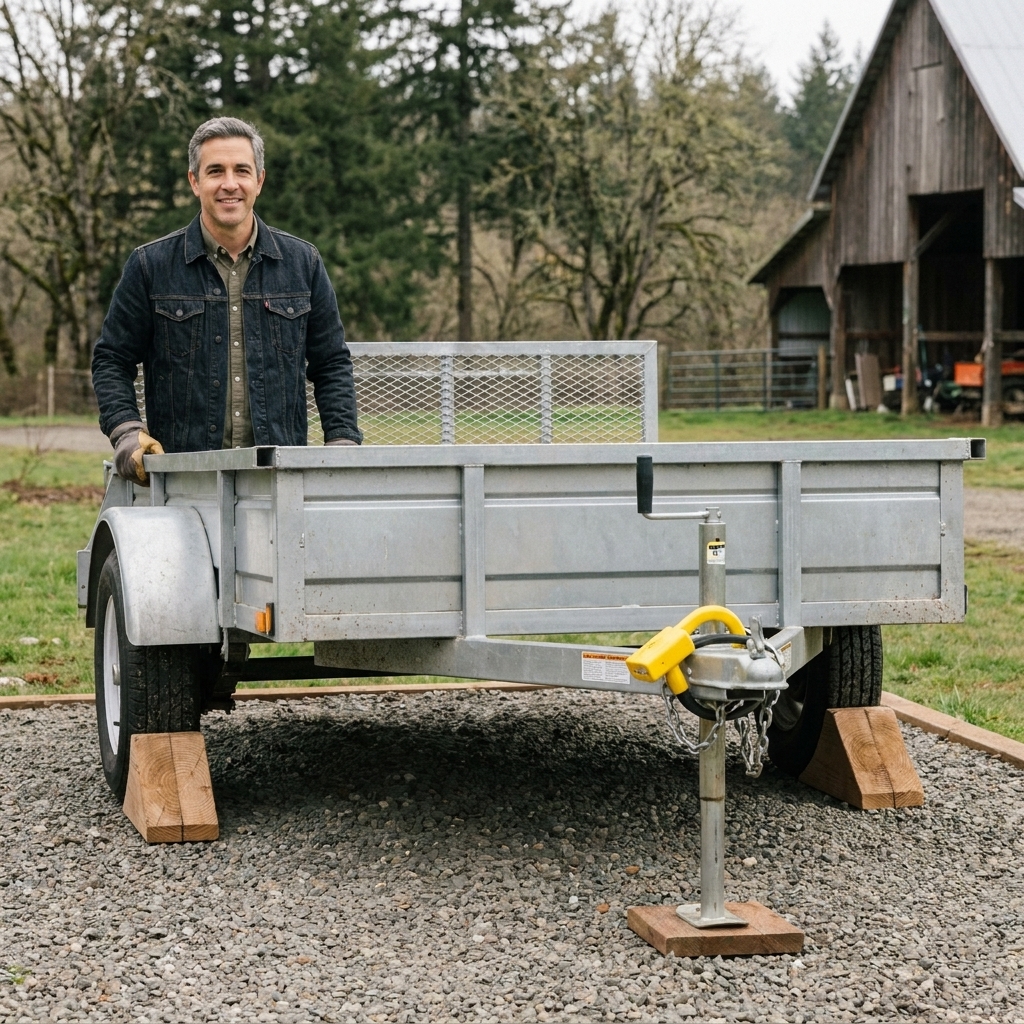
- Park on firm, level ground. If possible, keep tires off wet soil or grass for long periods.
- Chock the wheels and relieve tongue weight with the jack, but do not pick the whole trailer up by the jack as a long-term stand.
- Cover the coupler or keep it under a roof to reduce corrosion in the latch and ball socket.
- Security: use a coupler lock and, if you can, a wheel lock. Utility trailers are easy targets.
One more small habit: give the trailer a quick walk-around once a month in storage. Tires lose air, wasps build nests, and problems grow in silence.
Stop towing and fix it
If any of these show up, park it until you diagnose the problem:
- Hub is too hot to touch, grease flung on the inside of the wheel, or a burnt smell.
- New vibration, wobble, or a tire that looks like it is “walking.”
- Coupler will not latch positively or has excessive slop on the ball.
- Brake issues like grabbing, no braking, or a breakaway system that will not arm.
- Cracks in the tongue, spring hangers, or around welds.
- A spring, shackle, or U-bolt that looks shifted, broken, or freshly shiny.
A trailer rarely fails politely. It usually fails at speed, with other people around you. Staying ahead of it is the whole game.