If you have ever white-knuckled it down a windy interstate with a travel trailer pushing your half-ton around, you already know the truth. Towing is not just about the biggest number in a brochure. It is about torque where you actually use it, stability that does not fall apart when a semi blows by, and trailering tech that keeps small mistakes from turning into big ones.
I have set up and maintained more work trucks than I can count, and these days I spend my weekends towing a big family camper into the mountains. For this list, I am sticking to mainstream 1500-class pickups and focusing on what matters to travel trailer owners: strong powertrains, smart transmissions, stable towing manners, and factory trailering tools that make life easier.
How I judged these trucks
Every one of these trucks can tow a travel trailer. The question is which ones do it with the most confidence and the least drama.
- Torque and power delivery: Not just peak numbers, but how easily the powertrain holds speed on grades and into headwinds.
- Towing capacity, payload, and real limits: Travel trailers often run out of payload before towing capacity. Tongue weight, passengers, coolers, and a weight-distribution hitch add up fast.
- Trailering technology: Backup guidance, camera views, integrated brake controller, and sway control features that help normal drivers tow safely.
- Transmission and cooling strategy: A good tow/haul mode and stable temps matter more than people think.
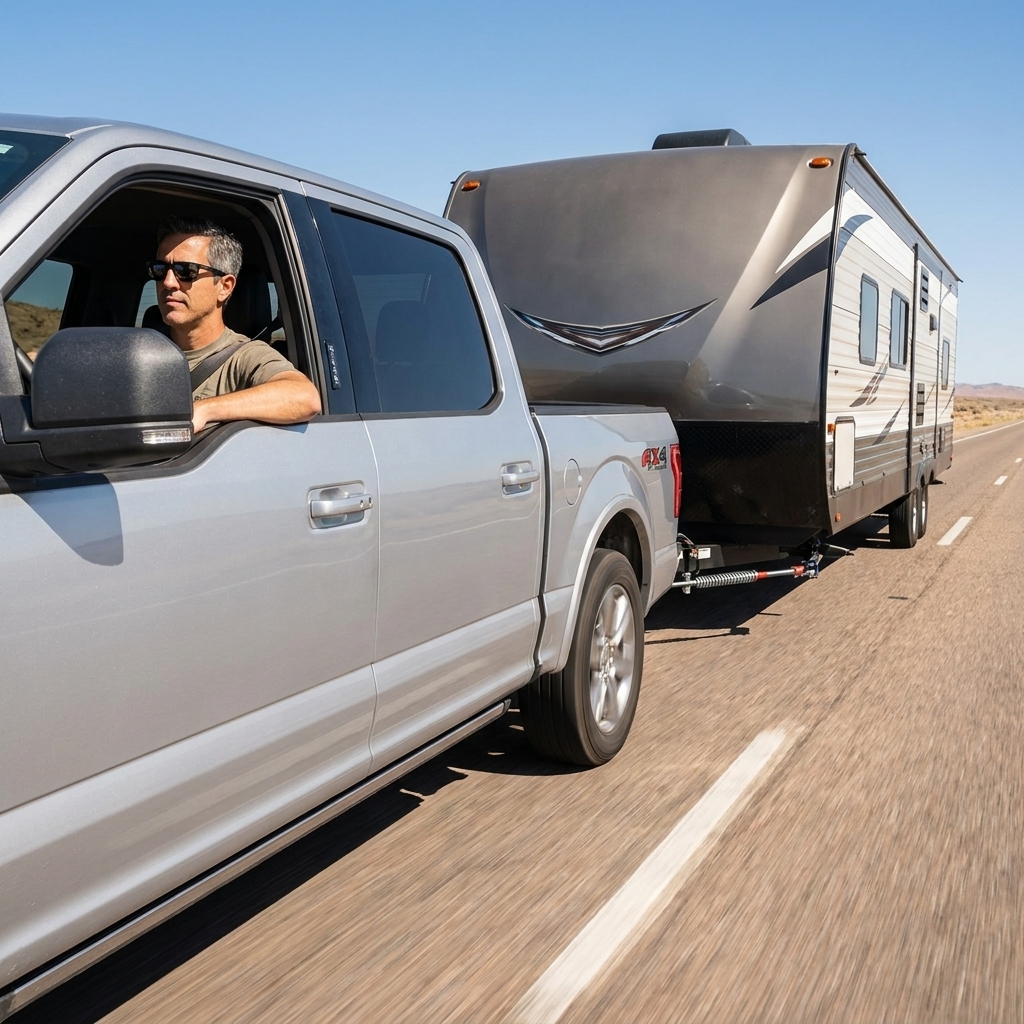
- Overall towing manners: Steering feel, braking confidence, and how settled the truck feels at 60 to 70 mph.
Ben tip from the driveway fence: If you are towing a travel trailer often, shop payload first. A half-ton with the right package and axle ratio can feel better than a higher-tow-rated trim that is heavy on options and light on payload.
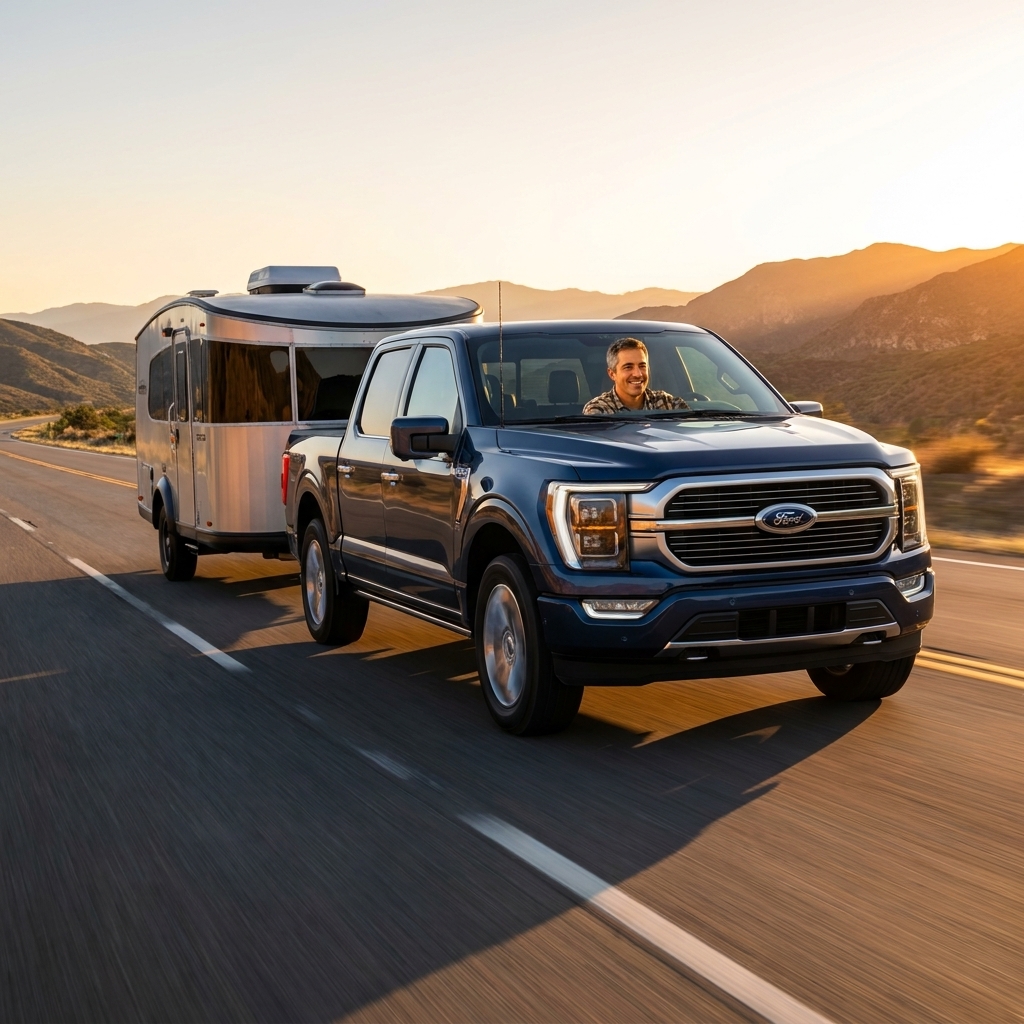
1) Ford F-150 (3.5L EcoBoost with Max Trailer Tow)
If your goal is to tow a travel trailer with a half-ton and you want a wide safety margin, the F-150 with the 3.5L EcoBoost is still the benchmark. That twin-turbo torque comes in strong, and it stays strong when you are climbing or merging.
I notice it most on long grades where a lot of gas half-tons start feeling busy. With the right axle ratio and tow package, the F-150 powertrain tends to hold speed without you constantly chasing the perfect pedal position.
Why it shines
- Easy power on rolling terrain: The 3.5 EcoBoost and 10-speed combo has the kind of midrange pull that helps keep shifts calm instead of frantic.
- Excellent factory towing ecosystem: Ford has one of the most complete trailering tech suites in the half-ton class, including strong camera support and helpful guidance features depending on trim.
- Confidence at speed: With the right wheelbase and a properly set weight-distribution hitch, these trucks track straight and feel composed.
Trailering tech to look for
- Pro Trailer Backup Assist (varies by year, trim, and package)
- Trailer Reverse Guidance (varies by year, trim, and package)
- Integrated brake controller (make sure the truck you are buying actually has it)
One real-world detail: When I am solo, the factory hitch guidance and camera views save a lot of back-and-forth. You can see the ball, line up smoothly, and skip the frustration that turns “quick hookup” into a 20-minute ordeal.
What I would pair it with: Instead of shopping by trailer length alone, I would match this truck to a travel trailer based on loaded weight and tongue weight. In the real world, many owners end up happiest with trailers that load out roughly in the 6,000 to 8,500 pound range, depending on the truck’s payload sticker, receiver ratings, and how much family and gear you carry.
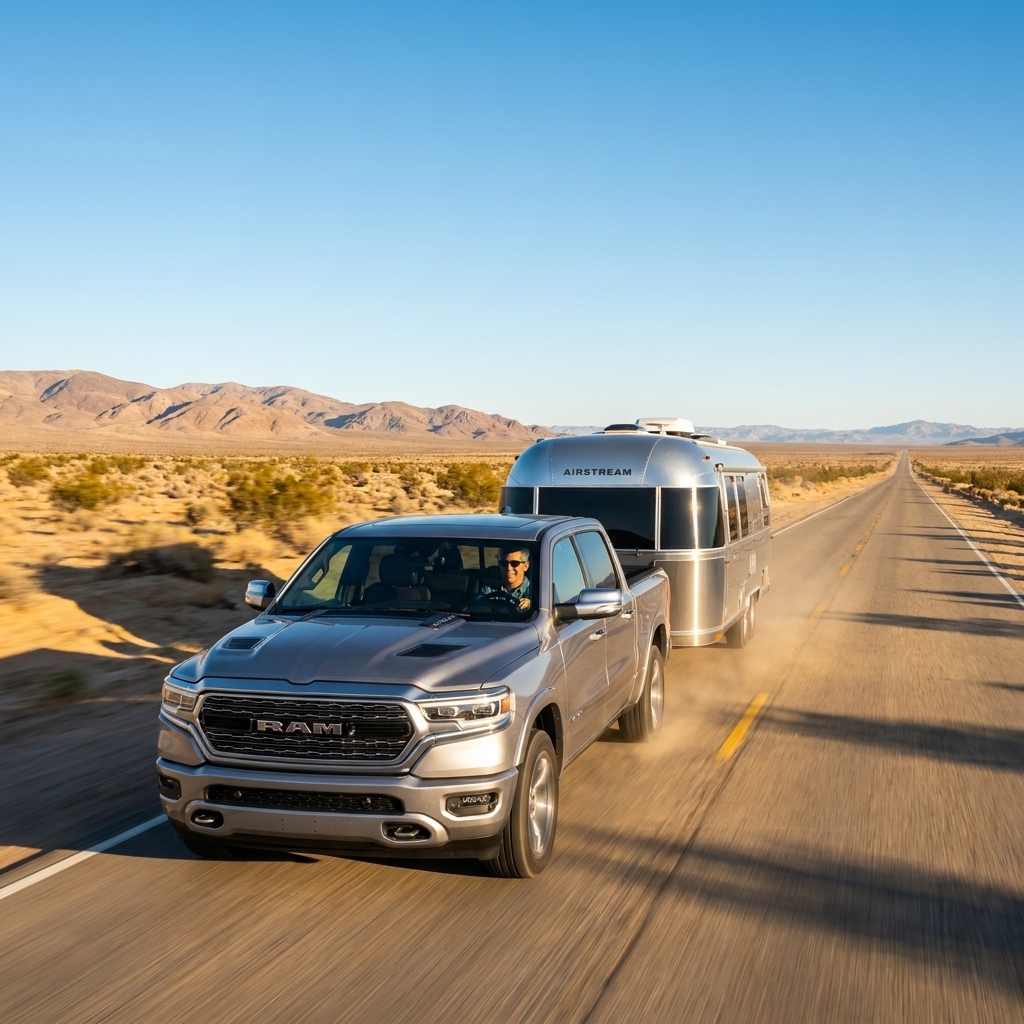
2) Ram 1500 (Hemi or V6)
Ram can be a great travel trailer tow rig, but you have to shop it by specific model year and build. For 2024 Ram 1500 trucks in particular, you are typically looking at the 5.7L Hemi (often with eTorque) or the 3.6L V6 (often with eTorque) depending on trim and configuration.
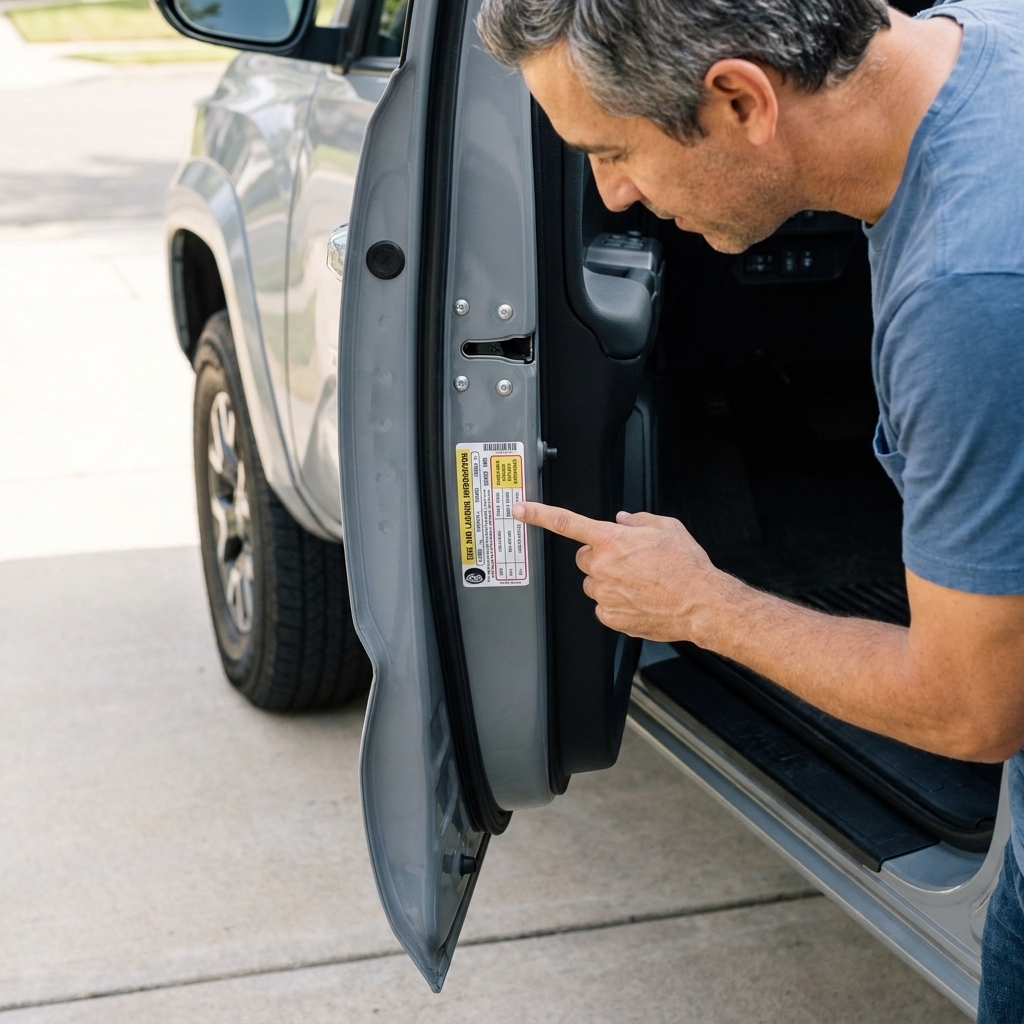
Important model-year note: Ram’s engine lineup has been changing, and the newer Hurricane inline-six shows up in some Ram product planning and later-model-year talk. If you are shopping used, shopping cross-year, or you are reading this as the lineup transitions, do not assume an engine based on a headline or a forum post. Verify the engine on that specific VIN, then confirm tow rating and the payload sticker on the driver door jamb.
Why it shines
- Towing comfort is a real feature: The Ram 1500 is a long-distance champ for ride comfort, which keeps fatigue down on multi-hour tow days.
- Predictable powertrain behavior: When the engine and transmission stay smooth under light throttle, it is easier to hold a steady pace in wind and traffic.
- Planted feel when set up right: A well-equipped Ram with the right tow package feels settled, especially with a dialed-in hitch and correct tire pressures.
Trailering tech to look for
- Trailer brake controller and tow mirrors where available
- Surround view camera options that help when backing into campsites
Watch-outs: Ram trims can vary a lot in payload. If you are towing a travel trailer with real tongue weight, do not assume. Check the driver door sticker before you sign anything.
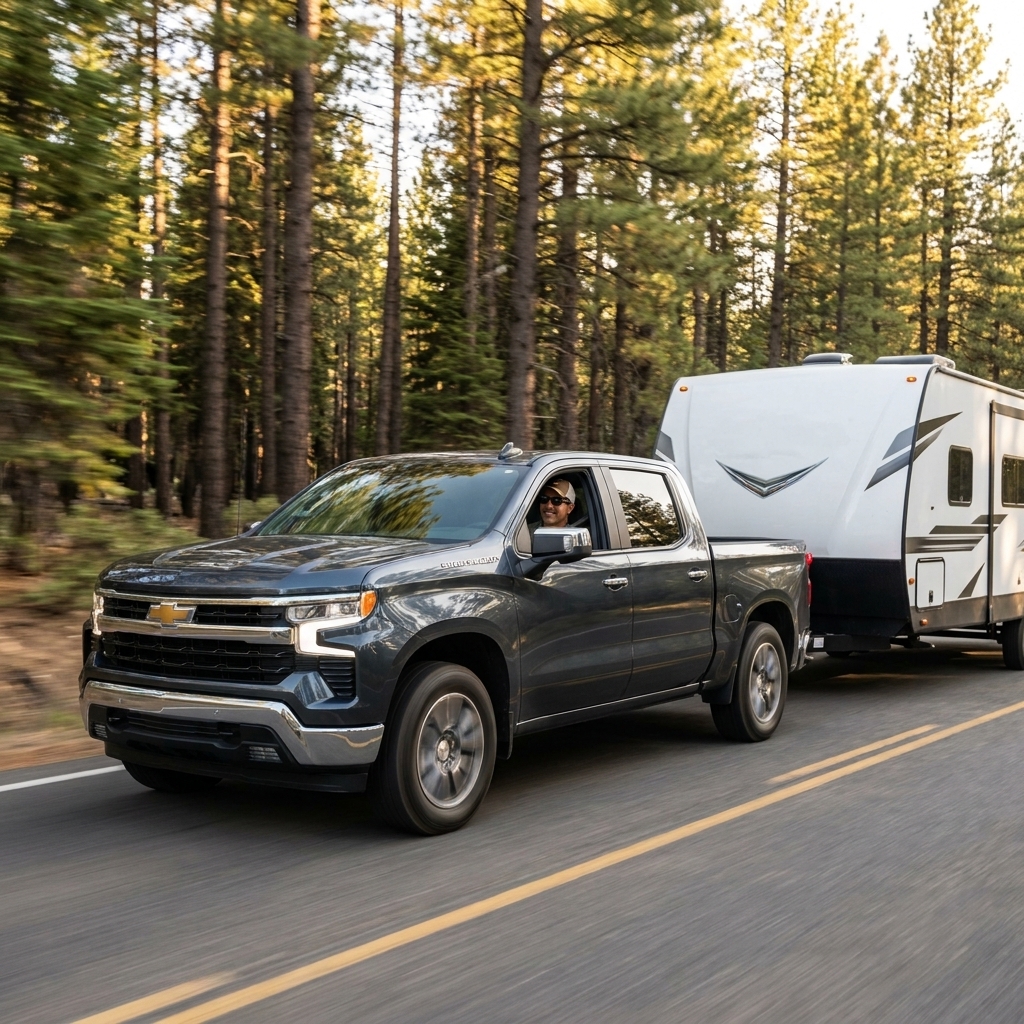
3) Chevrolet Silverado 1500 (3.0L Duramax)
If you tow often and you care about relaxed pulling and fewer fuel stops, the Silverado 1500 with the 3.0L Duramax is hard to ignore. It is not about drag racing up a grade. It is about steady, efficient torque and a powertrain that likes to work.
Range still depends on tank size, speed, wind, elevation, and the trailer you are dragging. But compared with many gas half-tons, this setup tends to feel less thirsty on long highway legs.
Why it shines
- Diesel-style pulling: Lots of usable torque at lower rpm helps keep things calm and controlled.
- Great road-trip manners: Many owners pick this setup for long hauls because it feels unstrained at highway speeds.
- Strong factory trailering tools: Look for the available in-truck trailering app, hitch guidance, and the camera system options that give you multiple views around the truck and trailer.
Trailering tech to look for
- Integrated trailer brake controller
- Advanced trailering camera views (availability varies widely)
- Hitch guidance and backup assistance
My real-world take: For a travel trailer that lives in the 6,000 to 8,500 pound loaded range, this powertrain is one of the least stressful ways to do it in a half-ton. It tends to feel steady on long grades without needing big rpm, assuming the truck has the payload to handle the tongue weight and your people and gear.
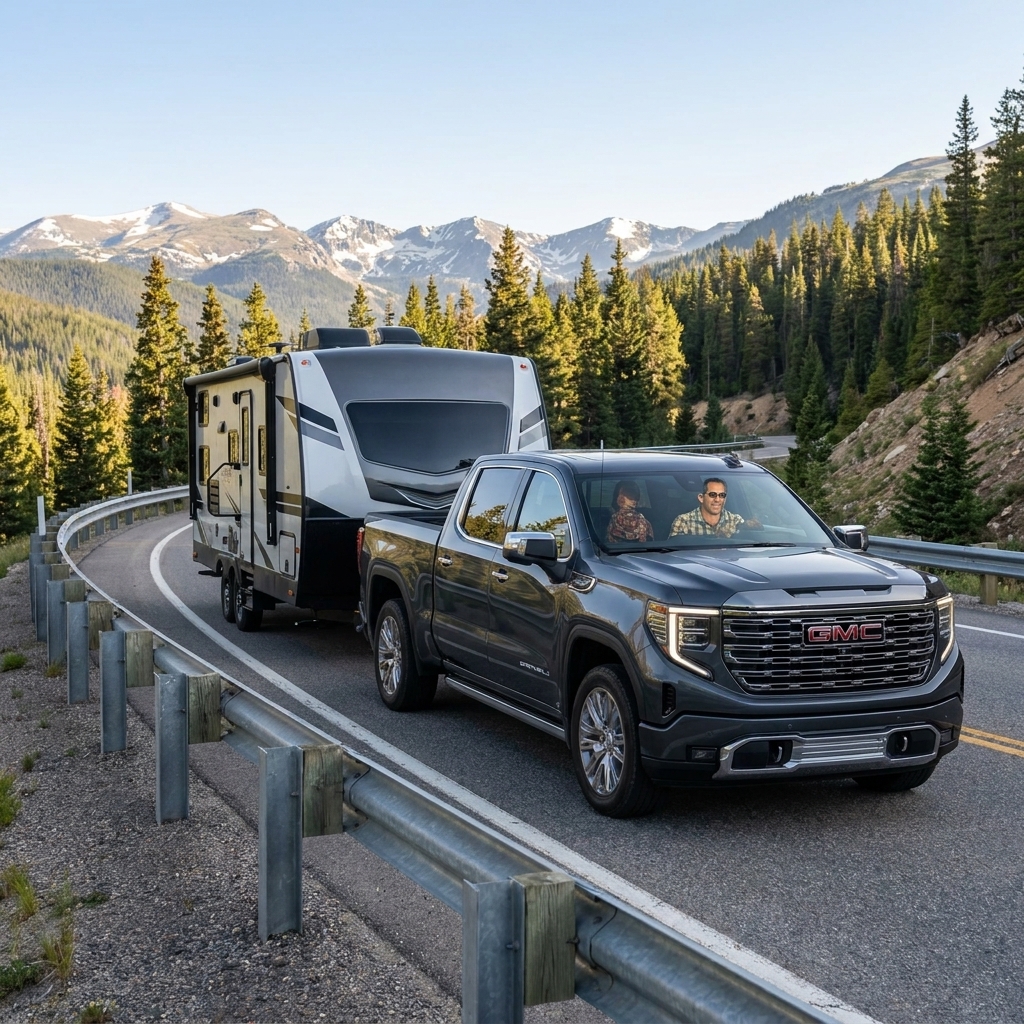
4) GMC Sierra 1500 (3.0L Duramax or 6.2L V8)
The Sierra 1500 earns a spot here because it offers two very towing-friendly personalities. The 3.0L Duramax gives you that calm, torquey, efficient pull. The 6.2L V8 gives you classic gas V8 power with strong passing performance and a satisfying feel under load.
Why it shines
- Two excellent engine choices: Pick the diesel for long-distance efficiency or the 6.2 for strong gas power.
- Towing-focused trims and options: Sierra packages can be configured to feel very purpose-built for trailering.
- Strong camera and trailering integration: Like the Silverado, the Sierra benefits from GM’s available camera views and trailering screens.
Trailering tech to look for
- Surround view and hitch guidance
- Trailer camera provisions depending on how you outfit your rig
Watch-outs: Do not let the fancy trim distract you from payload. Big wheels, heavy options, and luxury packages can chip away at what you can safely carry in the truck.
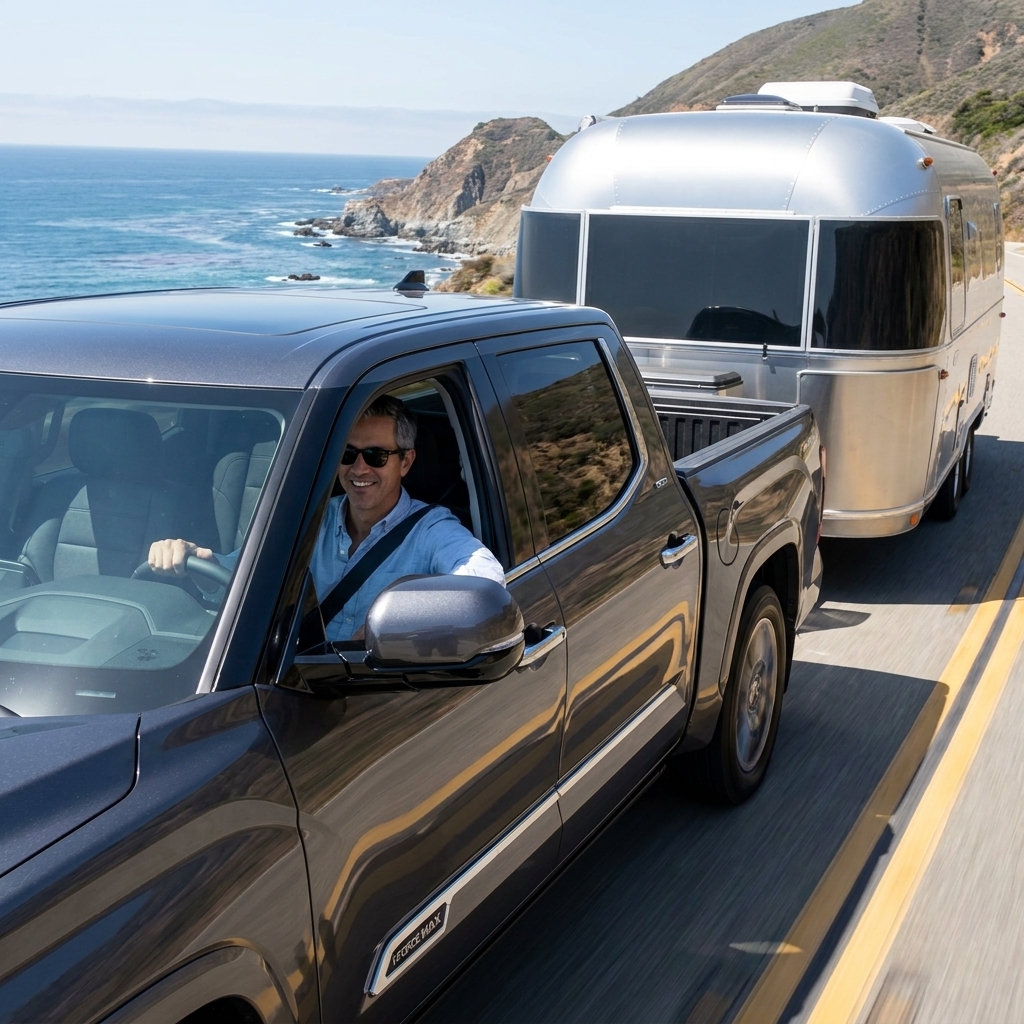
5) Toyota Tundra (i-FORCE MAX)
The latest Tundra is a different animal than the older V8 trucks. With the i-FORCE MAX hybrid setup, you get a torque-forward feel that is genuinely helpful when towing. For travel trailer owners who value smooth power delivery and Toyota’s track record, it is a strong contender.
Why it shines
- Immediate, usable torque: The hybrid assist can make starts and low-speed climbs feel easier than you would expect.
- Stable, modern platform: The truck feels solid and controlled, especially when correctly hitched with a weight-distribution setup.
- Smart safety tech: Toyota’s driver assistance suite can reduce fatigue, though you still need to tow like you mean it.
Trailering tech to look for
- Factory integrated trailer brake controller (availability varies by year, trim, and package, so confirm on the window sticker or build sheet)
- Camera aids that help with hitching and backing
My honest note: Tundra configurations and ratings can vary a lot. If you are targeting a heavier travel trailer, double-check the specific truck’s tow rating, payload sticker, receiver limits, and tire ratings instead of assuming all i-FORCE MAX trucks are identical.
Quick buying advice
1) Payload is the real limiter
A typical travel trailer might have a loaded tongue weight around 10 to 15 percent of trailer weight, and some floorplans can land higher once they are packed for a trip. Add passengers, a bed full of gear, a weight-distribution hitch, and maybe a cooler or generator, and you can run out of payload long before you touch max tow rating.
- Rule of thumb: If your trailer is 7,500 pounds loaded, a 12 percent tongue weight is about 900 pounds on the truck before people and cargo.
- Real example: Two trucks with the same max tow rating can have very different payload stickers. A higher-trim half-ton with a big sunroof, heavy wheels, and 4x4 can easily lose a few hundred pounds of payload compared with a more basic configuration.
Also remember: published tow ratings typically assume a specific configuration and relatively minimal cargo in the truck. Your actual family-and-gear reality is why the payload sticker matters so much.
Ben tip from the driveway fence: Read the yellow payload sticker first, then build your trailer match around that number. It saves you from buying a “tow monster” that runs out of payload the moment the family climbs in.
2) Weight-distribution hitch rules
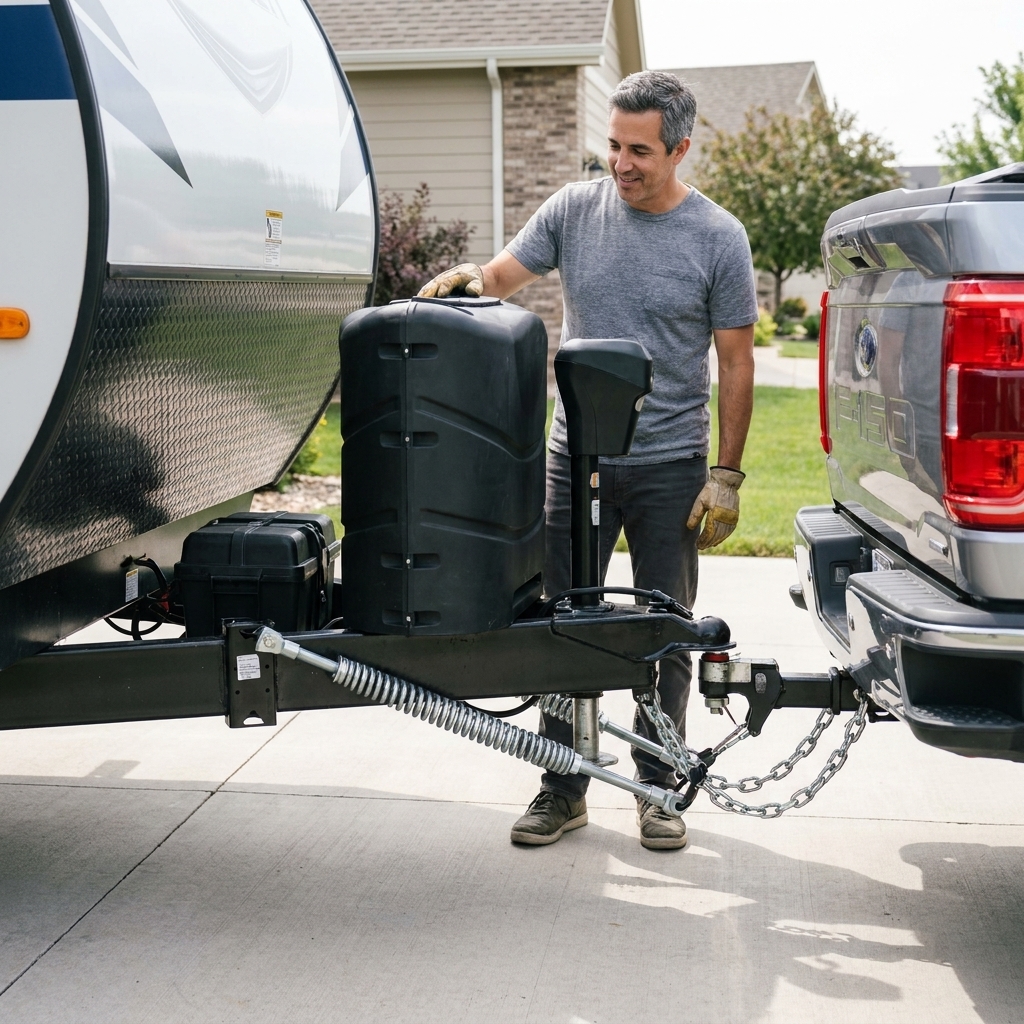
For many travel trailers, a properly set up weight-distribution hitch (often with sway control) is the difference between a calm tow and a nervous one. But it is not universal. Some lighter trailers and some receiver setups are rated for weight-carrying use without a WDH below certain tongue weights.
The right move is simple: follow the truck receiver label and the hitch and trailer manufacturer requirements. Pay attention to the receiver’s weight-carrying vs weight-distributing ratings because they can be very different.
3) Wheelbase matters
A longer wheelbase generally tows more smoothly. If you are choosing between cab and bed configurations, and towing is the priority, lean longer when you can.
4) Choose the tow package
The factory tow package often includes the things that matter on hot days and long grades: extra cooling, hitch hardware, programming that makes tow/haul mode actually useful, and, on many trucks, the wiring and provisions for an integrated brake controller.
5) Trailer cargo changes everything
Water in the tanks, extra batteries, a generator, and front storage can change both total weight and tongue weight. Do not assume your trailer tows the same way empty as it does packed for a real weekend.
6) Aftermarket gear counts too
Tonneau covers, bed caps, toolboxes, bigger tires, steel bumpers, and a bed full of “just in case” equipment all eat into payload. None of it is a deal-breaker, but it needs to be part of the math if you are towing near your limits.
7) Check the other ratings too
Max tow numbers are only part of the story. Before you commit, verify:
- GCWR (combined weight rating)
- RAWR (rear axle rating), because tongue weight lives back there
- Tire load ratings and proper inflation for towing
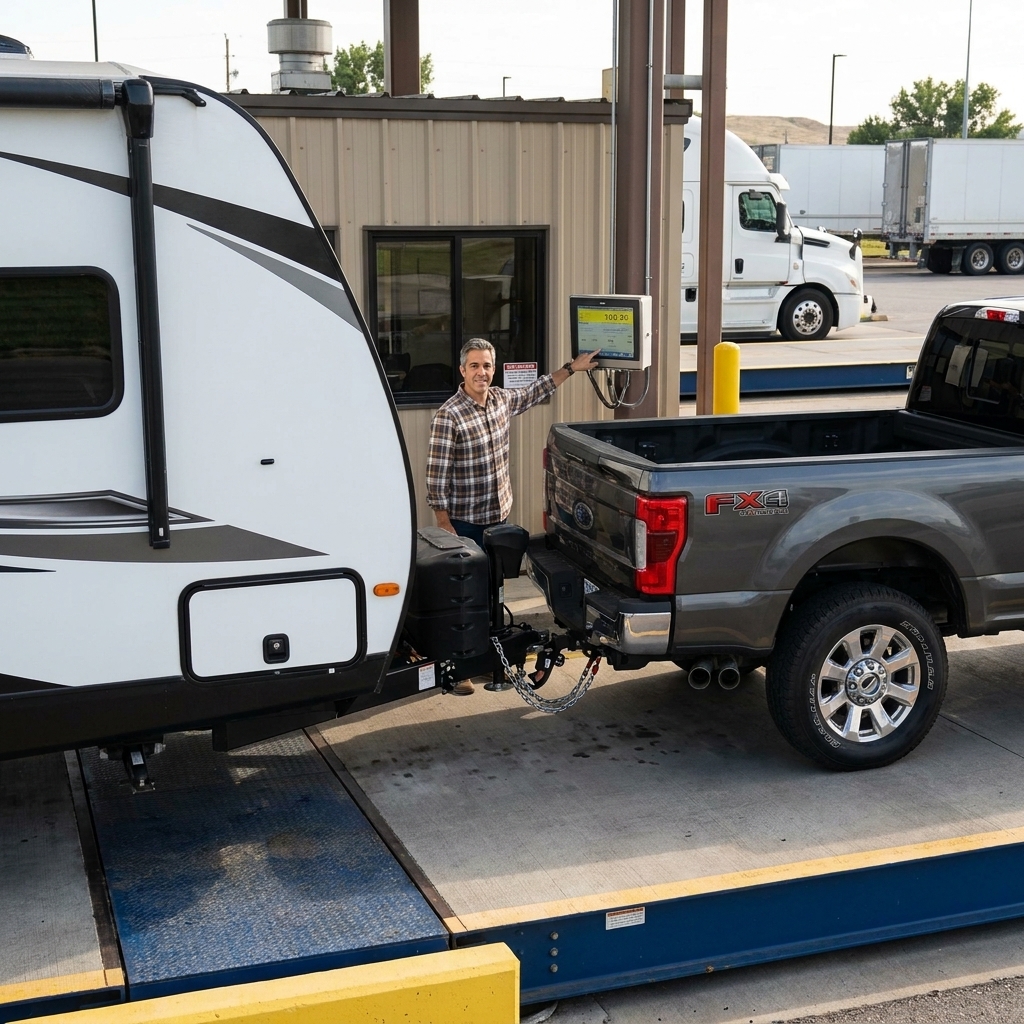
If you can, weigh your actual rig at a CAT scale once it is loaded for a real trip. That one receipt clears up a lot of guessing.
FAQ
What is the best half-ton for towing?
If I had to pick one “most people, most trailers” answer for 2024, it is the Ford F-150 with the 3.5L EcoBoost equipped with the right tow package. It has the torque curve, the towing ecosystem, and the configurability that travel trailer owners benefit from.
Is a diesel half-ton good for towing?
Yes, especially for frequent highway towing. The GM 3.0L Duramax in the Silverado 1500 and Sierra 1500 delivers a relaxed towing feel and often does well on fuel compared with many gas setups. Just remember diesel does not magically fix payload limits.
How big of a travel trailer can a half-ton tow?
It depends on the exact truck’s payload and the trailer’s loaded tongue weight. In the real world, many half-tons are happiest with travel trailers that load out in the 6,000 to 8,500 pound range, assuming a proper hitch setup and conservative packing. Some well-configured half-tons can go higher, but you need to verify payload, receiver limits, RAWR, and tire ratings.
What features matter most?
The features I see helping drivers the most are an integrated trailer brake controller, good camera views for hitching and backing, a solid tow/haul mode, and mirrors that let you see down both sides of the trailer without playing guessing games. Once you are hitched, take five minutes to set brake gain and confirm all trailer lights before you roll.
My bottom line
Any of these five half-tons can be a safe, confident travel trailer tow rig if you buy the right configuration and set it up correctly. If you want the broadest sweet spot, start with the F-150 3.5 EcoBoost. If you want relaxed highway towing and fewer fuel stops, look hard at the GM 3.0 Duramax trucks. If comfort is king, the Ram 1500 is tough to beat, especially if you confirm you are getting the engine and tow equipment you think you are. And if you want hybrid torque with Toyota’s approach to engineering, the Tundra i-FORCE MAX deserves a serious test drive.
Whatever you choose, do the unsexy part: read the payload sticker, confirm the receiver’s weight-carrying vs weight-distributing ratings, weigh your rig when you can, and take the time to dial in your hitch and brake controller. That is what turns towing from stressful to enjoyable.