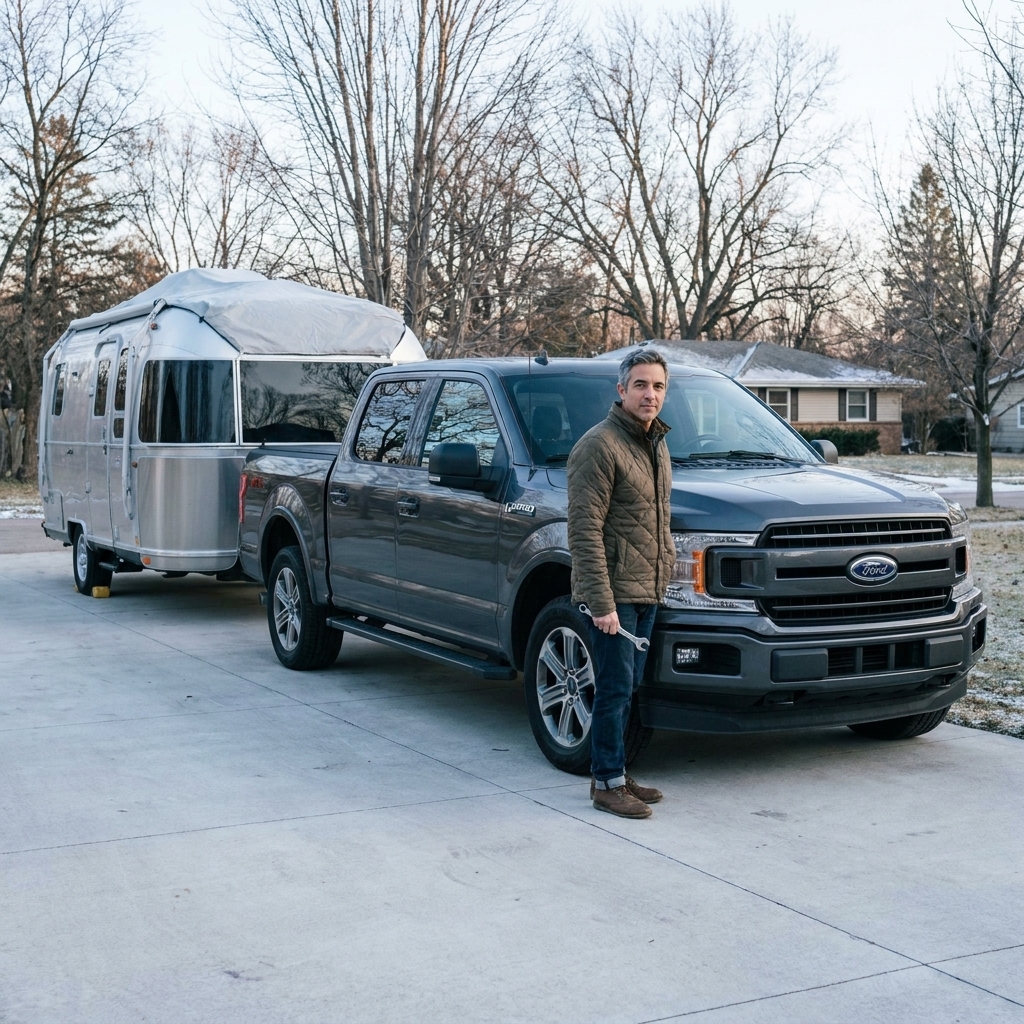
If you have an enclosed trailer, you already know it is part toolbox, part rolling garage, part investment. Winter is when it takes the most abuse while doing the least work. Salt mist, trapped humidity, and freeze-thaw cycles can turn a nice trailer into a rusty, musty headache by spring.
I've seen it a hundred times in fleet yards: the trailer that gets put away “clean enough” is the one that comes back with stuck brakes, crusty wiring, swollen wood, and orange rust bleeding out of seams. The good news is you can prevent most of it with a simple routine and a couple inexpensive supplies.
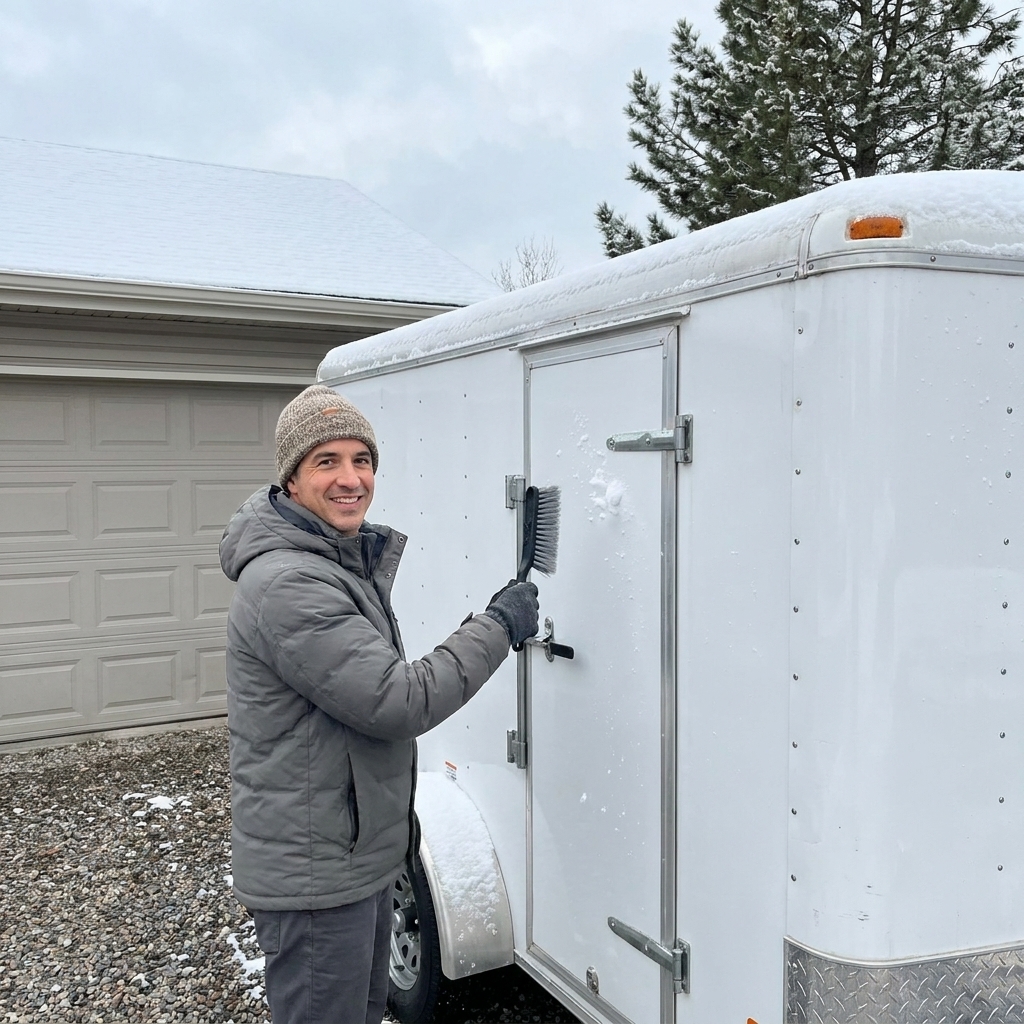
Start with the right goal
Winterizing isn't just “keeping it dry.” Your real goals are:
- Remove salt and grime so corrosion doesn't keep working all winter.
- Keep water from getting in through doors, roof seams, lights, and floor edges.
- Control humidity inside so condensation doesn't form on the walls, ceiling, and hardware.
- Prevent flat spots and brake issues from sitting.
- Keep the electrical system healthy, especially the breakaway battery (if your trailer has one).
Do those five things and your trailer will feel like it “lost no time” over the off-season.
Deep clean first
Wash it like you mean it
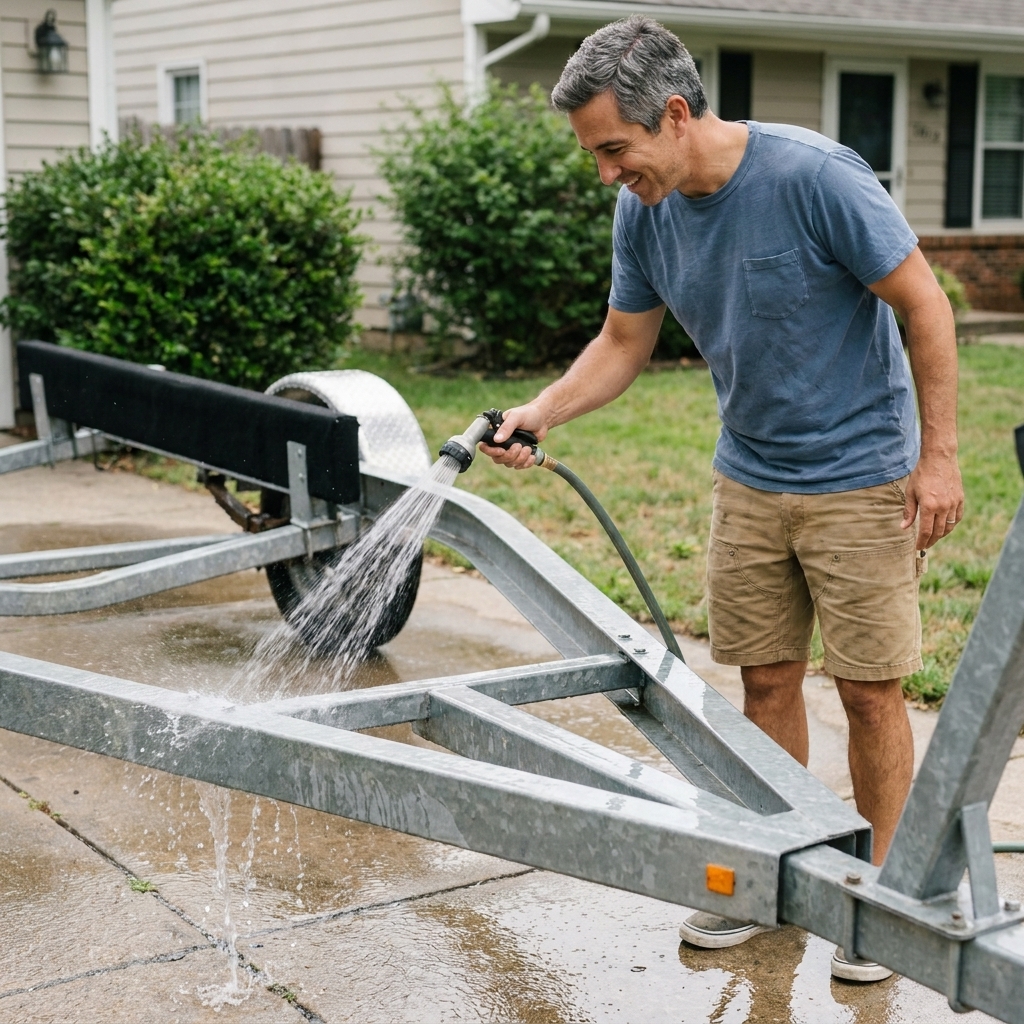
Before you park it for the season, give it a proper wash. I'm not talking about a quick hose-off. Use a truck soap or a mild automotive wash, then hit the seams and lower panels where road spray sticks.
- Rinse from the top down.
- Pay extra attention behind fenders, around the rear ramp or barn doors, and the front V-nose area if you have one.
- Open doors and wash the door jambs. That's where salty water sits and starts the rust party.
If you're washing where runoff matters, be smart about it. Salt and cleaners don't belong in storm drains. Follow local rules, and use a wash area that drains appropriately.
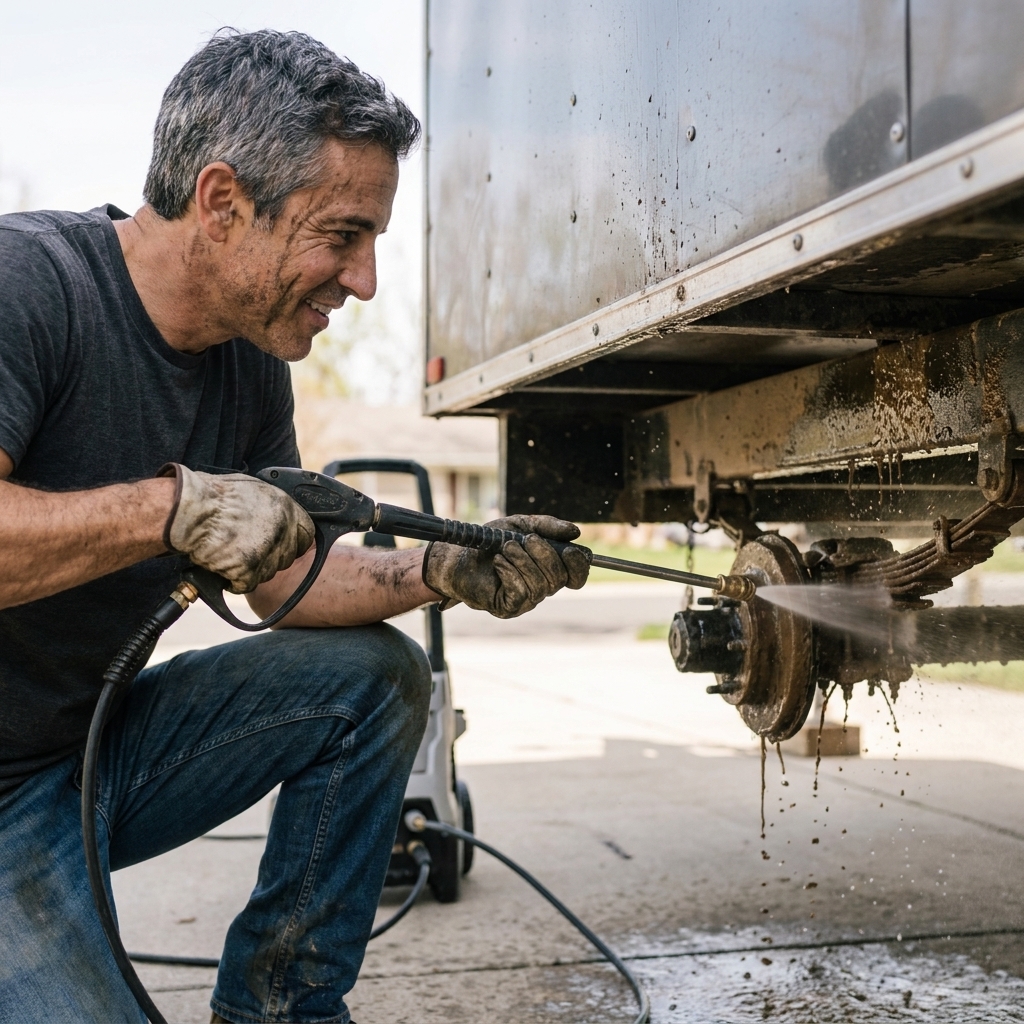
Flush the undercarriage and running gear
The underside is where trailers die early. If you towed on salted roads even once, rinse the frame rails, crossmembers, axle tubes, leaf springs, U-bolts, brake backing plates, and the inside of the wheels.
If you can, run a lawn sprinkler under the trailer for 20 to 30 minutes. It sounds goofy, but it works great for a long soak and flush.
After washing, take a short drive to dry the brakes before you park it for the season.
Stop rust early
Inspect and touch up chips
Once the trailer is clean and dry, walk around it slowly. Look for:
- Paint chips on the tongue, frame, and fenders
- Rust starting at welds and seam edges
- Stone rash on the front panel
Wire-brush small spots, wipe them clean, and hit them with a rust-inhibiting primer and paint. It isn't show-car work. You're just sealing bare metal before winter moisture gets a season-long head start.
Protect the frame and hardware
If your trailer sees winter roads, a corrosion protectant is cheap insurance. Focus on:
- Frame rails and crossmembers
- Spring hangers, shackles, equalizers
- Coupler, safety chain mounts, jack mount
- Exposed bolts and hardware
Use a product designed for corrosion protection, and keep it off brake rotors, brake drums, brake shoes, and tire tread. If you're not sure, spray light and wipe overspray. It's also worth laying down cardboard or a drip tray if you're working on a nice driveway.
Rule of thumb: If it's shiny bare metal and it lives underneath, it deserves protection before winter.
Seals and weatherstripping
Most enclosed trailer leaks aren't dramatic roof holes. They're tired seals and compressed weatherstripping that let water wick in during wind-driven rain or melting snow.
Clean and condition door seals
- Wipe weatherstripping with mild soap and water, then dry it.
- Use a rubber conditioner or silicone-based protectant to keep seals from drying and cracking.
- Check for flattened sections, tears, or spots where the seal is pulling away.
On ramp doors, check the top corners closely. That's where you'll find the first drip marks.
Check seams, trim, and lights
Look for gaps, failed caulk, or loose screws on:
- Roof edge trim
- Front and rear corner caps
- Marker lights and tail lights
- Any add-ons like vents, ladder racks, or solar cable pass-throughs
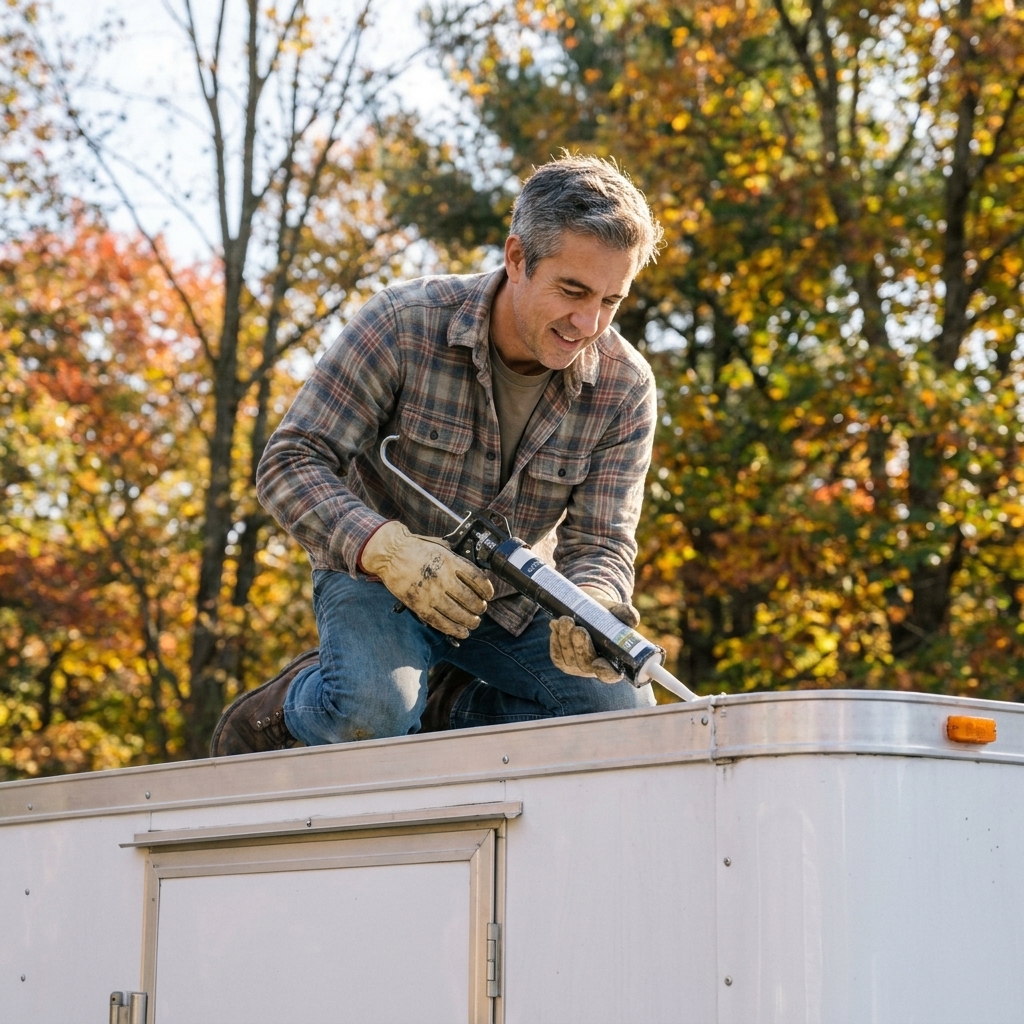
If you find a suspect seam, reseal it with a compatible sealant for your roof material. Make sure the surface is clean and dry before sealing, or it'll peel when temperatures swing.
Floor edges and rot
One of the easiest places for an enclosed trailer to start rotting is where the floor meets the outside world. Water creeps in at the rear threshold, around ramp hinges, and at any exposed plywood edges underneath.
- Inspect the rear threshold and ramp hinge area for dark staining, soft spots, or swollen wood.
- Look underneath for exposed plywood edges, missing undercoating, or fasteners that have loosened up.
- If you find bare wood, seal it. The goal is to keep water from wicking into the layers all winter.
Battery and breakaway
If your enclosed trailer has electric brakes, many setups are required to have a breakaway system with its own battery, but rules vary by jurisdiction and trailer weight. Either way, that little battery is one of the most neglected parts on the whole rig, and winter is when it quietly dies.
Test the breakaway battery
- Charge it fully.
- Use a battery tester or a multimeter to check voltage.
- Inspect the breakaway switch and cable for corrosion or damage.
If the battery is more than a few years old and it won't hold a charge, replace it now. Spring isn't the time to discover you have no breakaway power.
Store it smart
If your trailer will sit without shore power, you've got two good options:
- Remove the breakaway battery and store it somewhere that stays above freezing, then keep it on a maintainer.
- Leave it installed but connect a quality battery maintainer if you've got reliable power where you store the trailer.
A discharged lead-acid battery can freeze and crack its case, and sitting discharged is also how batteries sulfate and die early.
Control interior moisture
Enclosed trailers sweat. Warm afternoon sun hits the skin, temperatures drop overnight, and condensation forms on the inside walls and ceiling. If you store anything metal inside, it'll rust. If you've got a wood floor, it can absorb moisture and swell. If you have insulation, it can hold damp air like a sponge.
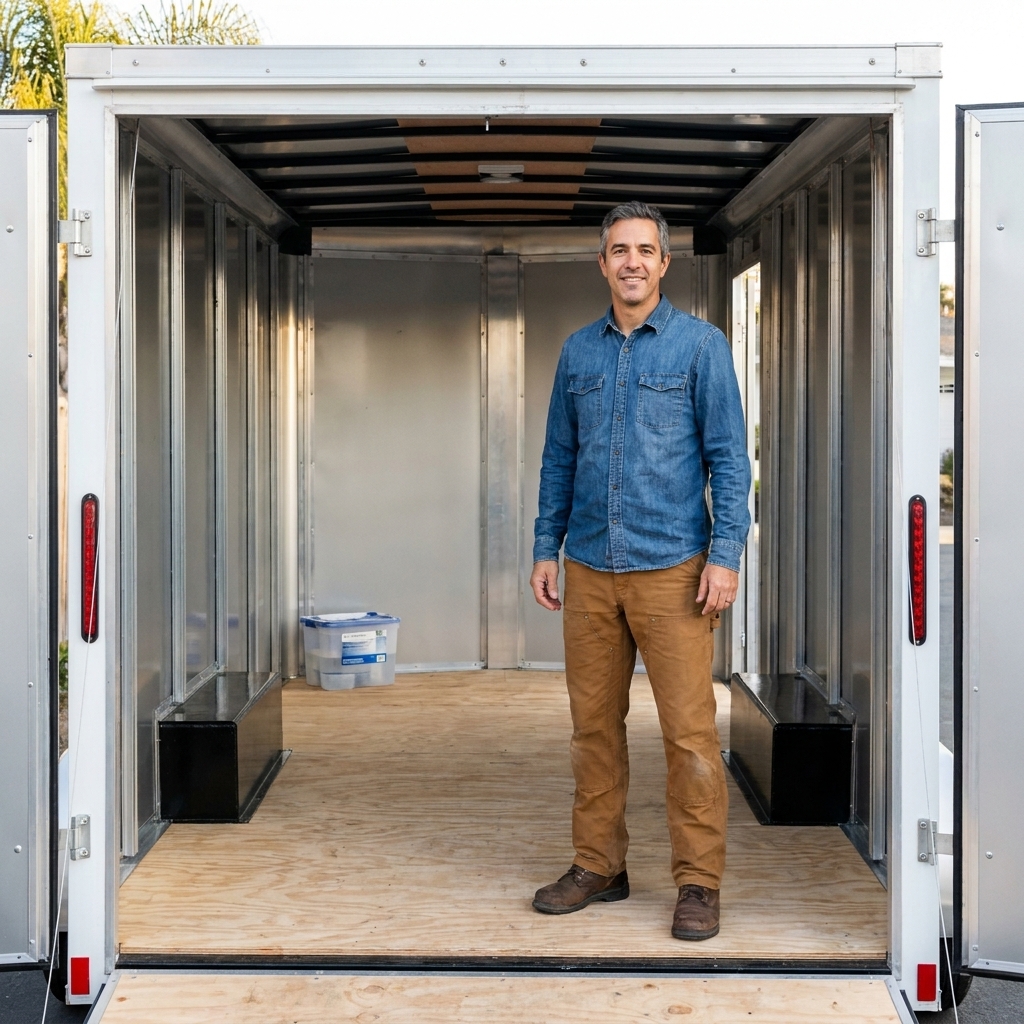
Empty it, then dry it out
For winter storage, the best load is no load. Remove what you can, especially:
- Cardboard boxes (they trap moisture and grow mildew)
- Salt, fertilizer, lawn chemicals
- Gas cans, propane bottles, and oily rags
- Wet straps, tarps, and muddy gear
Then open it up on a dry day and let it air out completely.
Use moisture absorbers correctly
Moisture tubs and desiccant packs work well in enclosed trailers. Place them where air can circulate and where they won't spill. In big trailers, use multiple containers spaced out.
If you store in a humid climate or your trailer is packed tight, consider a small, safe dehumidifier only if you've got reliable power and a proper drain setup. Otherwise, simple desiccants are the low-drama option.
Vent it carefully
If your trailer has roof vents, make sure they open and close smoothly and seal tight when closed. For storage, I like a little ventilation as long as it doesn't invite rain or snow in. A slightly cracked vent under a covered area can reduce condensation, but only if you trust your storage environment.
In very humid regions, outside air can be just as wet as what's inside, so ventilation may not help much. In that case, desiccant or dehumidification is more reliable.
Rodents and pests
Winter is when mice go looking for warm, quiet real estate, and an enclosed trailer is basically a studio apartment with plenty of hiding spots.
- Don't store pet food, bird seed, or snacks inside.
- Check for gaps around the rear door, side door, and any floor penetrations, then address what you can.
- If rodents are common where you live, set traps or deterrents around the trailer, not where they'll slide around inside during towing.
A quick look in the corners now can save you from chewed wiring and a nasty smell later.
Tires, bearings, and brakes
Inflate tires and block UV
Trailer tires hate sitting. Before storage:
- Set tire pressure appropriately for your setup. For many ST trailer tires, storing at the pressure listed on the sidewall is common. If you're running LT tires or you use a load and inflation chart, set pressure based on your actual axle load.
- Inspect for cracks, bubbles, or uneven wear.
- Cover the tires to block sunlight if stored outdoors.
If the trailer will sit for months, moving it a few feet every couple weeks helps prevent flat spotting. If you can't, don't panic. Just plan to take it easy for the first few miles in spring and recheck pressures.
Wheel bearings: service on schedule
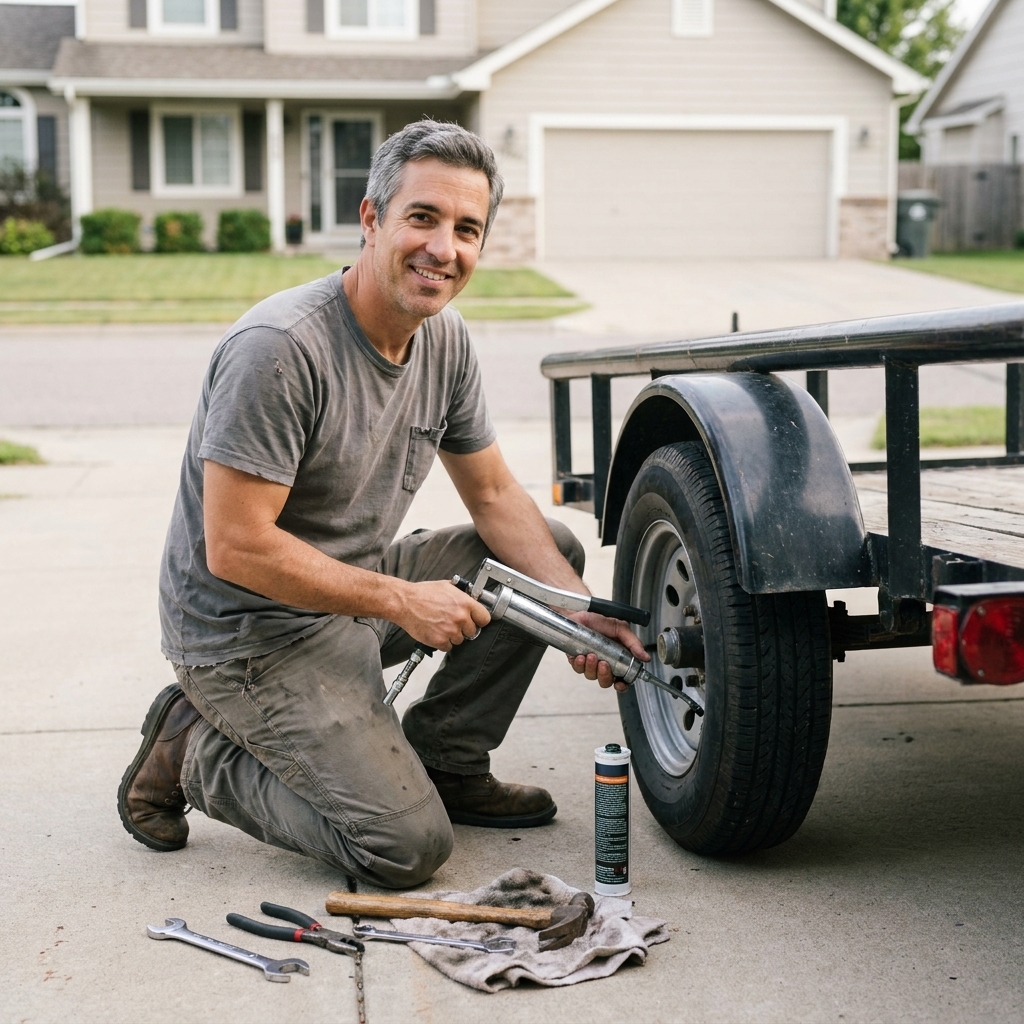
If you're due for bearing service, do it before winter storage or right after. Water intrusion and old grease are a bad mix.
At minimum, check for play by grabbing the tire at 12 and 6 o’clock and gently rocking it. Any noticeable clunk needs attention.
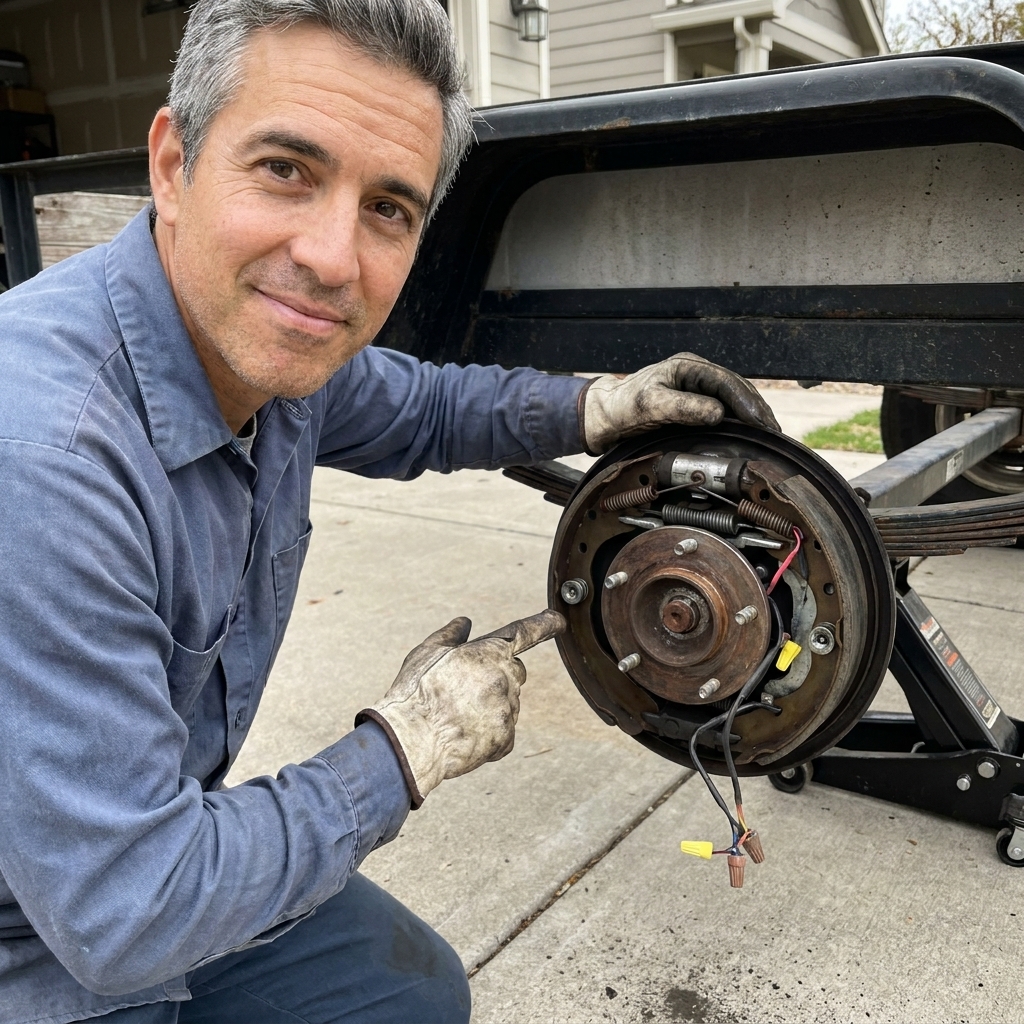
Brakes: keep them from sticking
Electric trailer brakes can stick after sitting in damp conditions. What helps:
- Store on a dry surface when possible.
- Avoid parking with wet brakes after a wash. Take a short drive to dry them.
- In spring, do a slow test pull and brake check before you hit highway speeds.
Hitch, coupler, and jack
Grease and protect moving parts
- Lightly grease the coupler latch pivot points.
- Lubricate the jack screw or grease points if your jack has them.
- Spray a protectant on the safety chains and hooks.
If you use a weight distribution hitch with the trailer, store the bars clean and lightly protected against surface rust.
Park it the right way
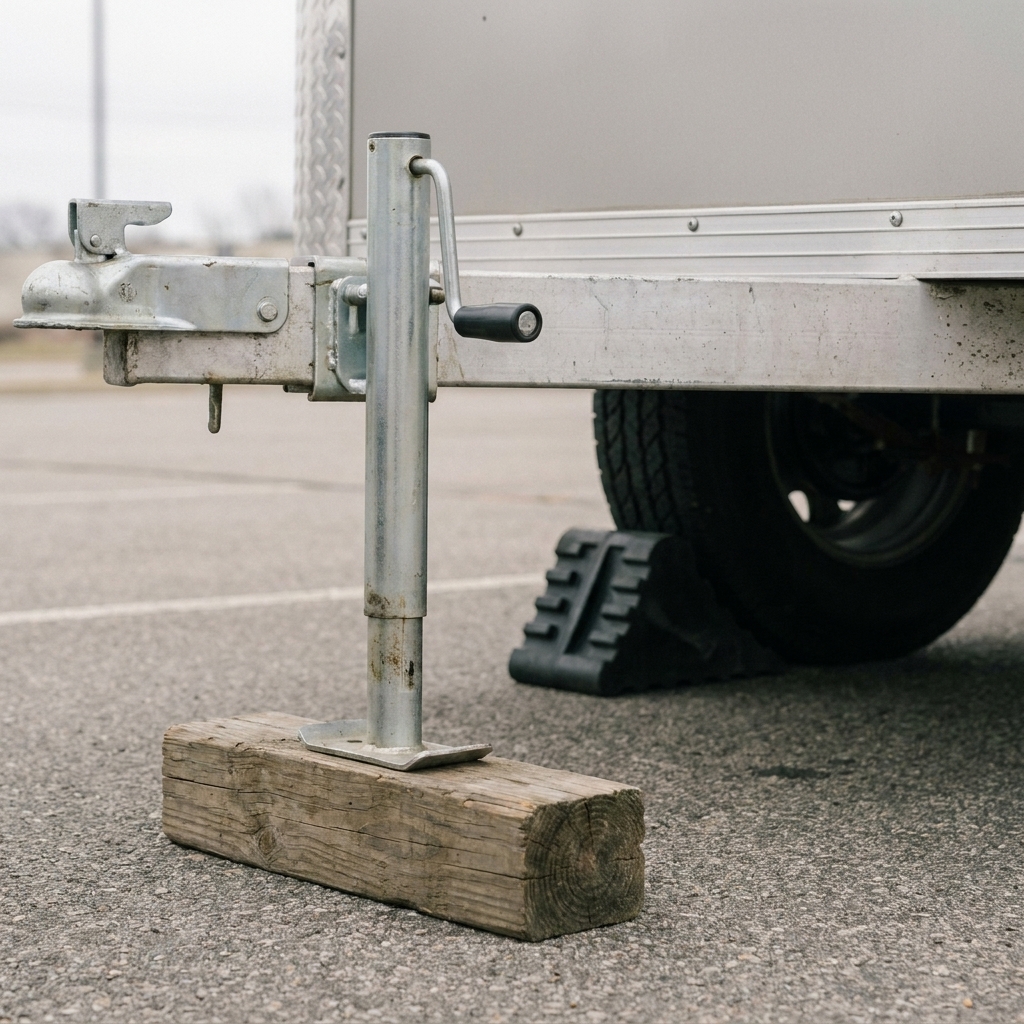
For long storage, I prefer the trailer sitting level or slightly nose-down so water doesn't pool at the rear threshold. Use wheel chocks, and if you're on soft ground, put boards under the jack foot and tires to keep them from sinking during freeze-thaw cycles.
Covers and storage location
Indoor is best
A barn, shop, or covered lot is the gold standard. Outdoors can work fine if you set the trailer up correctly.
If you cover it, don't trap moisture
A breathable trailer cover is better than a blue tarp. Tarps can trap moisture against the skin and rub paint in the wind.
- Make sure the trailer is clean and dry before covering.
- Secure the cover so it can't flap and scuff corners.
- Don't block all airflow inside if your trailer tends to sweat.
Watch the parking surface
Gravel or concrete is usually fine. Grass and dirt hold moisture and can accelerate corrosion from underneath, especially in mild winters where the ground stays wet. If grass is your only option, put boards down under the tires and tongue jack.
Winterizing checklist
Here's the driveway-friendly checklist I follow before winter:
- Wash exterior and door jambs
- Flush undercarriage, axles, springs, and wheels
- Dry fully, including a short drive to dry brakes
- Inspect and touch up paint chips and early rust
- Protect underside metal hardware (keep off brakes and tread)
- Check rear threshold and exposed floor edges, seal bare wood
- Clean and condition weatherstripping
- Inspect and reseal roof seams, lights, and trim as needed
- Charge and test breakaway battery, then maintain or store indoors (if equipped)
- Remove moisture-trapping cargo, then dry and ventilate interior
- Add moisture absorbers
- Inflate tires, cover tires if outdoors
- Grease coupler and service jack
- Chock wheels and park on a solid surface
- Check for rodent risk and remove anything that attracts them
FAQ
Should I leave my enclosed trailer plugged in all winter?
If you've got a battery maintainer or a properly designed on-board charger and reliable power, it can be a good thing. The key isn't “constant charging” but “smart maintaining.” Cheap trickle chargers can overcharge and cook a small battery. If you're not sure what you have, disconnect and bring the battery inside with a maintainer.
Is it okay to store an enclosed trailer with the ramp door closed tight?
Yes, but only if the interior is dry and you have some plan for moisture control. A closed trailer with damp gear inside becomes a condensation box. Dry it out, remove wet items, add desiccant, and you're in good shape.
What's the fastest way to stop rust from getting worse over winter?
Clean off salt, dry it, then address bare metal. Even a basic wire brush and touch-up paint beats letting rust sit exposed for months. Underneath, a corrosion protectant on hardware and frame sections goes a long way.
Do I need to put my trailer on jack stands for winter?
Most owners don't need to. If you're storing for a very long time or you have a lightweight trailer with small tires, stands can reduce tire stress. For typical seasonal storage, correct tire pressure, tire covers, and moving it occasionally are usually enough.
Wrap-up
Winter damage is usually slow and sneaky, not dramatic. A couple hours in the driveway now can save you brake headaches, rotten floors, corroded wiring, and that “why does my trailer smell like a wet basement?” surprise later.
If you want to keep it simple, remember the big three: clean it, seal it, and dry it out inside. Your spring self will thank you the first time you hook up and everything just works.