If you have ever watched a crowded campground check-in line build behind you while your trailer starts doing its own thing, you are not alone. Backing up a trailer feels weird at first because the trailer reacts opposite of what your brain expects. The good news is it is not a talent you are born with. It is a repeatable skill with a few rules that never change.
Below is the same approach I used training new drivers in a work-truck fleet, plus the mirror habits I rely on hauling my own 28-foot travel trailer. Take it slow, practice on purpose, and you will get it.
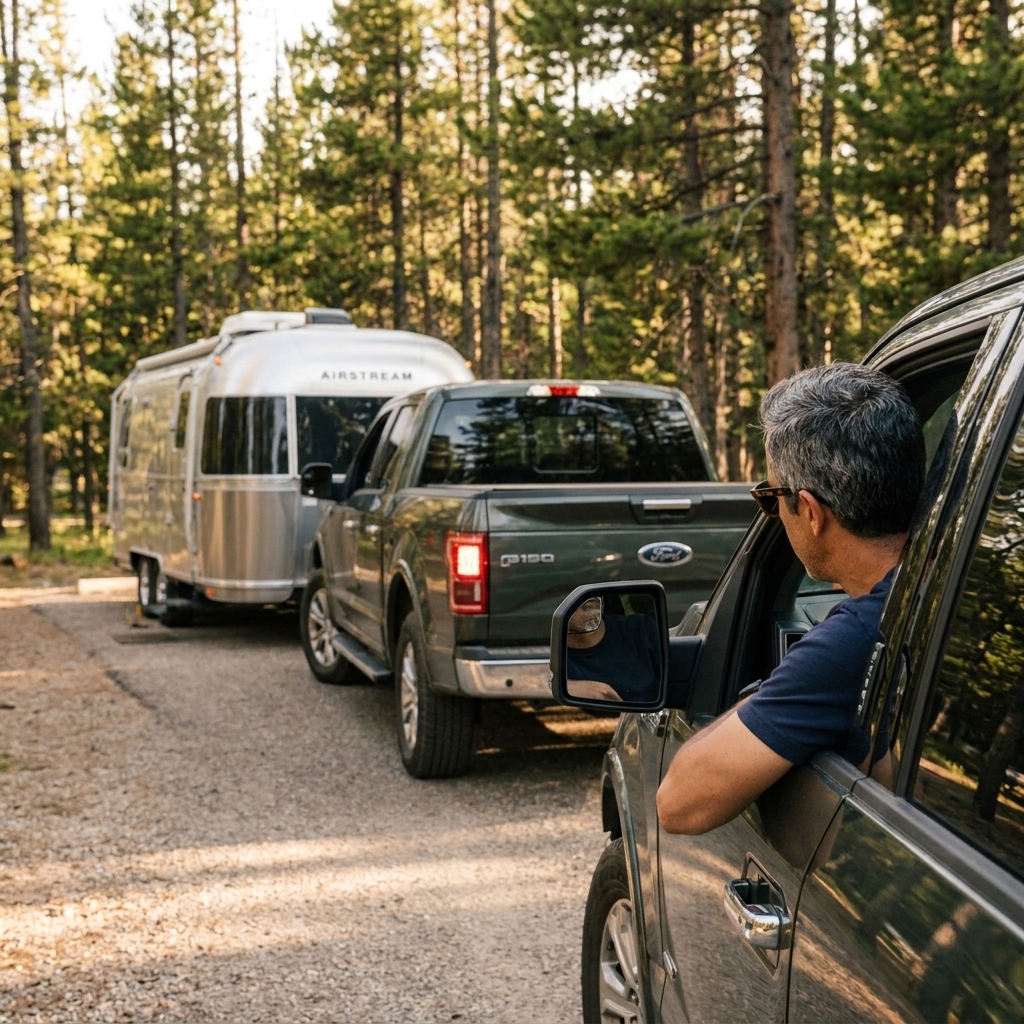
Before you move: a quick setup that prevents most mistakes
1) Pick your goal spot and your reset route
Before you put the truck in reverse, get out and look. Decide exactly where you want the trailer to end up, and confirm you have room to pull forward and reset if the angle goes bad. There is no shame in a reset. In fleet work, the best drivers reset early. The bent-bumper drivers try to “save it.”
2) Remove distractions and choose a spotter
If you have a passenger, make them your spotter. Agree on simple signals before you start:
- Stop: both hands up, palms out.
- Driver side / passenger side: point clearly.
- Come back: wave straight toward their body.
Also, set one rule that keeps everyone safe: the spotter stays where you can see them in a mirror at all times. If you lose sight of them, you stop. Period.
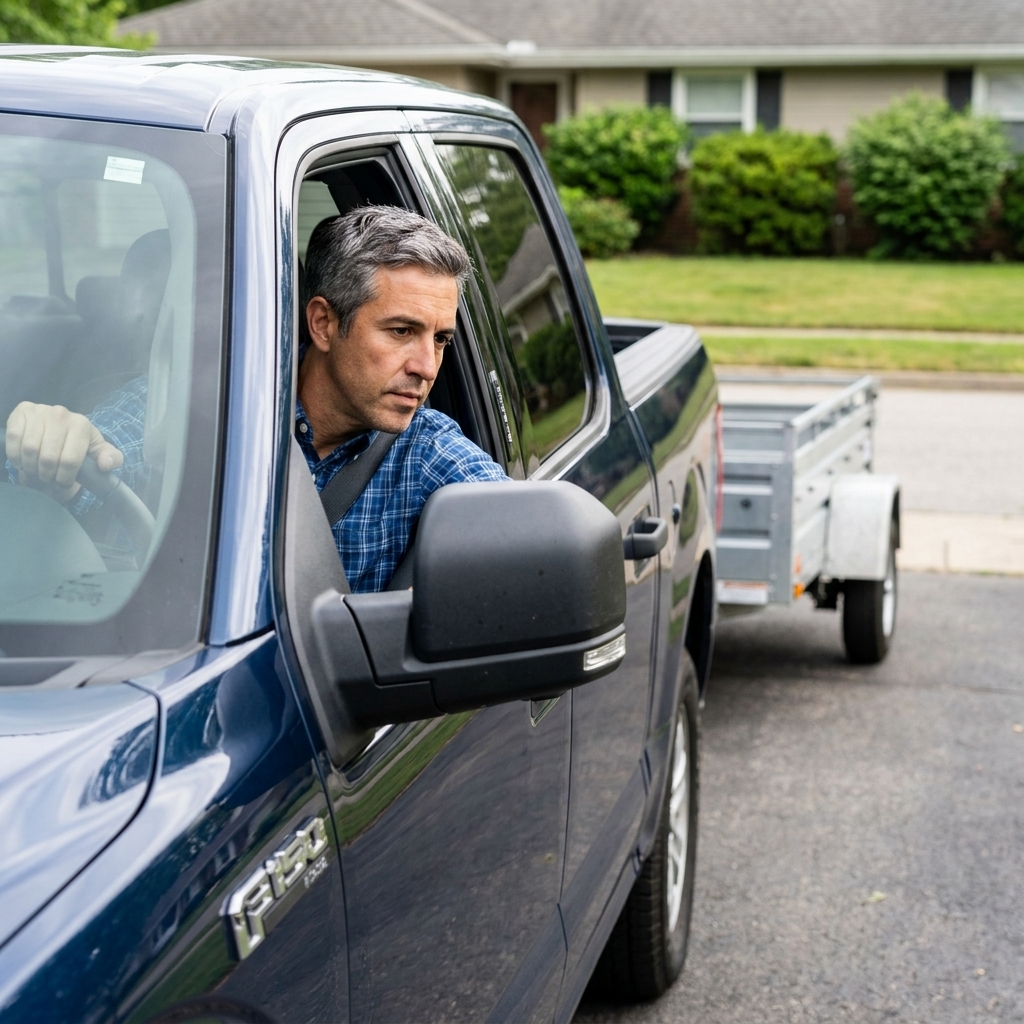
3) Set mirrors for backing, not highway cruising
You want to see the trailer tires and the space next to them. If you have tow mirrors, extend them and angle them down slightly. If you do not, adjust so you can see:
- The side of the trailer (to judge angle)
- The trailer wheels (to judge path)
- The curb, cones, or edge of the road (to judge clearance)
On longer trailers, the wheels tell the truth. If the wheels are headed somewhere you do not like, the whole trailer will be there in a second.
4) Do a quick hitch and brake check
Backing can load the hitch in odd ways. Before you start, confirm:
- Coupler is latched and pinned
- Safety chains are crossed and attached
- Breakaway cable is clipped to the truck (not the chains)
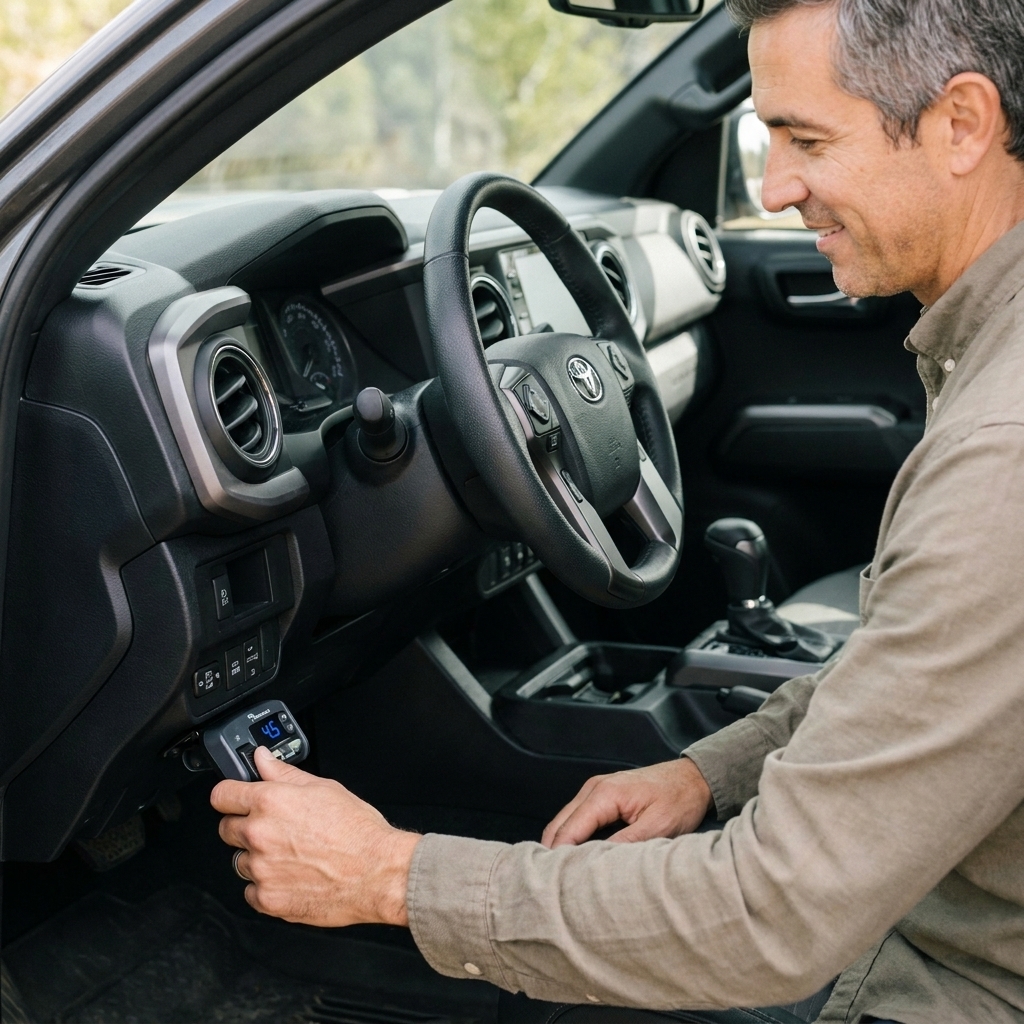
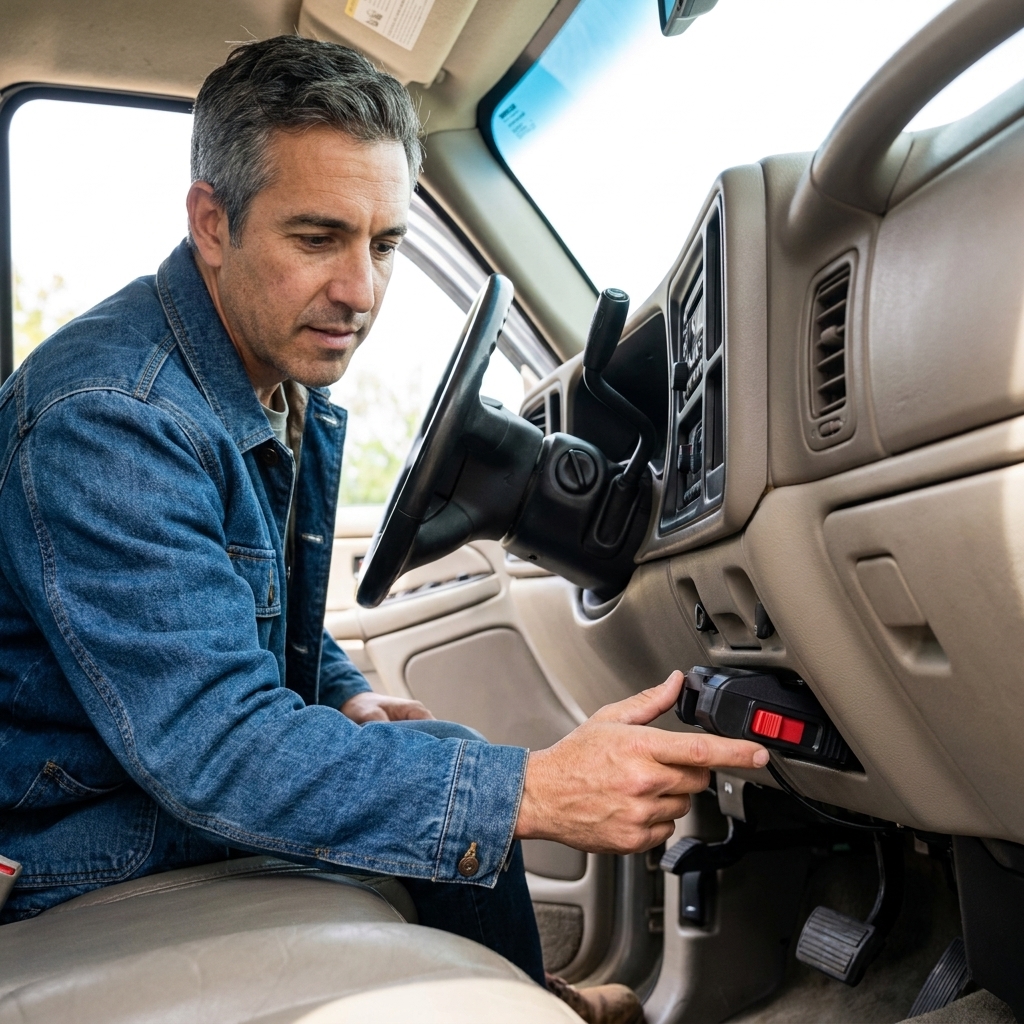
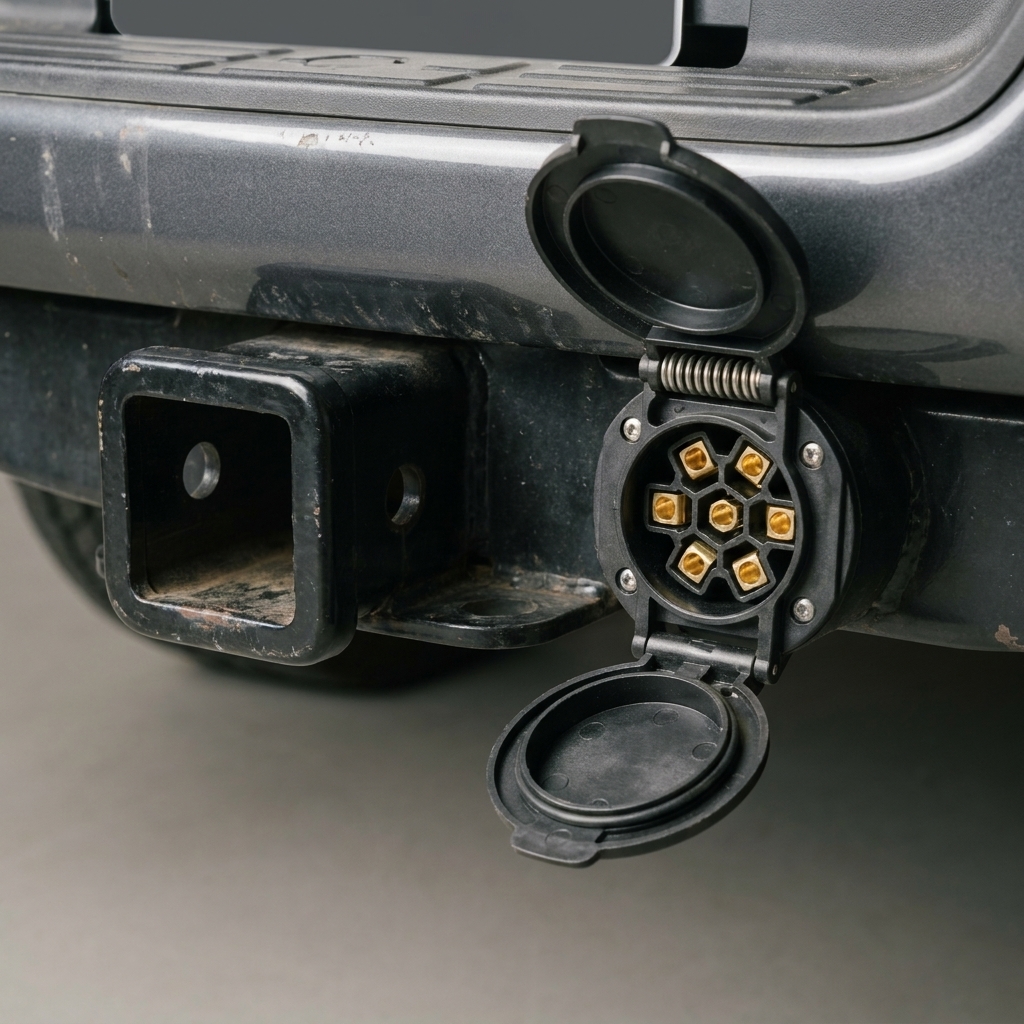
- 7-pin is connected and the trailer brake controller shows connection
If you are on a slope, you can use the brake controller manual lever briefly to help hold the trailer while you get settled, but do it at a crawl and follow your controller and trailer manufacturer guidance. If anything feels grabby or unpredictable, stop and reset.
5) Do the basics before you practice
Practice in an empty lot when traffic is light, and do not block lanes or entrances. If you have to stop near traffic, use hazard lights. When you are unsure about clearance, get out and look.
The steering rule that makes backing click
The simple truth: the trailer follows the back of the truck
When you back up, you are not “steering the trailer.” You are steering the rear of the truck so it pushes the trailer where you want it to go.
Here are two beginner-friendly ways to remember what to do.
Method A: bottom of the wheel
Put your hand at the bottom of the steering wheel (around 6 o’clock). Now:
- Move your hand toward the direction you want the trailer to go.
- Want the trailer to go left? Hand goes left.
- Want the trailer to go right? Hand goes right.
This works because you are thinking in trailer direction, not vehicle direction.
Method B: chase the trailer
If the trailer starts drifting left, you “chase” it by steering left a bit to get back behind it. If it drifts right, you steer right. This is how experienced drivers make tiny corrections without overthinking.
Hard-earned rule: Use small steering inputs and wait for the trailer to respond. Most jackknifes start with too much steering too early.
Step-by-step: backing into a typical site or driveway
This assumes you are backing into a spot on the right (passenger side). Driver-side backing is similar, but visibility is usually better on the driver side.
Step 1: Start with a good setup angle
Pull forward so your truck and trailer are straight, then position so the trailer has room to swing. A little extra space up front makes backing easier than any “fancy” steering trick.
As a general guide:
- For a tight turn into a driveway or campsite: start a little past the entrance so the trailer can arc in.
- For a straight back: square up early and keep it straight.
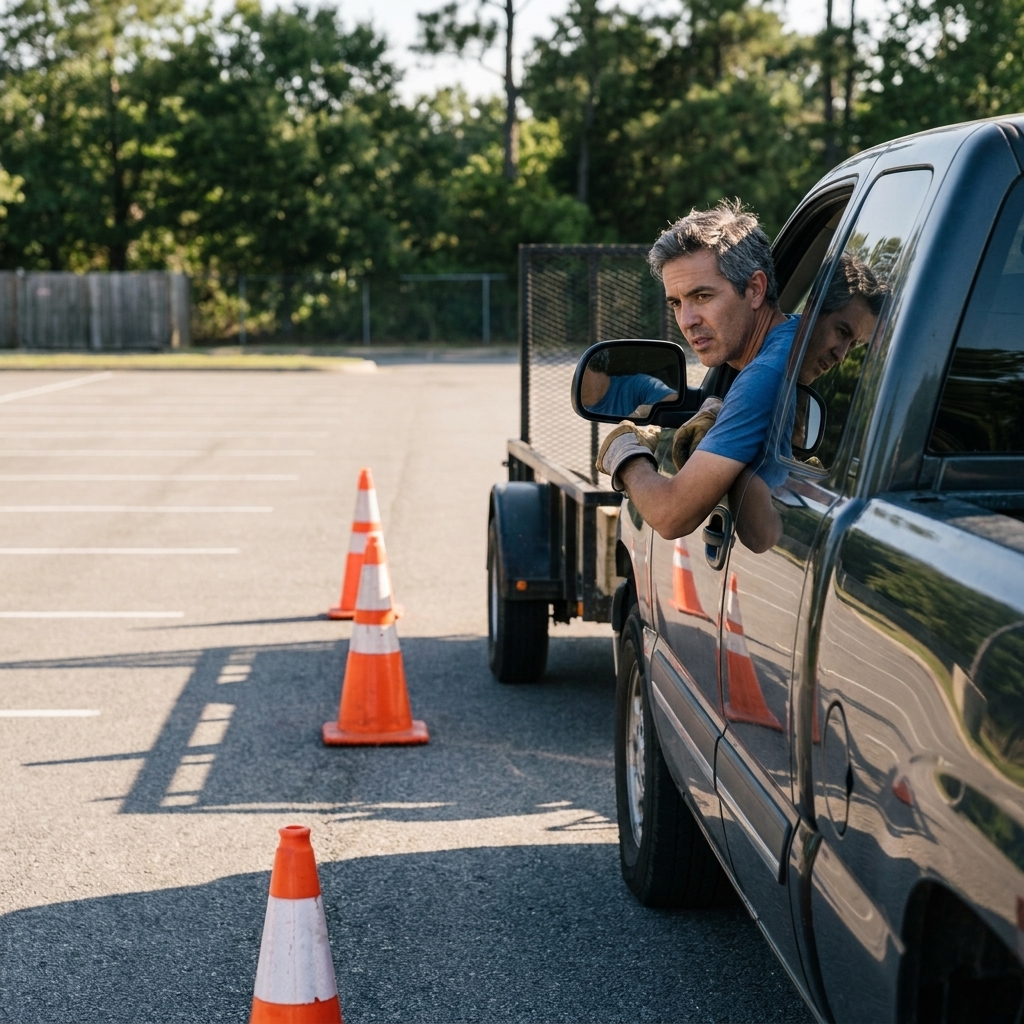
Step 2: Begin the turn slowly
Put the truck in reverse, foot lightly on the brake, and let the rig creep. Turn the wheel slightly toward where you want the trailer to go. Watch the trailer wheels in the mirror. They will start to arc.
One thing that helps prevent overcorrection: after you make a small input, start easing the wheel back toward center as the trailer responds. Do not hold big steering for long.
Step 3: Follow the trailer with the truck
Once the trailer starts turning, steer the truck back underneath it to control the angle. This is the part beginners miss. If you keep cranking the wheel, the angle keeps increasing until you jackknife.
A good rhythm looks like:
- Small turn to “start” the trailer
- Then small opposite correction to “follow” and hold the angle
Step 4: Stop early, pull forward, and straighten
If the angle gets sharp or you lose the line, stop. Pull forward until the rig is straight again. Then restart. Resets are normal and safer than trying to muscle it.
Step 5: Finish with a straight back
The cleanest parks happen when you get the trailer aligned with the spot early, then finish with a short straight-back. When you are nearly lined up, straighten the wheel and let the trailer walk in.
Mirror tricks that actually help
Use the tire-track mindset
Do not stare at the trailer body. Stare at the trailer tires. The tires show you where the trailer will be in the next second or two. The body follows.
Pick a reference point and keep it consistent
Choose something you can repeat: the edge of pavement, a seam in the asphalt, a line of gravel, a cone. Your goal is to keep the trailer tires tracking that reference.
Losing one side can be a warning sign
If you cannot see one side of the trailer in either mirror, it can be a sign the angle is getting too steep or your mirrors are not set for the move. Either way, slow down, stop if needed, and reset before it turns into a jackknife.
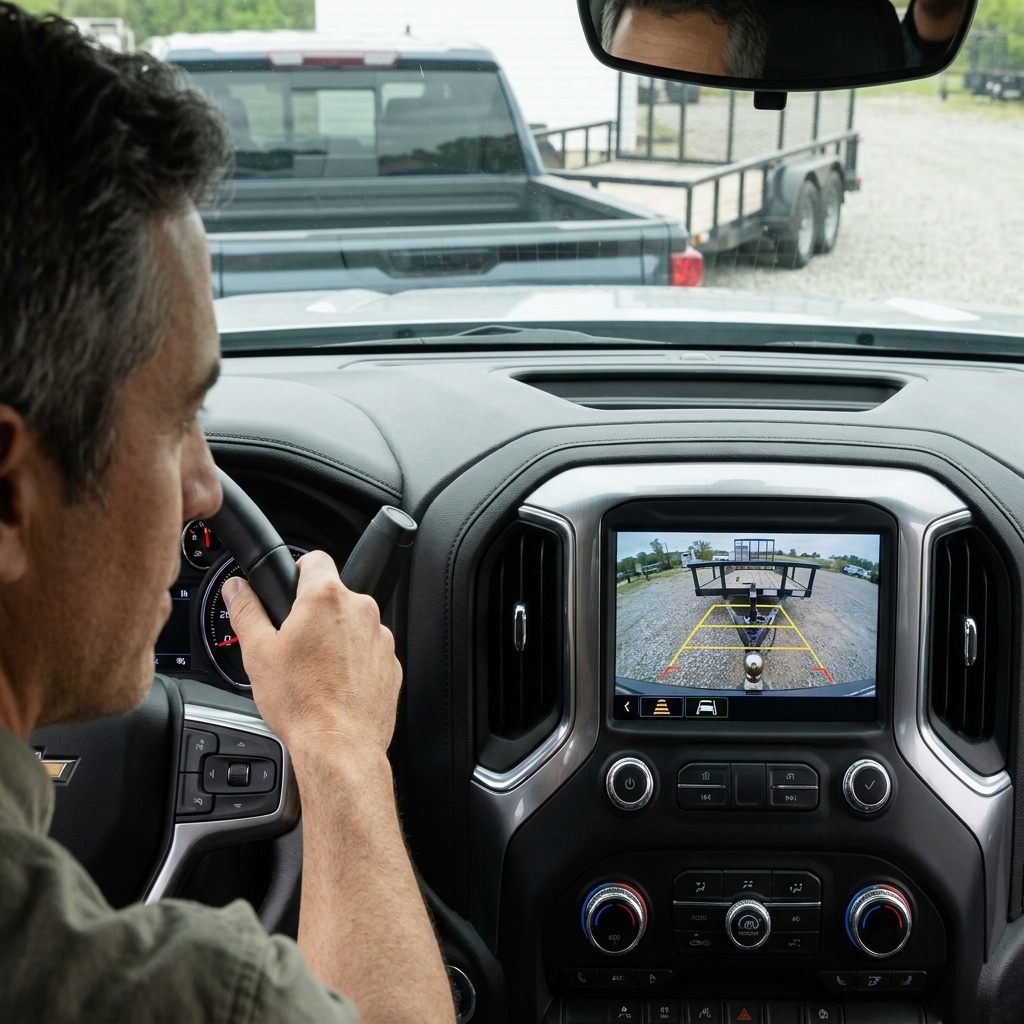
If you have a backup camera, use it like a helper
Cameras are great for checking the last few feet and confirming clearance. But mirrors are still king for controlling the arc and protecting the trailer sides. I am on the mirrors almost the whole time, then I use the camera to confirm the final few feet.
How to avoid jackknifing (and how to recover)
What causes jackknifing
A jackknife happens when the truck and trailer form too tight of an angle, usually from turning too much and not following the trailer back underneath you.
Prevent it with three habits
- Go slower than you think you need to. Slow gives you time to correct.
- Make small inputs and wait. The trailer reacts a beat later.
- Reset early. If the angle looks “sharp,” it will be sharper in two feet.
Recovery steps
If you feel the angle getting away from you:
- Stop. Do not keep rolling while you think.
- Pull forward while steering to straighten the rig. Get the truck and trailer back in line.
- Start over with a better setup angle.
If you are close to a vehicle, post, curb, or your spotter, do not guess. Get out and look.
Common backing scenarios (and what to do)
Backing straight
Backing straight is harder than it looks because tiny steering inputs make the trailer drift.
- Use the mirrors to keep both trailer sides “even.”
- Make micro-corrections, then return the wheel toward center.
- If it drifts, correct early. Waiting makes the correction bigger.
Backing around a corner into a campsite
Start wider than you think. Give the trailer room to swing, then follow it. If your campsite has a curb, stump, or big rock on the inside of the turn, have a spotter watch that corner.
Backing uphill
Uphill backing can load the drivetrain and makes it easier to roll backward faster than you intend.
- Use light brake pressure to control speed.
- If you have a brake controller, use the manual lever only in short, gentle bursts if you need to settle the trailer. If the rig is not straight or the trailer reacts sharply, stop and reset.
- Stop and reset more often. Gravity removes your margin for error.
Backing downhill
Downhill backing is where trailers like to “take over.” Keep it slow and consider a spotter. If the trailer starts to steer the truck, stop and pull forward to straighten.
Short trailer versus long trailer
Short trailers (small utility trailers, jet ski trailers) react fast. They need smaller inputs and quicker corrections.
Long trailers (travel trailers, enclosed car haulers) react slower but take more space. You can be smoother, but you must plan the arc and watch your swing.
Single axle versus tandem axle
Single-axle trailers tend to pivot and respond quickly. That is helpful in tight spaces, but it also means you can oversteer in a hurry.
Tandem-axle trailers usually feel steadier, but they scrub tires in tight turns. Give them room, go slower, and avoid cranking to full lock unless you truly need it.
Boat trailers and surge brakes
Some boat trailers use surge brakes. At very low speeds, they can feel different than electric trailer brakes, especially on slopes. Keep your speed down, avoid sudden stops, and if the braking behavior surprises you, stop and reassess before continuing.
Short wheelbase versus long wheelbase tow vehicles
A short wheelbase SUV will make the trailer react quicker to steering. A long-bed truck usually responds more slowly and smoothly. Either way, the cure is the same: smaller inputs, more patience, and earlier resets.
Beginner practice drills (30 minutes that pay off forever)
Find an empty parking lot early in the morning and bring 4 to 6 cones, buckets, or anything soft that will not damage the trailer if you tap it.
Drill 1: Straight-line lane
- Set cones in two lines like a narrow lane.
- Back through without touching them.
- Goal: learn micro-corrections and patience.
Drill 2: One turn into a “site”
- Create a fake campsite opening and a box to park in.
- Practice setting up wide and finishing straight.
Drill 3: Reset on purpose
Intentionally let the trailer get slightly off line, then practice stopping, pulling forward, and restarting. This drill removes the ego from resetting, and that is what keeps you calm in real life.
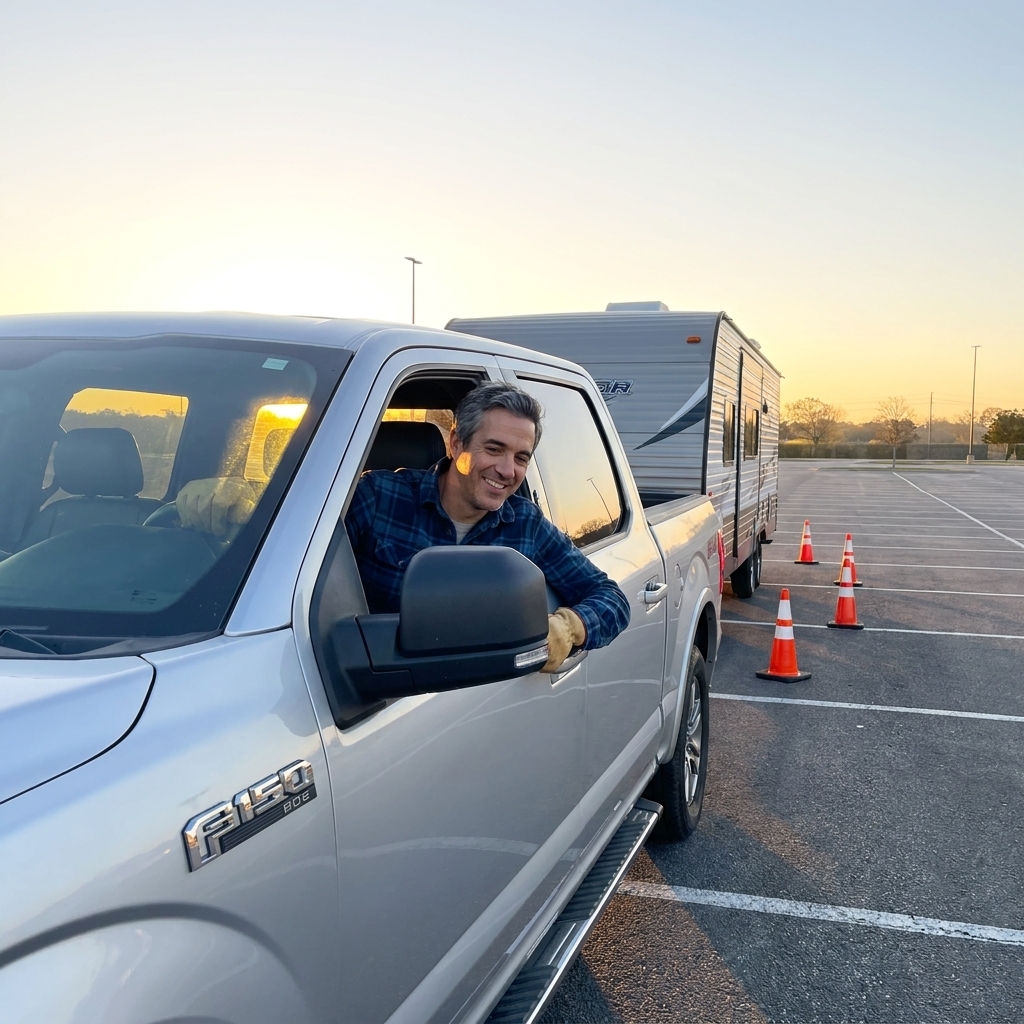
Safety checklist for every back-in
- GOAL: Get out and look before you start, and anytime you are unsure.
- Spotter visible: If you cannot see them, you stop.
- Windows down: You can hear your spotter and any warnings.
- Hands slow: Small steering inputs, then wait.
- Speed crawling: Idle speed is plenty.
- Protect the inside corner: Curbs and posts love trailer tires.
- Watch the swing: The front of the trailer swings opposite direction of the turn.
Troubleshooting: why it keeps going wrong
“It keeps turning too fast.”
You are probably backing too quickly or turning the wheel too much. Slow down, start with smaller steering inputs, and correct sooner.
“I lose track of which way to steer.”
Use the bottom-of-the-wheel method. Hand goes where you want the trailer to go. Also, say it out loud: “Trailer left.” Then move your hand left. Sounds silly. Works great under pressure.
“I can’t see anything in my mirrors.”
Re-aim the mirrors to include the trailer wheels and the space beside them. If the trailer is wider than your truck, consider clip-on towing mirrors or proper tow mirrors for your vehicle. And clean your mirror glass. Dust and rain spots ruin depth perception at night.
“The trailer keeps pushing the truck around.”
That is often speed, slope, or too much angle. Crawl slower, reduce the angle by pulling forward, and only use the brake controller manual lever gently and briefly if it helps. If it makes things feel less stable, stop and reset.
FAQ
Is it easier to back up from the driver side or passenger side?
Driver side is usually easier because you can see more naturally. Passenger-side backing is still completely doable, it just demands better mirror use and a spotter in tighter spaces.
How do I know when I need to pull forward and reset?
If the trailer angle looks sharp, if you lose a clear view of the trailer sides, or if you are unsure about clearance, reset. The earlier you reset, the smaller the reset needs to be.
Does a weight distribution hitch affect backing?
Not much for normal angles. But very sharp backing angles can bind spring bars on some setups. If you are trying to back at an extreme angle and you hear popping or feel binding, stop and straighten out.
What about boat trailers or tiny utility trailers?
They react quickly, so everything happens faster. Use smaller steering inputs and do not be afraid to hop out and check alignment. Practicing with a short trailer makes you better, but it can be a steeper learning curve.
The bottom line
Backing a trailer is not magic. It is setup, slow speed, small steering, and knowing when to reset. Spend one morning practicing with cones, and you will feel a real difference the next time you roll into a campground or jobsite.