I have managed fleets where a missing trailer meant a missed job, an angry customer, and a long phone call with insurance. I have also watched everyday folks lose a camper or utility trailer in the time it takes to grab a sandwich. The hard truth is that trailer theft is often quick, quiet, and based on opportunity. The good news is you do not need to turn your driveway into Fort Knox. You just need a layered setup that slows a thief down, makes noise, and gives you a way to recover the trailer if the worst happens.
This guide breaks down what actually works for securing a parked trailer: physical deterrents like coupler locks and wheel locks, tracking like GPS and AirTag-style devices, and a few habits that matter more than the product you buy.
The mindset: layers beat one lock
Trailer thieves come in a few flavors. Some are opportunists cruising neighborhoods and storage lots looking for an easy hookup. Others know exactly what they want and show up with tools. You are not trying to create an unbreakable setup. You are trying to add time, friction, noise, and risk so your trailer looks like more work than the one two rows over.
I like thinking in three layers:
- Delay: physical locks that make towing it away slow and awkward.
- Detect: alarms and motion alerts that turn a quiet theft into a loud one.
- Recover: GPS tracking and documentation so you can get it back and prove it is yours.
Start with the basics
Do not leave it ready to steal
If your trailer is sitting level, coupler uncovered, safety chains neatly draped, and the jack handle easy to crank, you are doing half the thief’s work. When you park for more than a quick fuel stop, make it annoying:
- Raise or lower the tongue so it is not at a typical ball height.
- Turn the coupler away from the drive lane when possible.
- Lock the latch even if you are “just running inside.”
- Chock it on sloped ground so it cannot be rolled easily.
Match locks to your coupler
Coupler sizes and shapes matter. A good lock that does not fit is an expensive paperweight. Before ordering anything, confirm:
- Ball size (most commonly 2 inches, 2 5/16 inches, or 1 7/8 inches)
- Coupler style (A-frame, straight tongue, lunette ring, gooseneck, fifth-wheel)
- Latch style (some need a lock that blocks the latch, others need a lock that fills the coupler)
Physical deterrents
1) Coupler locks
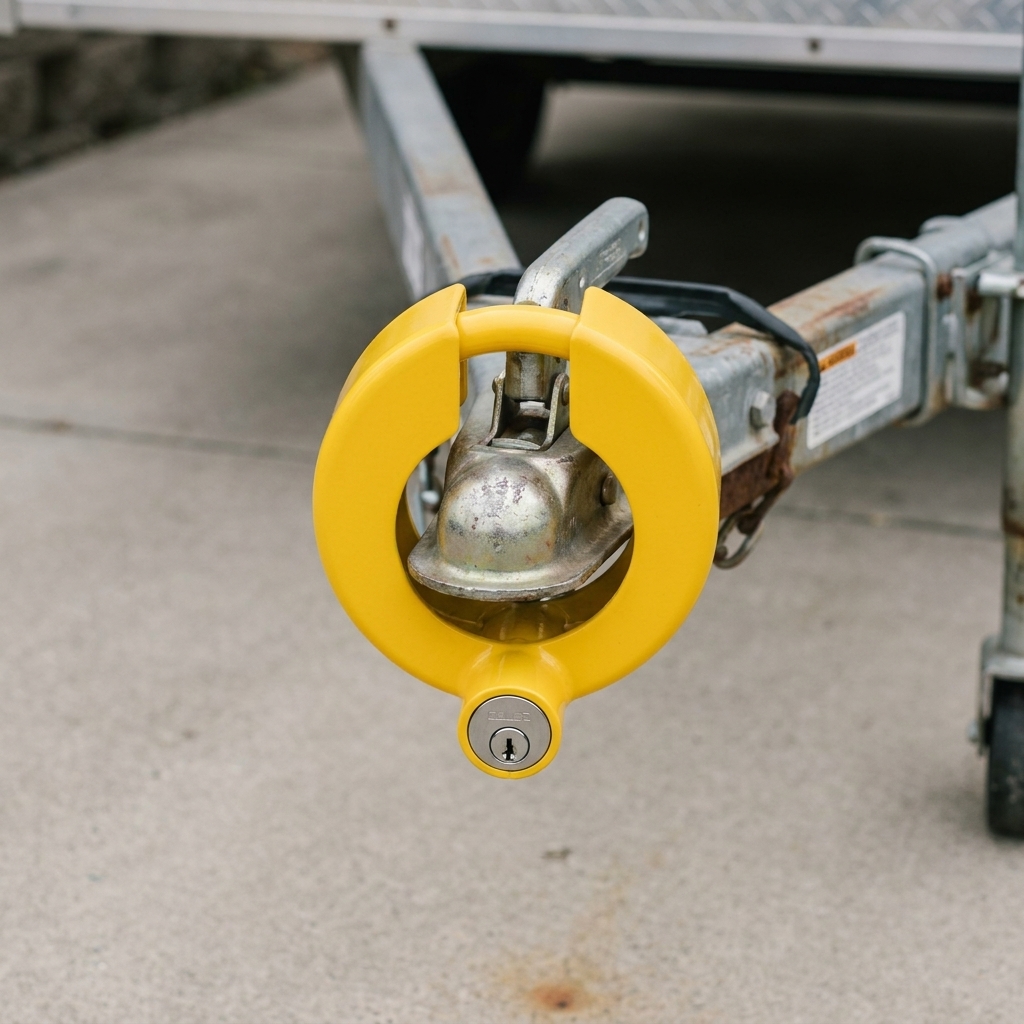
If you only buy one security item, make it a solid coupler lock. This is what stops the quick “drop it on the ball and go” theft.
Two main styles:
- Coupler-wrap locks: cover the coupler and latch area. These are usually more resistant to prying because they shield the latch.
- Ball-style or insert locks: fill the coupler like a fake hitch ball. They are fast to use, but fit and build quality matter a lot.
What to look for:
- Hardened steel where it counts, not just a thick-looking shell.
- A shrouded or recessed locking area so cutters and pry tools cannot get a clean bite on the shackle or latch hardware.
- Minimal wiggle when installed. Slop equals leverage for a thief.
- Weather resistance if you store outside. Road salt and rain kill cheap cylinders.
One more reality check: on some lighter trailers, a determined thief may skip the lock and attack the tongue or coupler hardware itself. That is another reason layers matter.
2) Receiver hitch locks
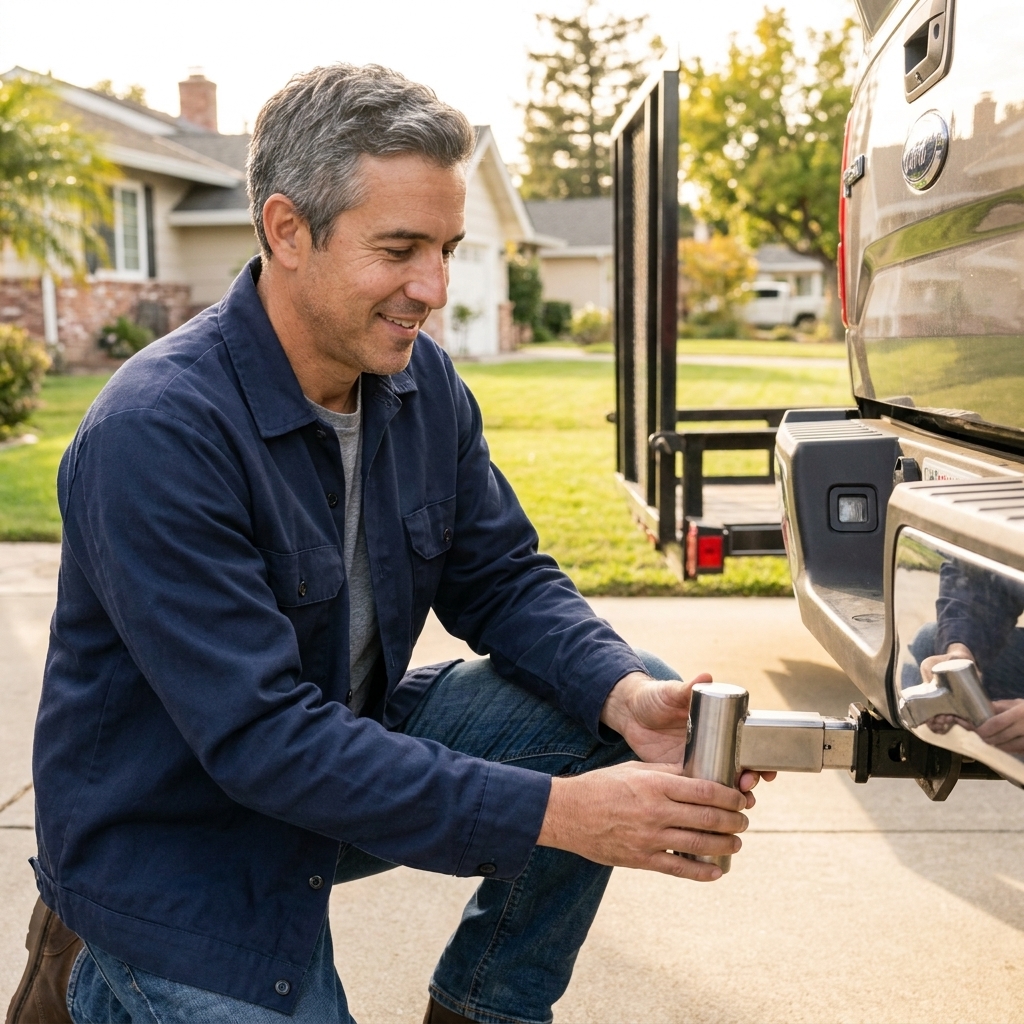
Receiver locks do two jobs depending on your setup:
- When towing: they discourage someone from pulling your hitch pin at a stop.
- When parked: they help prevent theft of your ball mount, weight distribution shank, or pintle setup.
They do not stop someone from stealing the whole trailer. Think of receiver locks as “protect the expensive hitch gear” and “reduce tampering,” not as total trailer security.
3) Wheel locks and immobilizers
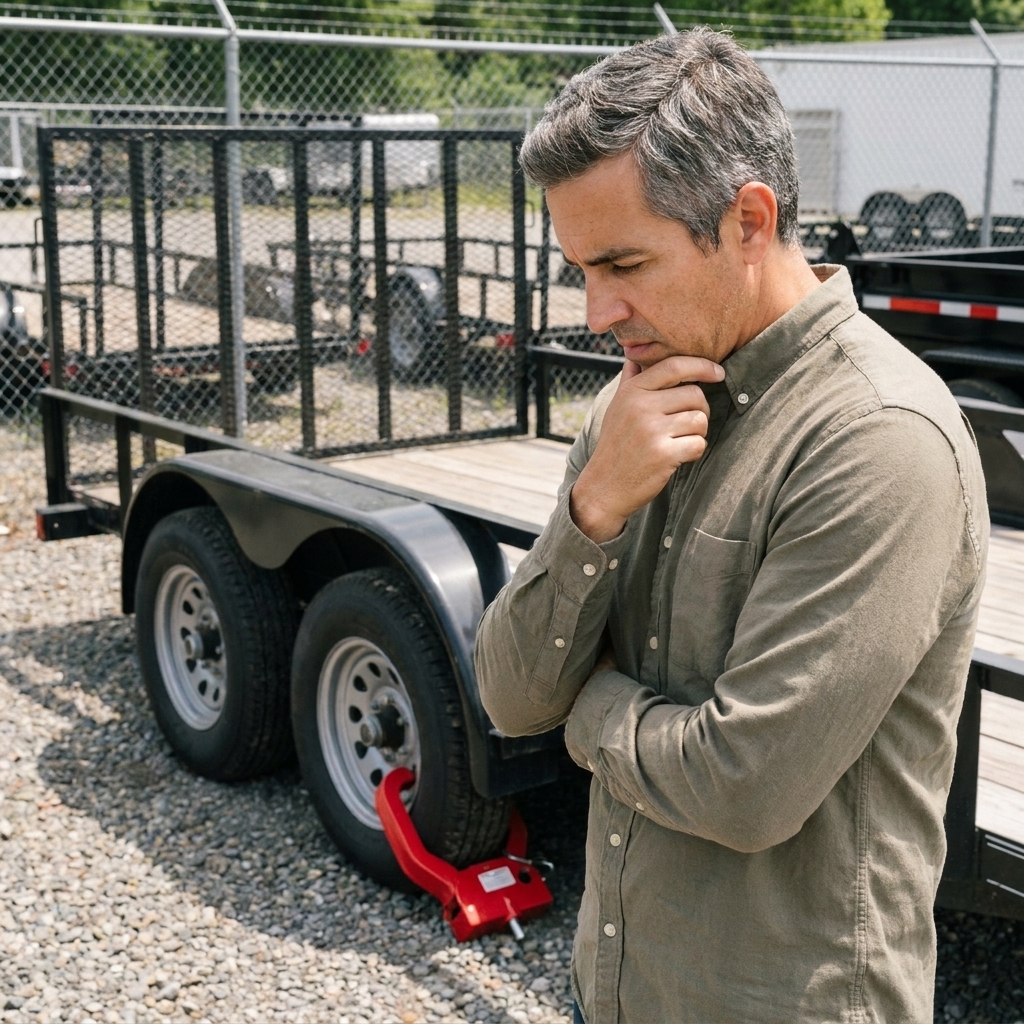
If you want a thief to walk away, immobilize a wheel. A decent wheel lock forces a thief to either:
- Cut or defeat the lock (loud and time-consuming), or
- Jack the trailer and swap a wheel (doable on common sizes, but still time-consuming and exposed), or
- Drag the trailer and shred tires (very loud and obvious).
Common options:
- Wheel boot style: clamps around the tire or wheel. Very visible, very effective.
- Wheel clamp style: locks through spokes or around the rim and tire. Fit matters.
- Locking lug nuts: helpful, but not enough by themselves.
My practical advice: If the trailer sits for days or weeks, a wheel boot is worth the money and the hassle. If it is a daily utility trailer, a good coupler lock plus a tracker is usually the sweet spot.
4) Tongue and jack locks
The tongue jack is a sneaky weak spot. If someone can crank your jack up and drop the coupler onto their ball, they are halfway gone.
- Jack handle locks limit cranking on certain jack styles.
- Tongue pin locks protect removable tongues on some trailers.
- Locking drop-leg pins can help on some setups.
Not every trailer can use these, but if yours can, they are a nice extra layer that catches people who came prepared for only a coupler lock.
5) Chains and anchors
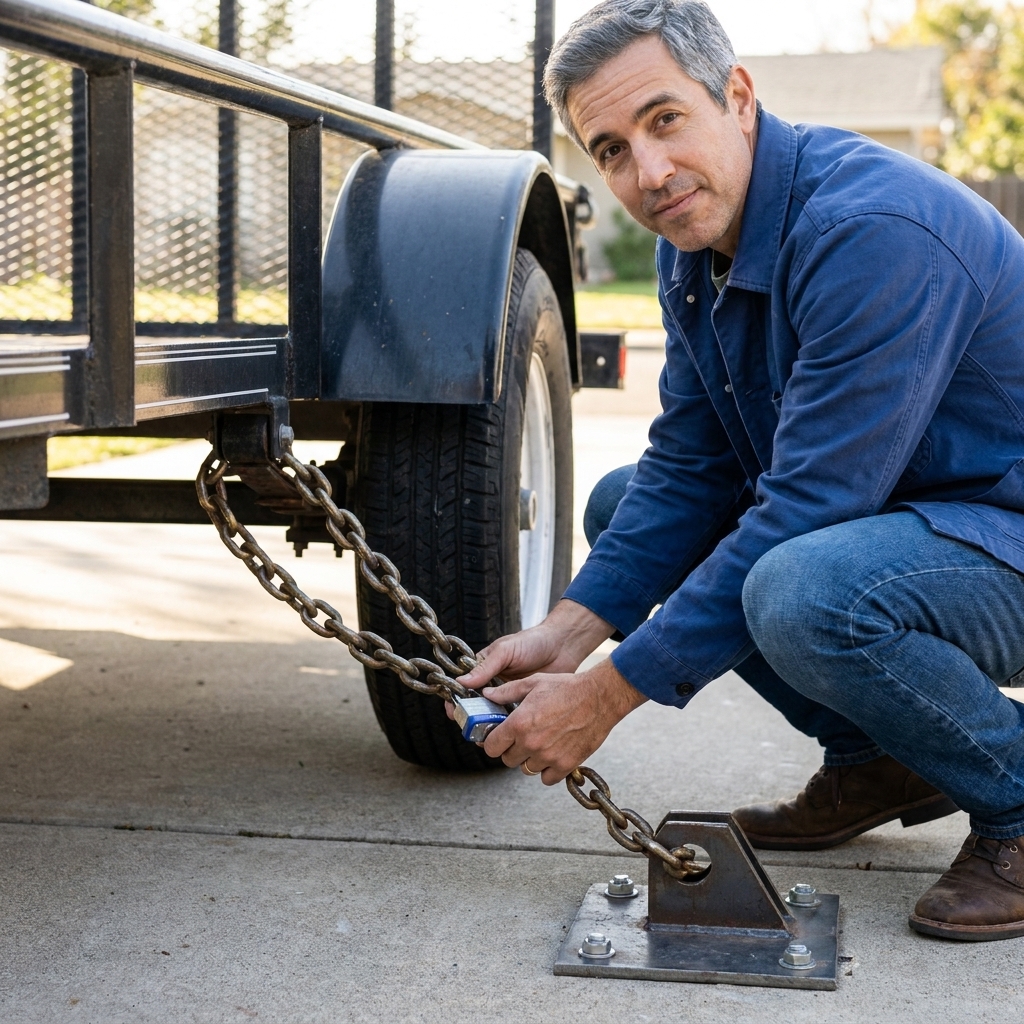
At home, anchoring the trailer to something that does not roll away is one of the strongest deterrents you can add.
- Run a hardened chain through the frame or axle, not just a thin tab.
- Use a serious padlock with a shrouded shackle.
- Anchor to a ground eyelet set in concrete, or a heavy structural point in a garage.
Safety note: route chains so they do not rub brake lines, wiring, or sharp edges. Do not rely on easy-to-unbolt parts as your “anchor point.”
A thief with a battery grinder can eventually cut almost anything. The win here is time and noise, plus the fact that many thieves do not want sparks flying in a neighborhood.
Tracking
Locks are for prevention. Tracking is for recovery. I recommend both, because even the best lock is just a speed bump to somebody who showed up with tools and intent.
GPS trailer trackers
A true GPS tracker with cellular service is one of the best options for real-time recovery. You typically get:
- Live location (or frequent location updates)
- Geofencing alerts when the trailer leaves an area
- Movement and tamper alerts on better units
- Long-life batteries or hardwire capability
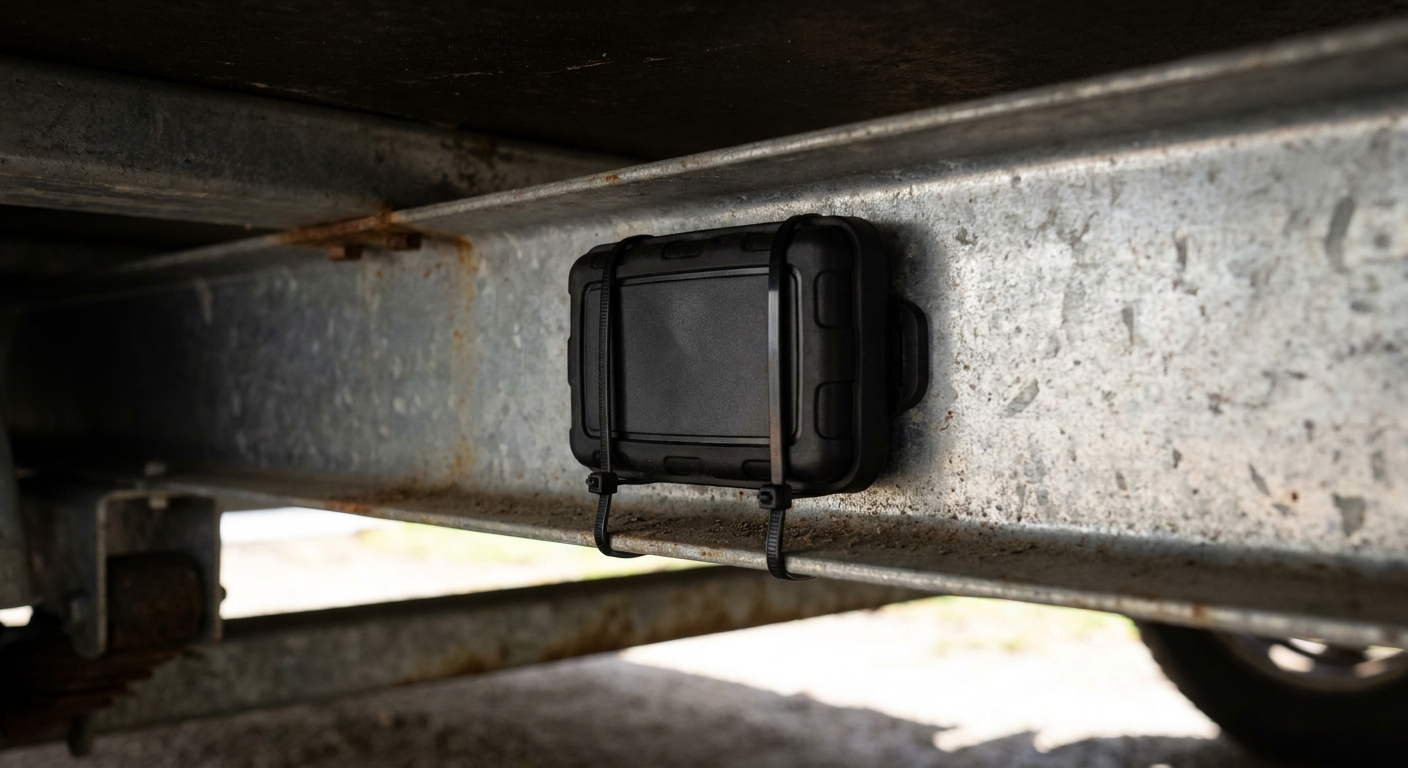
Where people go wrong: mounting a tracker somewhere obvious. If a thief finds it in 30 seconds, it becomes expensive trash.
Better hiding spots: inside a locked front storage compartment, tucked up near wiring looms, inside a sealed tool tube, or up under the trailer where it is hard to spot without crawling and hard to reach without tools.
One more practical note: metal can block GPS and cellular signals. Wherever you mount it, test for a reliable signal before you call it done.
Bluetooth trackers (AirTag-style)
Bluetooth trackers can work surprisingly well in populated areas because they “phone home” through nearby devices. They are affordable and easy to hide, but they have limits:
- They are not true GPS in the moment.
- They rely on other people being nearby.
- Anti-stalking features can reduce usefulness for long-duration tracking, and some trackers may play a sound or trigger “unknown tracker” alerts depending on the platform and settings.
I still like Bluetooth trackers as a secondary device. If you run a GPS tracker plus a hidden Bluetooth tracker somewhere else on the trailer, you have redundancy.
Alarms and detection
Motion and tilt alarms
A simple battery-powered motion alarm can be a great “make noise” layer. The best use case is storage lots or driveways where people will hear it. If you are in a remote overflow lot, noise alone does less.
Look for:
- Adjustable sensitivity so wind and passing trucks do not set it off constantly
- A real siren that is loud enough to matter
- Weather resistance
Cameras and lighting
If you store at home, a couple of well-placed cameras are worth more than another lock. Put one camera wide to capture vehicles and one tighter on the trailer tongue area. Lighting matters. A basic motion light is often a better deterrent than a fancy camera that cannot see at night.
Parking strategy
At home
- Block it in with another vehicle if you can. Theft is harder when a trailer cannot be pulled straight out.
- Back it tight to a wall or fence so the coupler is not accessible.
- Turn the trailer so it cannot be hooked up without maneuvering.
- Remove easy targets like an exposed spare tire if you can.
Storage lots
- Choose visibility over convenience. Near the office, near cameras, near lighting.
- Park tongue-in to reduce coupler access if the layout allows it.
- Use a wheel lock if the trailer will sit a while.
- Ask about gate logs and camera coverage before you sign.
Hotels, trailheads, campgrounds
- Pick lighting and foot traffic. The back corner is quiet for a reason.
- Do a quick walk-around when you stop for the night: coupler locked, wheel lock on, tracker pinging.
- Leave yourself a sightline to the trailer from your window when possible.
Good, better, best setups
If you are overwhelmed by options, here are three setups that work in the real world.
Good
- Quality coupler lock
- Receiver hitch lock (protects your hitch gear)
- One hidden Bluetooth tracker
Better
- Quality coupler-wrap lock
- Wheel boot or wheel clamp
- Hidden GPS tracker with geofence alerts
- Second hidden Bluetooth tracker as backup
Best
- High-security coupler lock plus wheel boot
- Hardened chain to a ground anchor when at home
- GPS tracker hardwired or long-life battery, plus backup tracker
- Motion alarm and camera coverage where possible
Mark it and document it
If a trailer does get stolen, the first 24 hours matter. Make it easy to prove ownership and give police and insurance something solid to work with.
- Photograph the VIN or serial number plate and store the photo in your phone and cloud.
- Take full-trailer photos from all four corners, plus any unique decals, damage, or modifications.
- Record make, model, color, axle count, tire size, and notable accessories (toolboxes, racks, solar, generators).
- Keep receipts for big upgrades.
- Mark the trailer in a way that is hard to remove, such as engraving an ID number on the frame and noting a few “only you would know” identifiers. It will not stop theft by itself, but it can help prove it is yours.
Insurance basics
Security gear is great, but you also want the financial side squared away. If your trailer is worth real money, verify you have the right coverage for theft (often comprehensive) and that your declared value and upgrades match reality. Keep your registration and plate current and store policy info somewhere you can access quickly if you need to file a report.
Do not assume a lock or tracker will lower your premium, but it is worth asking. Even when it does not change the rate, documentation and tracking can speed up a claim and improve odds of recovery.
Common mistakes
- Using a cheap coupler lock that can be pried off. If the lock looks like thin stamped metal, it probably is.
- Putting the tracker in the first obvious spot. Under the tongue, inside a plastic battery box, or Velcro’d to an exposed surface is the first place a thief checks.
- Not testing tracker signal after mounting. A perfectly hidden tracker that cannot report location is just extra weight.
- Assuming the storage lot is handling security. Lots help, but your trailer is still your responsibility.
- Relying on a receiver lock to protect the trailer. It protects the hitch components, not the trailer sitting on its own.
- Leaving the spare tire and easy accessories exposed. Sometimes thieves start by grabbing what is quick and come back later for the whole trailer.
FAQ
Is a coupler lock enough by itself?
For quick errands, it might be. For overnight parking or storage, I treat a coupler lock as the minimum. Adding a wheel lock or a tracker makes a big difference because it either prevents rolling or helps recovery.
Should I lock the safety chains too?
Chains are not usually the primary target, but locking or securing them can prevent tampering and keeps someone from easily using your chains with their hitch if they do manage to couple up.
Can thieves tow a trailer with a wheel boot on it?
They can drag it, but it is loud, it draws attention, and it can damage their tow vehicle and your trailer. Most thieves want quiet and quick. A boot changes the math in your favor.
Where is the best place to hide a trailer GPS tracker?
Up under the trailer near wiring runs where it looks “factory” is a good start, as long as it still has enough signal to report. I prefer two devices in two different hiding spots if the trailer is valuable, and I always test signal after mounting.
What about removing the hitch coupler entirely?
On some setups that is not practical, but removing something critical like a removable tongue or a specific hitch component can be very effective. Just make sure you are not creating a safety issue when you reinstall it later.
My bottom line
If you want the biggest jump in security per dollar, buy a serious coupler lock and use it every single time. Then add one more layer based on how and where you park: a wheel boot for long sits, a GPS tracker for recovery, and a couple of smart parking habits that make your trailer a pain to hook up.
Trailer theft is a game of odds. Your job is to make your trailer the one that is not worth the risk.