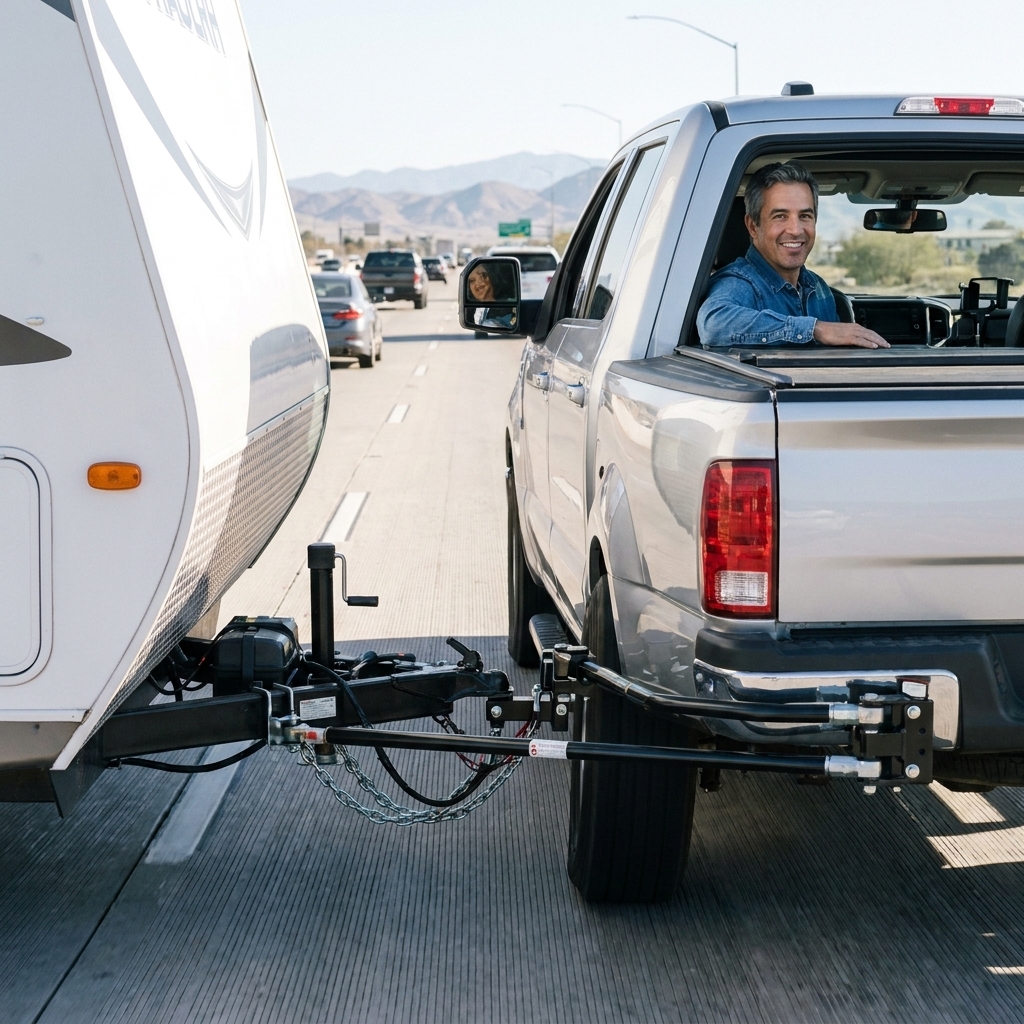
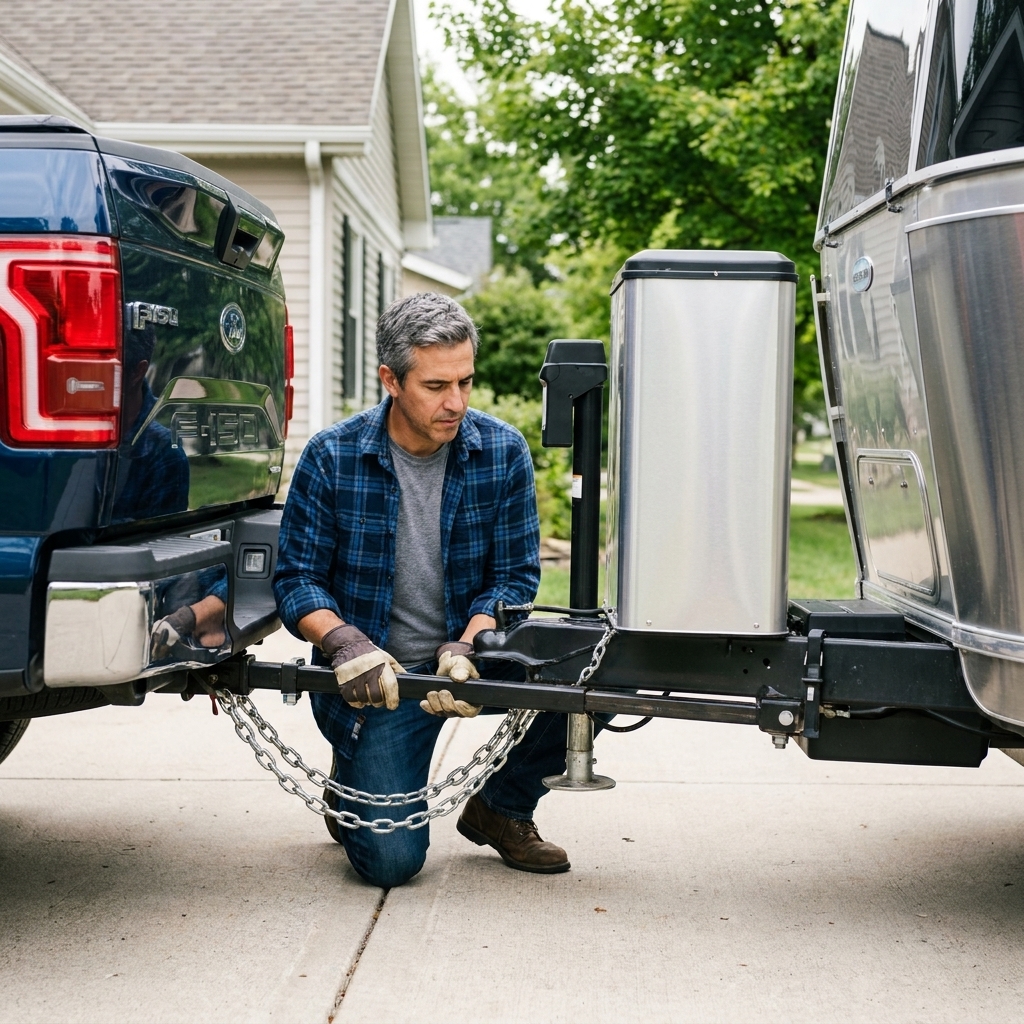
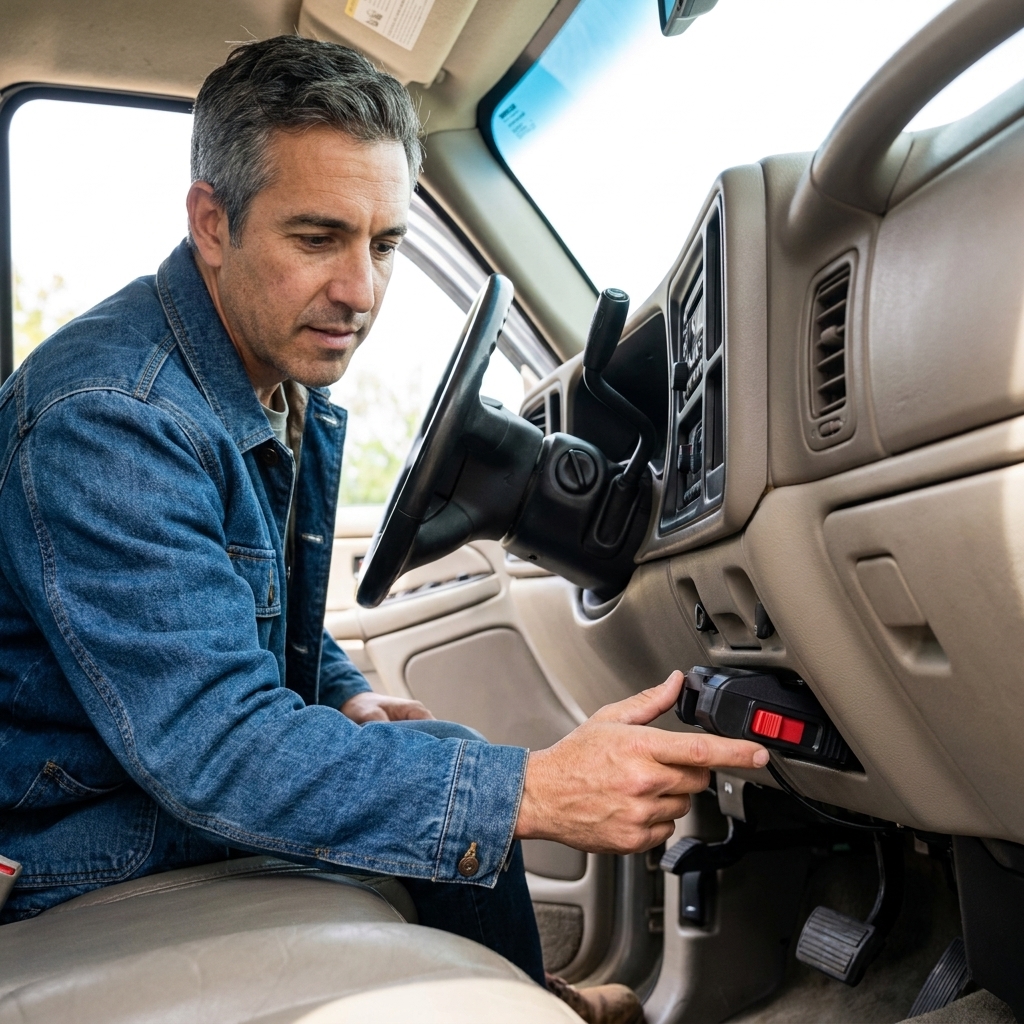
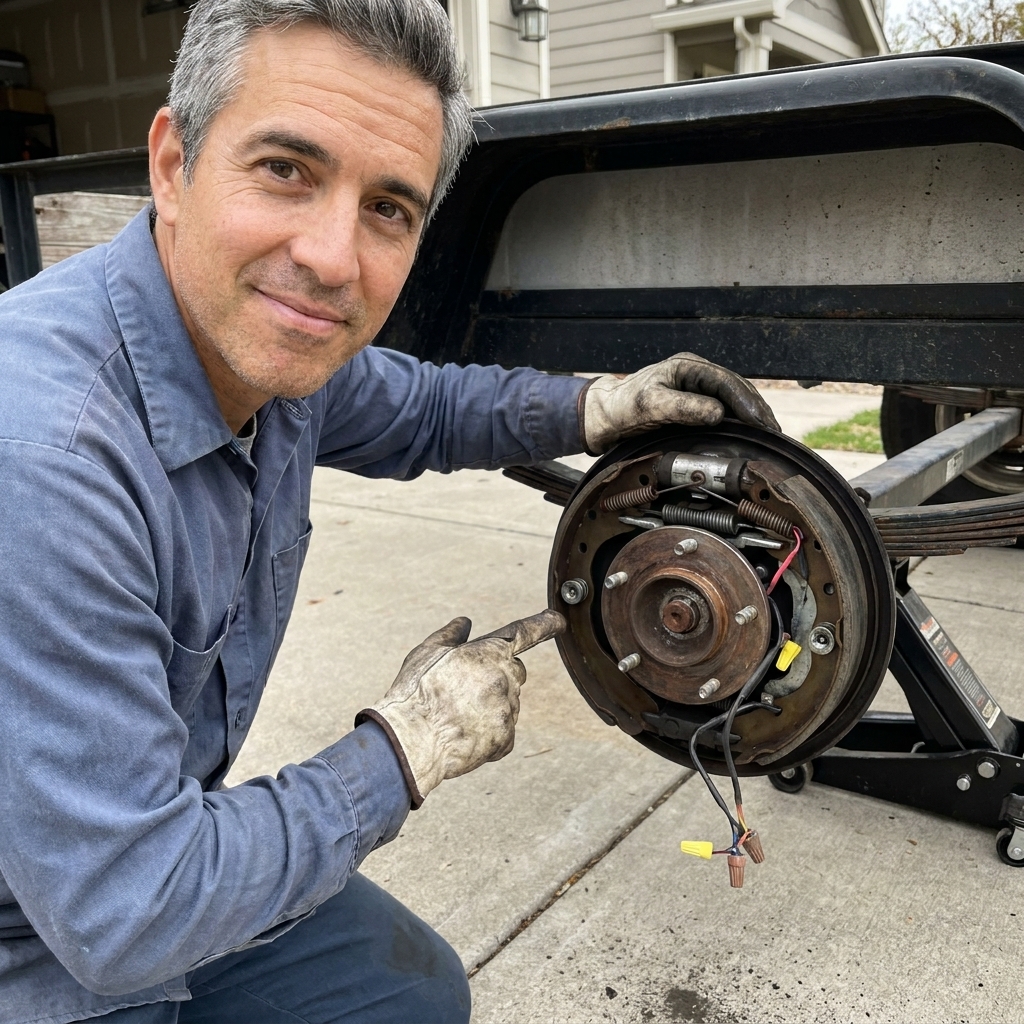
A trailer tire blowout has a way of turning a calm drive into a white-knuckle moment in about half a second. You hear a bang, feel a tug, maybe see the trailer twitch in the mirror, and your brain immediately says, “Get off the road now.”
I get it. But with a trailer behind you, the safest move is usually a controlled move, not a panicked one. This guide is about two things: keeping the rig stable and making smart roadside decisions so you do not turn a tire failure into a crash.
How to spot a tire failure
Not every tire failure announces itself the same way, especially on heavier tow rigs where the truck feels planted. Here are the common clues that should make you treat it like a blowout until proven otherwise:
- Sharp bang or repeated thumping from the trailer area
- Trailer sway you did not have a second ago, especially a wagging motion you see in the mirrors
- A sudden pull or the feeling that the trailer is “steering” the truck
- Vibration through the seat or steering wheel that ramps up quickly
- TPMS warning (if you run trailer tire pressure monitoring) showing a rapid pressure drop or a high-temp alert
- Debris in the mirror like rubber strips or dust
Even if you are not sure which tire is the culprit, assume the trailer is compromised and drive accordingly until you can stop somewhere safe.
First priority: keep it stable
Your exact truck and trailer may have specific emergency guidance in the owner’s manuals. If you tow regularly, it is worth reading those sections now, not in the moment. The universal goal is the same: maintain control, reduce speed smoothly, and avoid sudden inputs.
What helps right away
- Hold the wheel steady. Think “hands at 9 and 3, gentle corrections only.”
- Stay off sudden steering. Quick lane changes are where a trailer can start to whip.
- Ease off the accelerator. Let speed bleed off gradually.
- Brake smoothly and progressively. Avoid a panic stomp on the truck brakes while the trailer is unsettled.
Some rigs and brake-controller setups allow you to manually apply trailer brakes gently to help the trailer track straight if sway starts, but the right move depends on your equipment and the manufacturer guidance. When in doubt, prioritize straight-line control and smooth speed reduction.
What usually makes it worse
- Slamming the truck brakes while the trailer is unsettled
- Jumping onto a narrow shoulder immediately before the rig is stable
- Hard counter-steering like you are correcting a skid in a car
If you feel sway starting, your best friend is calm, straight-line control while you gently reduce speed and create space around you.
Choose a safe place to stop
After a blowout, the shoulder feels like the obvious answer. Sometimes it is the only answer. But “a shoulder” is not automatically “a safe shoulder.” I have seen too many folks crouched beside live traffic because they stopped at the first patch of pavement they found.
Better options than a tight shoulder
- A wide shoulder or emergency pull-off with lots of room to work away from traffic
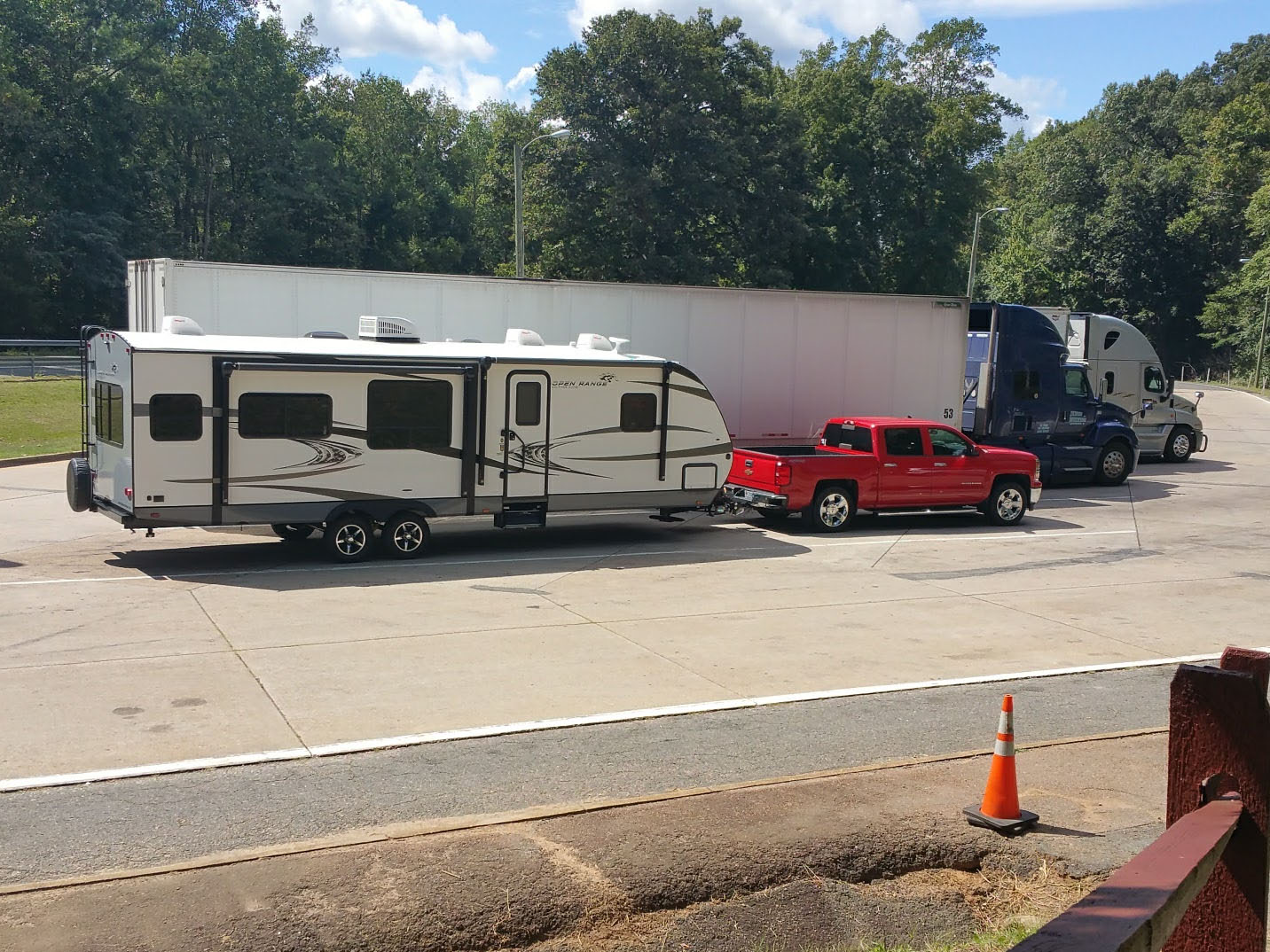
- A rest area where you can assess damage without cars ripping by at 70 mph
- A large parking lot (truck stop, big box store) that lets you pull through and stay straight
- A ramp or turnout if it is wide, visible, and gives you space
How to set up while you slow down
- Signal early. Let drivers know you are moving over.
- Turn on hazard lights once you are committed to slowing and merging right.
- Avoid stopping on curves, crests, and narrow bridges. Visibility is life.
- Give yourself time. If the rig is tracking straight, it is often safer to continue at reduced speed to a truly safe spot, but only if you can maintain control and the failed tire is not actively destroying the wheel well, wiring, or brakes.
Once stopped: secure the rig
Before you hop out and start troubleshooting, take ten seconds to make the whole situation less dynamic.
- Get straight and as far off the lane as you safely can.
- Keep your foot on the brake until the rig is fully settled.
- Set the tow vehicle parking brake.
- Chock wheels if you have chocks and can place them without stepping into traffic.
- Keep hazards on. If you have reflective triangles and can deploy them safely, do it.
Before you step out
Once stopped, take a breath and do a quick safety scan before opening the door.
- Are you far enough off the travel lane that a passing vehicle will not clip you?
- Can oncoming traffic see you from far back, or are you hidden by a curve or hill?
- Is the ground stable or are you on soft shoulder that could let a jack sink?
- Do you have daylight and enough space to work without standing in traffic?
If the answer to any of those is “no,” treat this as a call-for-help situation. There is no shame in that. It is smart.
Repair or call for help?
Here is my rule of thumb: if fixing it puts your body in the danger zone, do not fix it there. A spare tire is cheaper than a hospital bill, and it is definitely cheaper than what happens when a distracted driver drifts onto the shoulder.
Calling for assistance is often safer when…
- You are on a narrow shoulder with fast traffic and no physical barrier
- It is dark, raining, snowing, or foggy
- The trailer is leaning or looks unstable
- You would have to work on the traffic-side wheel
- You do not have the right jack for your trailer axle, frame, or equalizer setup
- The wheel well, wiring, brake components, or fender skirt is damaged
- The tire failure shredded the sidewall and you suspect additional damage
A tire change can be reasonable when…
- You are fully off the roadway on solid, level ground with room to work away from traffic
- You have the correct tools and you know your jack points
- You can keep your body out of the lane-side hazard area
- You have a proper spare that matches the trailer’s load rating and wheel spec
Notice what is not on that list: bravado. I have managed fleets for years, and I still call for help when conditions are sketchy. That is not being helpless. That is being alive.
If you do change it yourself, remember this: many RV scissor jacks are meant to stabilize, not lift for a wheel change. Use a jack that is rated for the job, place it at the correct lift point for your trailer, and chock before you lift.
What to check before rolling
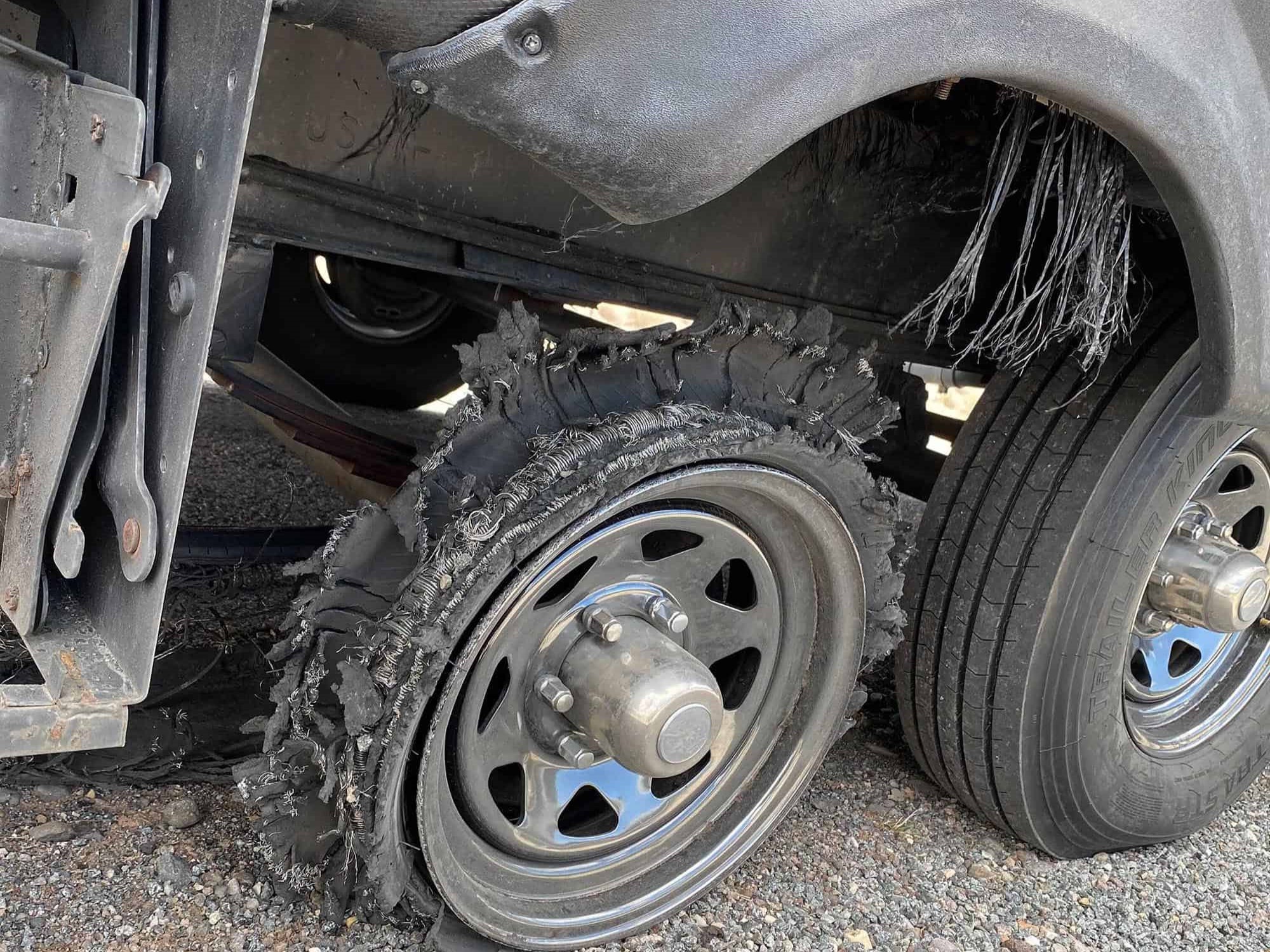
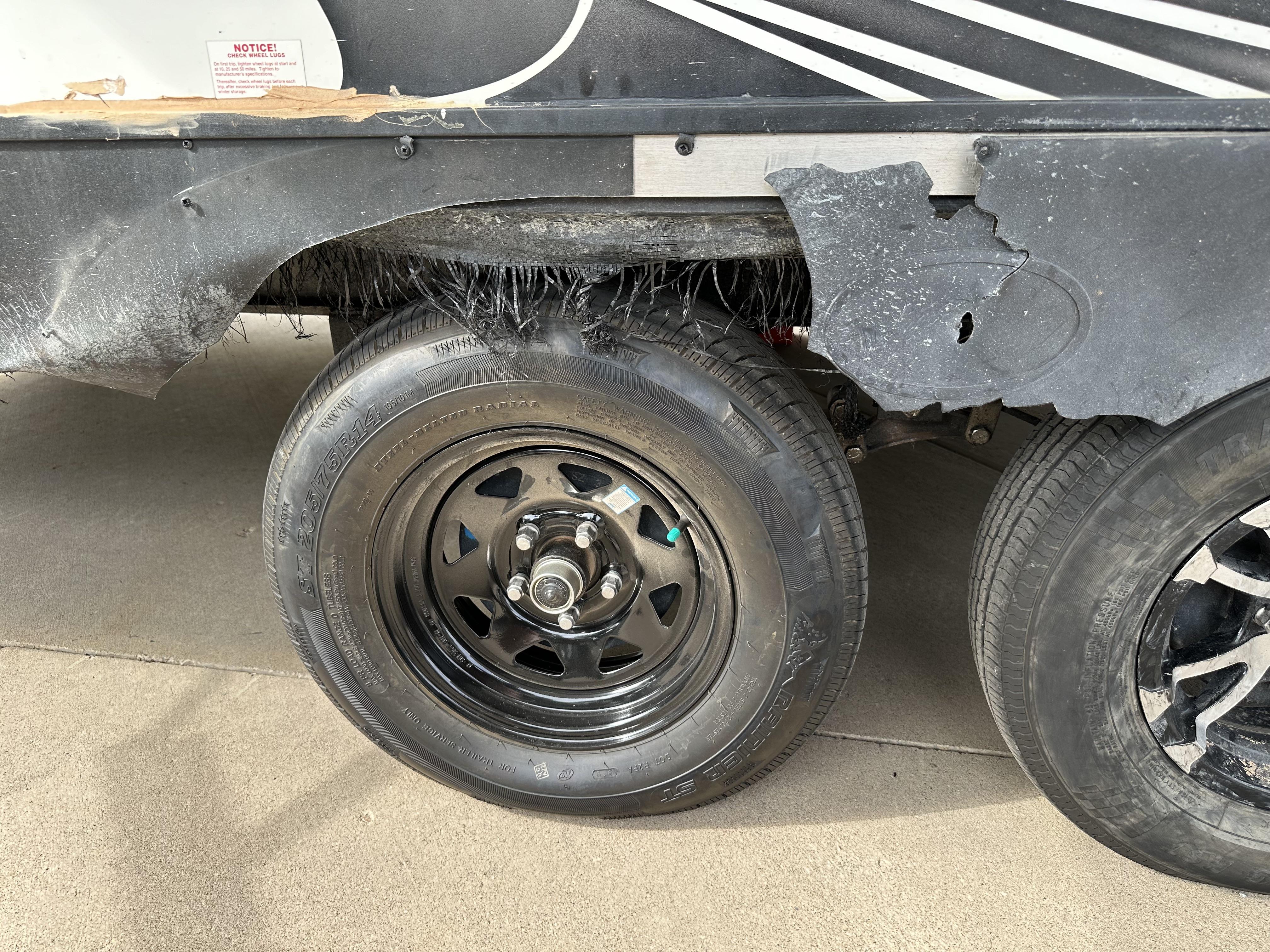
A blowout is not just a flat tire. The tire can take other parts with it as it comes apart, especially on tandem-axle trailers where shredded rubber flails around like a weed-whacker.
Do a walk-around
- Wheel well and underside: Look for torn insulation, dangling underbelly material, broken fender skirts, or ripped splash guards.
- Brake wiring (electric brakes): Check for cut wires to the brake magnets. A severed brake wire can leave you with reduced braking on one wheel or axle.
- Hydraulic lines or cables (if equipped): Some trailers use surge or electric-over-hydraulic systems, and some have disc brakes. If you see a wet leak, a kinked line, or damaged hardware, stop and call for service.
- Suspension parts: Look at leaf springs, shackles, equalizers, and U-bolts for anything bent, shifted, or shiny where it is rubbing.
- Rim condition: A blowout can chew up the wheel. If the rim is gouged, cracked, or visibly bent, do not keep towing on it.
- Neighboring tire: On tandem axles, check the tire next to the failed one. Debris can cut it, and overload can heat it up.
- Lug nut torque: If you installed a wheel, torque the lug nuts to the wheel or trailer manufacturer spec using a torque wrench, and re-torque after 25 to 50 miles (or per manufacturer guidance).
Common follow-on problems
These are the issues that surprise people and cause the next breakdown 10 miles later:
- Loose or under-torqued lug nuts after a quick change
- Damaged brake wiring leading to weak braking or a brake controller fault
- Shredded tire debris wrapped around the axle that melts into a mess near brakes
- Underinflation on the remaining tires because you lost pressure on one and never checked the others
- Overheated tires from driving extended distance on a compromised setup
If anything looks questionable, limp to the nearest safe lot at reduced speed and get professional eyes on it.
If you must stop on the shoulder
Sometimes you do not get a choice. If the trailer is unstable, the tire is disintegrating into the brakes, or you cannot maintain safe control, you may need to get it stopped right now.
- Get as far right as safely possible and keep the rig straight.
- Keep hazards on and use triangles or warning devices if you have them and can place them without entering traffic.
- Exit on the non-traffic side if conditions allow.
- Move passengers to a safer spot. Depending on the scene, that can mean getting everyone well away from the roadway and, when appropriate, behind a guardrail. Local conditions matter, so do not trade one hazard for another.
- Do not crawl beside the trailer near live lanes. If the traffic-side tire is the one that failed, that is a big clue to call for help.
This is exactly why I carry good roadside coverage when I tow. It is not about convenience. It is about not becoming the crumple zone.
Prevent the next blowout
You cannot prevent every tire failure, but you can prevent the common ones.
- Inflate to the trailer tire’s required pressure when cold, based on the tire, load, and manufacturer guidance.
- Respect tire age. Trailer tires often age out before they wear out. Check the DOT date code.
- Watch speed ratings. Many ST tires are rated around 65 mph unless marked otherwise, and some newer models are rated higher. Check the sidewall and the tire spec sheet.
- Do a pre-trip touch check. At stops, feel for a hotter-than-normal hub or tire sidewall, cautiously.
- Do not overload. Overloading and underinflation are a blowout combo you do not want.
- Consider a trailer TPMS. Early warnings beat loud surprises.
Quick checklist
If the trailer is stable: slow down smoothly, signal early, and aim for a wide, safe stopping place.
If stopping puts you inches from traffic: call roadside assistance. Do not make yourself the crumple zone.
Before continuing: secure the rig, then inspect the wheel well, brakes, suspension, neighboring tire, rim, and lug torque. A blowout often breaks more than rubber.