If you tow with a half-ton that squats, or you haul a heavy pin weight or tongue weight on the regular, an airbag helper spring kit can feel like cheating in the best way. The truck stays level, steering feels normal again, headlights stop pointing at the treetops, and the whole rig settles down.
But airbags only help when they hold air. Most problems I see are not “bad bags” right out of the gate. They are small leaks, loose fittings, chafed air lines, or a compressor system that is working harder than it should. The good news is you can prevent most of it with a quick routine and a simple leak test you can do in your driveway.
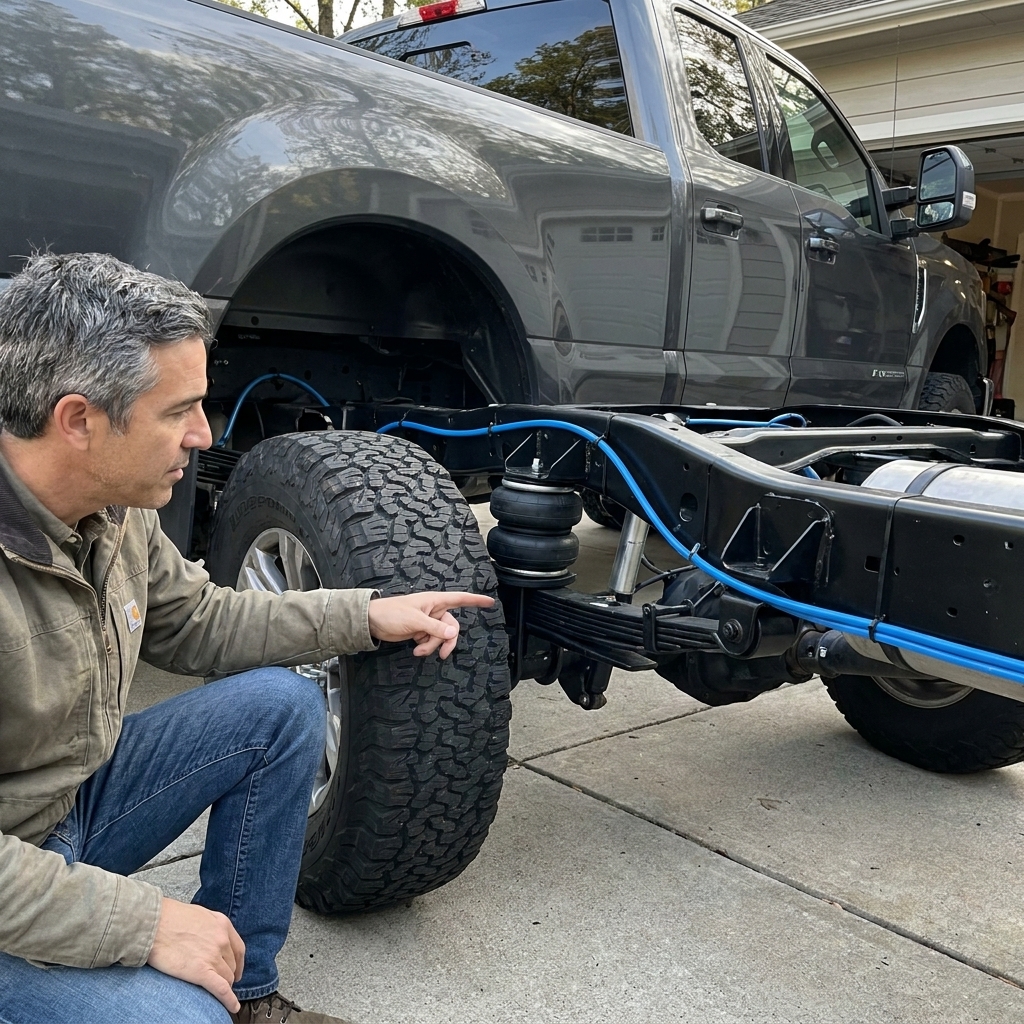
What “normal” looks like
Before you troubleshoot anything, it helps to know what behavior is actually normal:
- Some pressure change is expected. Air pressure rises with heat and drops with cold. A cool morning after a warm afternoon can look like a “leak” if you are only watching the gauge.
- Pressure should not fall quickly. A healthy system may drift a couple PSI over days depending on temperature and how many fittings and valves your setup has. Some systems can hold pressure for weeks. Others with more joints and components can be a little more sensitive.
- Left and right do not have to match exactly. If you plumb the bags separately (recommended for most towing setups), the heavier side can carry a little more pressure. If you tee them together, they will equalize, but the shared line can let air move side-to-side in corners. That cross-flow can feel tippier or increase sway.
My rule of thumb: if you have to add air every time you tow, you most likely have a leak. If you only notice it during big weather swings, confirm the temperature effect first by checking pressure at the same time of day, with the truck sitting.
Routine upkeep
You do not need to baby an airbag kit, but you do need to treat the air lines and fittings like brake lines on a trailer. A small nick in plastic line can turn into a slow leak that drives you nuts.
1) Check air line routing and clearance
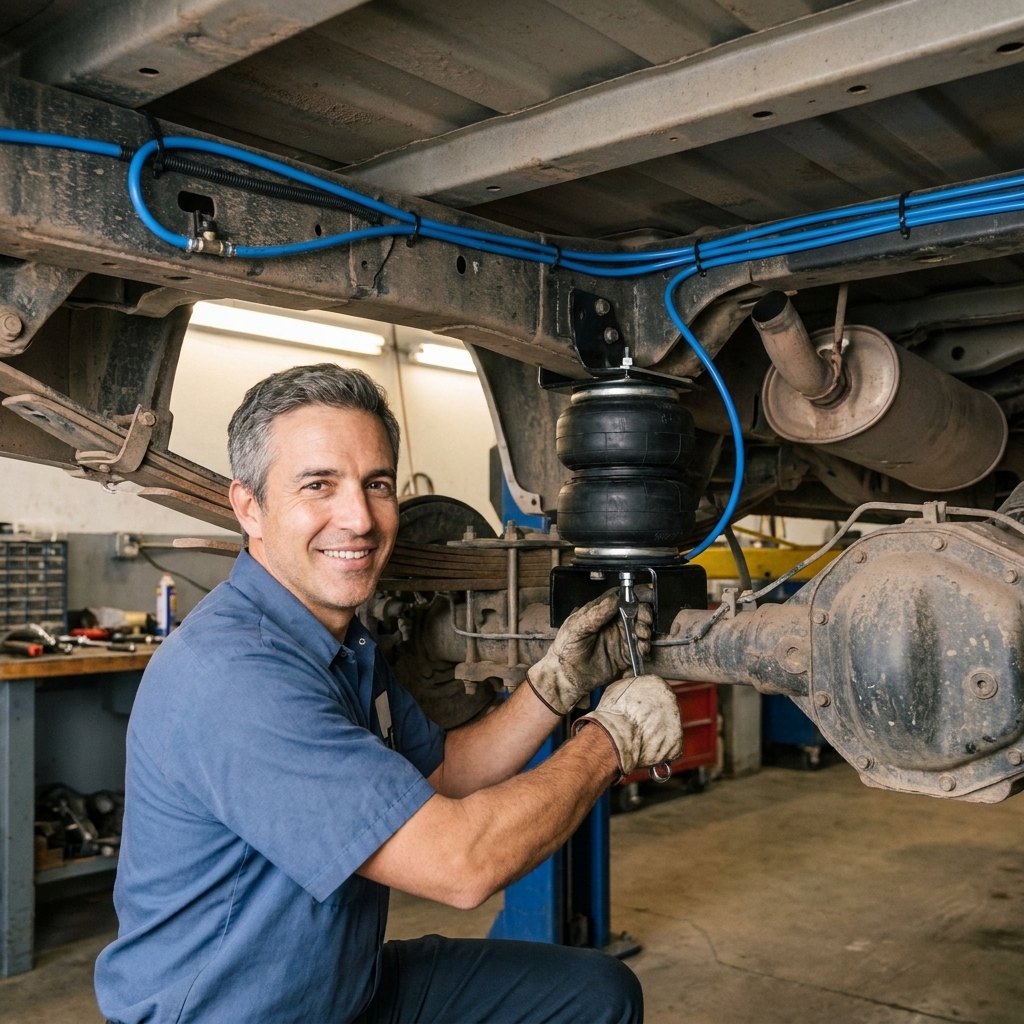
- Look for rub points: frame edges, bed supports, leaf spring packs, sway bar brackets, and anything that moves through suspension travel.
- Look for heat exposure: exhaust pipes, mufflers, and any hot aftertreatment components (diesel systems like DPF/SCR), plus heat shields that are missing or bent.
- Confirm slack where needed: near the axle, give the line enough length to handle full droop without pulling tight.
If you see shiny spots on the line or a flattened section, re-route it now. Use proper clamps, loom, or abrasion wrap. Zip ties are fine as a secondary tidy-up, but do not rely on them where a sharp edge can saw through the line.
2) Inspect the bags, brackets, and hardware
- Check bag alignment: the bag should not be rubbing the bracket or contacting the tire, bump stop, or exhaust during normal ride height.
- Look for cracking or dry rot: rare on newer bags, but worth checking if your truck lives outside or sees road salt.
- Retorque hardware: especially after the first few hundred miles and again after a season of towing. Brackets can settle.
3) Keep minimum pressure in the bags
Most kits specify a minimum pressure to keep the bags from folding and chafing. It is commonly around 5 PSI, but confirm your kit’s spec. Running them at 0 PSI all the time is a great way to shorten their life. If you do not need extra support unloaded, keep them at the minimum.
4) Respect max pressure limits
The flip side is max pressure. Do not exceed the air spring or kit rating, even if you are trying to level a heavy load. If you need more pressure than the kit is designed for to get the stance back, something else in the combo is off (too much weight, hitch setup, or load placement).
5) Drain water from on-board air systems
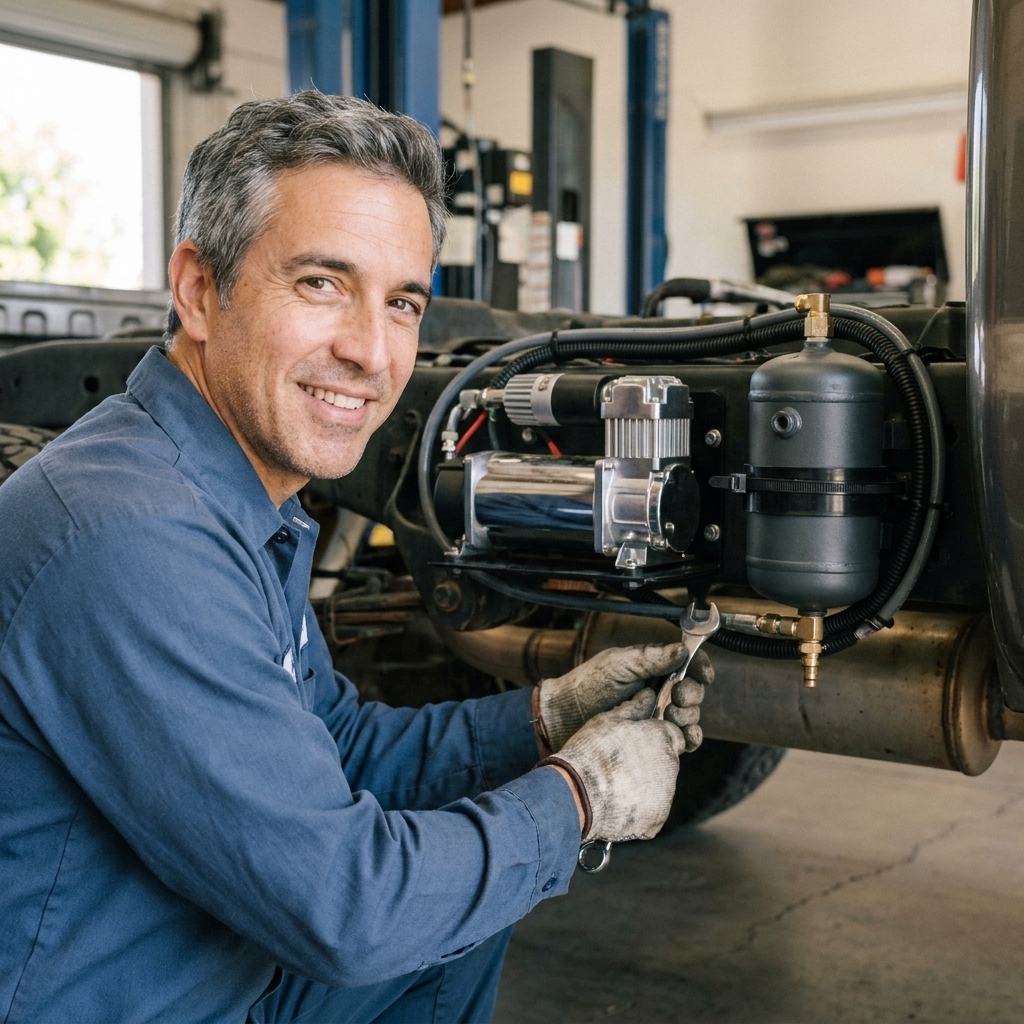
If you have an onboard compressor with a tank, moisture is part of life. Drain the tank periodically, more often in humid climates. Water in the system can corrode fittings and valves and can cause sticky check valves in freezing weather.
Leak troubleshooting
When someone tells me “my airbags leak,” I start by asking one question: Is the leak in the bag system, or in the compressor system? The approach is different.
Step 1: Confirm it is really losing air (and how fast)
Set both bags to a known pressure when the truck is cold, ideally first thing in the morning. Write it down. Check again 12 hours later without driving. If you drop more than a couple PSI with stable temperature, move on to leak testing.
If you run an electronic management system, note that some valves and controllers can behave differently than a simple manual-fill setup. If the system is designed to vent or self-level, check the controller and valve block manual so you are not chasing “normal” behavior.
Step 2: Do the soap-and-water test the right way
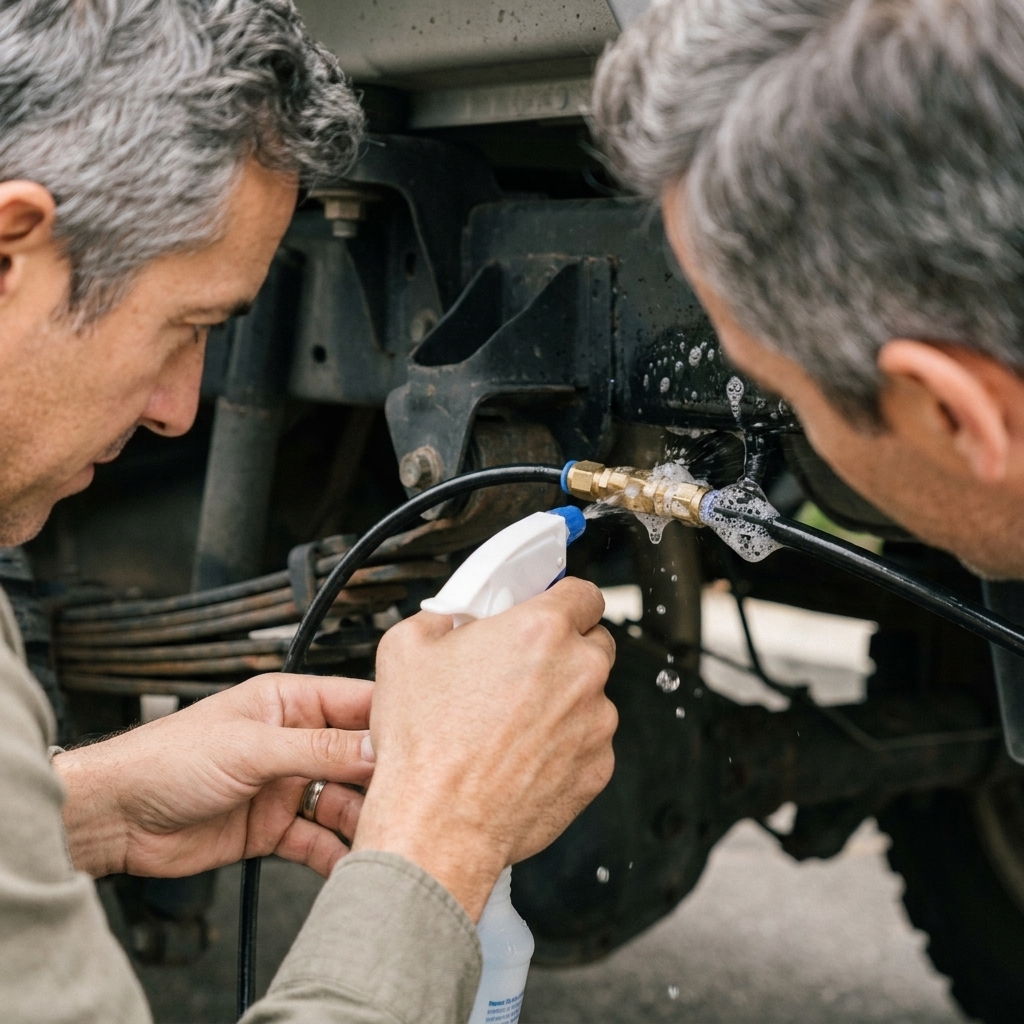
You do not need fancy tools. A spray bottle with water and a good squirt of dish soap is still the quickest leak detector I know.
- Air the system to a moderate pressure (15 to 30 PSI is plenty).
- Spray every connection until it is wet, not misted: bag fittings, tee fittings, Schrader valves, manifold ports, compressor head, tank fittings, drain valve.
- Watch for growing bubbles, not just foam. Overspray can look “foamy” without an active leak.
Start at the bags and work outward. Leaks usually show up at fittings and at the ends of the air line, not through the rubber bag itself.
One more tip: do your first soap test at normal ride height. If you cannot find anything but the system still drops, recheck with the suspension moved. Some pinholes only open up when the axle articulates or the line shifts.
Common leak points
Push-to-connect fitting leaks
This is the big one. Push-to-connect fittings are reliable when installed correctly, and maddening when the cut is crooked.
- Fix: Depressurize the system, push the collar in, pull the line out, and recut the line perfectly square with a proper tubing cutter. A fresh razor can work in a pinch, but you need a square cut. Reinsert fully until it bottoms out.
- Tip: If the line end is scratched, ovaled, or crushed from pliers, cut back to clean material.
- Also: Do not leave the line in a bind. Side-load on the fitting (line pulling sideways) is a quiet way to create slow leaks over time.
Air line chafing or melting
A pinhole from rubbing on a frame edge can leak slowly and only show up when the suspension moves. Heat damage near the exhaust can make the line brittle and prone to cracking.
- Fix: Replace the damaged section. Splices are fine if you use the correct union fitting, but I prefer a single continuous run when possible.
- Prevention: Add abrasion sleeve, reroute away from heat, and use insulated clamps instead of letting the line float.
Schrader valve seepage
If you use manual fill valves (like tire valves), the core can seep, especially after dirt and road salt get involved.
- Fix: Replace the valve core with a quality core tool. Add a valve cap with a seal, not a cheap open cap.
Bag fitting at the air spring
The fitting where the air line enters the bag can leak if it is cross-threaded, under-tightened, or sealed incorrectly.
- Fix: Follow the kit instructions. Some fittings require thread sealant, others use an O-ring or patch. Over-tightening can be just as bad as under-tightening.
- Warning: Use only what the manufacturer specifies. PTFE tape works in plenty of air systems when applied correctly, but it is not universal. If tape is allowed, keep it back from the first thread so it cannot shred into the system. If the manufacturer calls for sealant, use a liquid or paste thread sealant approved for air systems.
Compressor leak checks
If you have an onboard compressor setup, leaks can hide in places that have nothing to do with the bags themselves.
Signs your compressor system has a leak
- Compressor cycles when the truck is parked and you are not adjusting pressure.
- It takes longer and longer to build pressure over time.
- You hear a faint hiss near the compressor, manifold, or tank after shutdown.
Quick isolation test
To separate “bag side” from “compressor side,” close any manual shutoff valves if your system has them. If not, you can temporarily disconnect the bag feed and cap it, or isolate at a manifold port if accessible.
- If the bags hold when isolated, your leak is likely in the compressor, tank, manifold, check valve, or fittings upstream.
- If the bags still drop, stay focused on bag fittings, lines, and the bags themselves.
Check valve and manifold leaks
Many compressors rely on a check valve to keep air from bleeding back through the compressor head. A weak check valve can cause pressure loss and frequent cycling.
- Fix: Soap test the check valve and manifold ports. Replace the leaking component, do not try to “seal” a failing check valve with goop.
Set pressure for towing
The goal with airbags is not to make the rear suspension rock-hard. The goal is to get your truck back to a safe, controlled stance so your front axle has traction and your headlights and steering geometry are where they belong.
A simple setup method I use
- Load the trailer like you actually travel.
- Measure fender height front and rear on level ground.
- Add air in small steps until the truck returns close to its unloaded rear height, or until the steering feels normal and the rig looks level.
- Take a short test drive, then fine-tune 2 to 5 PSI at a time.
If you crank the bags up to “make it perfectly level” but the ride turns bouncy and traction feels skittish, back it off. Too much air can reduce how much the leaf pack is doing and can overwhelm the shocks’ ability to control bounce.
Safety note: Airbags help with sag. They do not increase your truck’s payload rating, axle ratings, tire ratings, or hitch rating. If you are overweight, airbags can hide the squat while the numbers are still unsafe.
Cold weather care
If you tow into the mountains or live where winter is real, plan for temperature swings and moisture.
- Expect lower PSI in the cold. Add air as needed, but only after confirming you do not have a leak.
- Drain air tanks often. Water can freeze and jam valves.
- Protect exposed lines. Road salt and grit can chew up anything that is loose or rubbing.
If you store the truck for a season, leave the bags at the manufacturer’s minimum pressure and give everything a quick soap test when you bring it back.
When it is actually a bad bag
True air spring failures are less common than fitting and line issues, but they happen. Suspect the bag itself if:
- You see visible cracking, bulging, or cords showing.
- The bag is rubbing due to a bent bracket or incorrect install, and the rubber is worn thin.
- Soap bubbles appear on the rubber surface away from any fitting.
If the bag is leaking through the rubber, replace it. Do not patch it. A helper spring is a load-bearing component, and patches rarely hold up to heat, flex, and road grime.
Quick checklist
- Losing pressure overnight? Do a soap test at 15 to 30 PSI.
- Bubbles at a push-to-connect? Recut the line square, reseat it fully, and remove any side-load on the fitting.
- Compressor cycling while parked? Soap test compressor, check valve, manifold, and tank fittings.
- One side drops faster? Focus on that bag’s line routing and fitting at the bag.
- Leaks only when driving? Look for chafing where suspension moves, and retest with the axle articulated if possible.
FAQ
How long should airbags hold air?
In a healthy system, you should be able to park for days and come back to essentially the same pressure, allowing for temperature changes. Some setups can hold steady for weeks. If you are topping off every day or two in stable weather, you likely have a small leak at a fitting or a damaged line.
Can I run my airbags at 0 PSI when unloaded?
Most manufacturers recommend a minimum pressure to prevent the bag from folding and rubbing itself. Keep them at the stated minimum when you are not towing or hauling.
Is it normal for the gauge to move when the weather changes?
Yes. Pressure drops with temperature. A cold snap can make it look like you lost air. Confirm by checking at the same time of day, with the truck sitting, before you assume it is a leak.
Do airbags fix trailer sway?
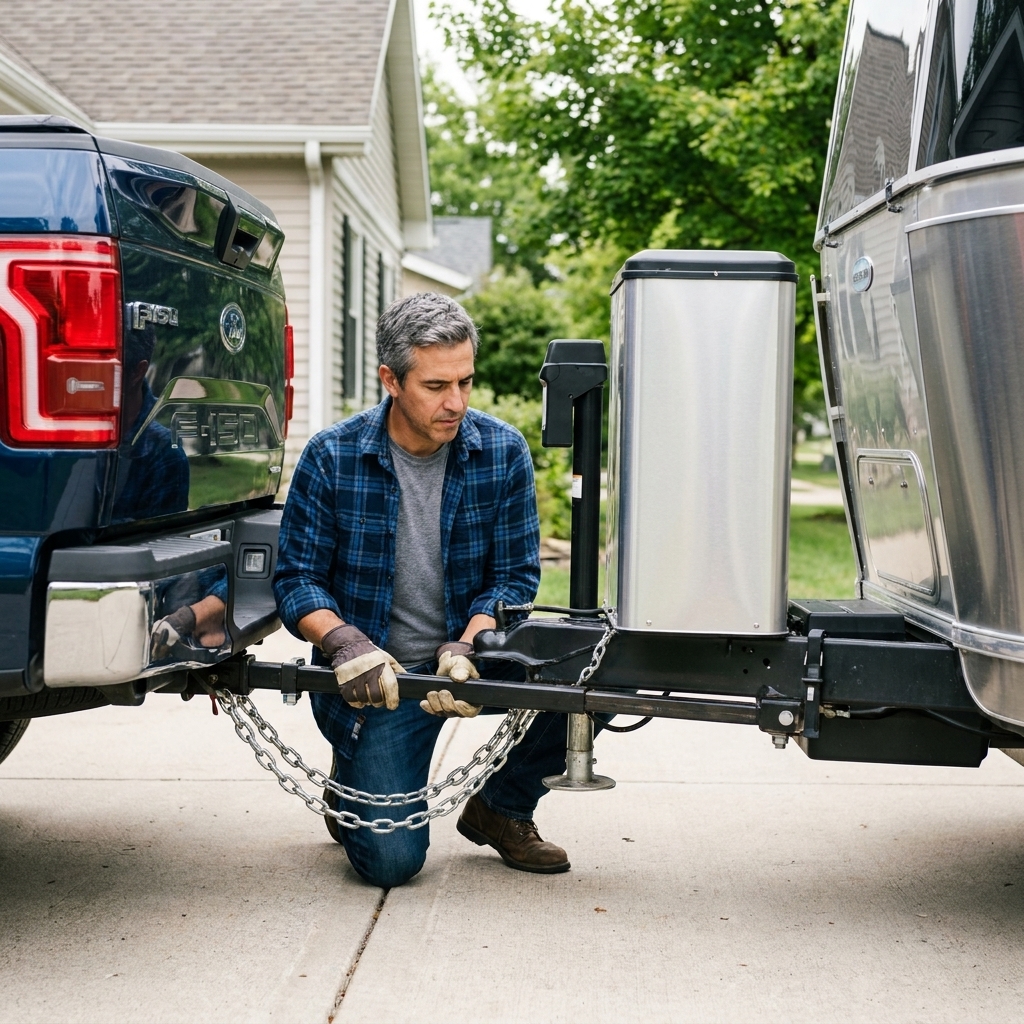
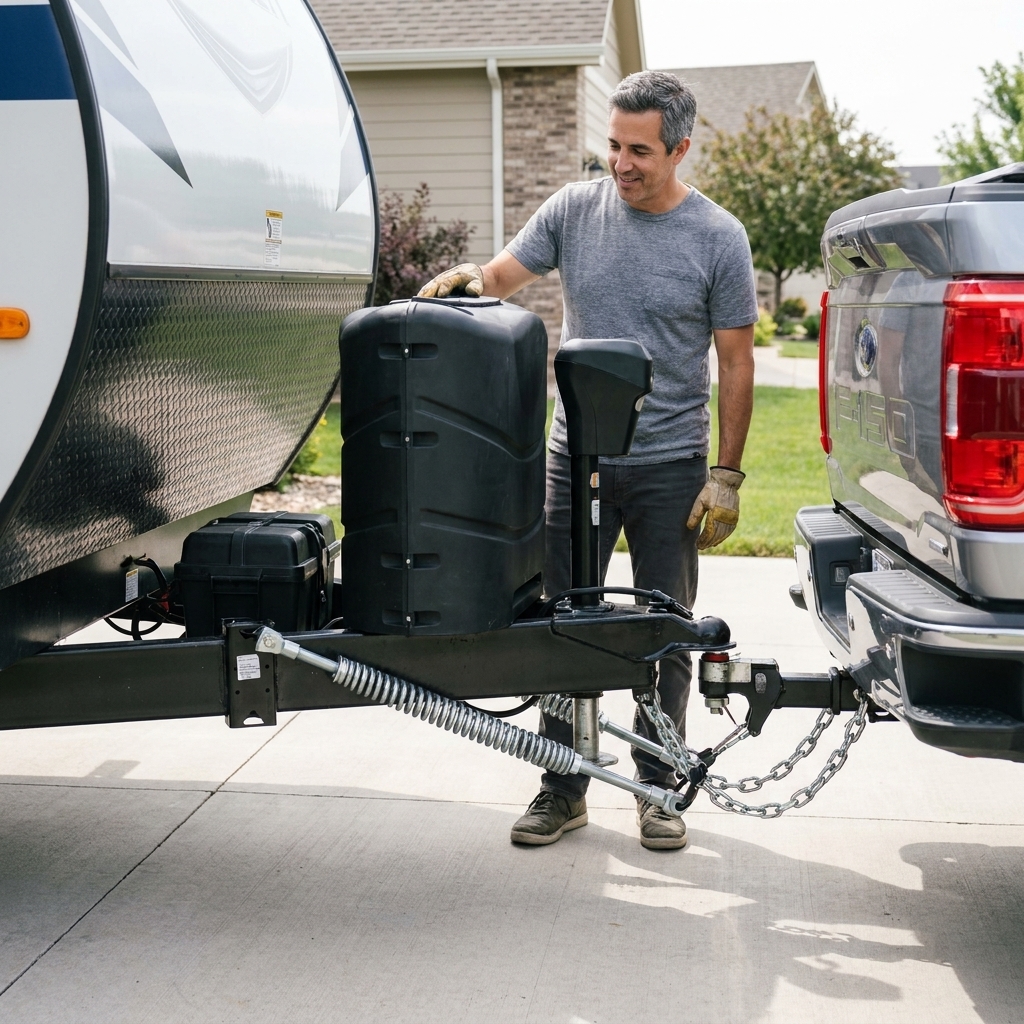
They can improve stability by restoring ride height and front axle traction, but they are not a replacement for correct hitch setup, proper tongue weight, good tires, and a weight distribution hitch when your combo calls for it.