If you tow even a few times a month, tires stop being “just tires” and start acting like a safety system. I have watched perfectly good trucks get sketchy fast because the tires were under-inflated, overloaded, or just the wrong construction for the job.
This comes up constantly in my driveway chats: “Do I really need E-rated tires?” The honest answer is: it depends on your load, your truck, and how you maintain them. Let’s break down what changes in tread life, rotation habits, and inflation rules when you go from a standard truck tire to an E-rated (Load Range E) tire.
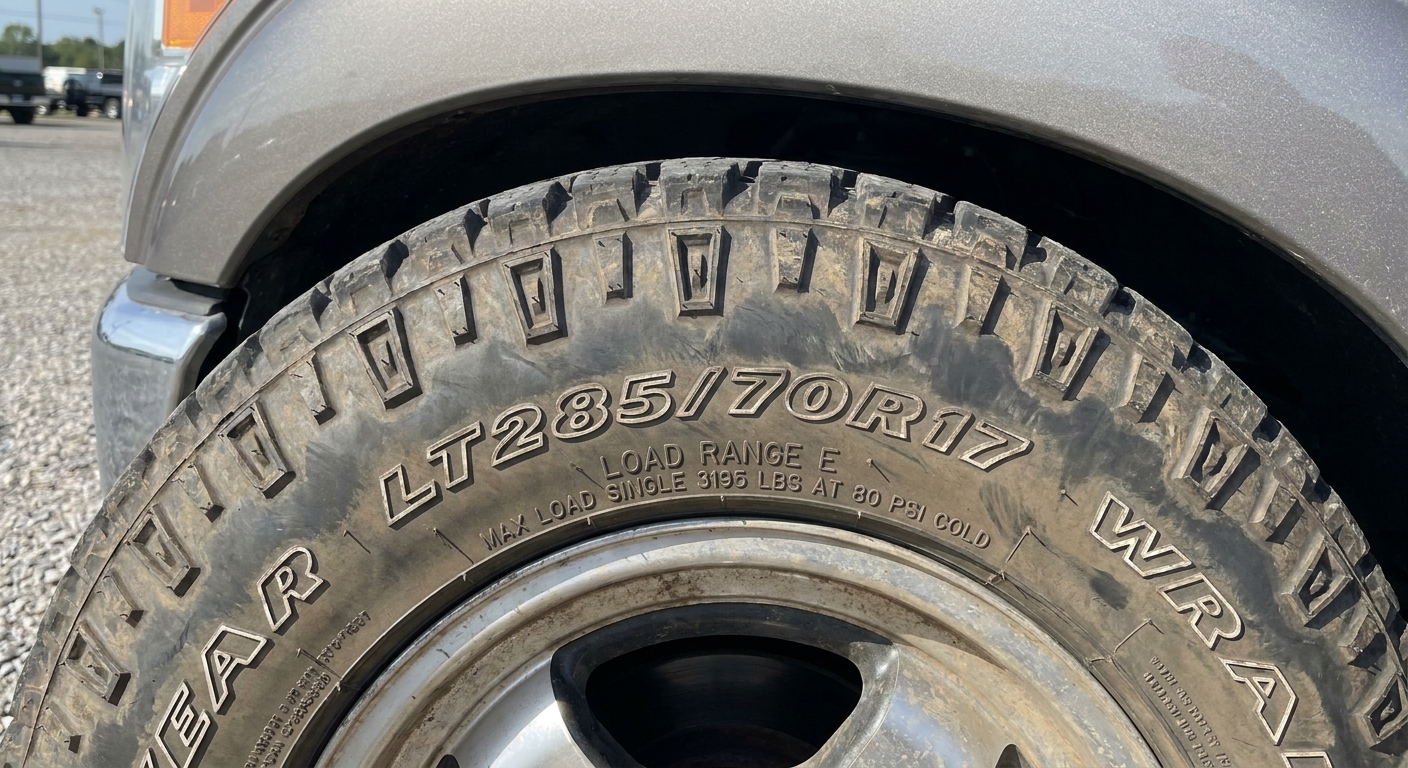
What “E-rated” means
Most folks use “E-rated” as shorthand for “heavy-duty tire.” In the tire world, that usually means an LT tire (Light Truck tire) with Load Range E. A few key points:
- Load Range is about strength and pressure capacity, not necessarily tread type. Many (not all) Load Range E LT tires are built to carry their rated load at up to 80 psi, depending on the tire’s size and load index (check your sidewall and the manufacturer’s load table).
- P-metric (passenger) tires are common on half-tons and SUVs. Their max pressure varies by spec, but a good rule of thumb is around 44 psi for Standard Load and up to about 50 to 51 psi for XL (Extra Load). Always confirm on the sidewall.
- XL (Extra Load) passenger tires exist too. They are tougher than standard P-metric but still not the same animal as an LT Load Range E under sustained tongue weight and heat.
When towing, the big differences you feel between E-rated and standard tires are sidewall stiffness, heat tolerance, and how sensitive they are to inflation mistakes.
One nuance worth knowing: on many trucks and SUVs, P-metric tires are effectively de-rated in load capacity compared to their passenger-car usage. That is one more reason to check load tables and actual axle weights instead of guessing.
Tread life while towing
People expect E-rated tires to automatically last longer because they are “heavier duty.” Sometimes they do, sometimes they do not. Tread life is a three-legged stool: compound, alignment, and heat.
Why E-rated tires can last longer
- Less squirm under load: Stiffer sidewalls reduce tread squirm when you add tongue weight or bed payload. Less squirm often means less heat and less feathering on the edges.
- Better stability can reduce odd wear: A stable tire helps the truck track straighter. That can reduce the constant little steering corrections that scrub tread, especially on long tow days in crosswinds.
- More margin before you are at the limit: When you are close to your axle ratings, an LT E-rated tire is more likely to be operating in a comfortable part of its load range, assuming it is inflated correctly.
Why standard tires can wear better day to day
- Softer compounds can be quieter and more even unloaded: Many standard tires are tuned for comfort and may wear very evenly when the truck is mostly empty.
- E-rated tires can wear fast if you run the wrong pressure: Over-inflation while unloaded is a classic recipe for center wear and a harsh ride.
My rule of thumb: If your truck spends a lot of time towing or carrying, E-rated tires tend to deliver a longer, more predictable service life because they tolerate sidewall stress better and give you more setup margin. If you tow occasionally and run empty most days, standard tires can live a long life too, as long as you keep them within their load and pressure limits.
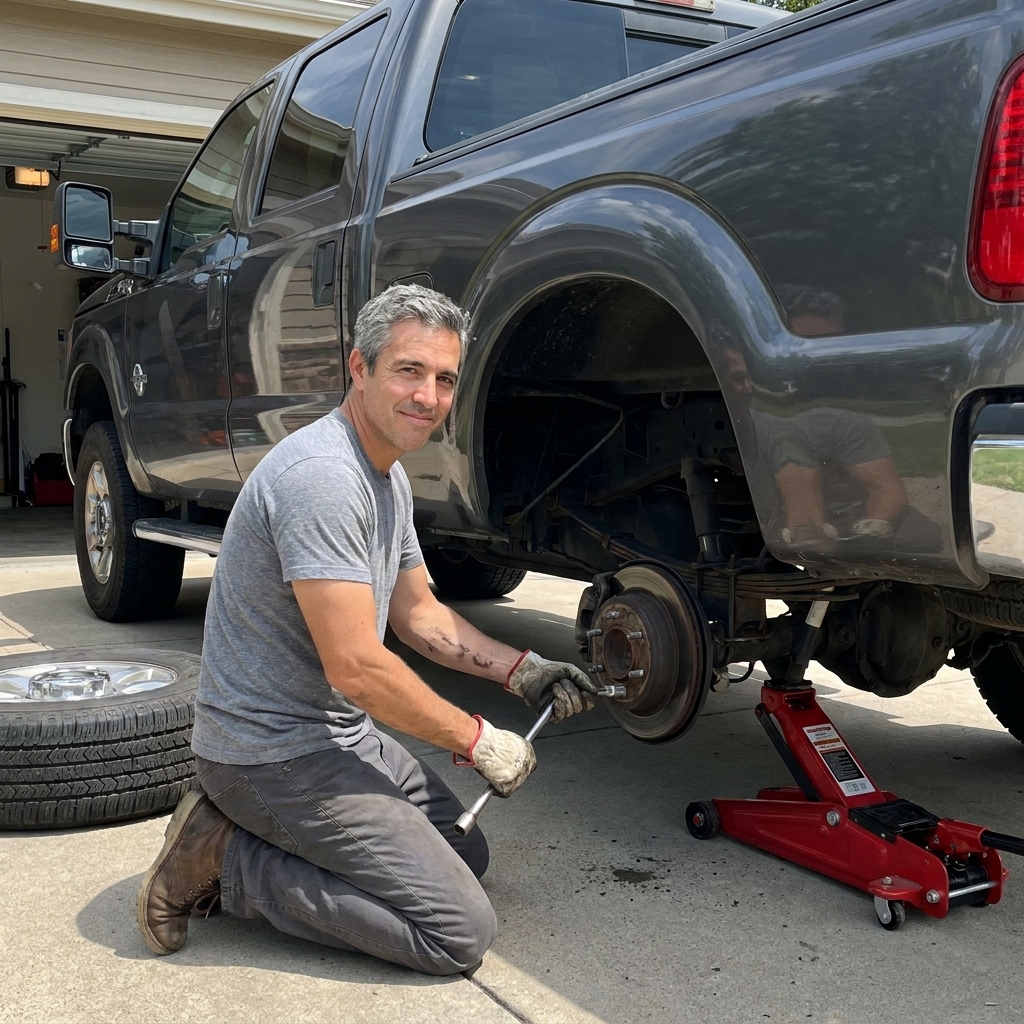
Rotation schedule
Rotation is not glamorous, but it is one of the easiest ways to get full value out of a set of tires. Towing adds two wear accelerators: rear-axle load and front tire scrub (especially on tight campground turns).
How often to rotate
For trucks that tow regularly, I like this cadence:
- Every 5,000 miles if you tow often, run heavy loads, or do lots of short trips.
- Every 6,000 to 7,500 miles if towing is occasional and most miles are highway.
If you want a simple habit: rotate at every oil change if your interval is in that range.
Rotation patterns
Start with the basics: follow your tire manufacturer and vehicle manual first, especially on 4WD/AWD trucks and on any tire with a directional tread.
- Non-directional, same size front and rear (common pickups): one common example is a forward cross (rear tires go to the front on the same side, fronts cross to the rear). Some shops prefer a rearward cross or a modified pattern depending on wear and drivetrain.
- Directional tires: usually rotate front to back on the same side only.
- Staggered sizes (some sport trucks and SUVs): rotation options are limited, which matters for towing because you lose a wear management tool.
Why E-rated tires can be less forgiving: the stiffer casing that makes them great for stability can also make an irregular wear pattern hang around. If you let mild cupping or toe wear develop, it can get loud quickly. Regular rotation helps keep the wear pattern shallow.
Inflation rules
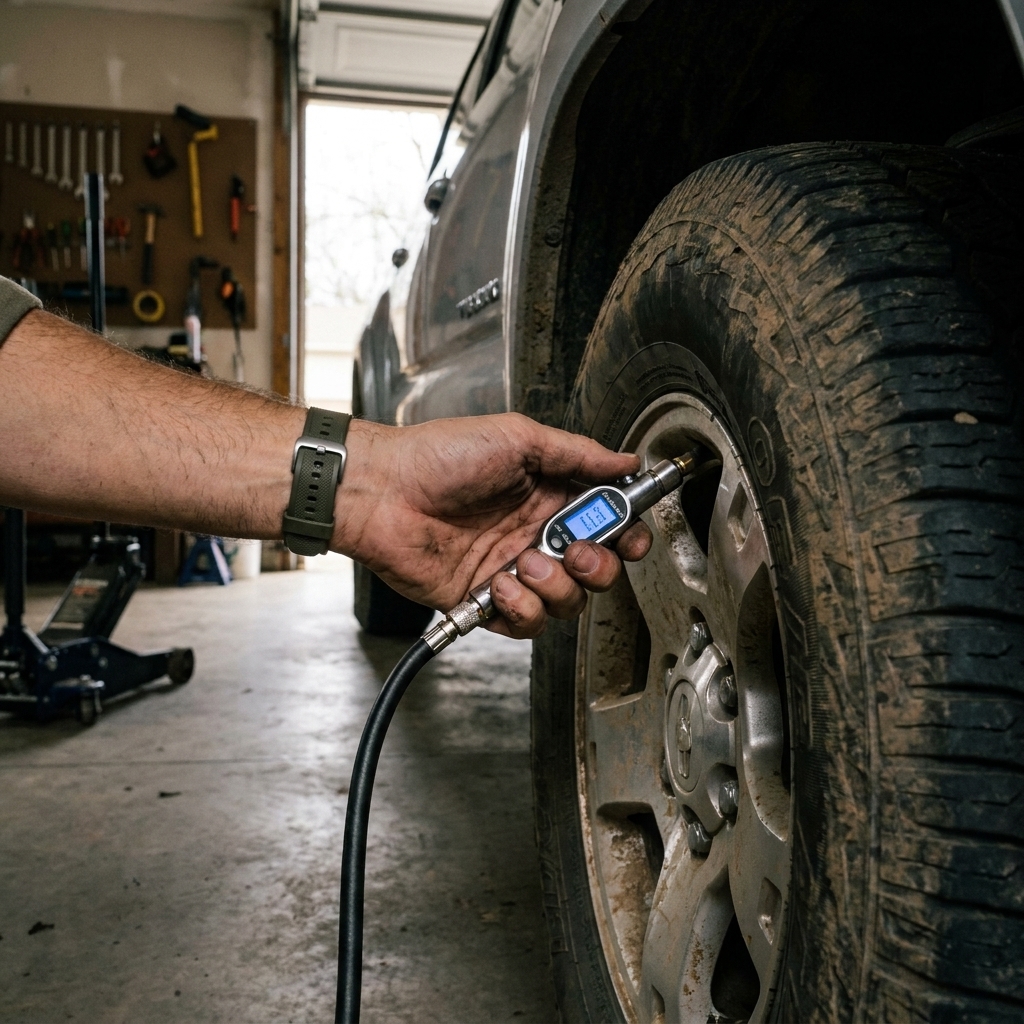
If you only remember one thing from this article, make it this: tire pressure is a load setting. It is not a comfort preference and it is not a “one number forever” situation if your load changes.
E-rated inflation basics
Most Load Range E LT tires are capable of high pressures (often up to 80 psi max, depending on the tire). That does not mean you should run max pressure all the time.
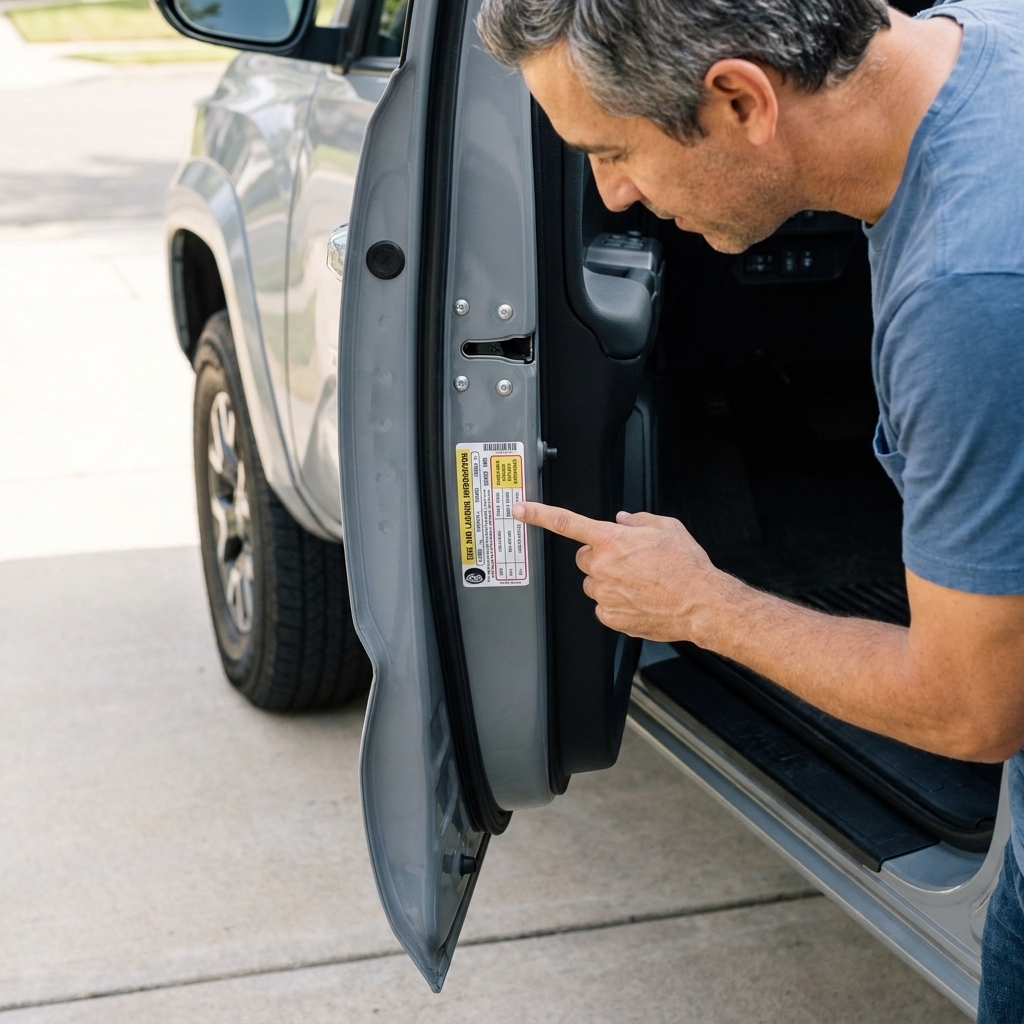
- Use your truck’s door placard as the baseline for the original tire type and size.
- Do not exceed vehicle or wheel limits. Wheels have pressure ratings, and the truck manufacturer may specify limits for ride, handling, and TPMS calibration.
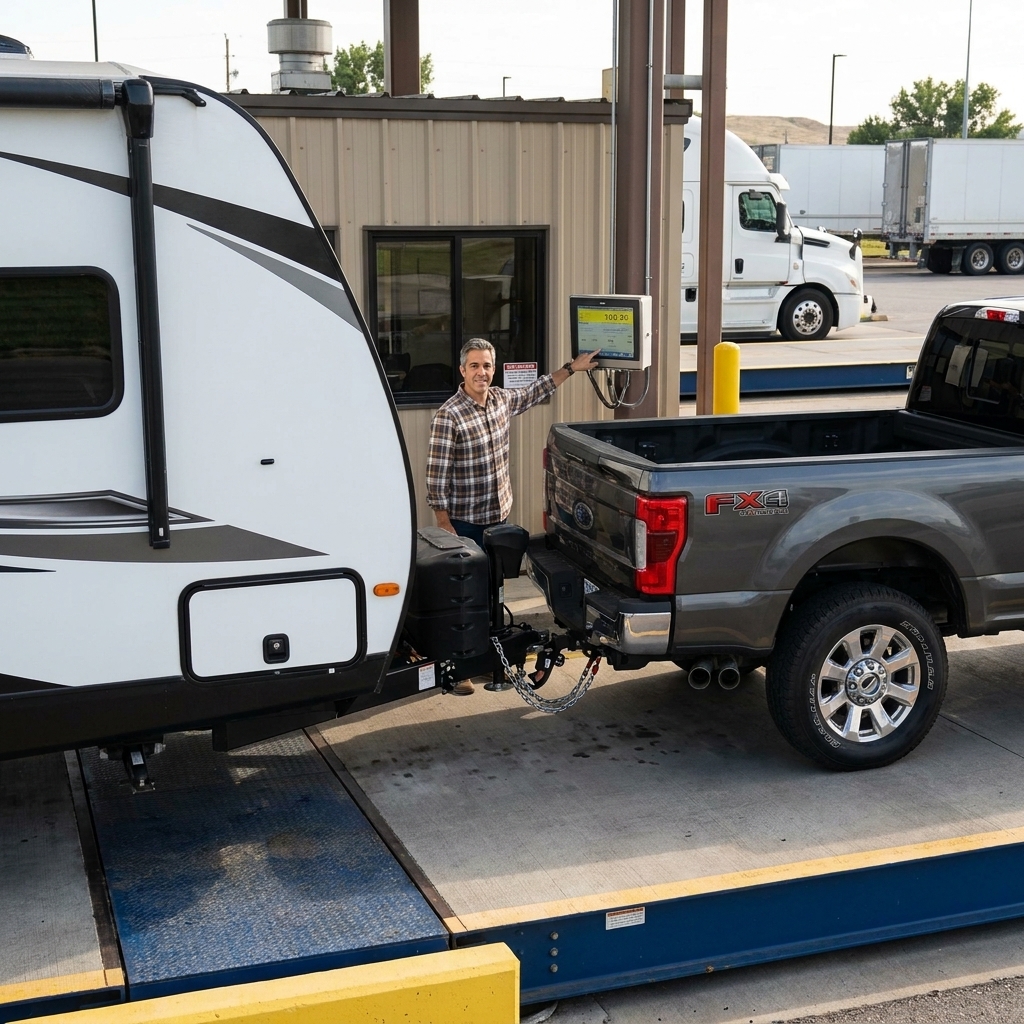
- Only increase pressure based on load, using the tire maker’s load and inflation tables (or guidance from a qualified tire shop), ideally after you weigh your axles.
What I see in the wild: people upgrade to E-rated tires and keep running the old P-metric pressure without checking load tables. That can be under-inflation for the real load, which builds heat, flexes the sidewall, and chews the shoulders.
Standard tire inflation basics
Standard tires usually have less pressure headroom. That makes pressure accuracy even more important when towing:
- Do not air down for ride comfort when towing. Soft tires plus trailer tongue weight is a heat recipe.
- Keep pressures at least at the door placard, and verify you are not exceeding the tire’s load capacity for your actual axle weights.
The cold pressure rule
Set pressures cold, meaning the truck has been parked long enough that the tires are at ambient temperature. If you set pressures after driving, you will underfill them. Then the next morning you start under-inflated.
Driveway rule: check pressure before you hook up, not after you stop for fuel.
Wear patterns that tell on you
- Under-inflation: wears both shoulders, runs hot, increases blowout risk under tow.
- Over-inflation: wears the center, reduces traction on wet roads, can feel skittish when empty.
- Incorrect front-to-rear balance: can create strange handling, especially with a weight distribution hitch that shifts load back onto the front axle.
One more thing people miss: TPMS is not a towing coach. Many systems do not alert until you are significantly under the target pressure. “No light” does not mean “good to tow.”
Heat and towing
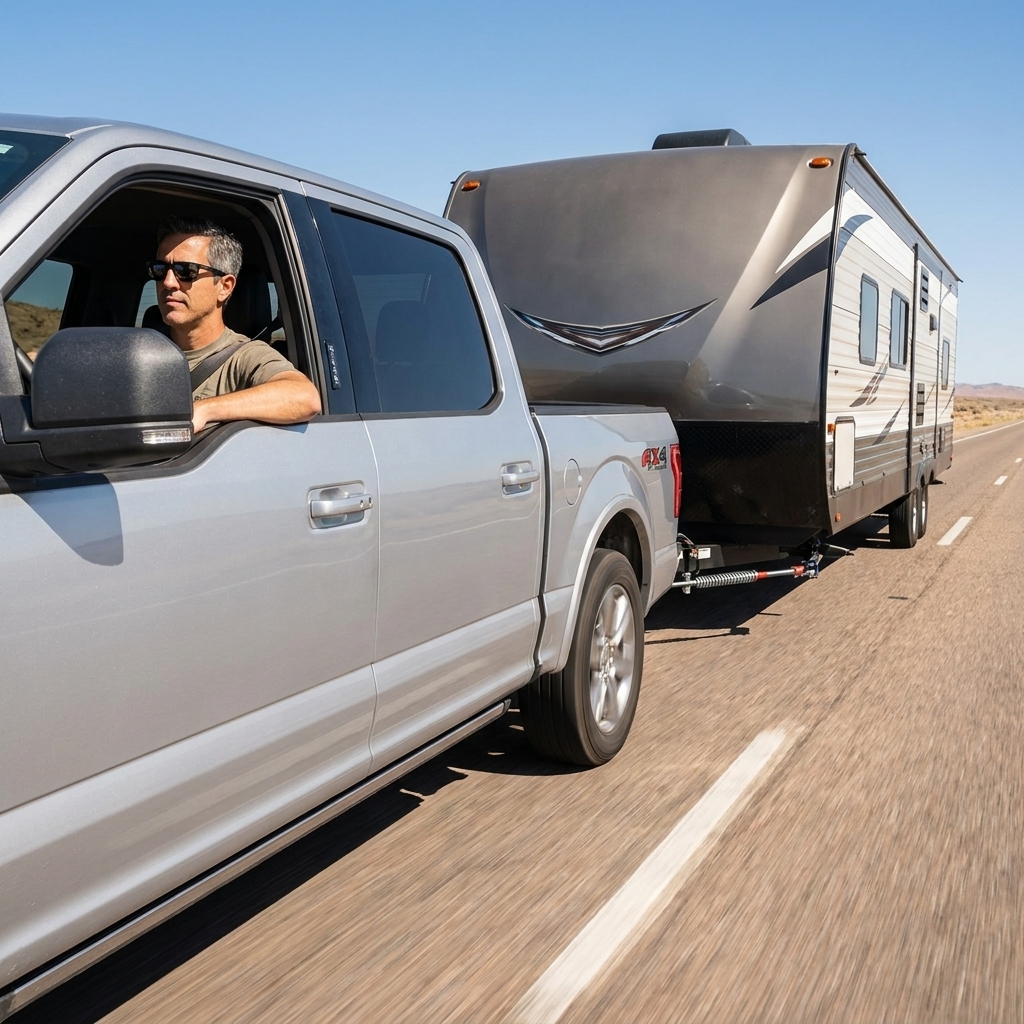
Towing adds steady load for long stretches, which means steady heat. Heat is what breaks down rubber, accelerates tread wear, and can damage the casing internally.
E-rated tires generally have an advantage here because they are built to carry higher loads when inflated appropriately. But the real driver is still the same: correct inflation for the load. An under-inflated E-rated tire can run dangerously hot just like anything else.
Standard tires can do fine too, but they have less margin for error if:
- you are near max payload
- you run lower pressure than you should
- you tow fast in hot weather
- you have a slightly out-of-spec alignment
Two more real-world factors: scrub and speed. Tight turns in campgrounds and backing a trailer into a spot can scrub the tread, especially on the front tires. And if your tires have a lower speed rating (common on some all-terrains), pushing speed while towing can stack heat fast.
Maintenance with E-rated tires
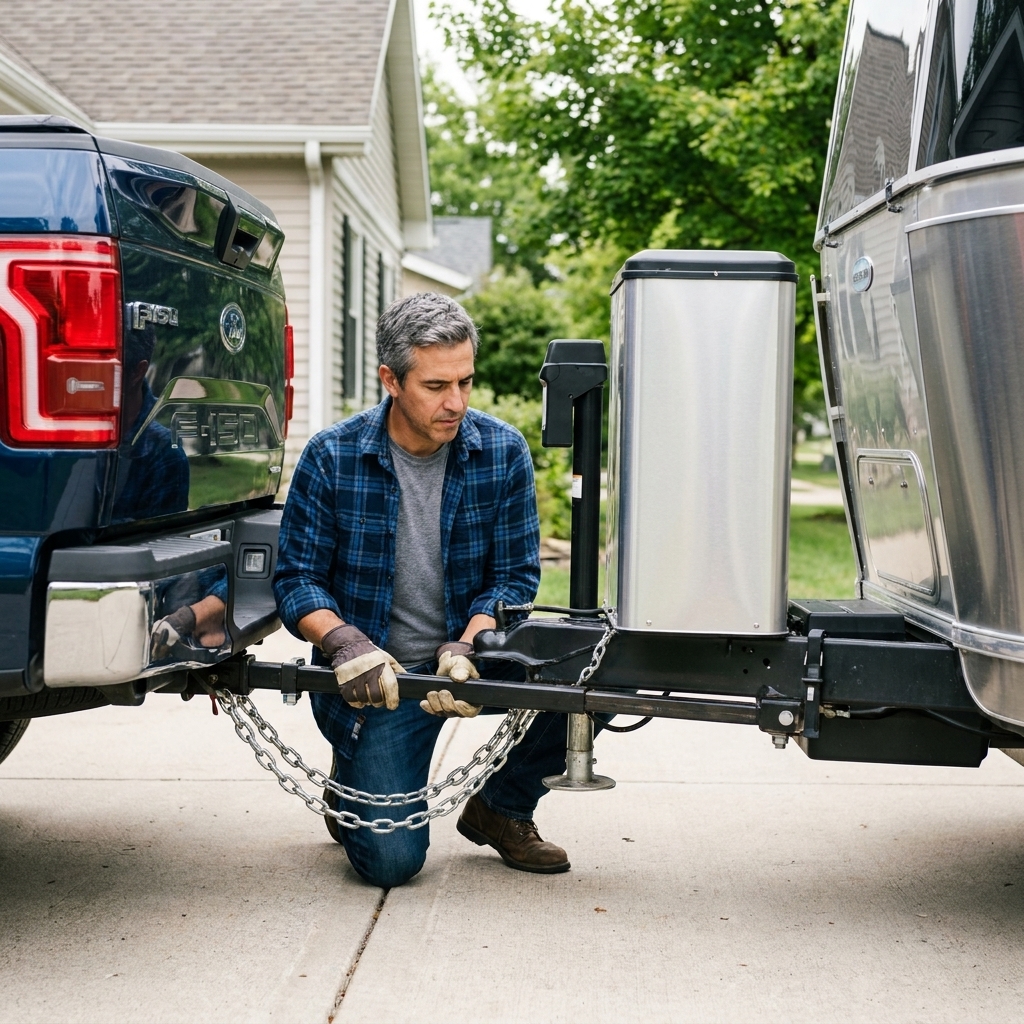
Here is the part I tell friends straight: E-rated tires are not “set it and forget it.” They are more like a stronger suspension component. You need to treat pressure and rotations as part of the towing setup.
Do this, avoid this
- Do: check cold pressures weekly during towing season. Avoid: trusting TPMS alone.
- Do: adjust pressure when the load changes (empty commute vs. hooked up). Avoid: running one pressure year-round because it “feels fine.”
- Do: rotate on schedule. Avoid: waiting until you can see the wear.
- Do: rebalance if you feel a new vibration. Avoid: assuming it is “just truck stuff.”
- Do: inspect for shoulder wear and feathering. Avoid: ignoring it until it gets loud.
If you do this, E-rated tires tend to wear evenly and last. If you do not, they can get loud, choppy, and expensive faster than you would expect.
Picking the right tire
Instead of asking “Which lasts longer?”, ask “Which will stay in its safe operating window the most often?” That is where longevity really comes from.
E-rated makes sense when
- You tow a travel trailer, car hauler, dump trailer, or equipment trailer regularly
- Your rear axle sees a lot of payload (toolboxes, bed cargo, tongue weight)
- You want a firmer, more controlled feel when the trailer pushes around in crosswinds
- You regularly drive in heat, mountains, or long highway stretches while loaded
Standard tires can be better when
- Your truck is mostly a daily driver and only tows light, occasionally
- You prioritize ride comfort and noise over maximum load margin
- Your actual axle weights are comfortably below tire and axle ratings
Important: Tires do not increase your truck’s GVWR or GAWR. If you are exceeding axle ratings, you are in unsafe territory and, depending on where you live and how you are using the truck, it can also create legal, insurance, and liability problems.
Also, if your truck came with P-metric tires and you switch to LT Load Range E, your door placard pressures may no longer match what the new tires need. The right pressures are not automatically higher or lower. They are load-derived. This is where it pays to weigh the truck and trailer setup and then set pressure based on actual axle loads and tire manufacturer guidance.
Quick FAQ
Do E-rated tires always add towing capacity?
No. Your truck’s payload and axle ratings set your limits. Stronger tires can remove a tire bottleneck, but they do not magically raise GVWR or GAWR.
Should I run 80 psi in E-rated tires?
Not automatically. 80 psi is often a maximum for Load Range E, depending on the tire. Run the pressure that matches your load using load and inflation tables, stays within wheel limits, and delivers even wear. Many trucks will feel harsh and wear the centers if you run max pressure while empty.
Why did my tires wear faster after I started towing?
Usually one of three things: pressure too low for the load, not rotating often enough, or alignment slightly off that became obvious under towing weight.
What is the biggest tire mistake you see with trailers?
Under-inflation, especially on the rear tires of the truck. It looks “fine” until a hot day and a long grade make it very not fine.
My driveway take
If you tow heavy or tow often, E-rated tires are usually the safer, longer-lasting play because they stay more stable under load and give you more margin. But they only pay you back if you treat inflation like part of the towing setup and rotate them like clockwork.
If you want the best next step, it is not guessing. It is weighing your rig (truck axles and trailer axles) and then setting pressures that match the real load you are asking your tires to carry.